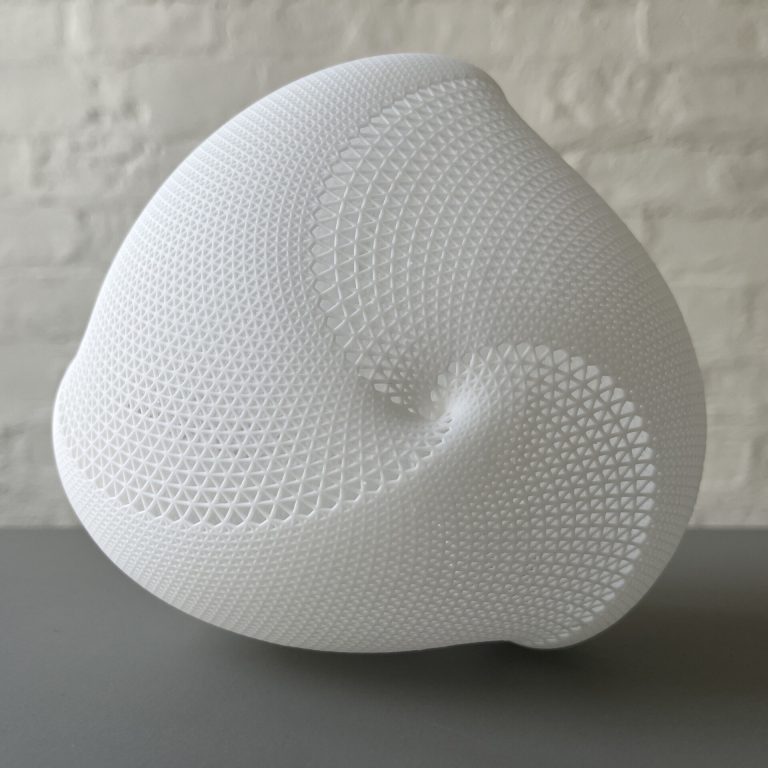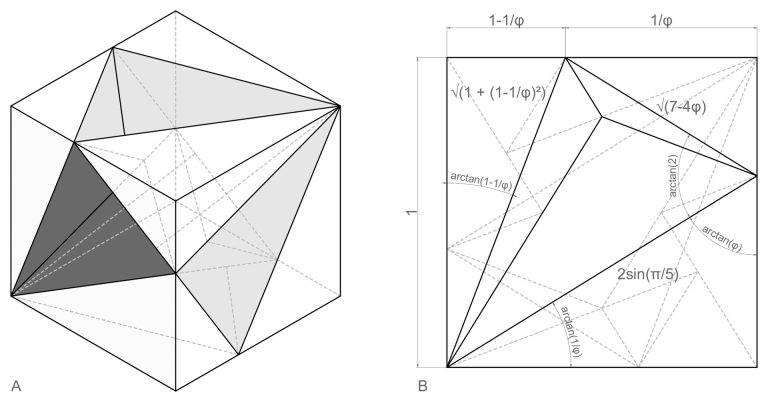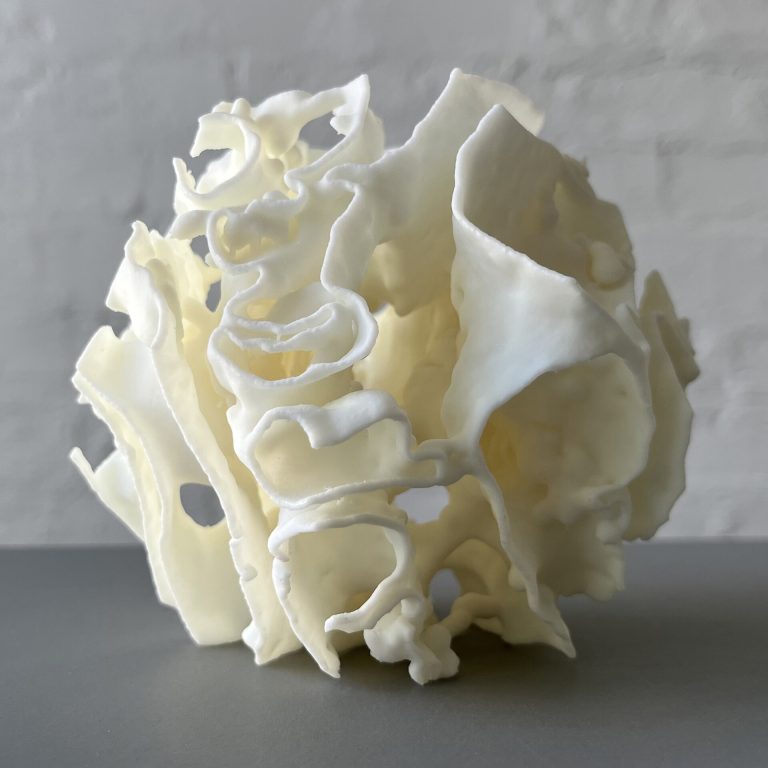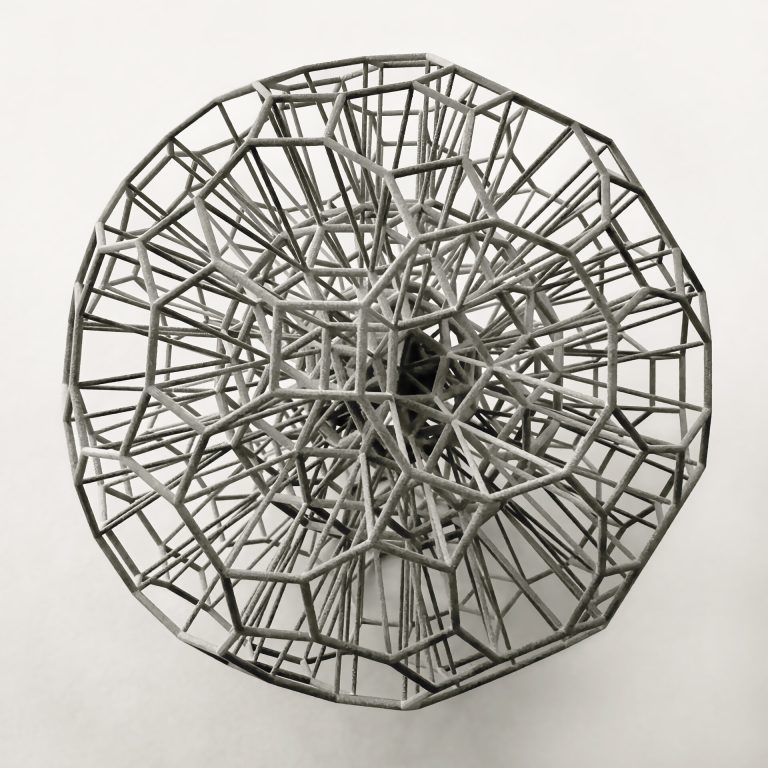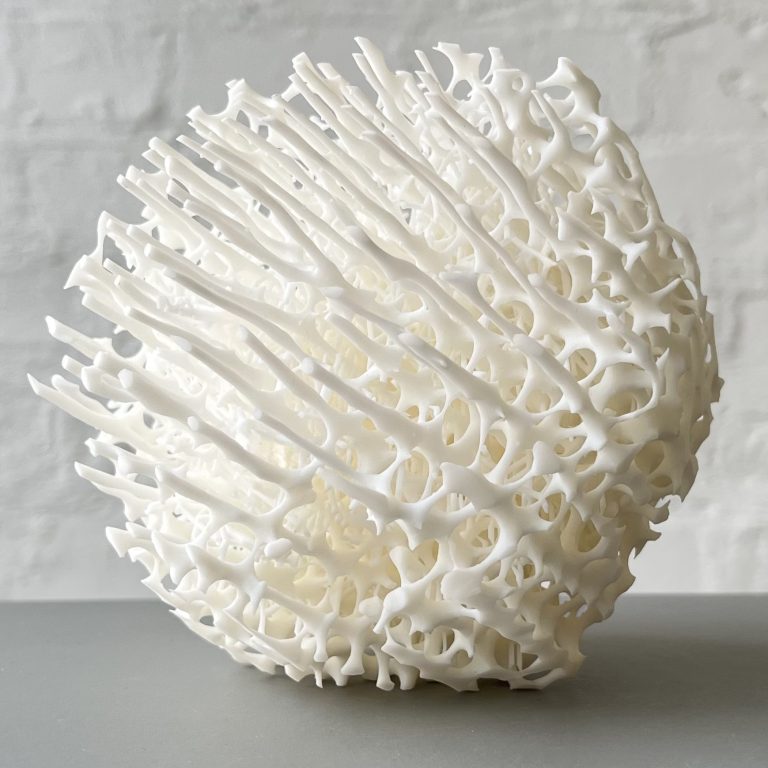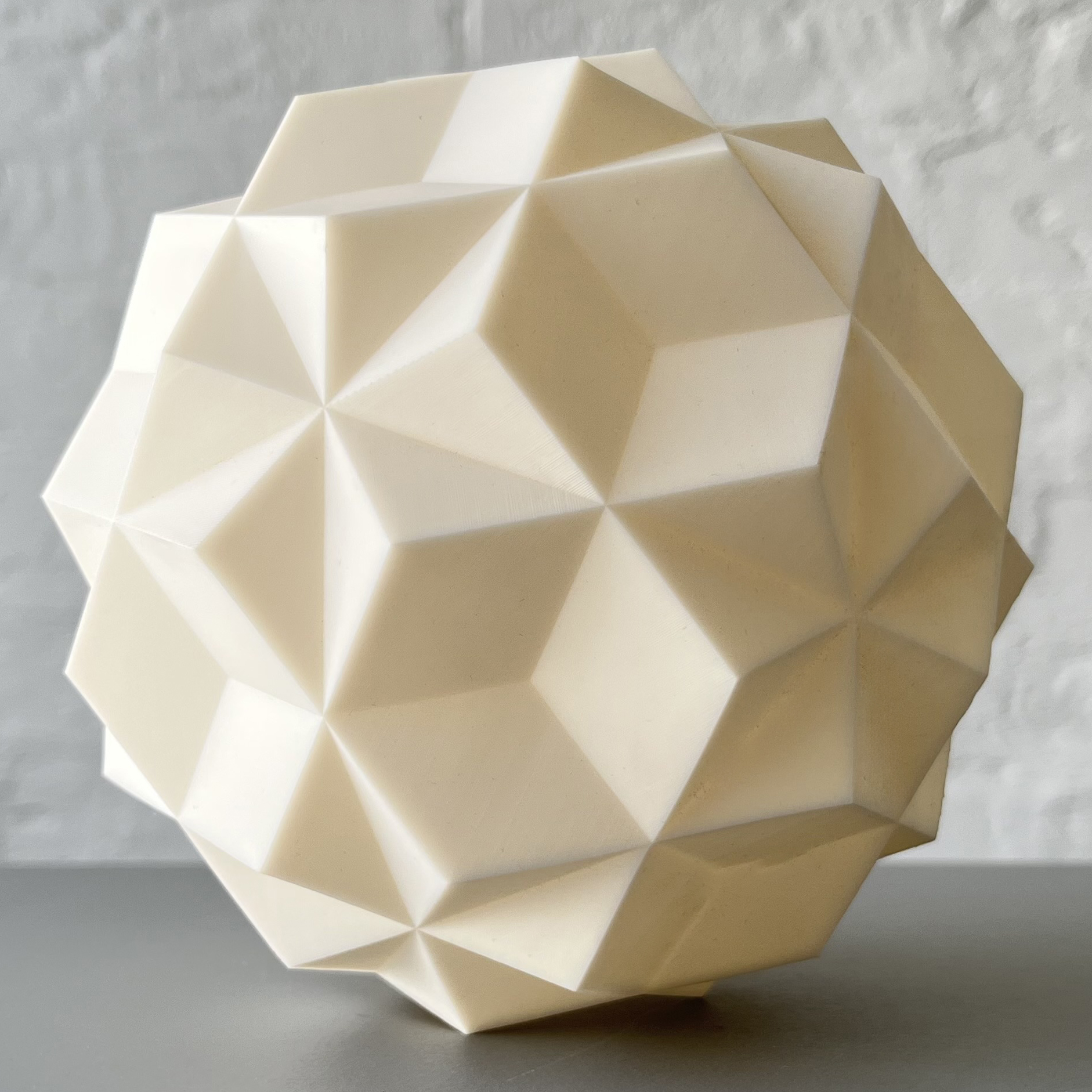
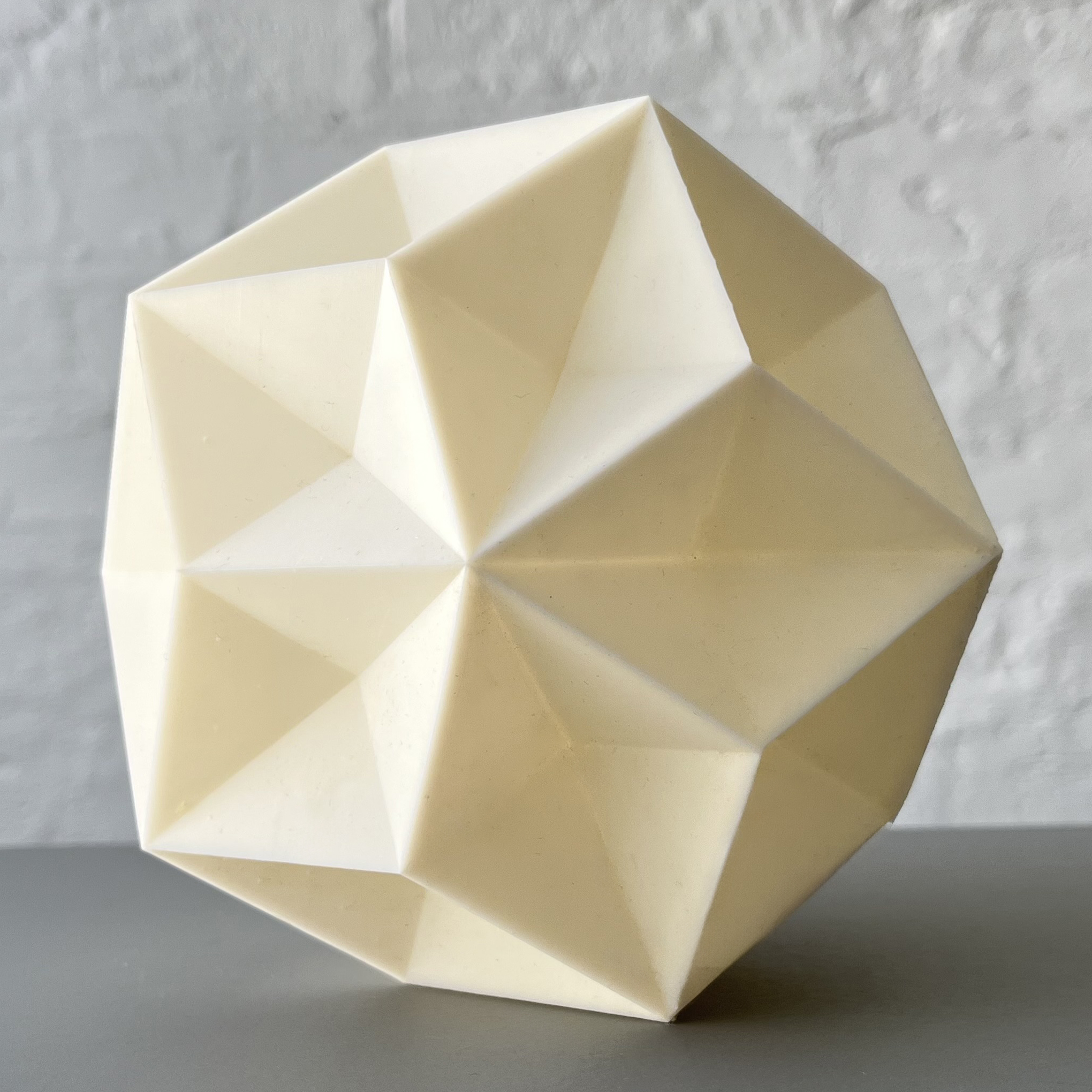
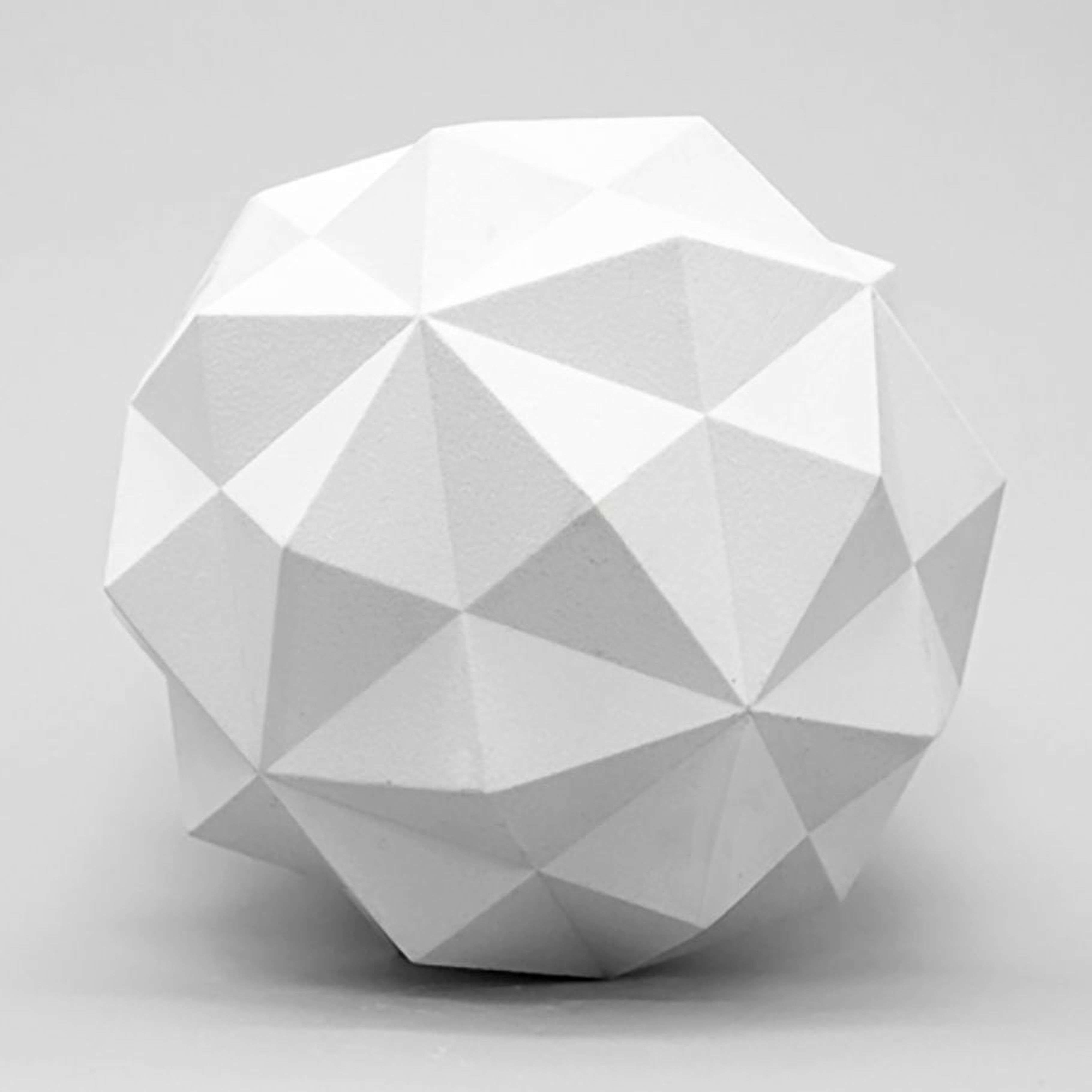
The Phi Stars study investigates fractal tilings of T-Quanta modules arranged in icosahedral symmetry. Based on Einar Thorsteinn's puzzle system, these tetrahedral units combine to create different polyhedral structures.
Tetrahedral shapes are added to establish various geometric configurations. Many of these forms correspond to stellations of the rhombic triacontahedron, though the construction method differs from traditional stellation processes. Rather than extending face planes, the approach builds outward through addition of fractal modules.
The T-Quanta modules follow golden ratio subdivisions, creating hierarchical arrangements where smaller tetrahedral elements aggregate into larger polyhedral forms. Icosahedral organization governs module placement, and specific configurations generate stable geometric structures. The fractal tiling approach produces star-like polyhedral forms through systematic tetrahedral addition.
Photography: Phillip C. Reiner
Artwork year: | Last updated: