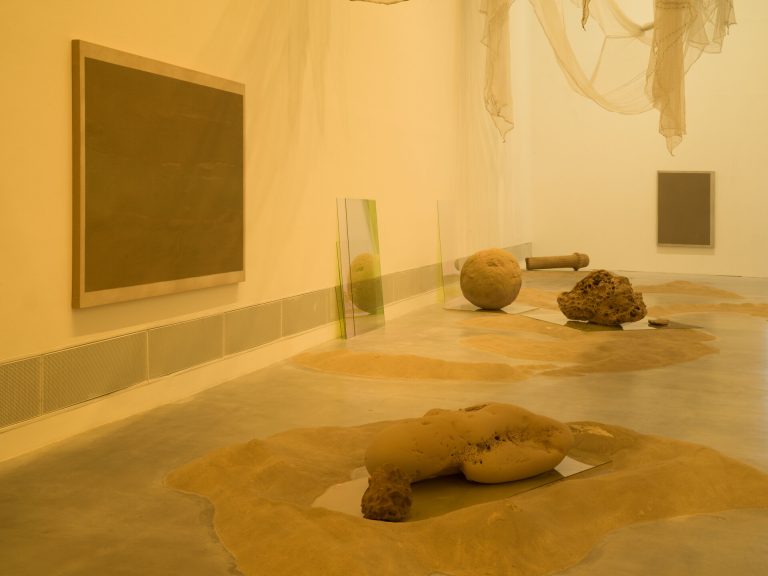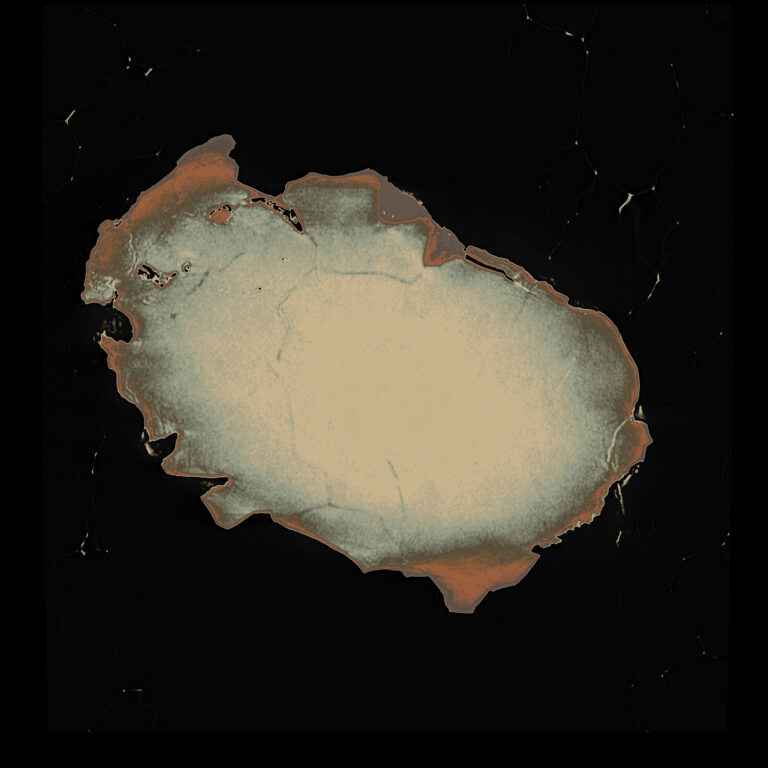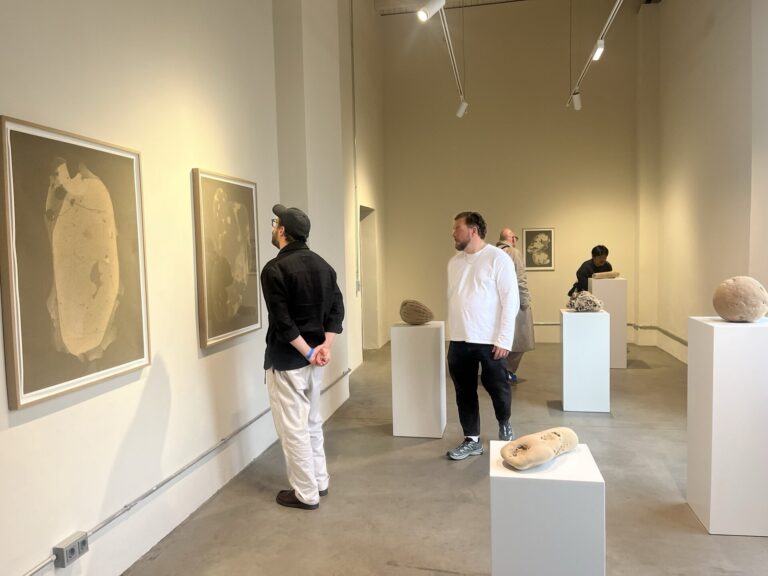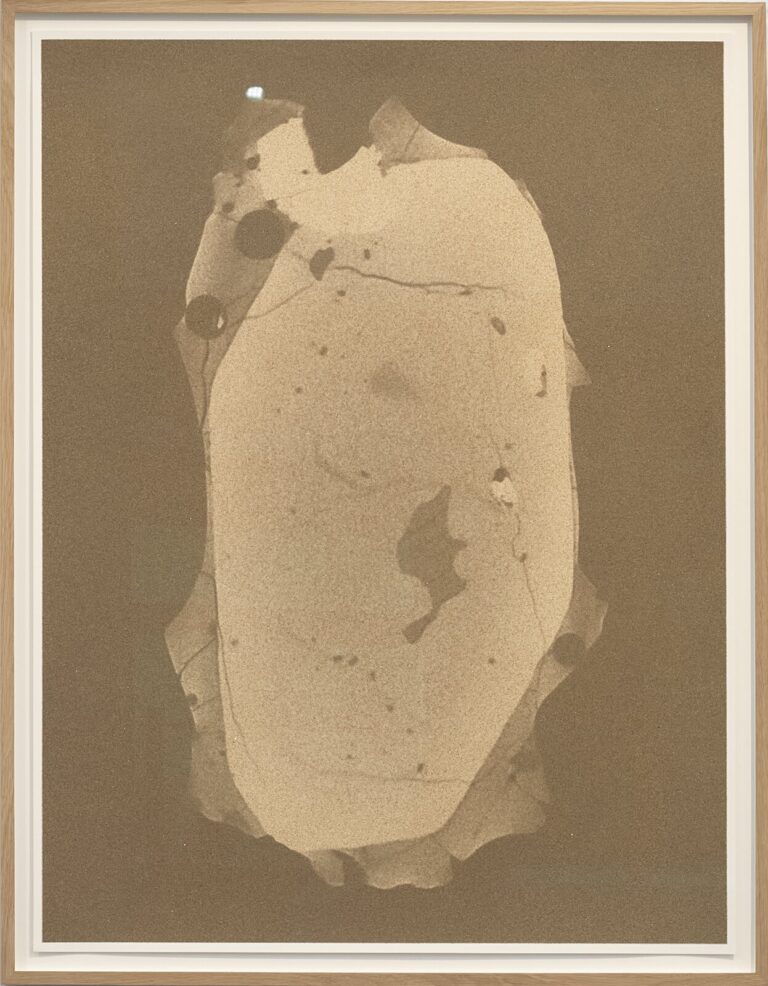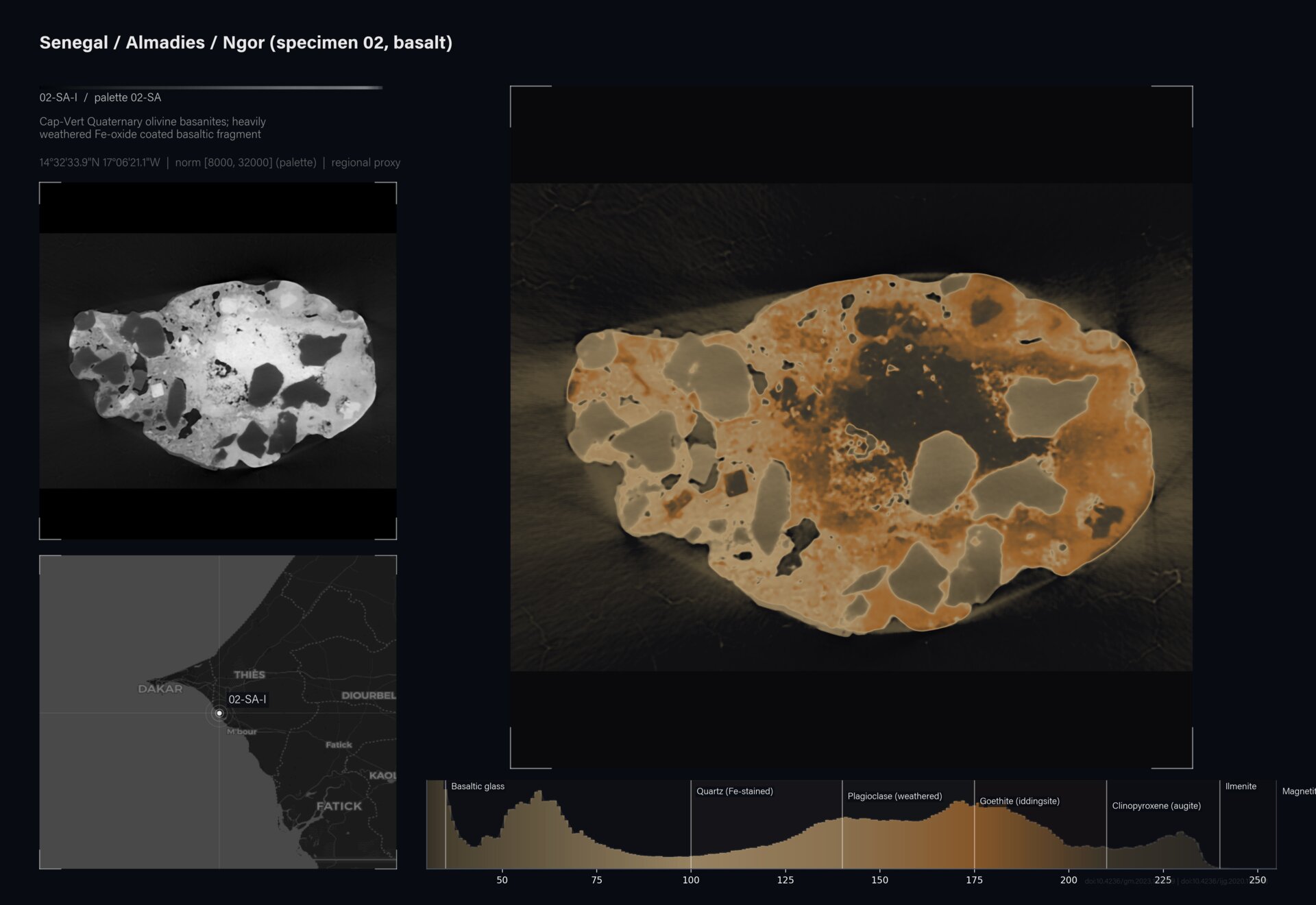
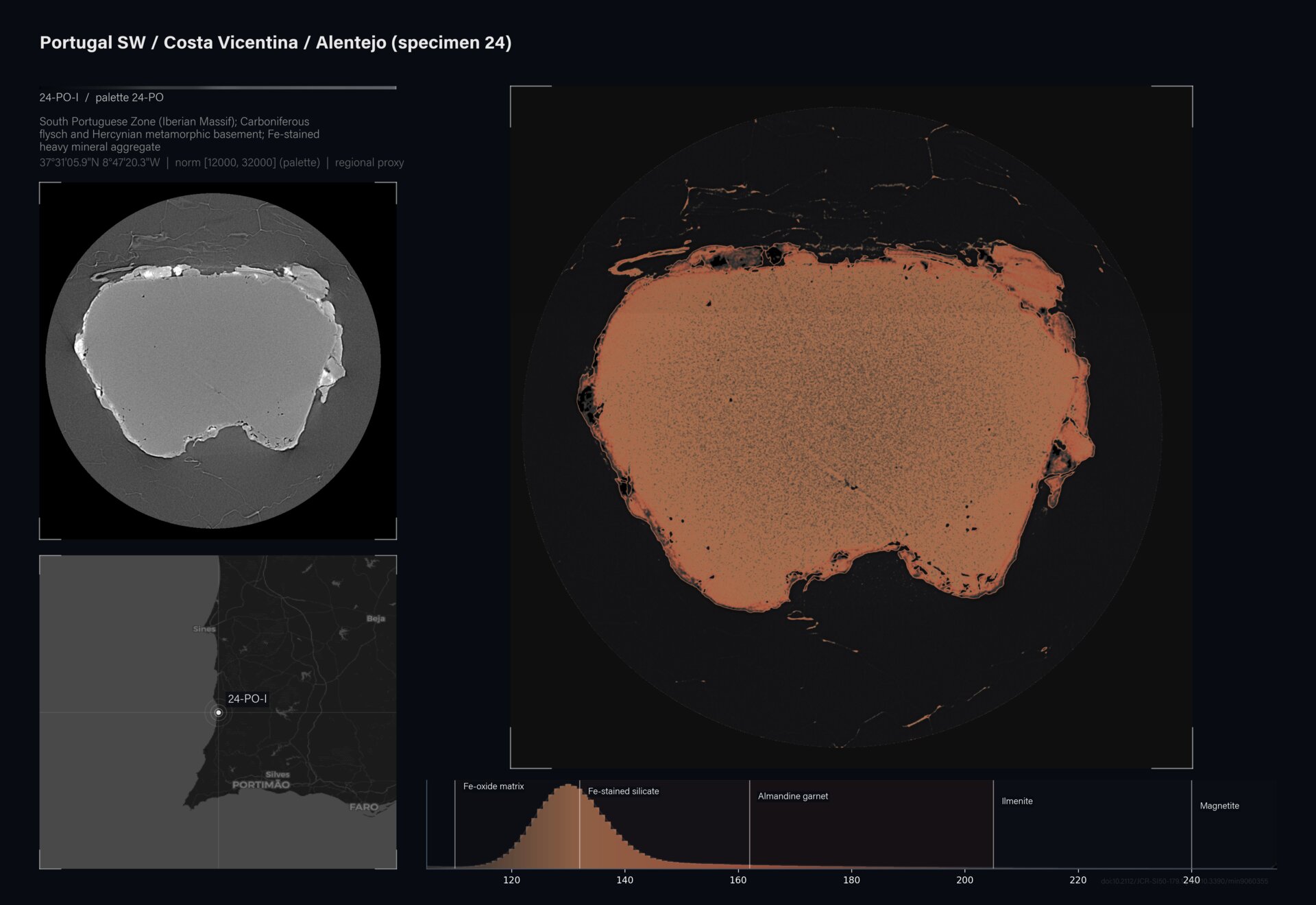
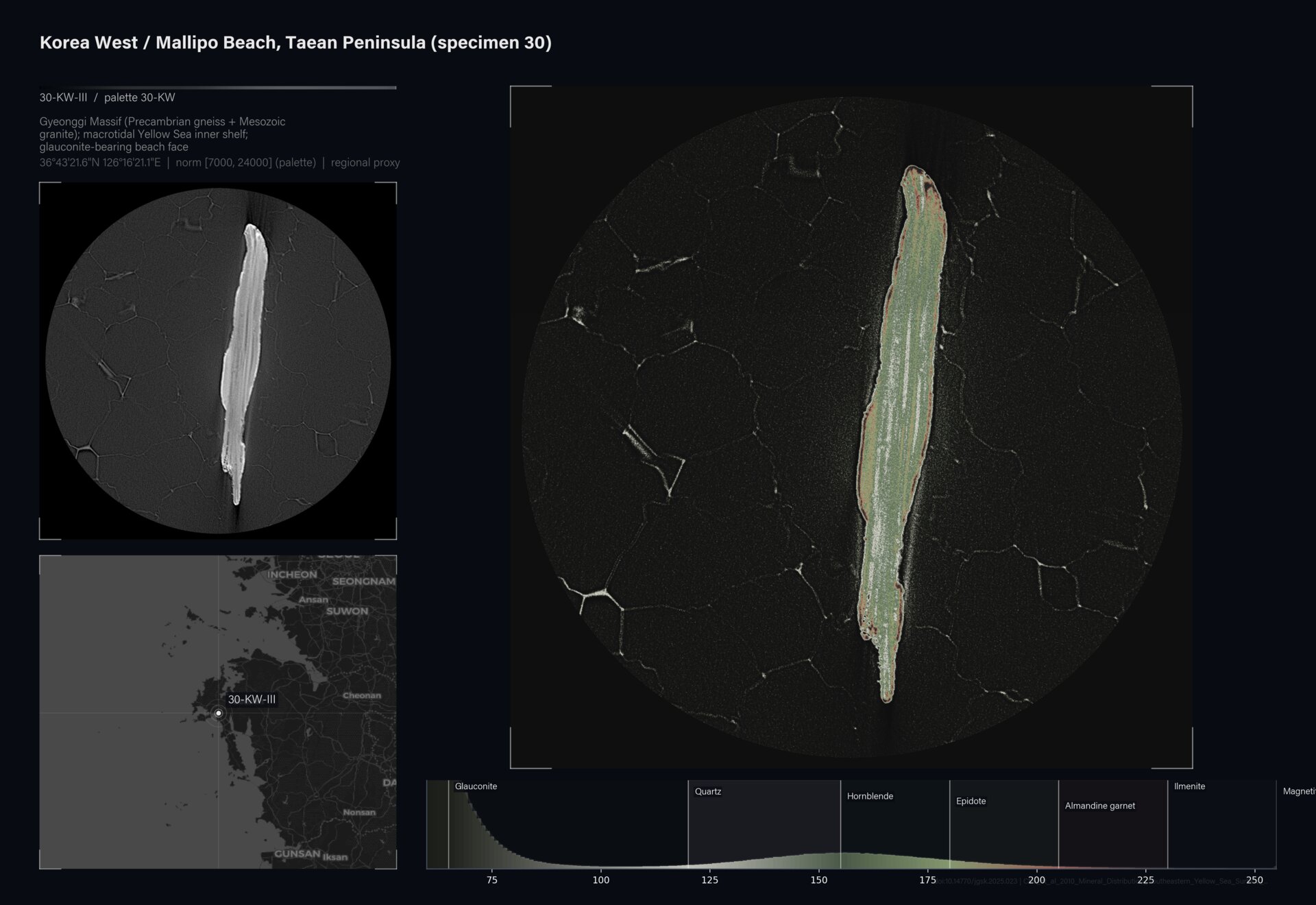
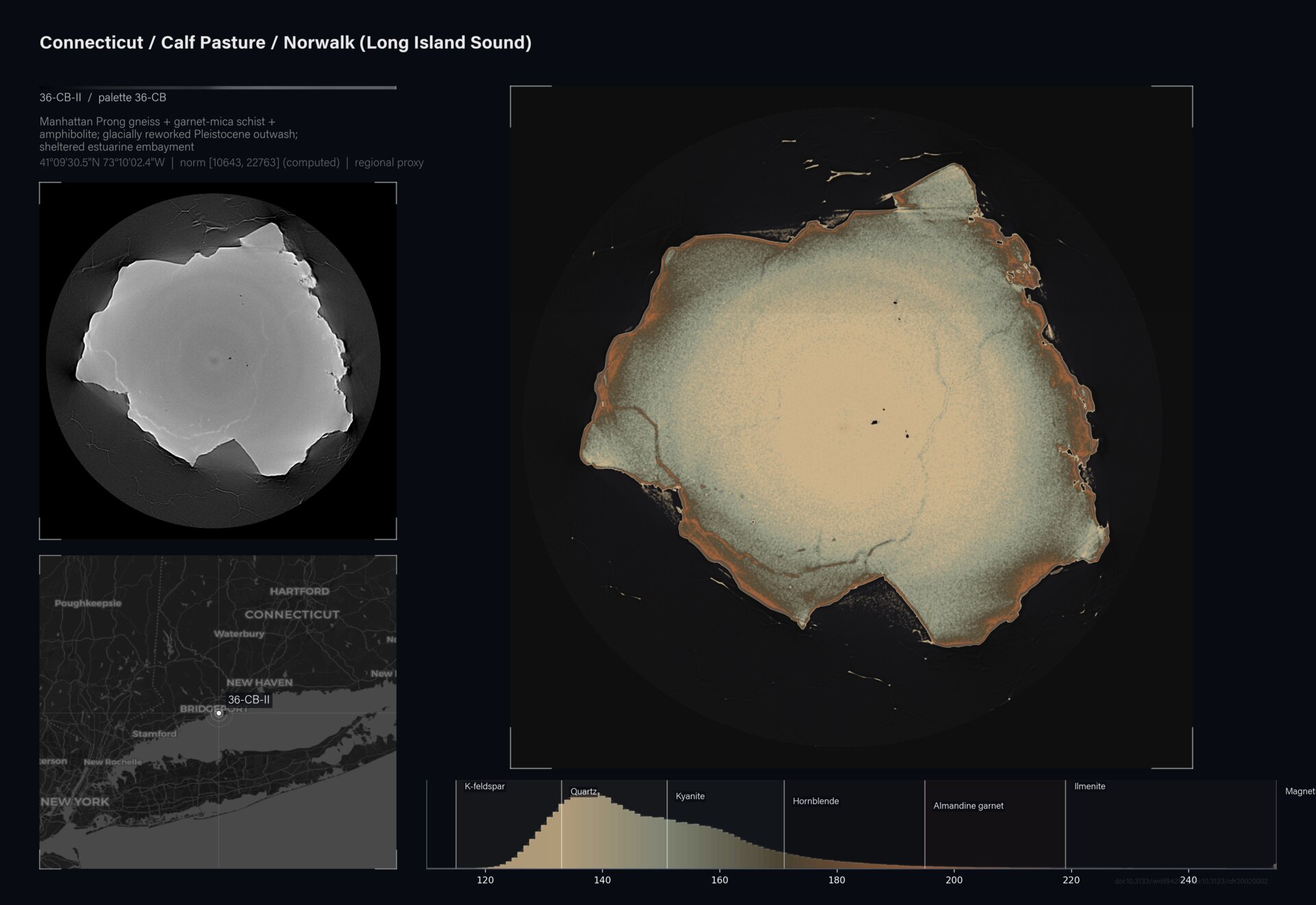
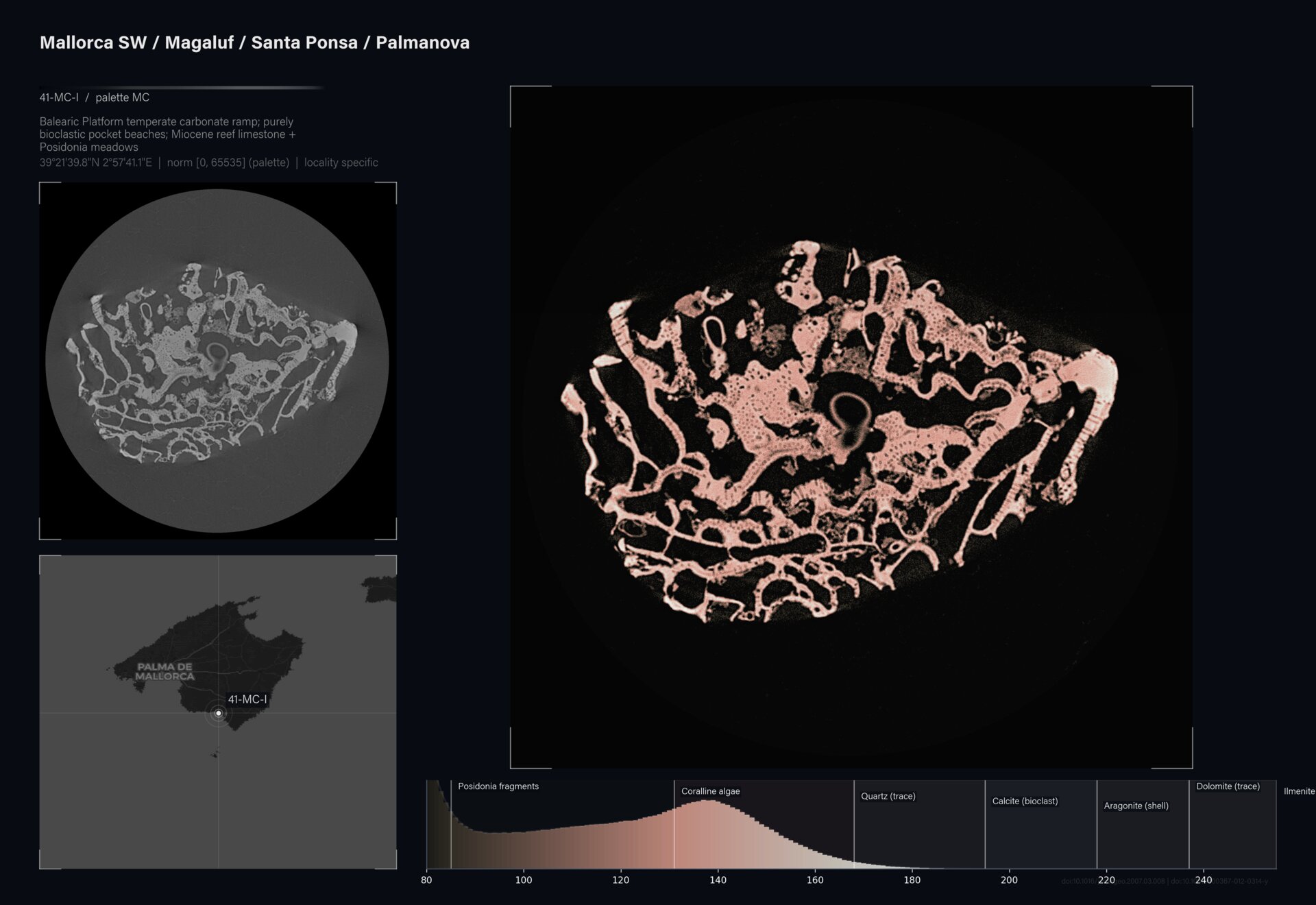
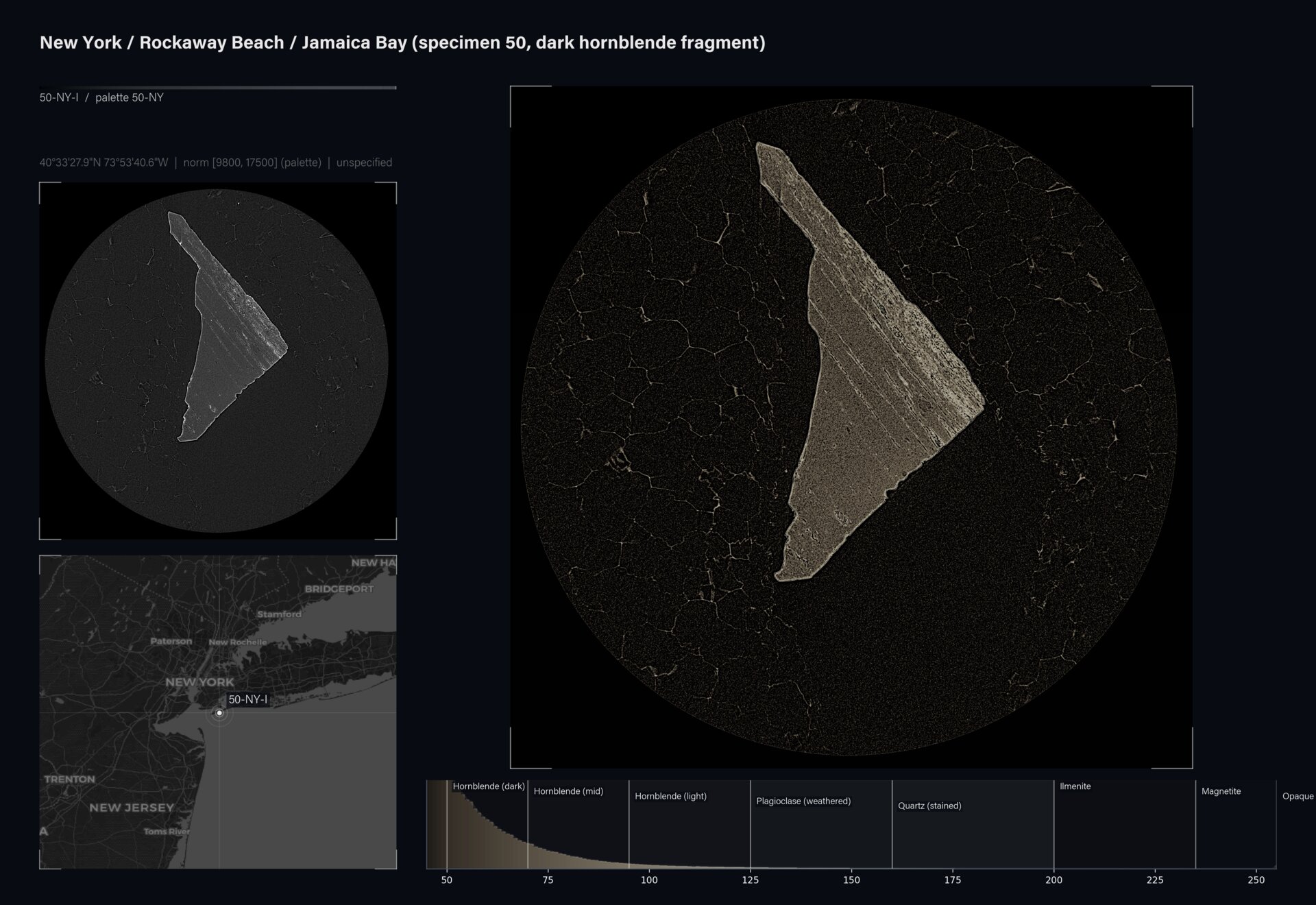
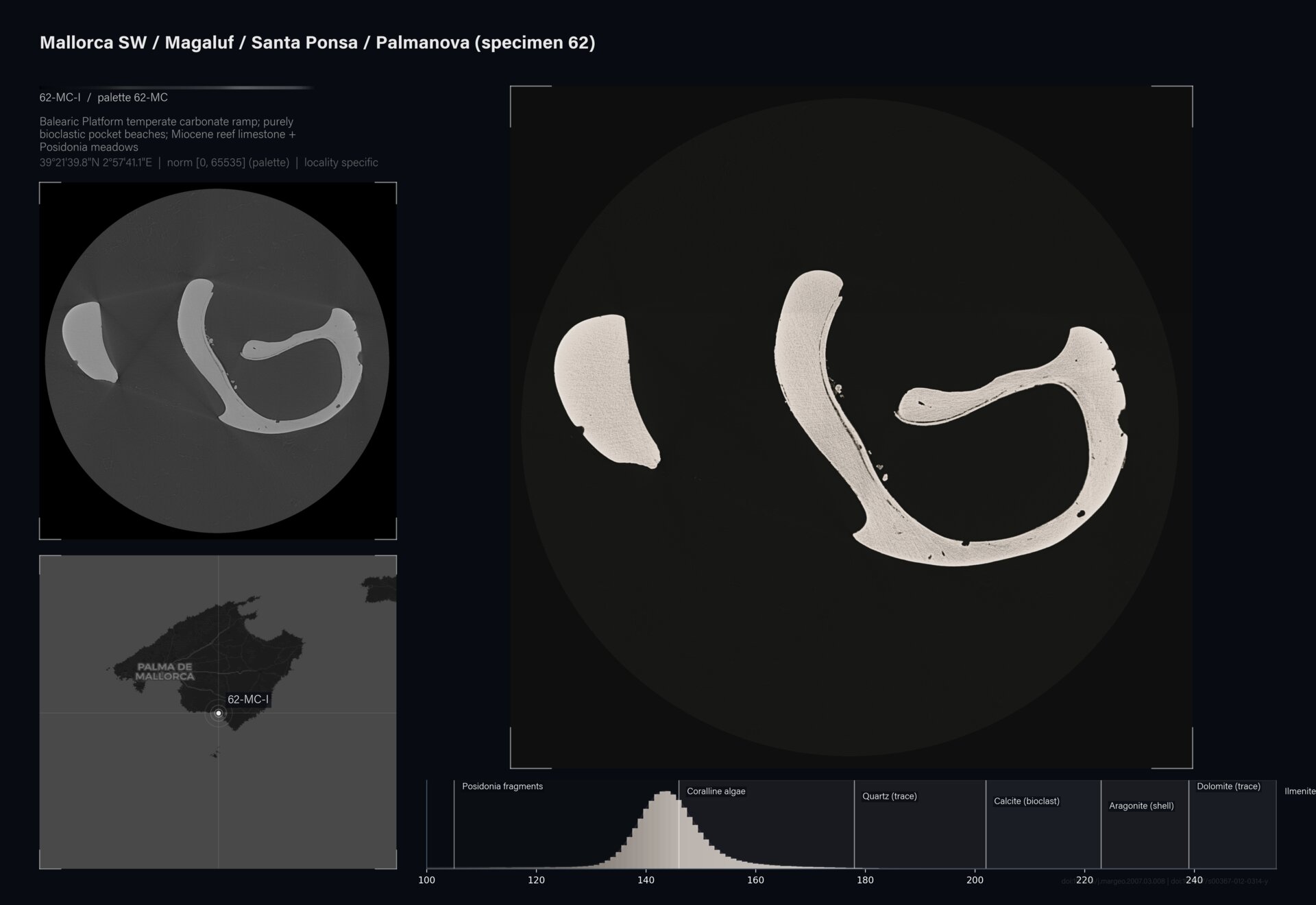
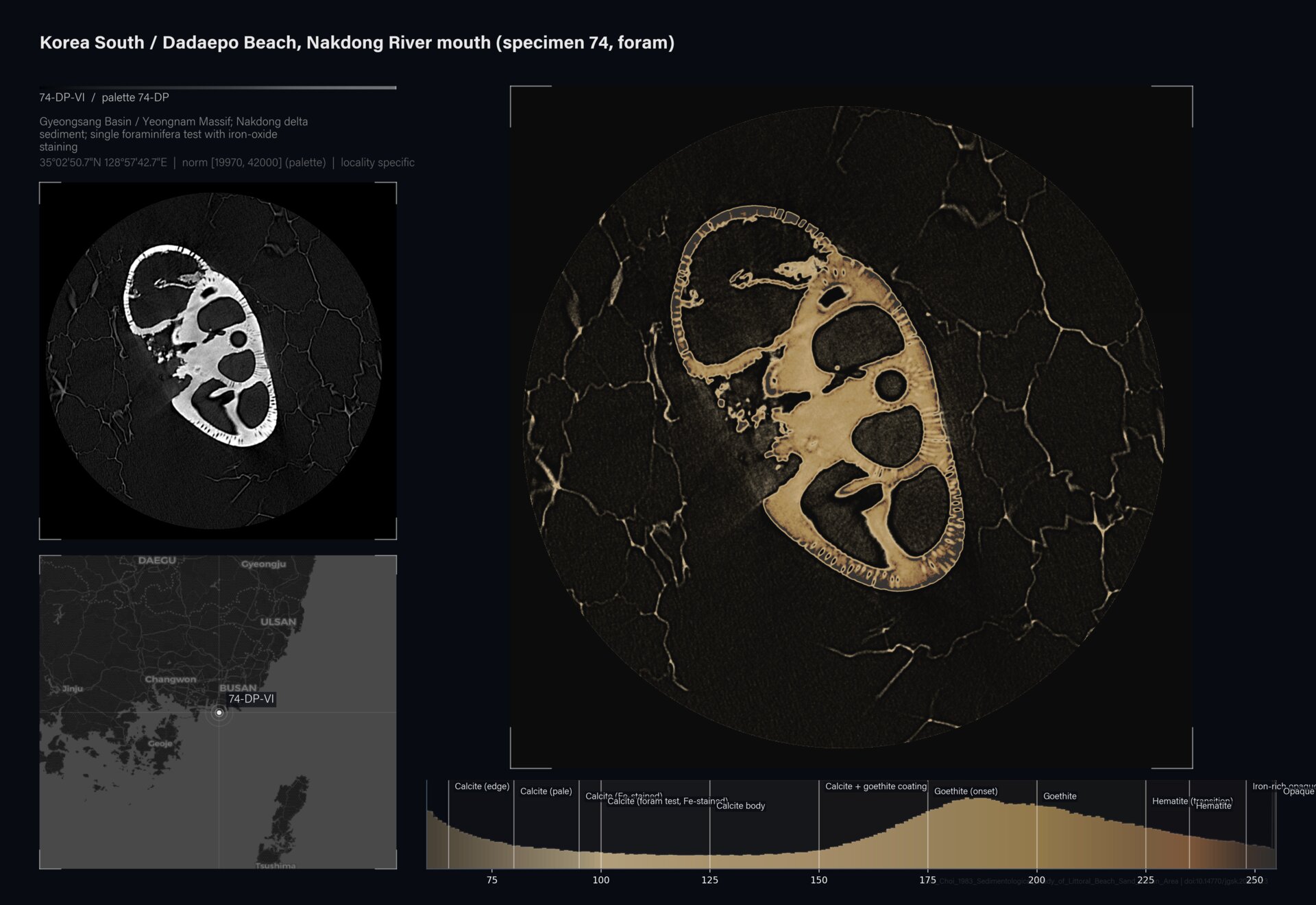
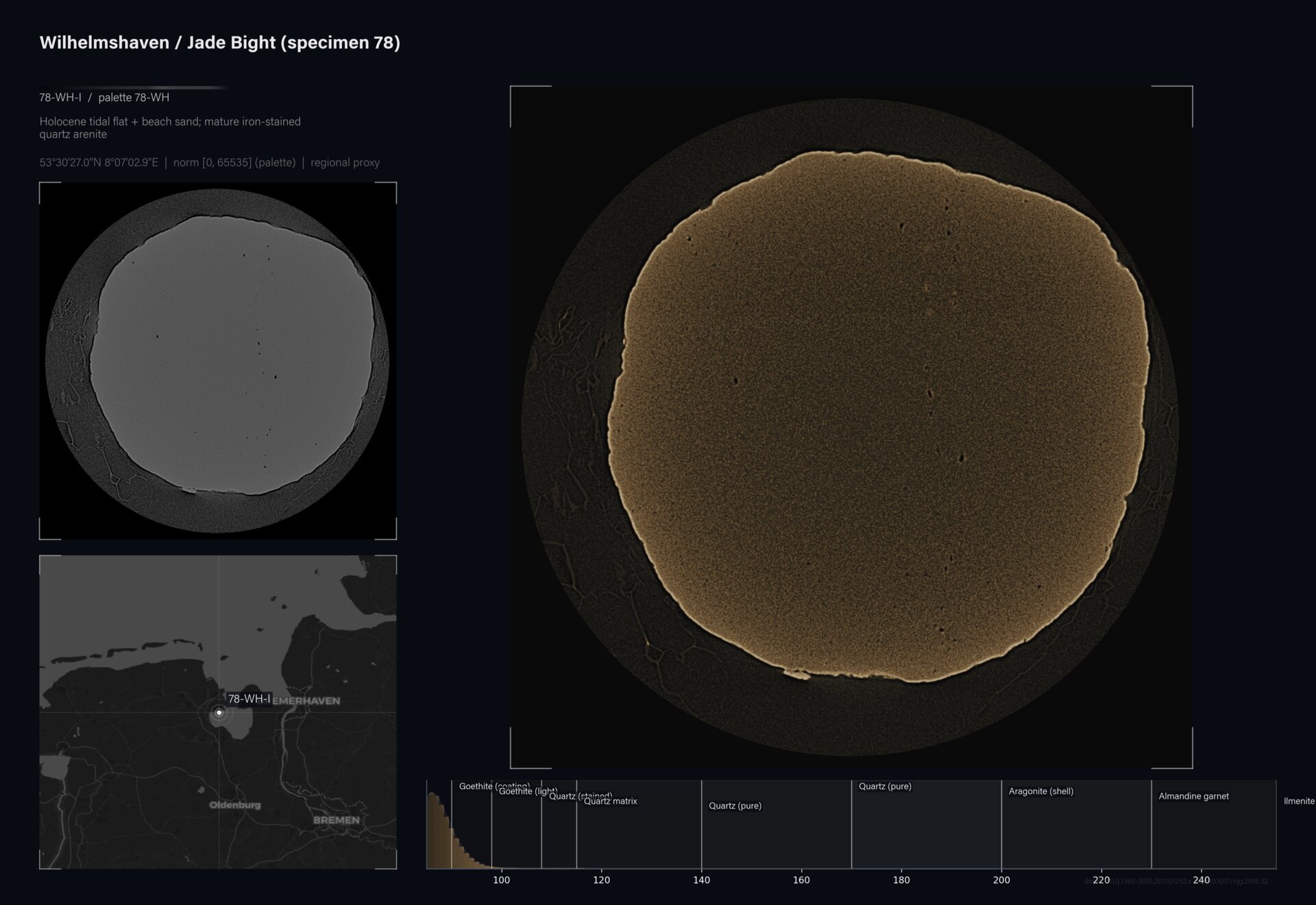
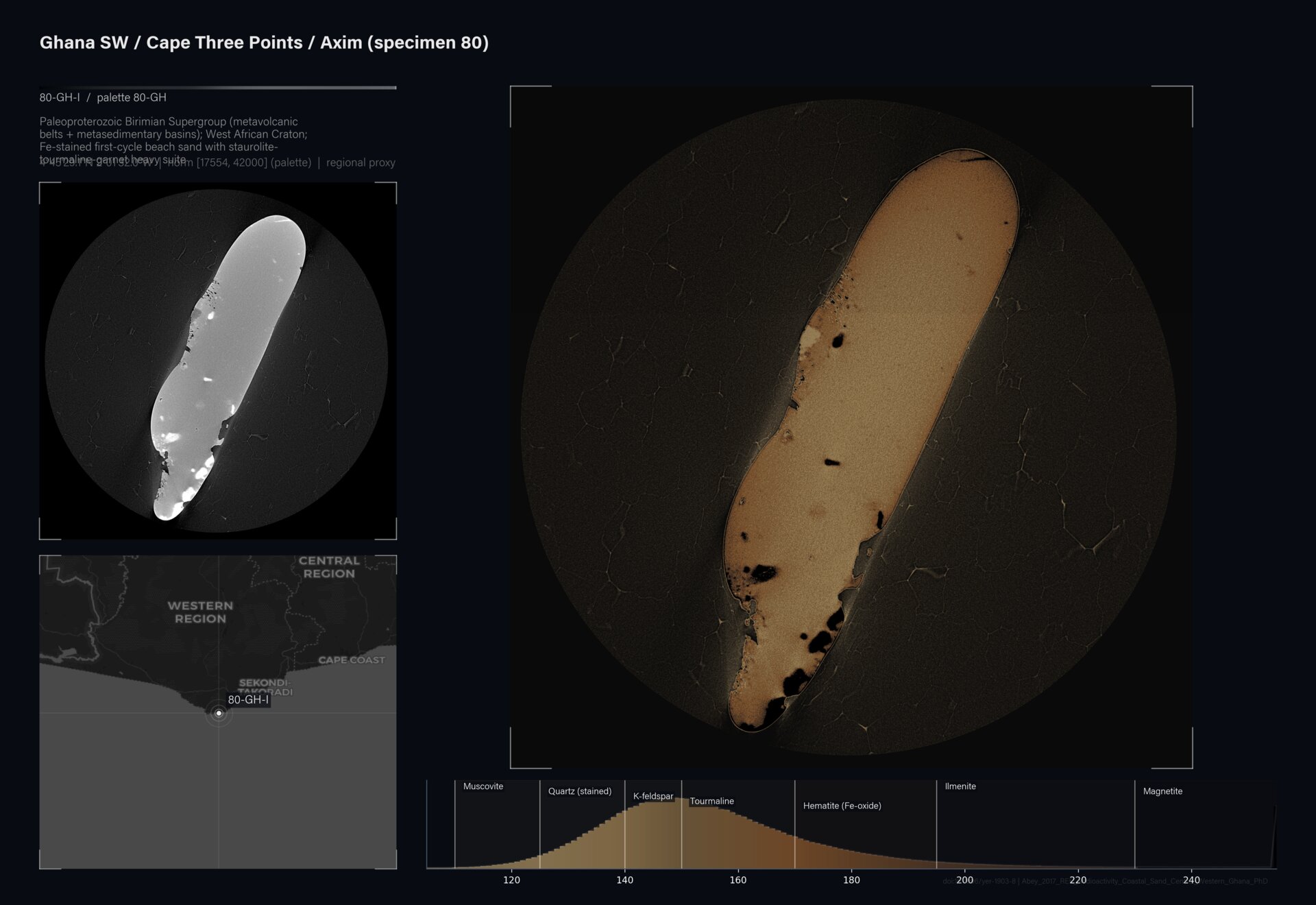
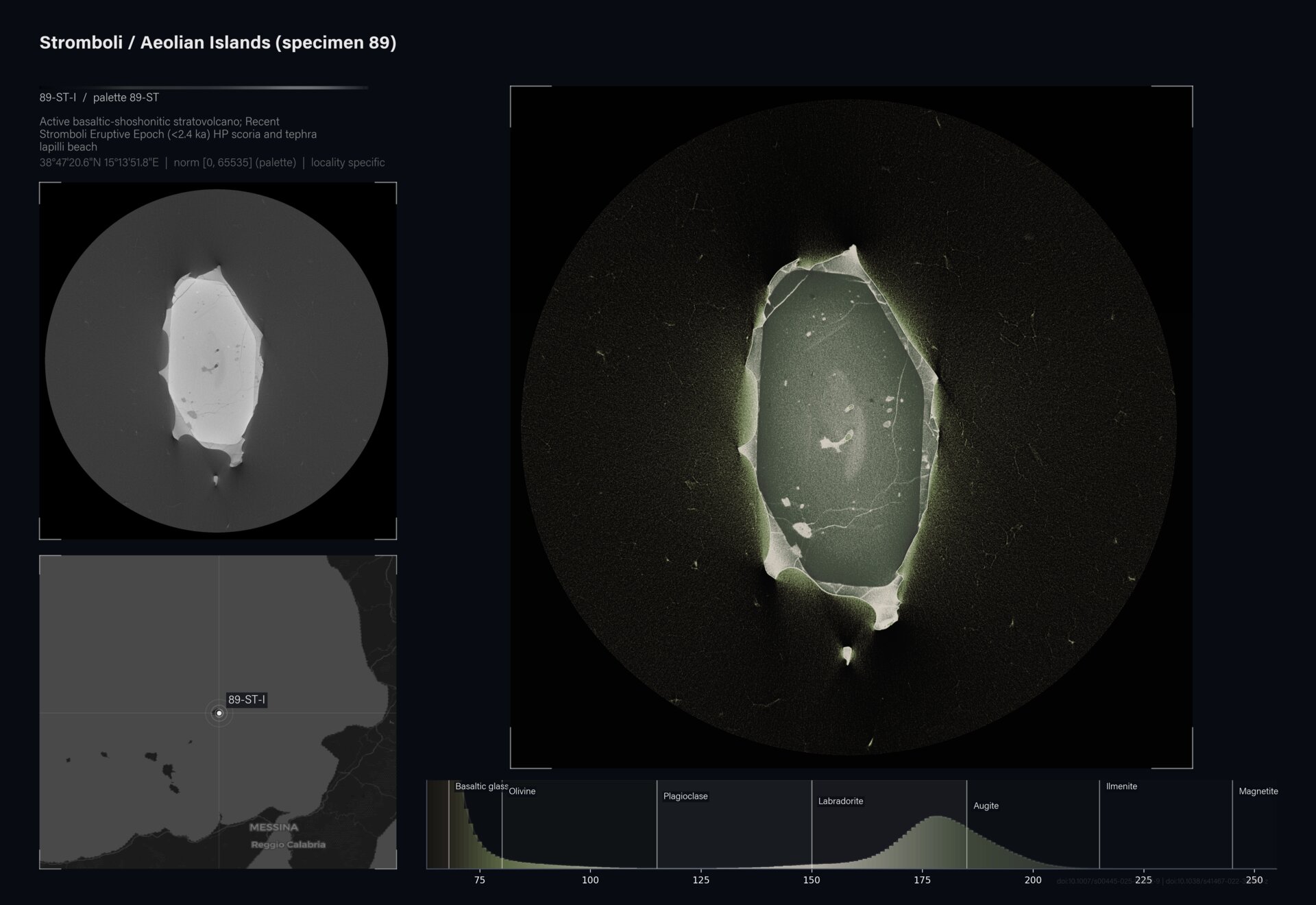
Locality Palette develops a provenance-anchored colorization method for nanoCT grayscale data. X-ray attenuation values record material density, not color. Grayscale volumes have no color ground truth. Neural colorization models trained on natural photographs assign color through texture similarity, mapping porous structures to whatever the training set associates with similar textures. Applied to scientific imaging, this is a category error: the output encodes learned associations, not specimen properties. The locality palette system instead derives color from the geological provenance of each scanned grain. Each collection site determines which minerals are present and at what density ranges they occur. Attenuation bands map to mineral phases characteristic of the provenance: basaltic glass and clinopyroxene for Stromboli tephra, quartz and iron oxides for Wilhelmshaven tidal sediment, feldspar and heavy minerals for Birimian coastal sand. The same attenuation value can represent different minerals at different sites: a quartz-dominated North Sea grain and a plagioclase-rich volcanic fragment occupy overlapping density ranges but carry different geological identities. Anchor colors for each locality reference published mineralogy and thin-section optical data. A lookup table interpolates between anchors to produce a continuous color mapping across the full attenuation range. False-color conventions in adjacent fields follow comparable logic: astronomical imaging maps wavelength bands to RGB channels through declared assignment, not observed color. The locality palette applies this principle to geological specimens, where every color traces to a stated mineral phase at a specific density range for a given provenance. The system does not resolve the fundamental problem of assigning color to data captured outside the visible spectrum. It makes the mapping assumptions explicit (which mineral, at which density, mapped to which color) rather than embedding them in learned weights. Localities span volcanic, metamorphic, carbonate, and siliciclastic provenances. The investigation remains ongoing.
Photography: Phillip C. Reiner
Artwork year: | Last updated: