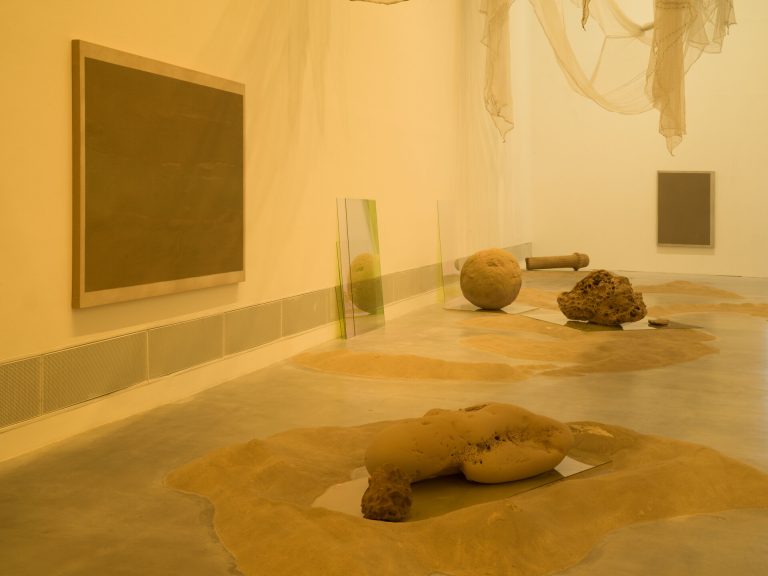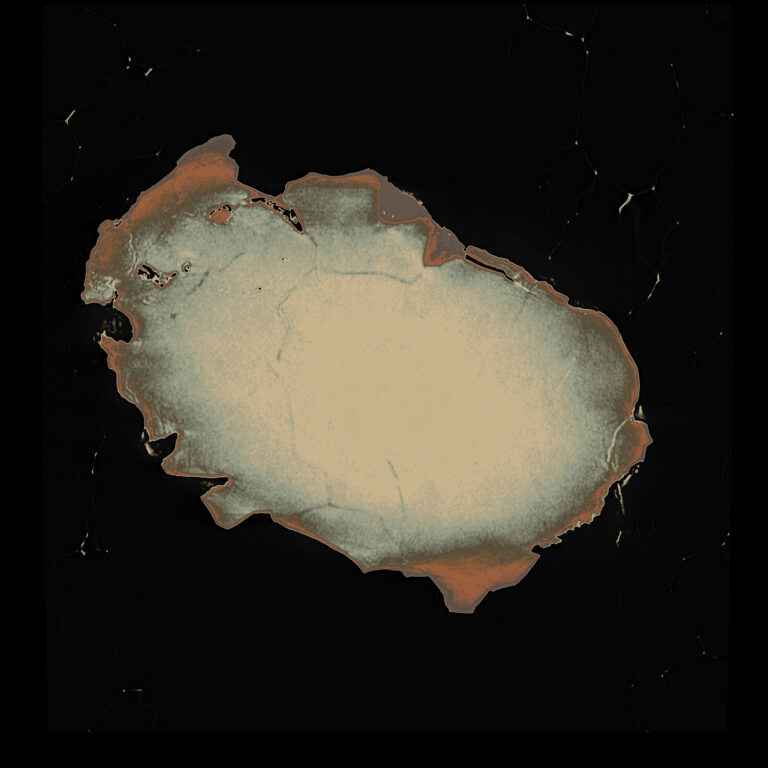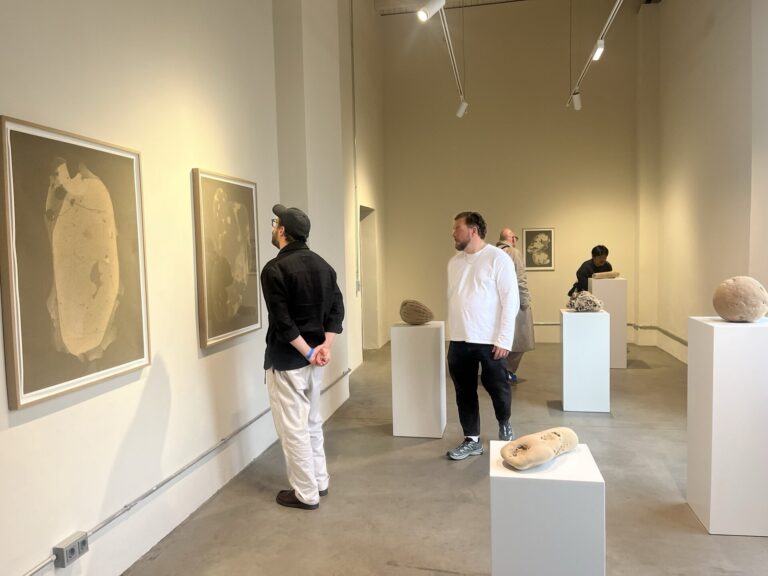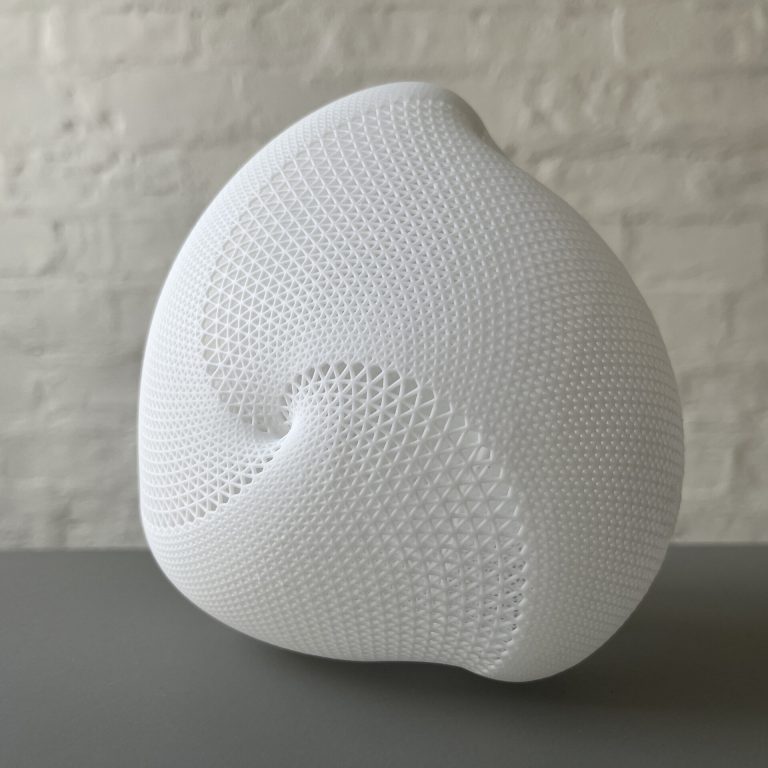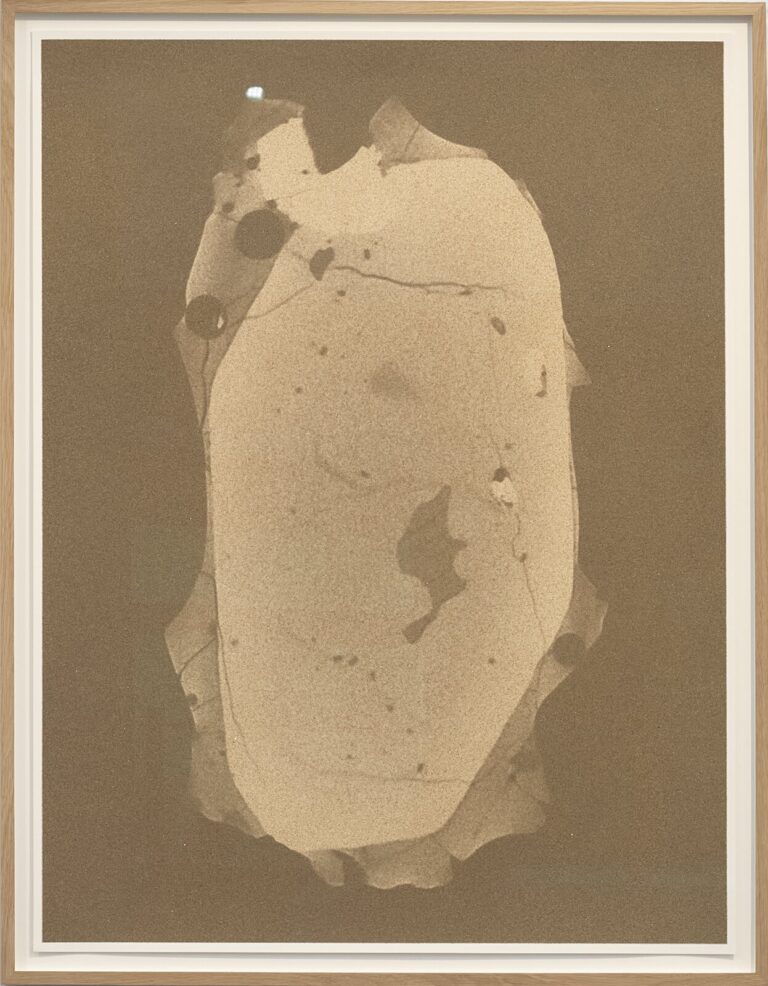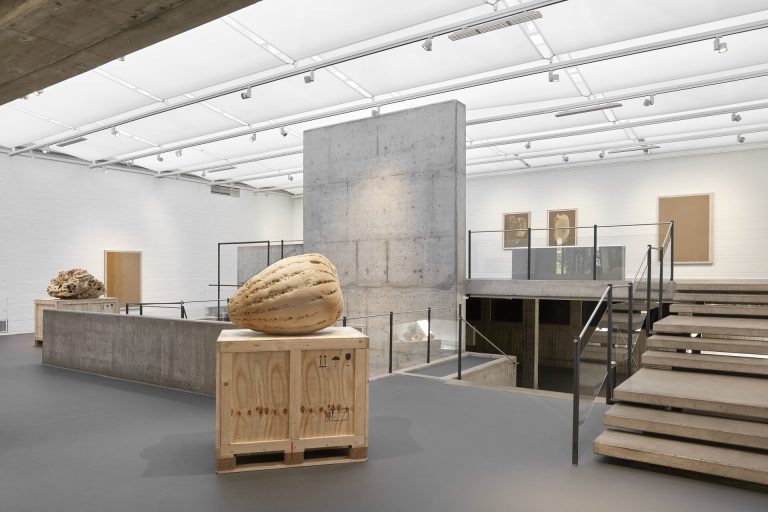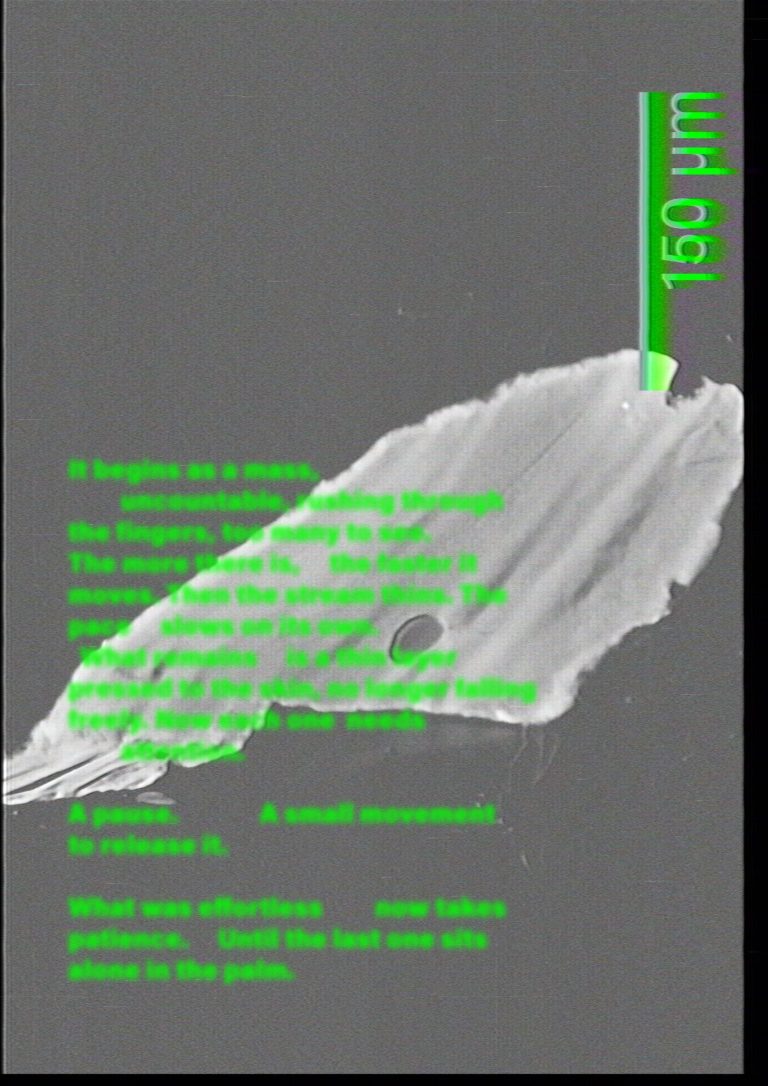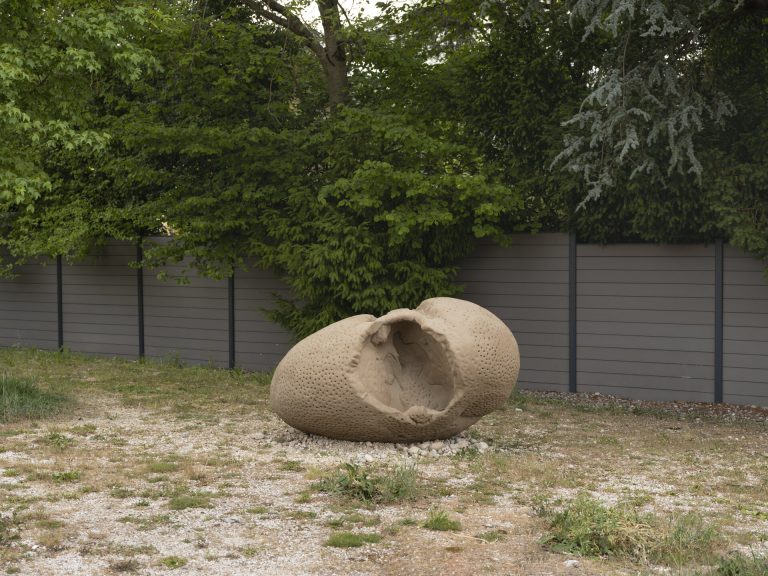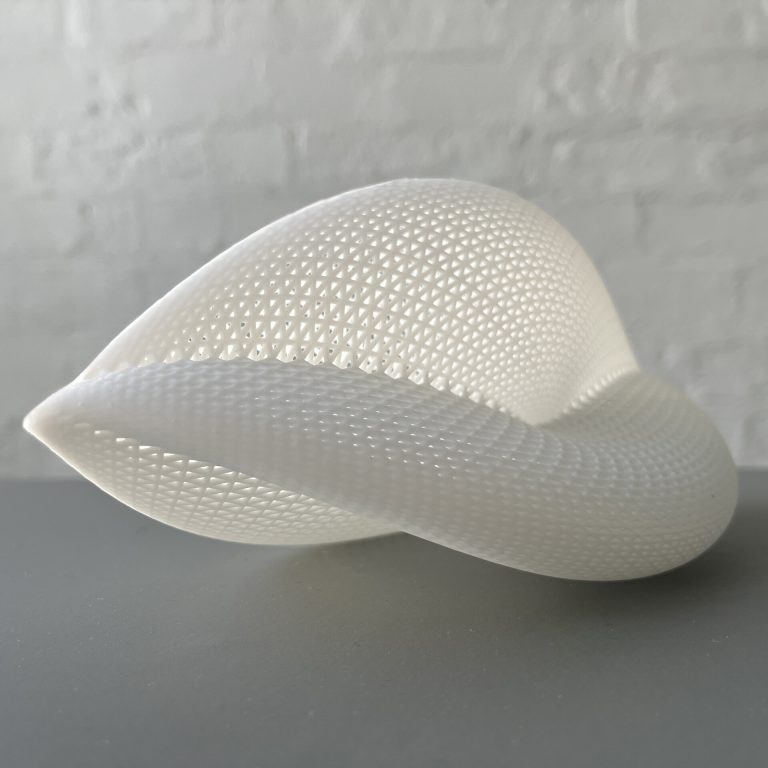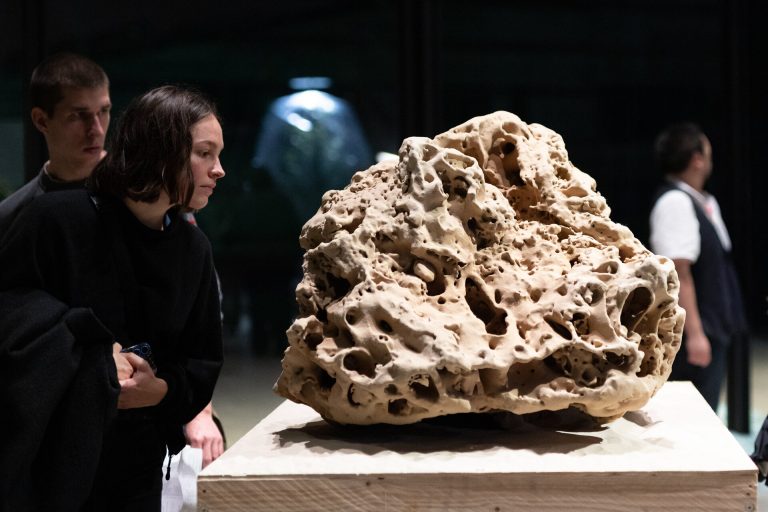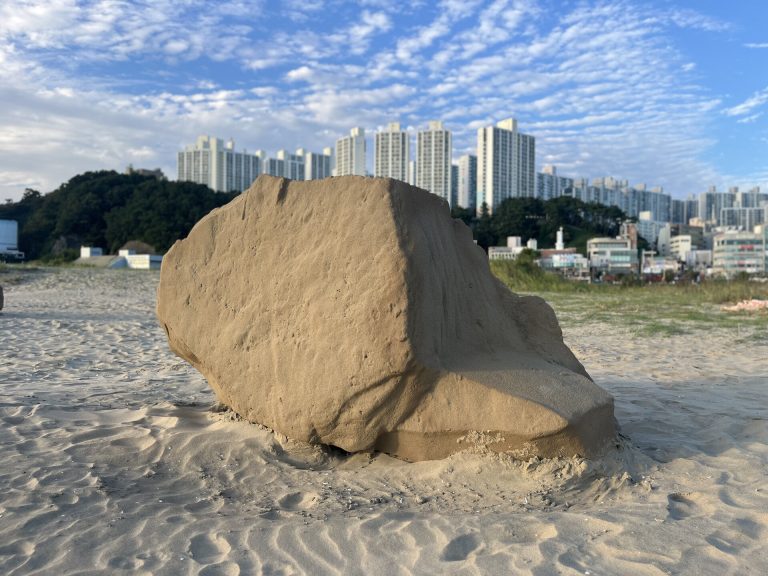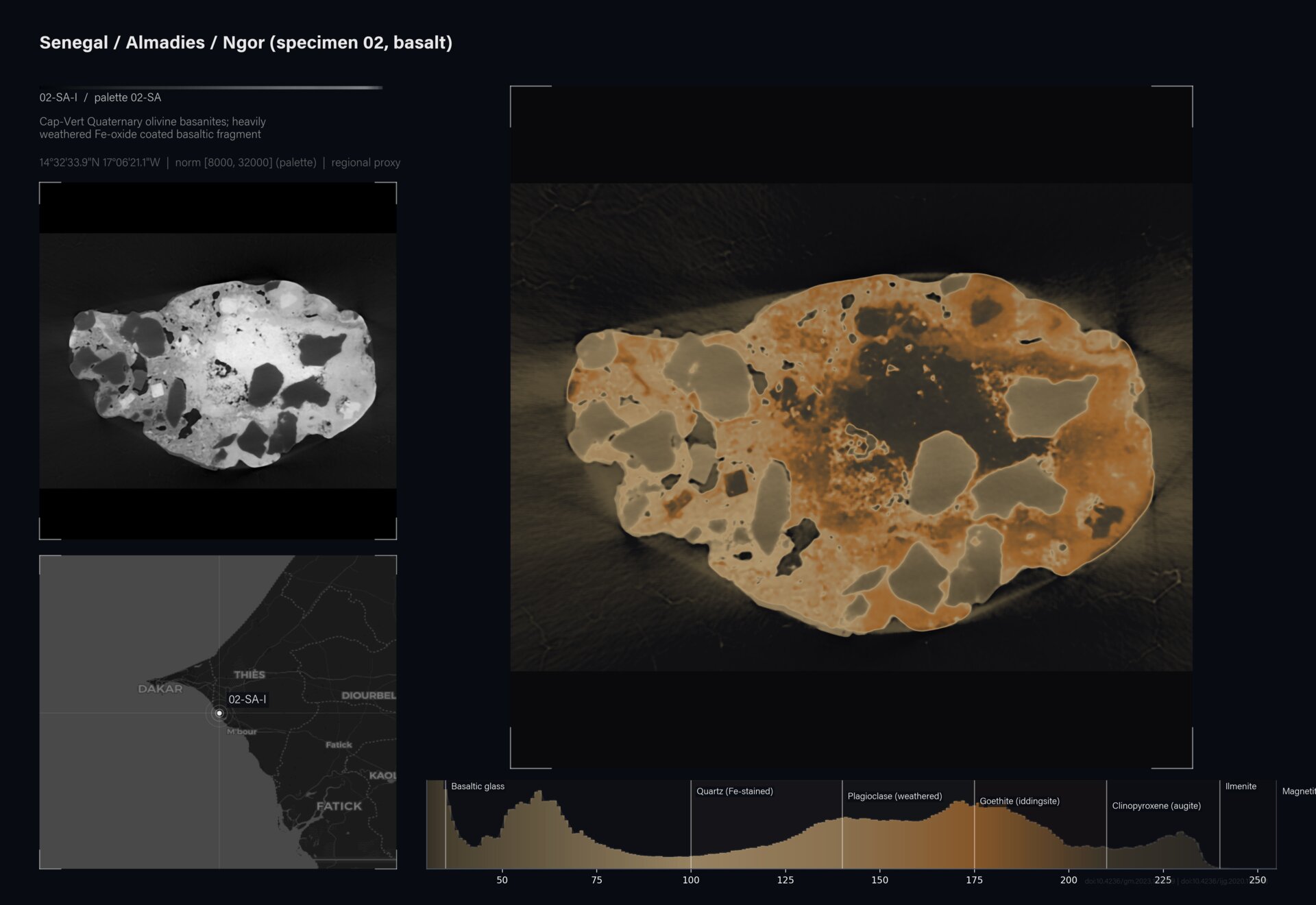
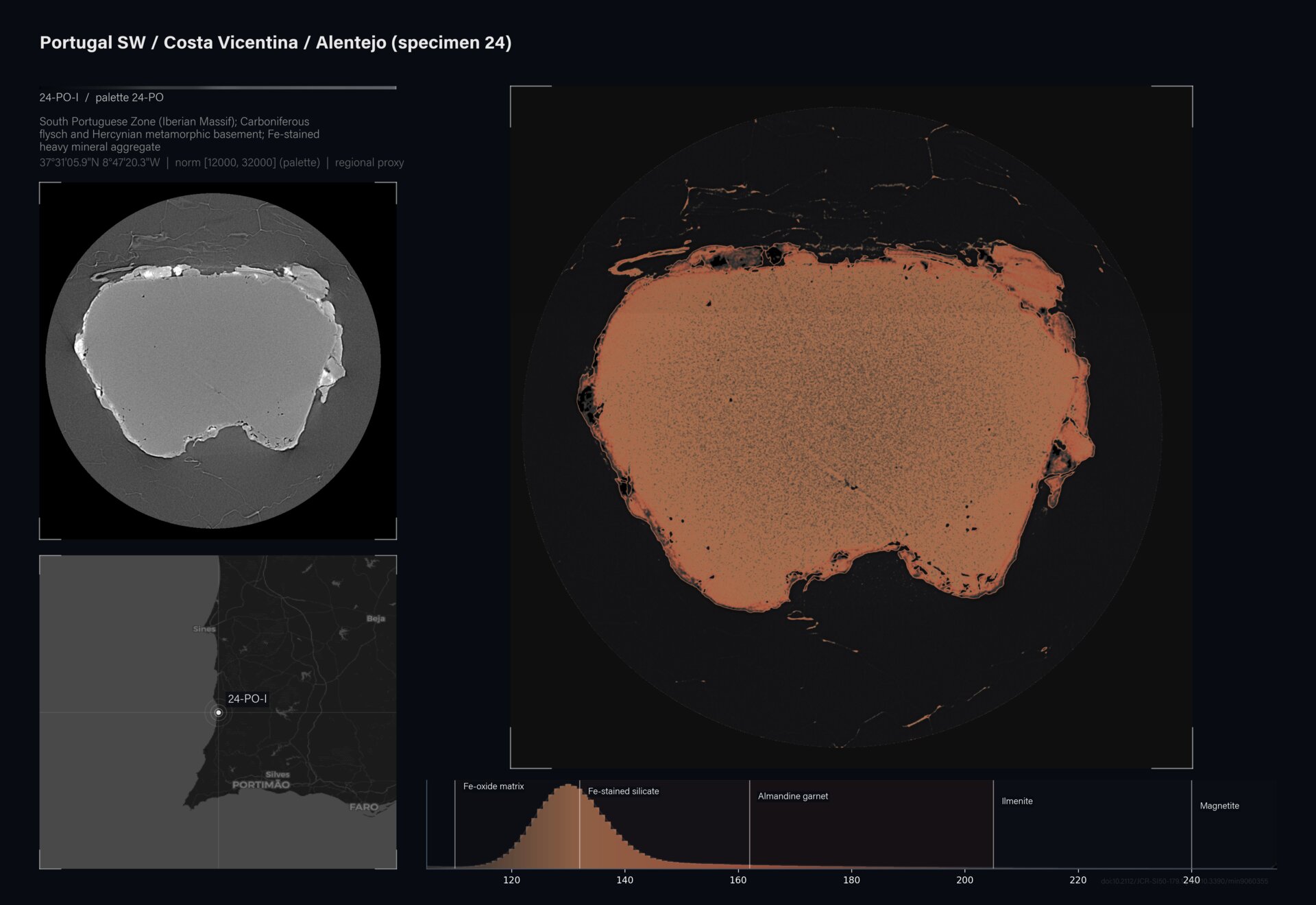
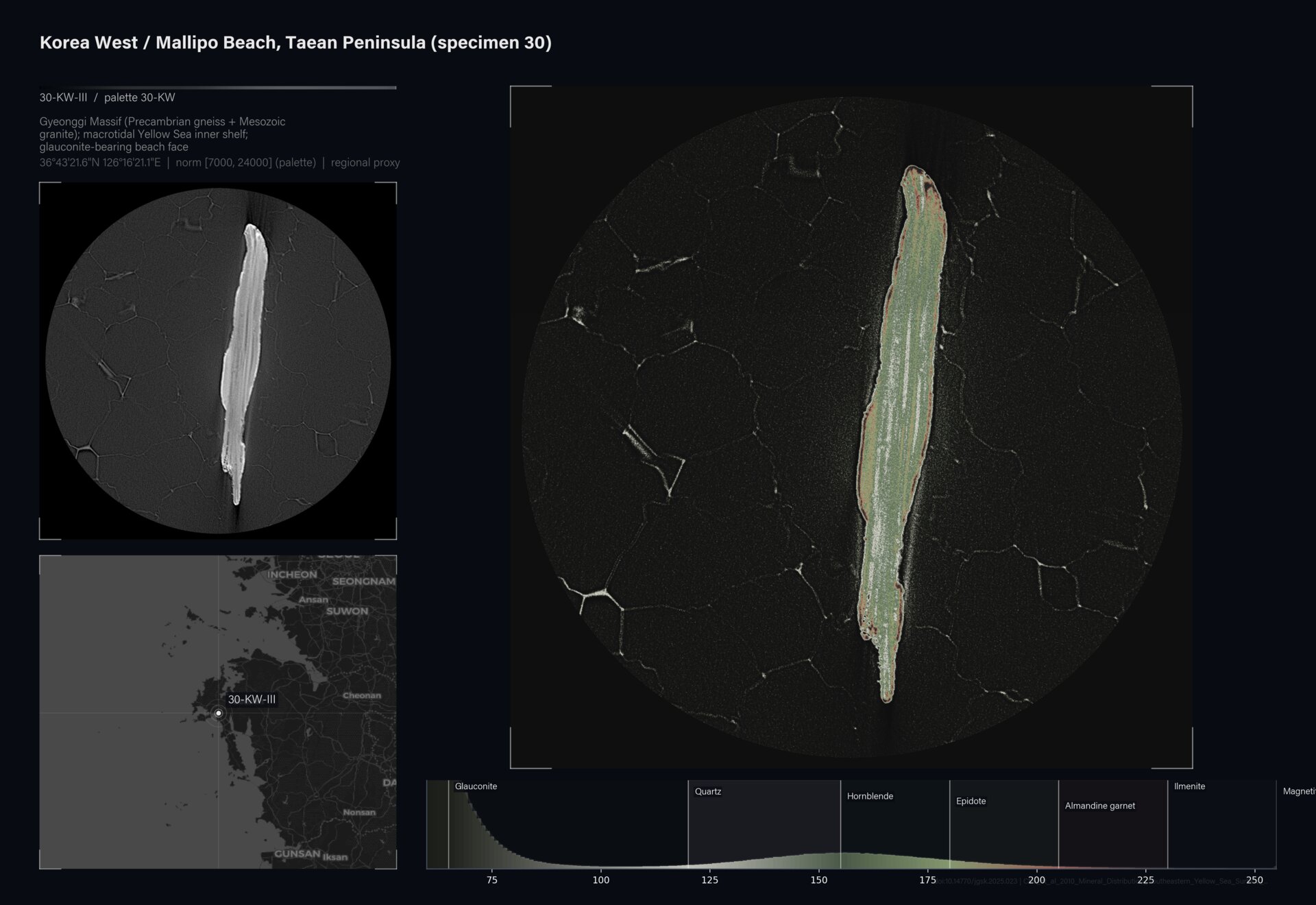
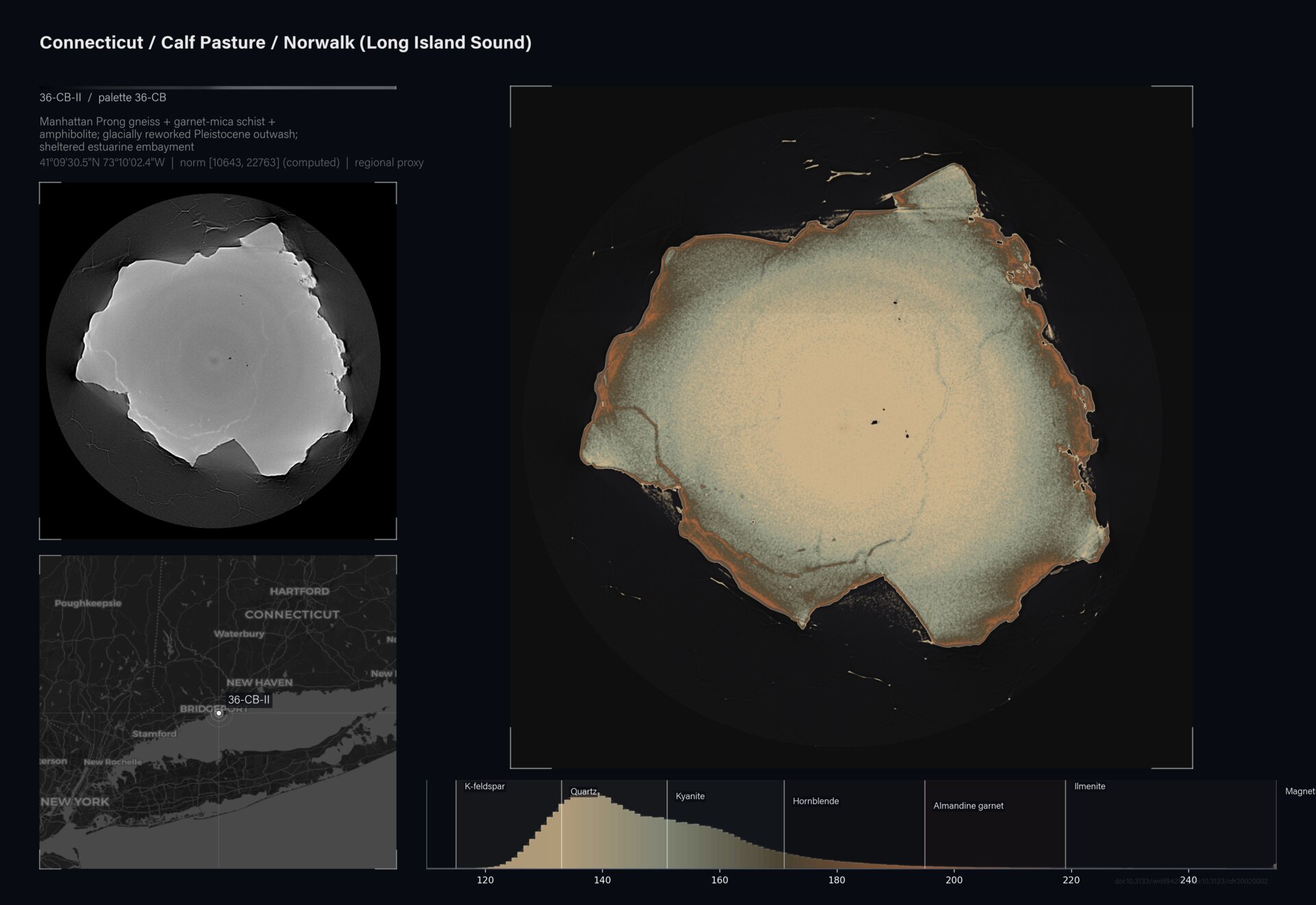
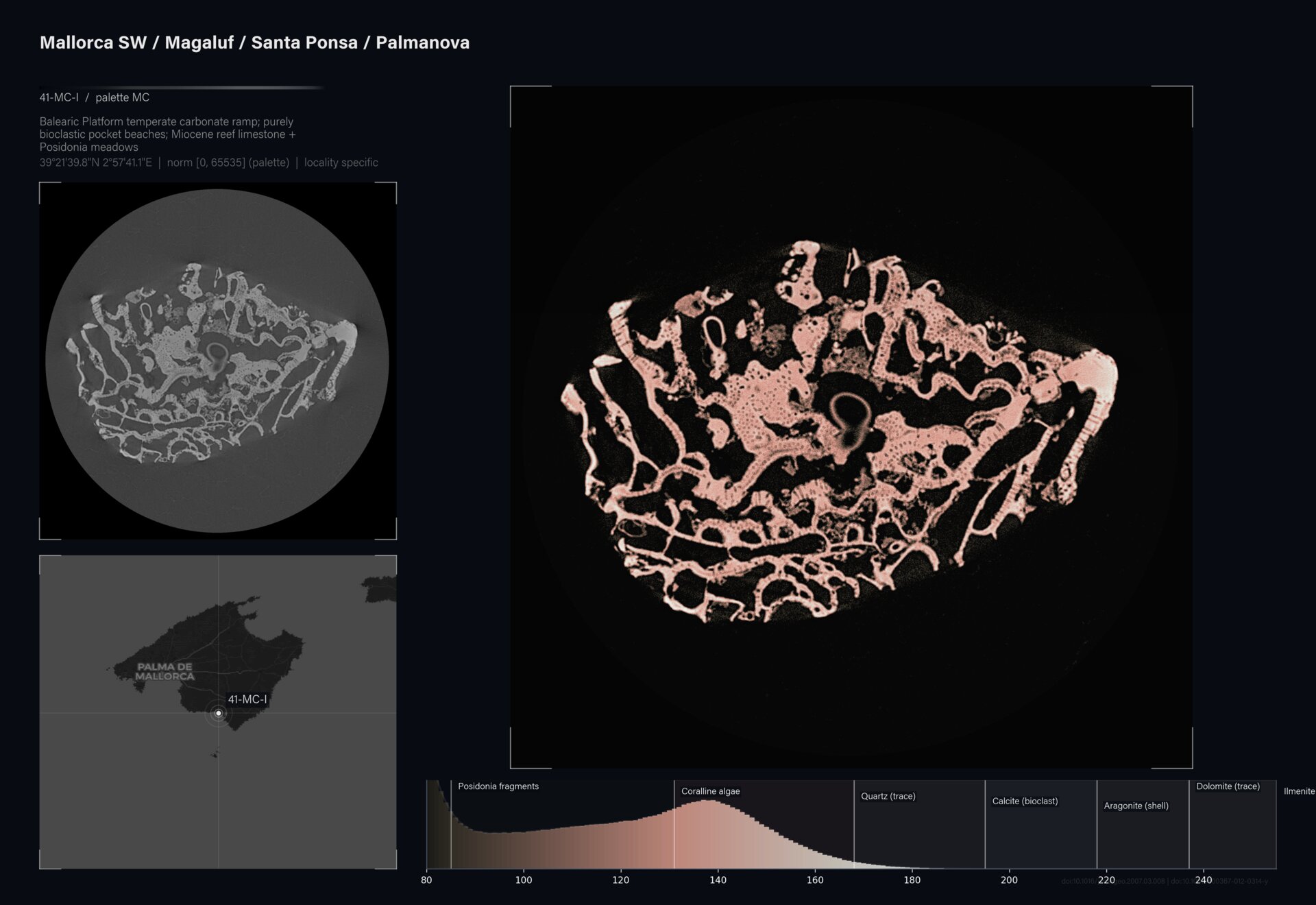
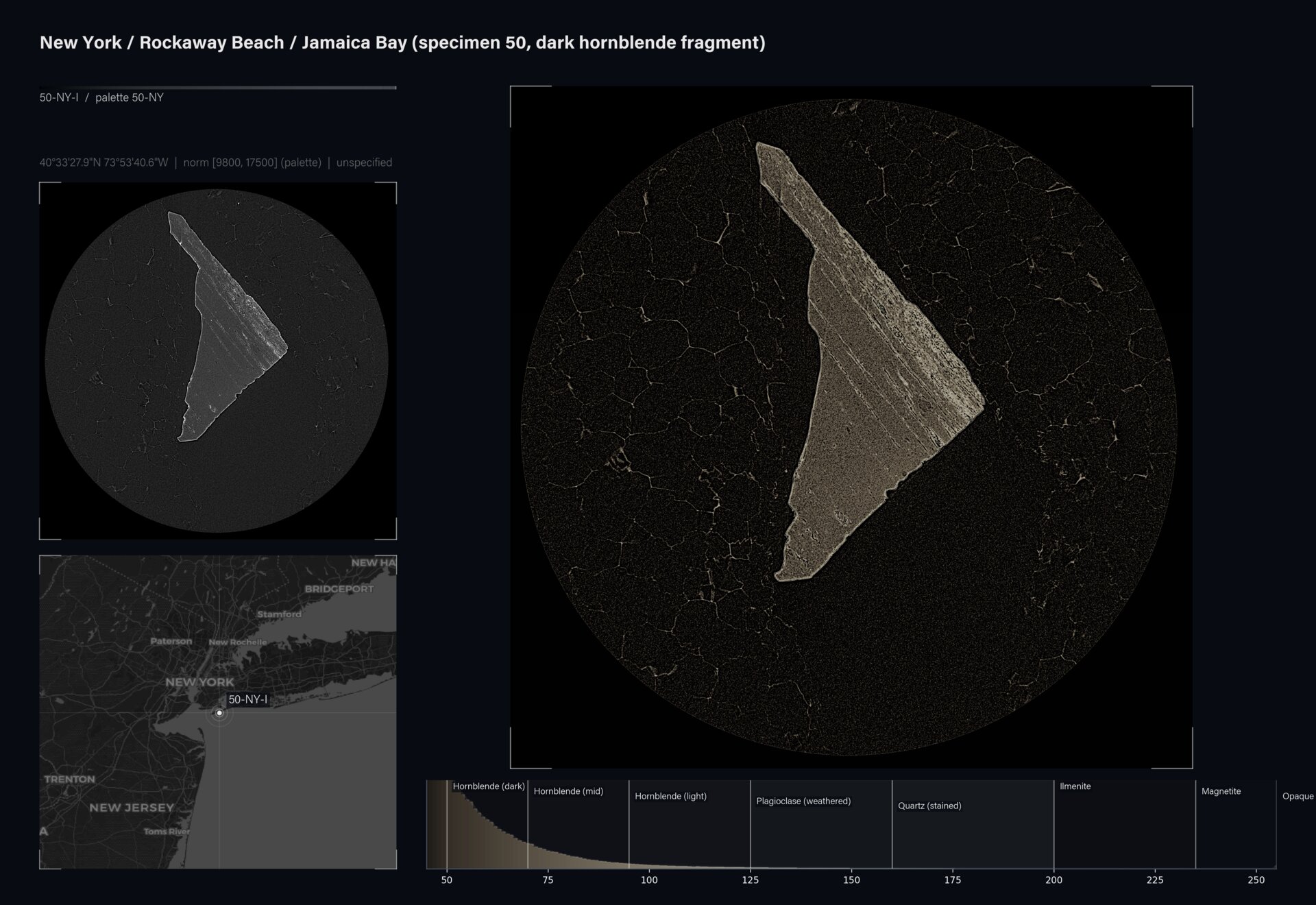
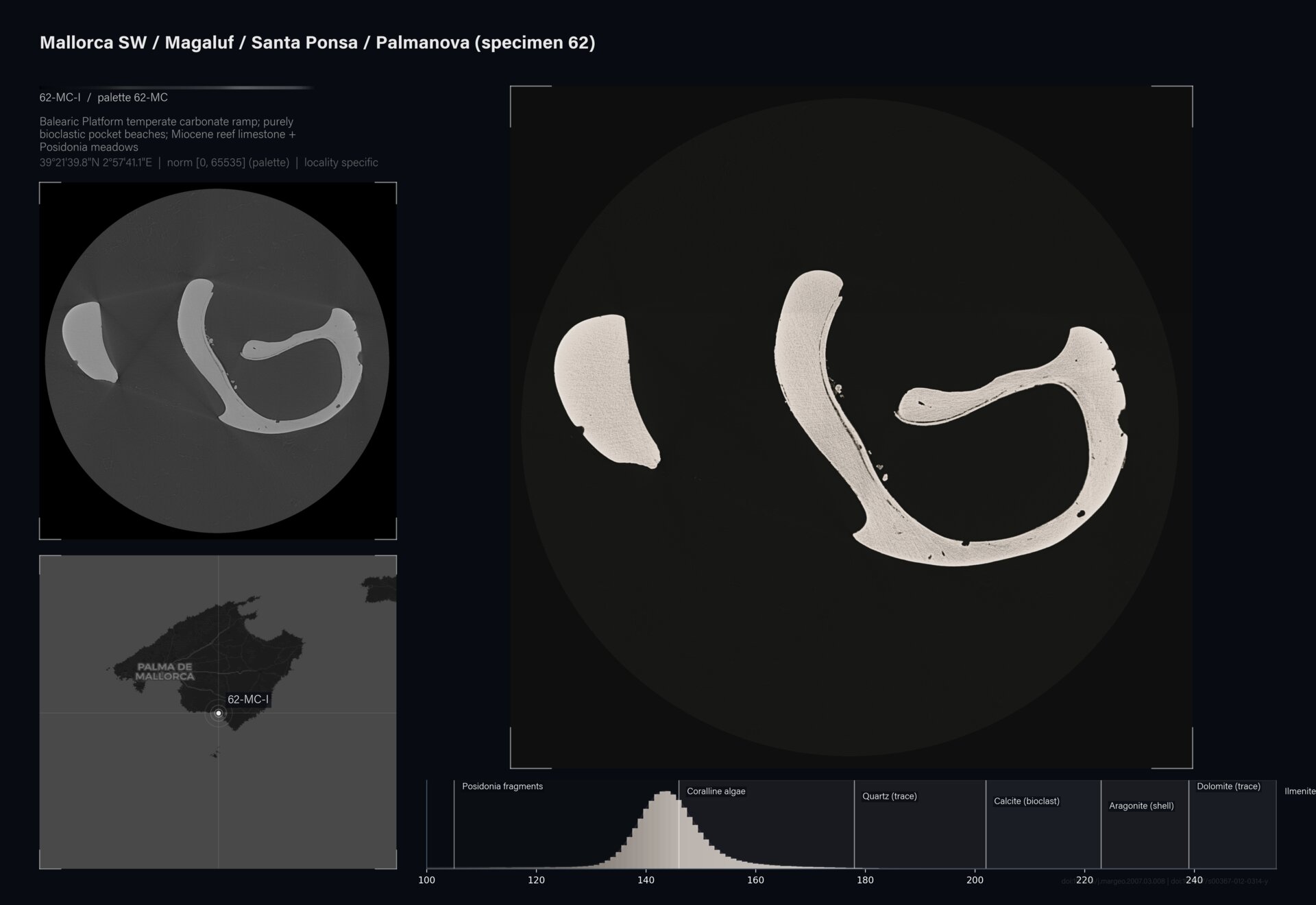
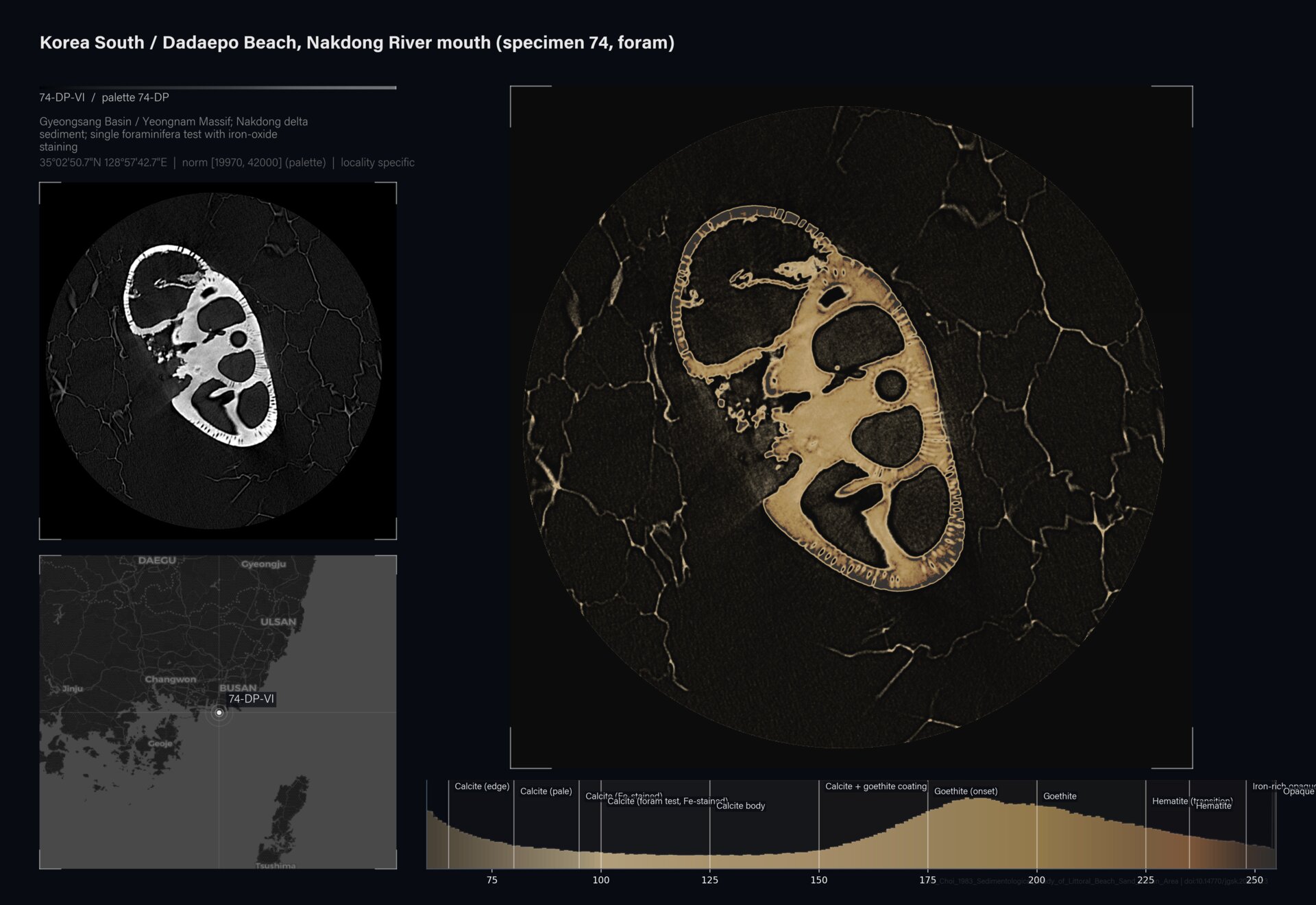
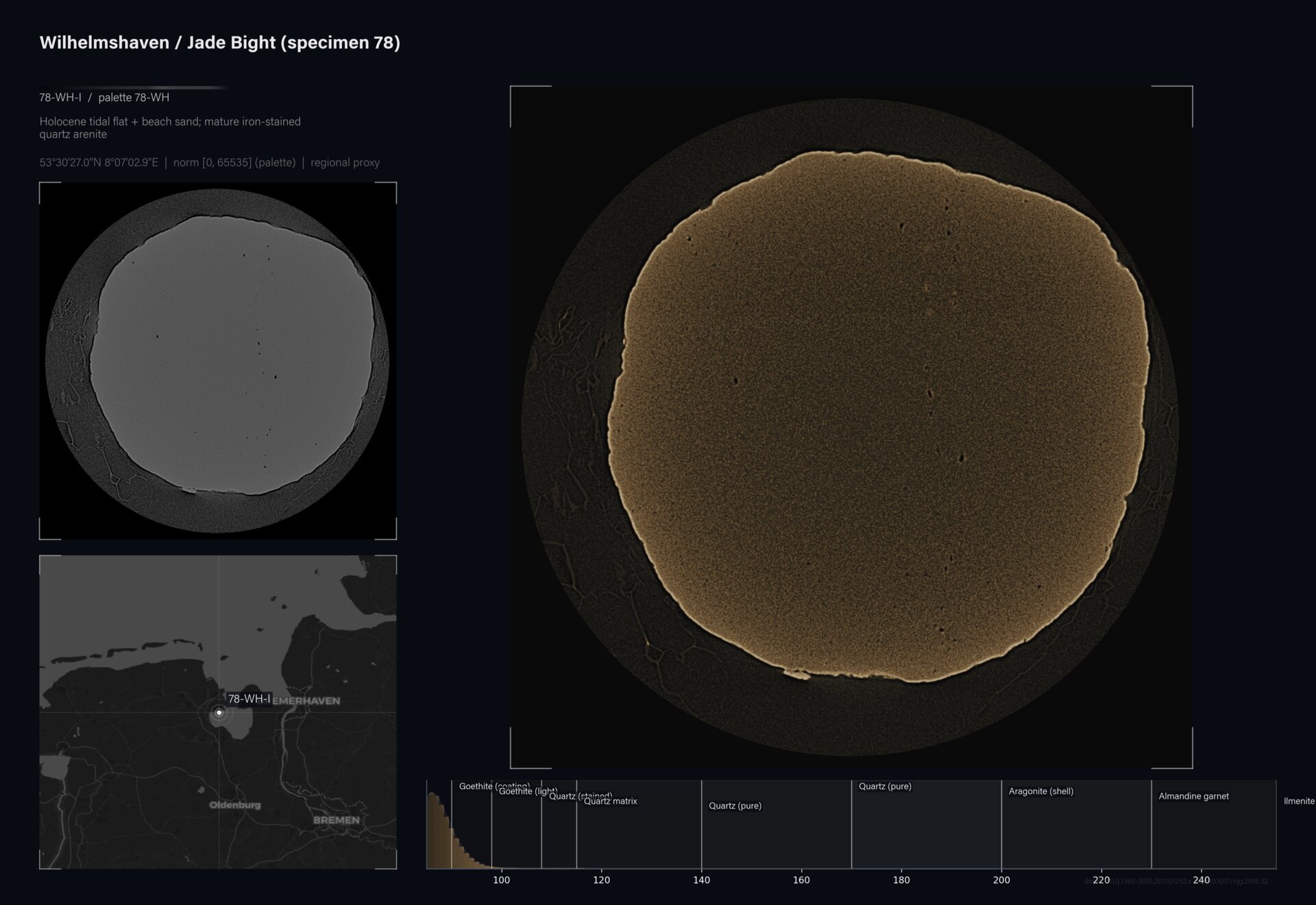
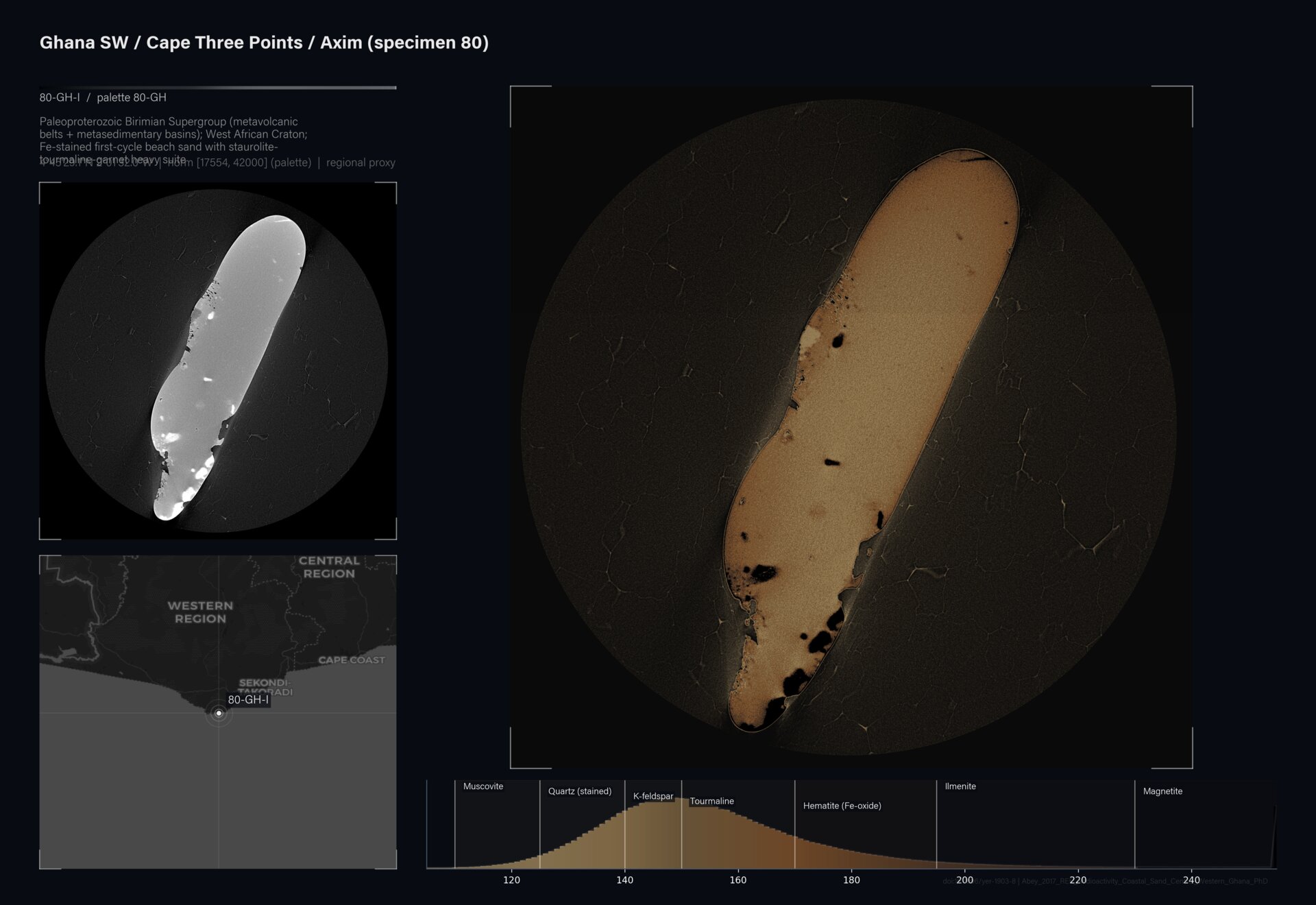
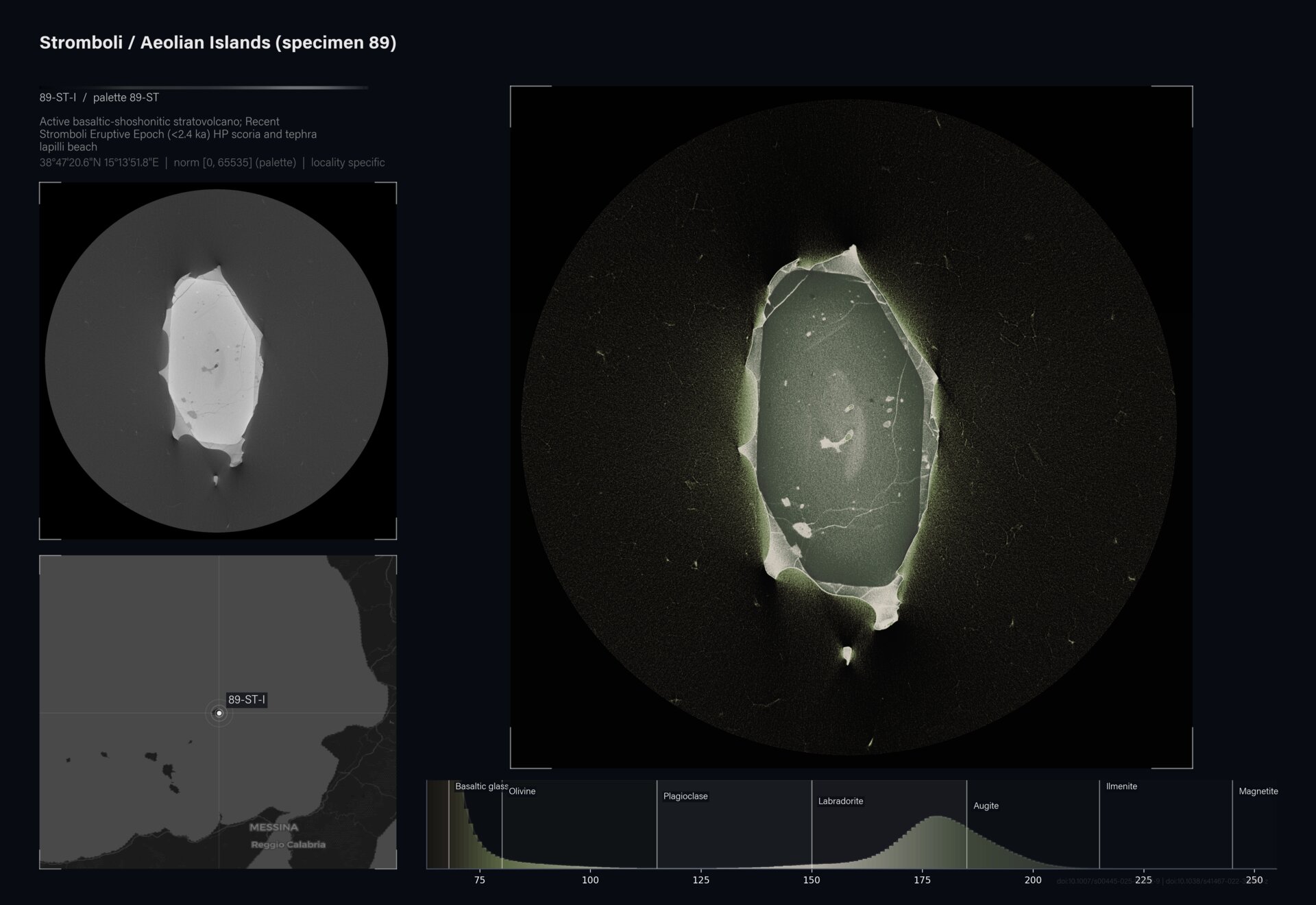
Volcanic tephra, sand from Stromboli is a most unlikely subject for color, or so it would seem. Under the nanoCT scanner, it becomes a grayscale volume of X-ray attenuation values, and nothing in that volume makes any distinction between which gray is plagioclase and which is glass, because attenuation is measured outside the visible spectrum and carries no color at all. The colors in Locality Palette are born of geology. The site at which a grain was collected fixes which minerals can be present and what range of densities they might fall within, so each locality carries its own palette, indexed to the physical sand sample and its coordinates; anchor colors derive from measured mineral reflectance spectra in the USGS Spectral Library and a lookup table interpolates between them. Three localities made the first round of tests. The Stromboli grain shows up as a light gray plagioclase body with dark blue-gray vesicles, green and brown pyroxene and glass. A Wilhelmshaven grain from the North Sea is nearly pure quartz and settles into warm sandy ochre. Birimian sand from southern Ghana runs busier, with iron-oxide inclusions red-brown against a cream and tan quartz matrix. No SEM-EDS element maps or thin sections have checked the assignments yet. Plausible is all they can claim.
Photography: Phillip C. Reiner
Artwork year: | Last updated: