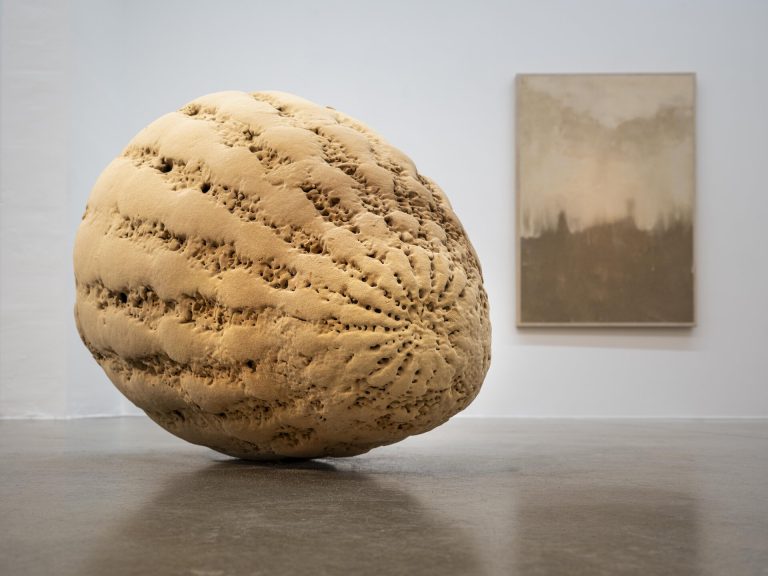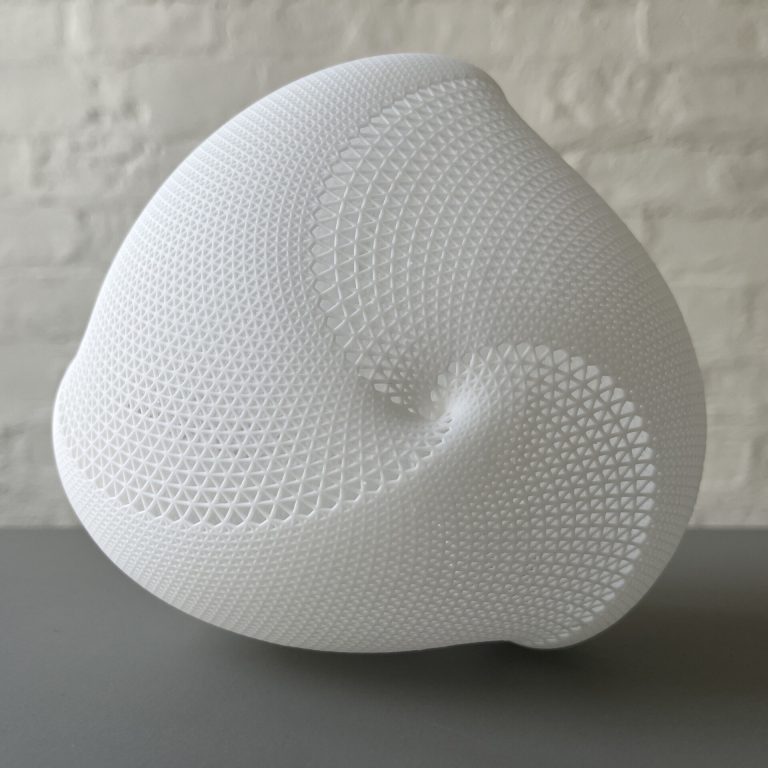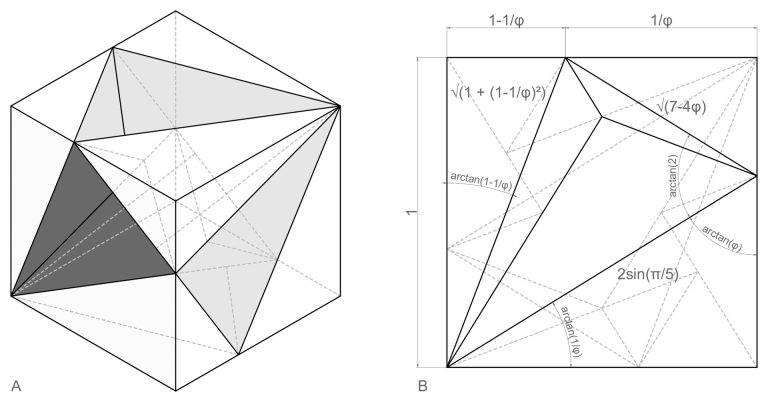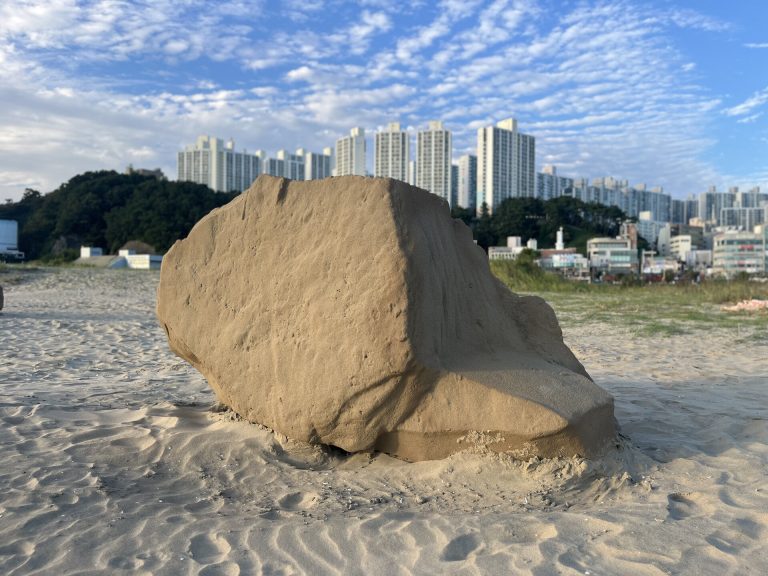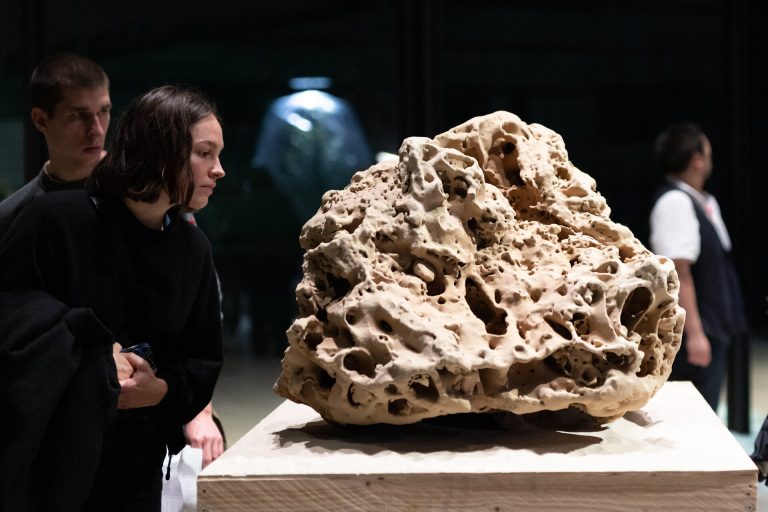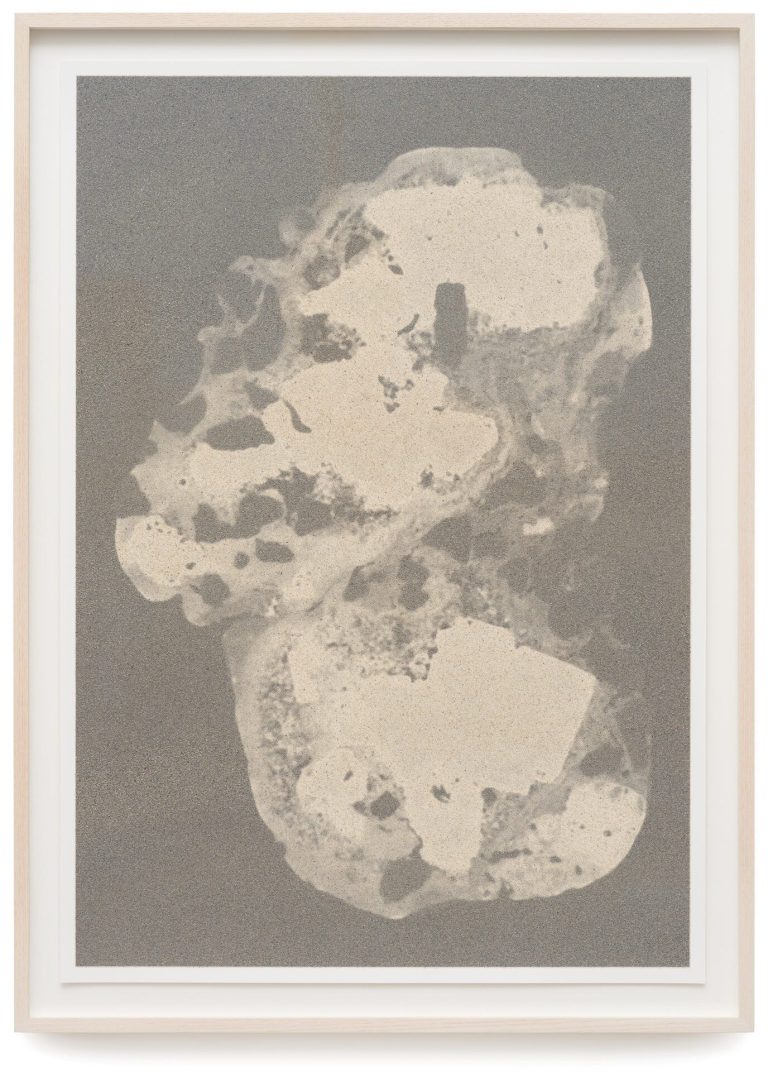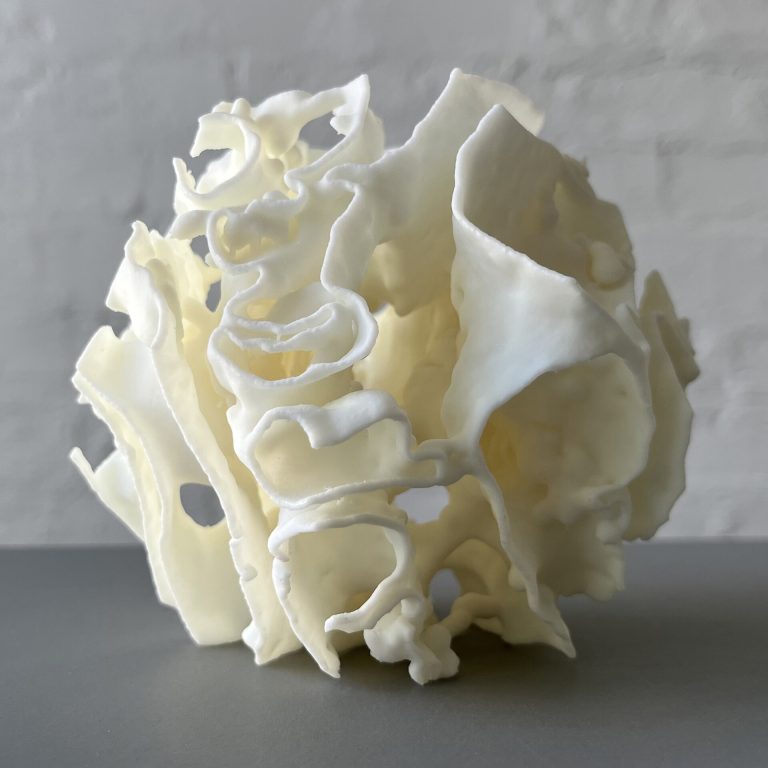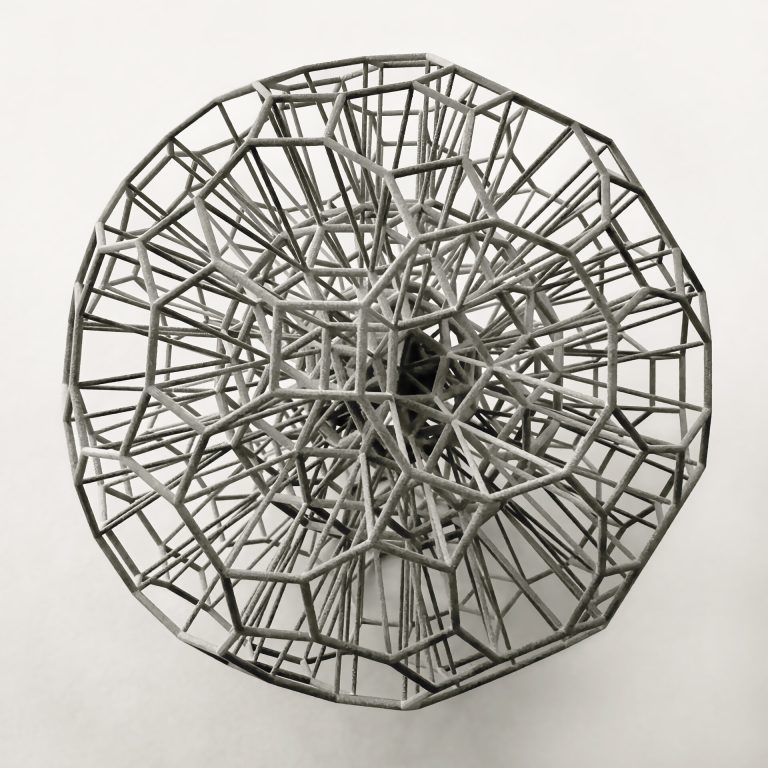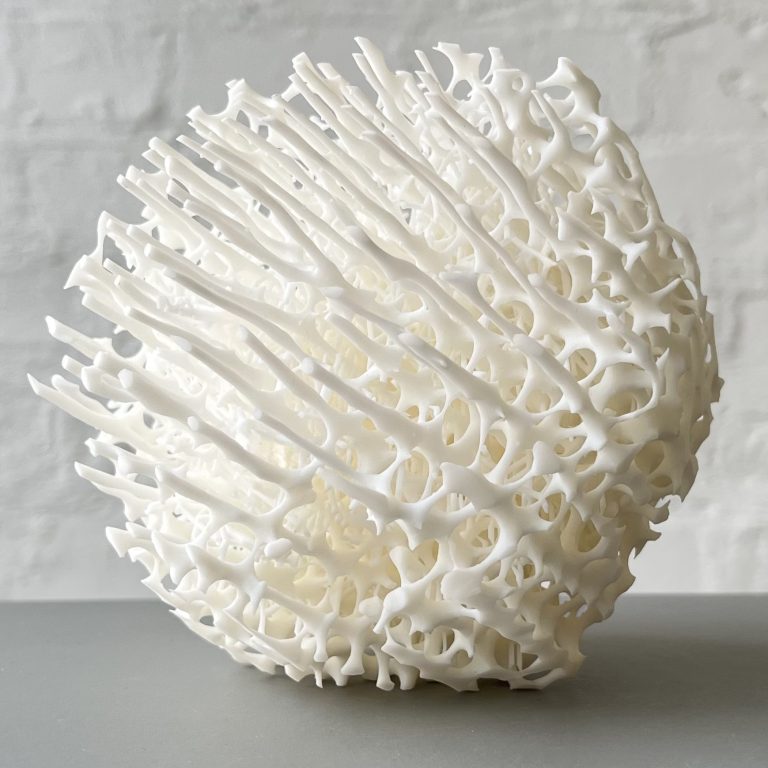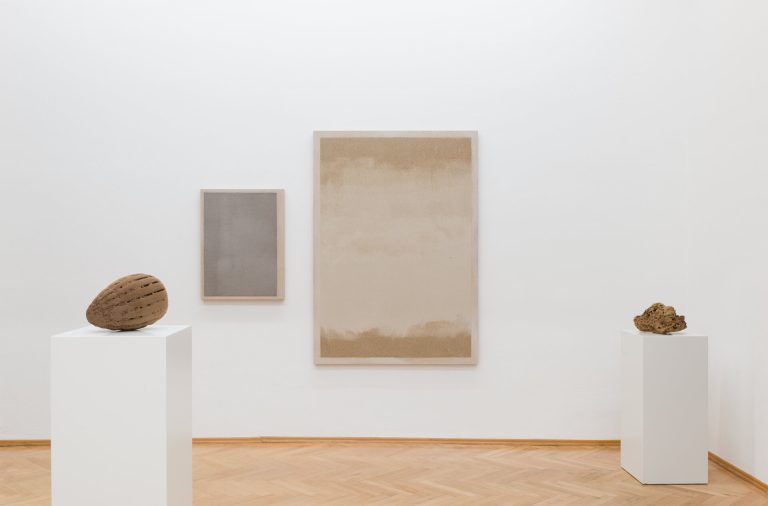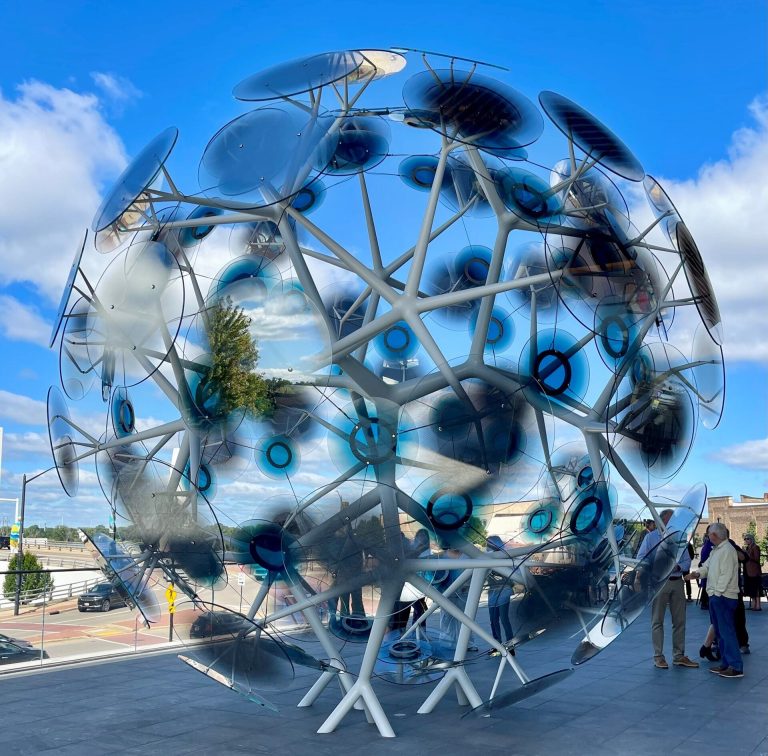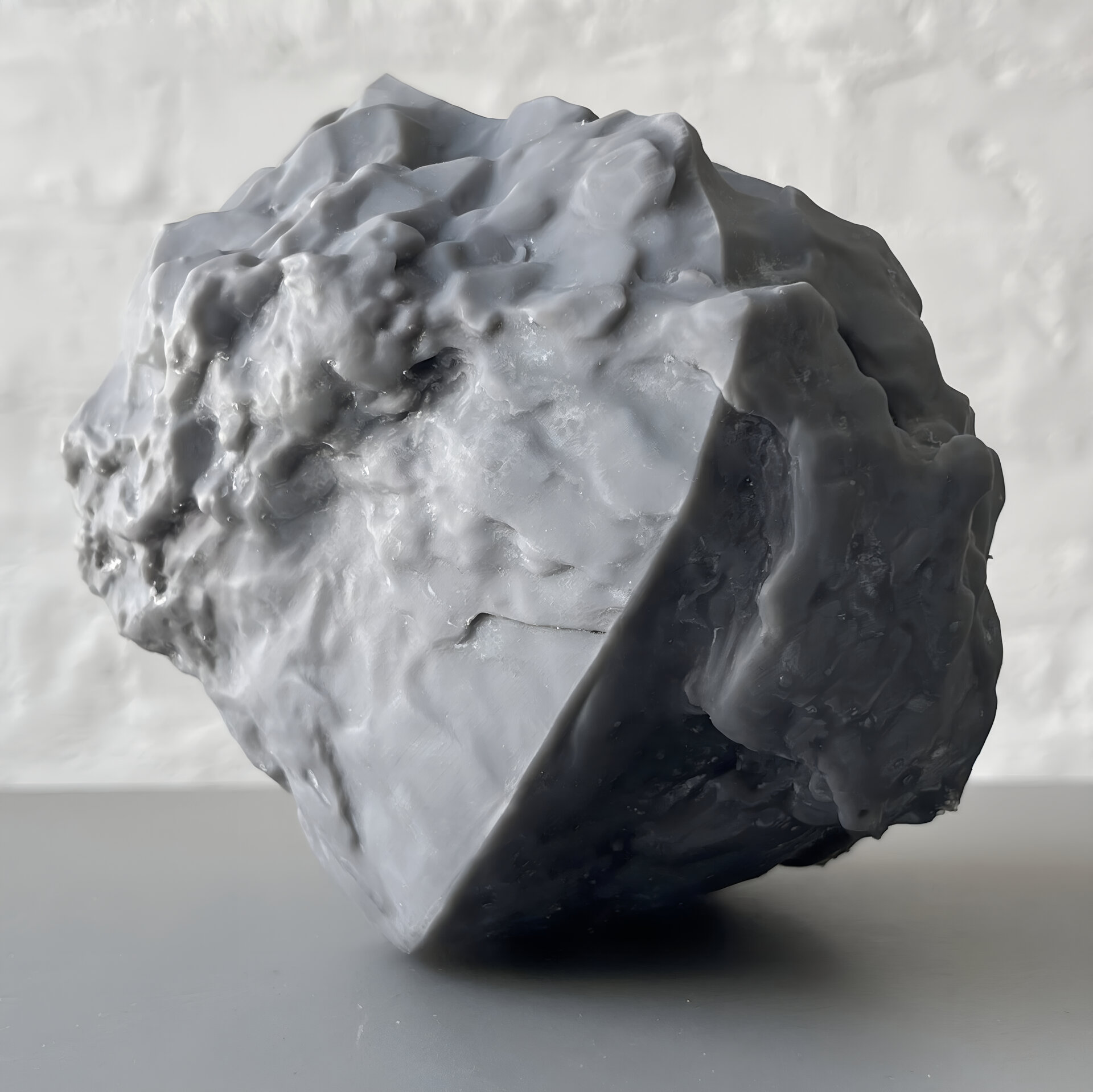
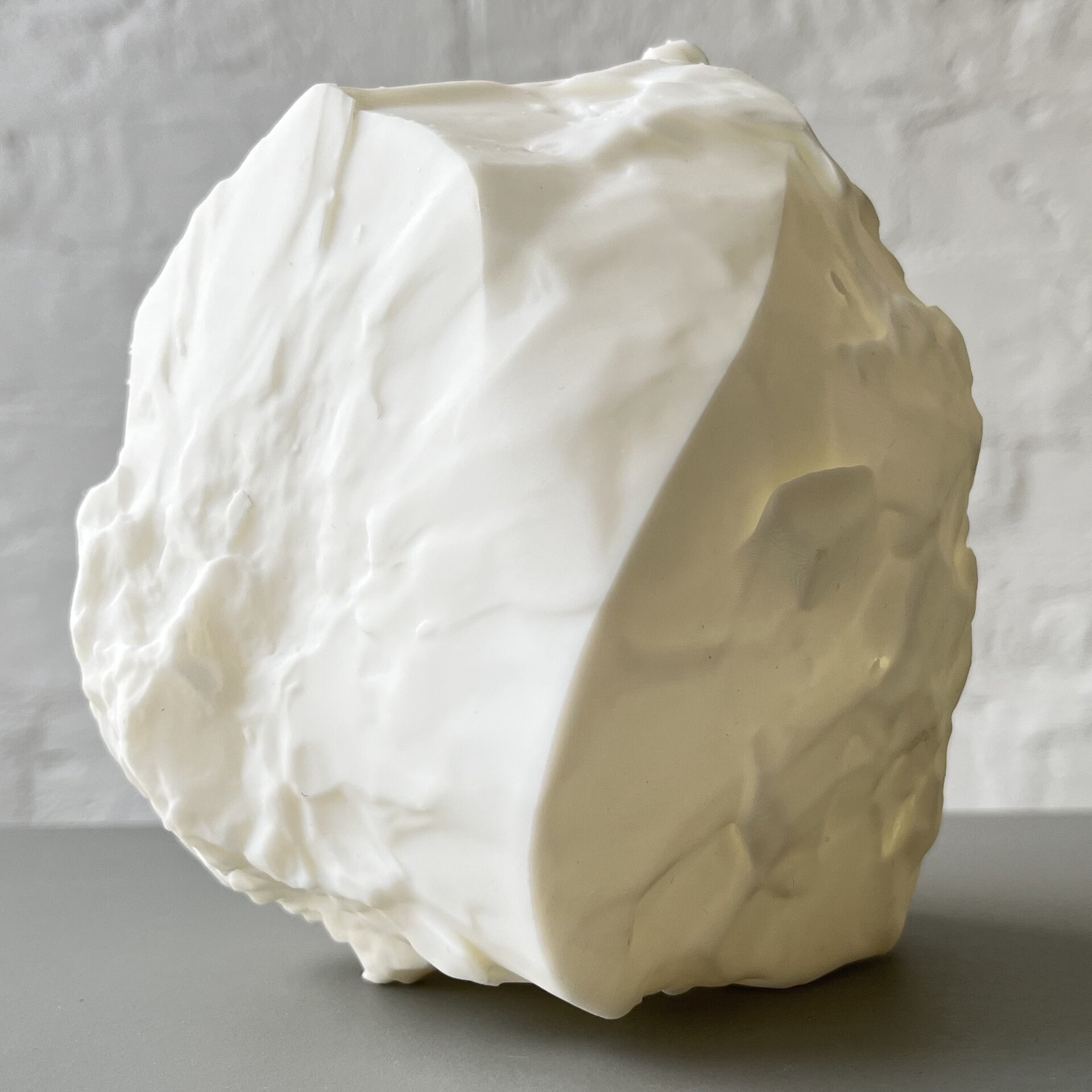
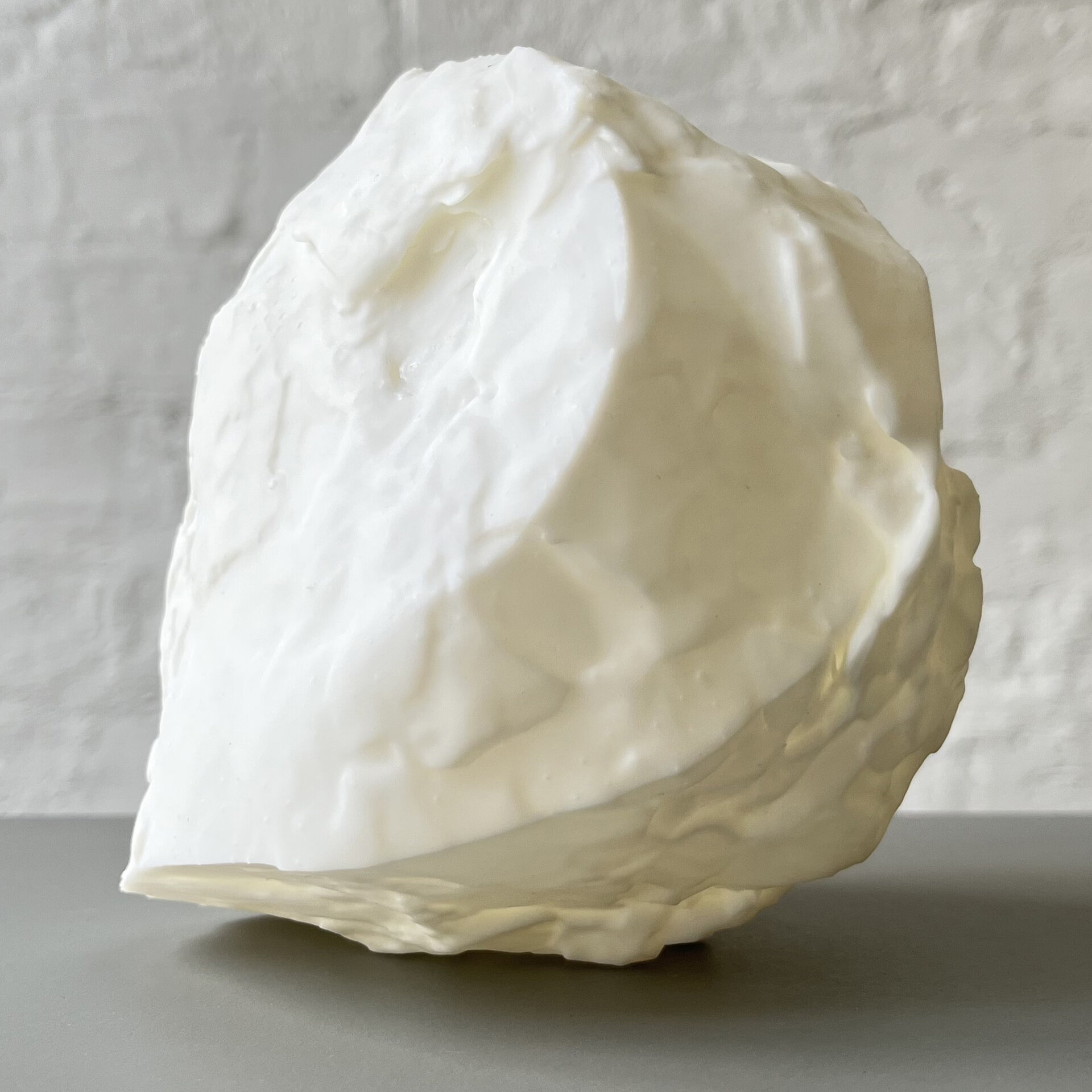
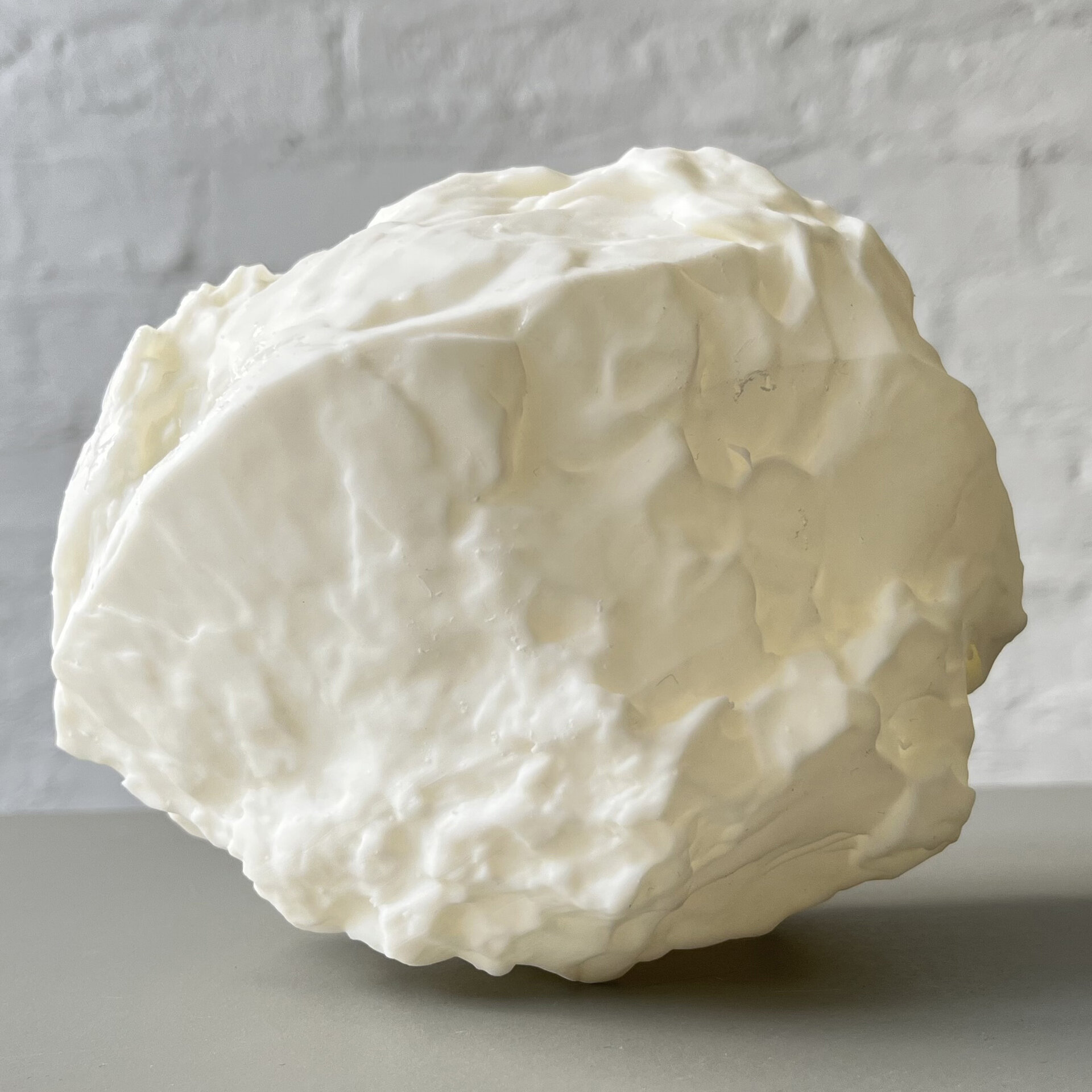
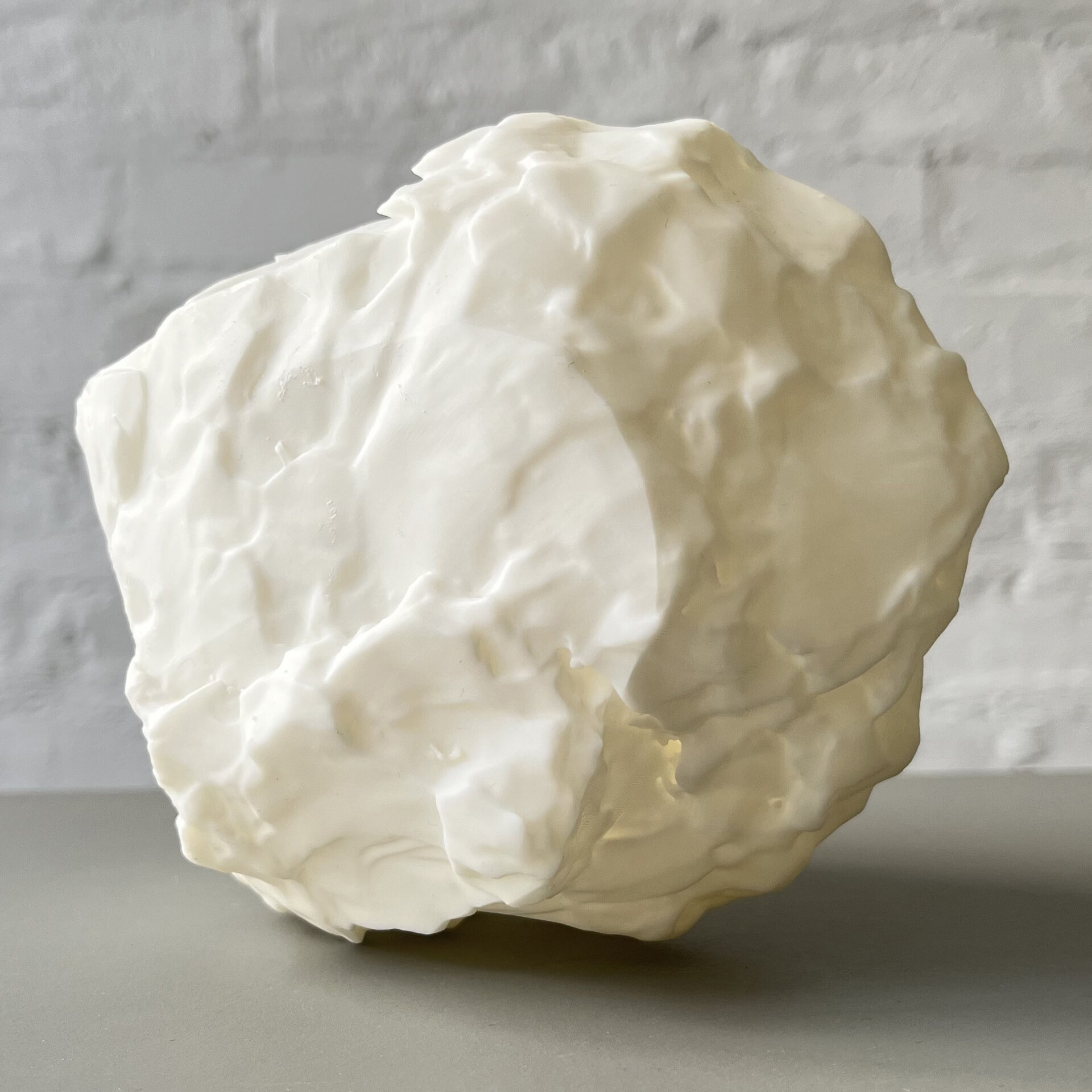
Kaleidograins investigates the mapping of sand grain surface structures onto kaleidocycloid geometries, combining microscopic natural forms captured through nano-CT scanning with kinetic kaleidocycle frameworks. Irregular grain surfaces — pitting, fractures, erosion patterns — project onto transformable geometric systems. Kaleidocycles are rings of tetrahedra linked along shared edges, forming dynamic substrates that maintain kinematic properties while carrying textural information from geological fragments. As the kaleidocycle rotates through its cycle, mapped grain topologies deform continuously, and the mapping must account for this geometric transformation at every stage of the rotation. Microscopic topologies translate to larger geometric forms, retaining surface complexity through the projection process. The central problem is preserving grain detail while adapting to kaleidocycloid geometry: the study develops methods for projecting natural complexity onto kinetic geometric frameworks whose surfaces are themselves in motion. The investigation remains ongoing.
Photography: Phillip C. Reiner
Artwork year: | Last updated: