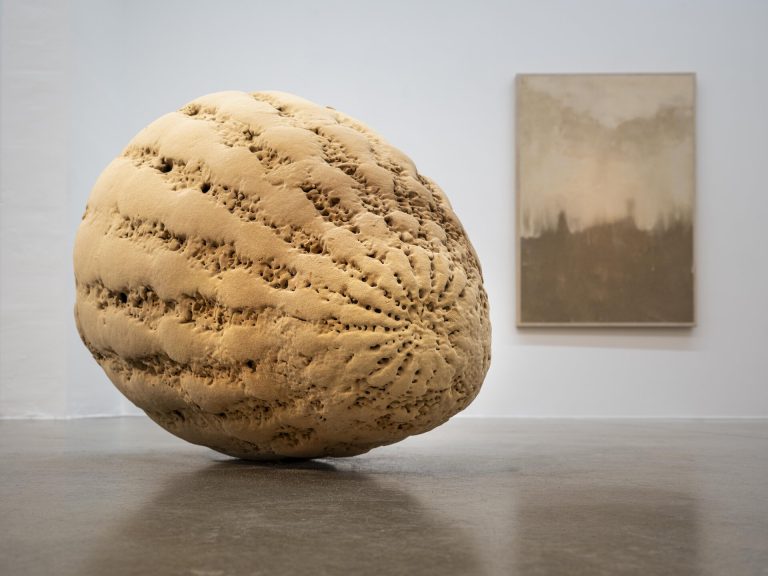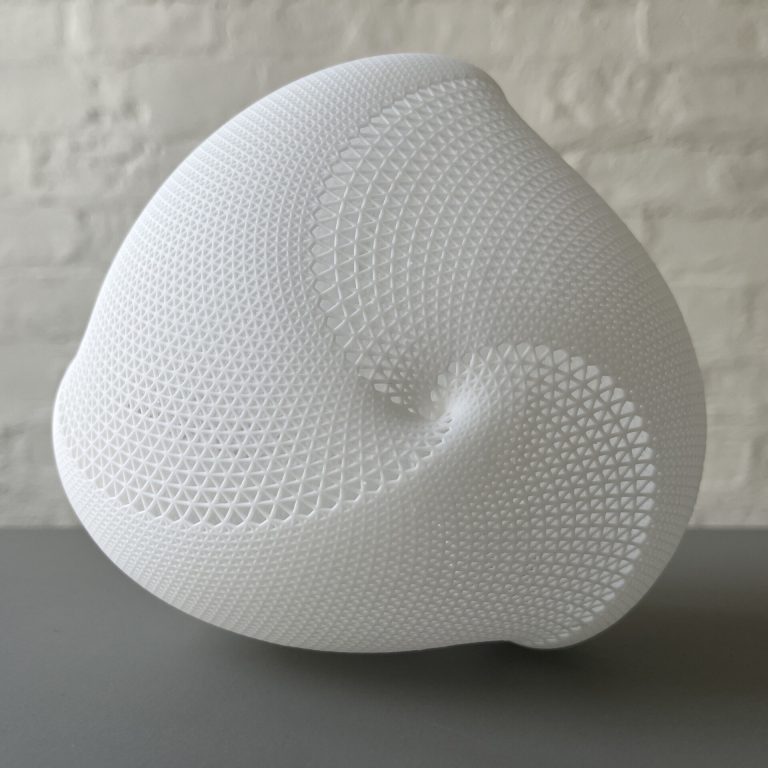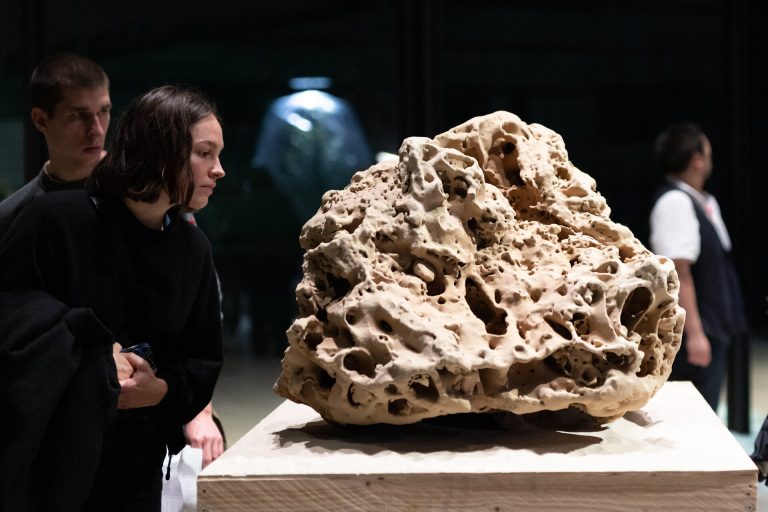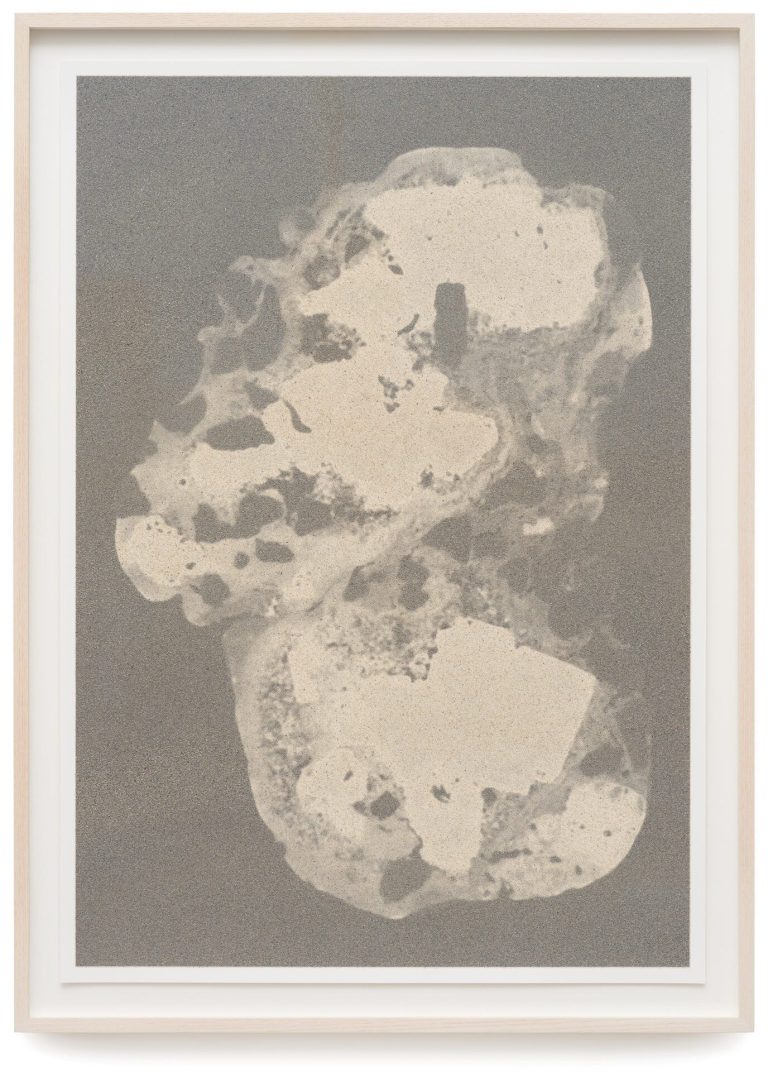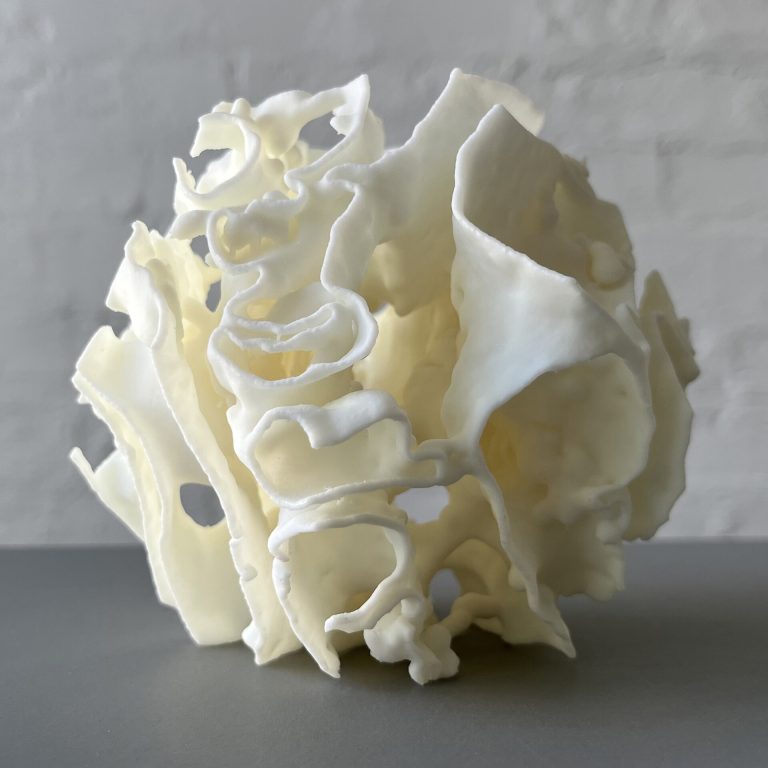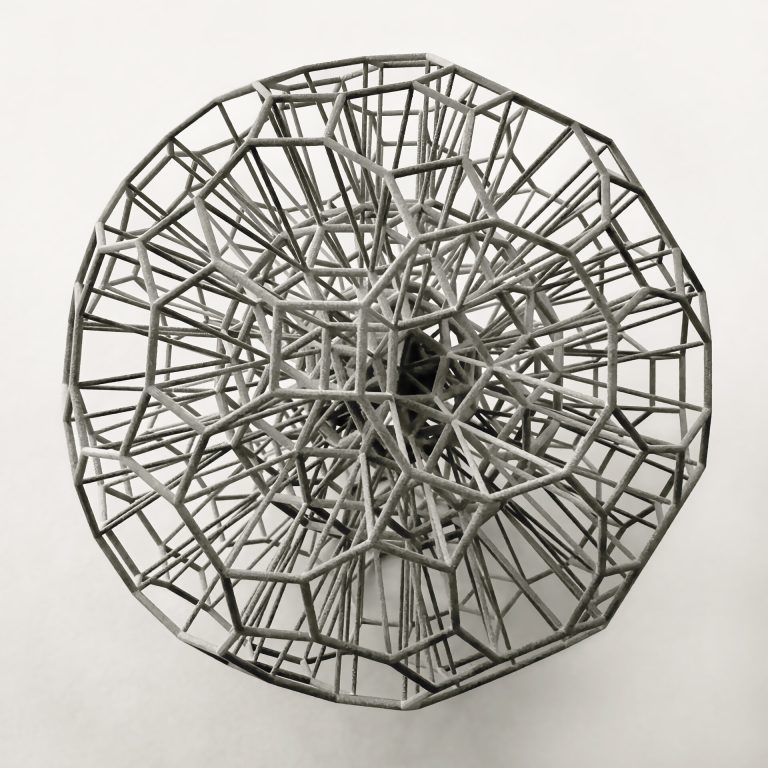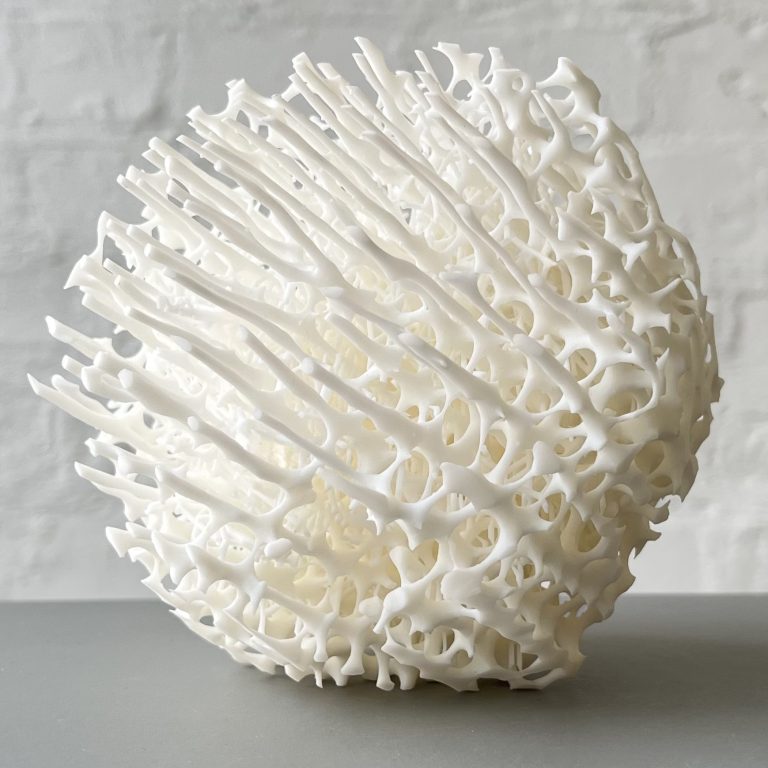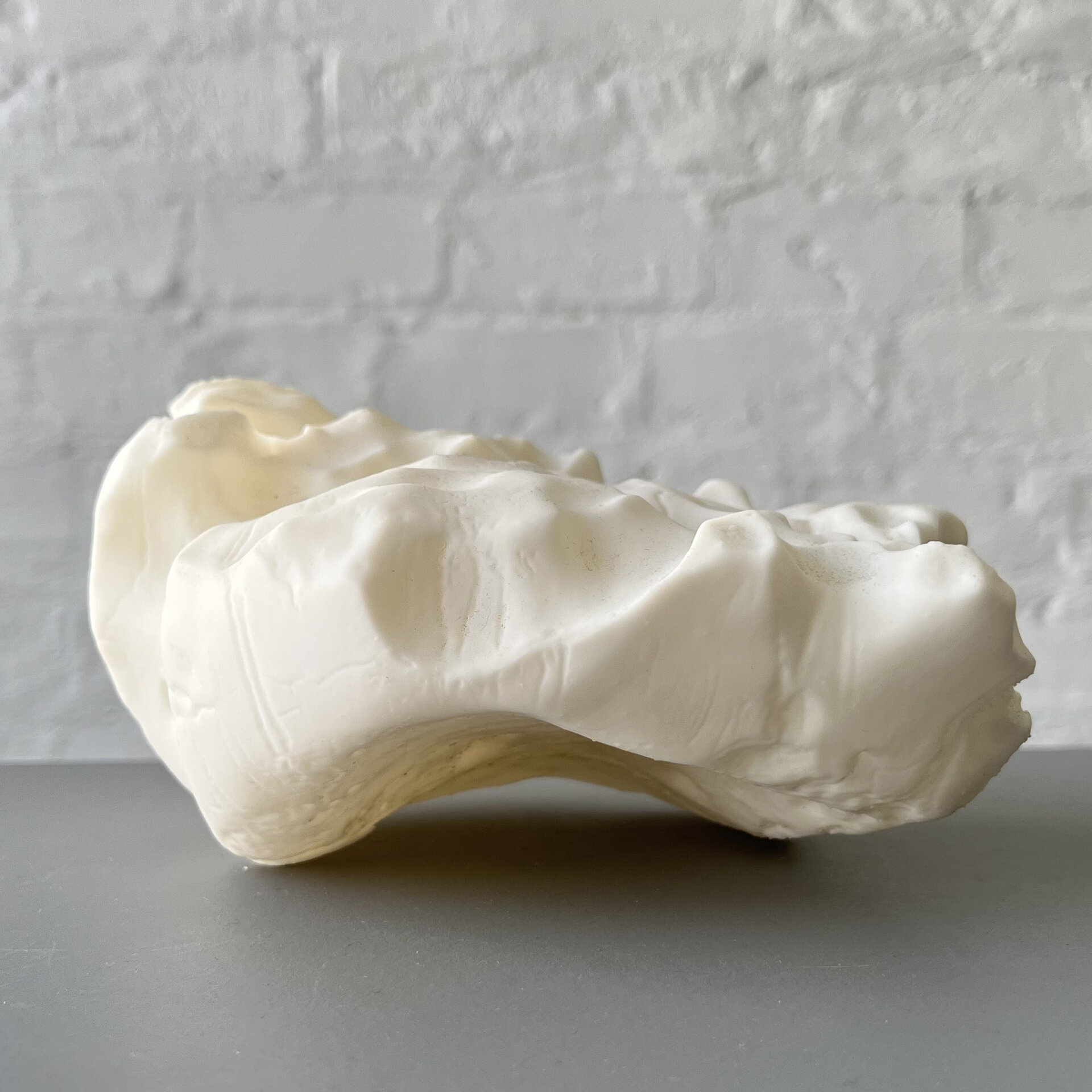
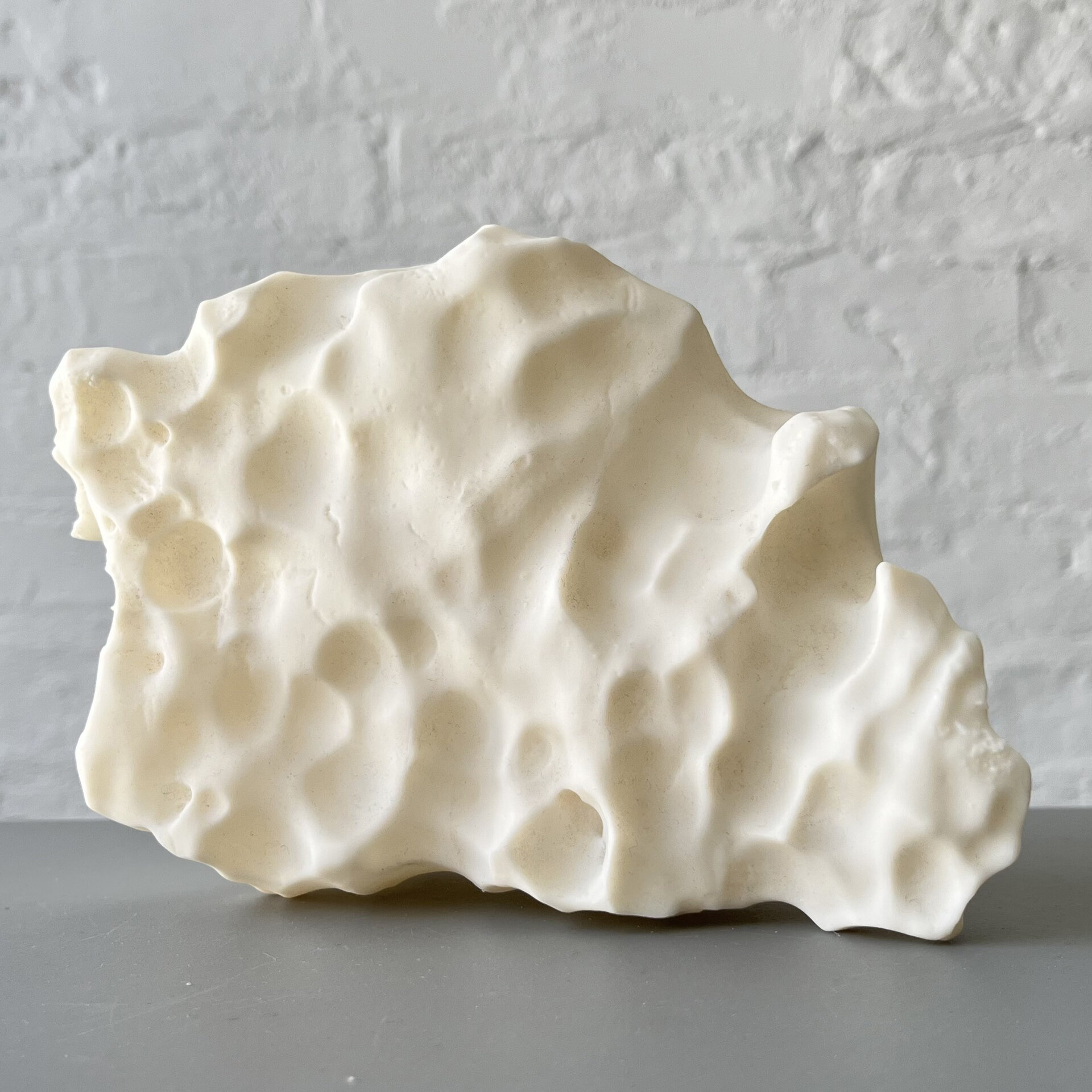
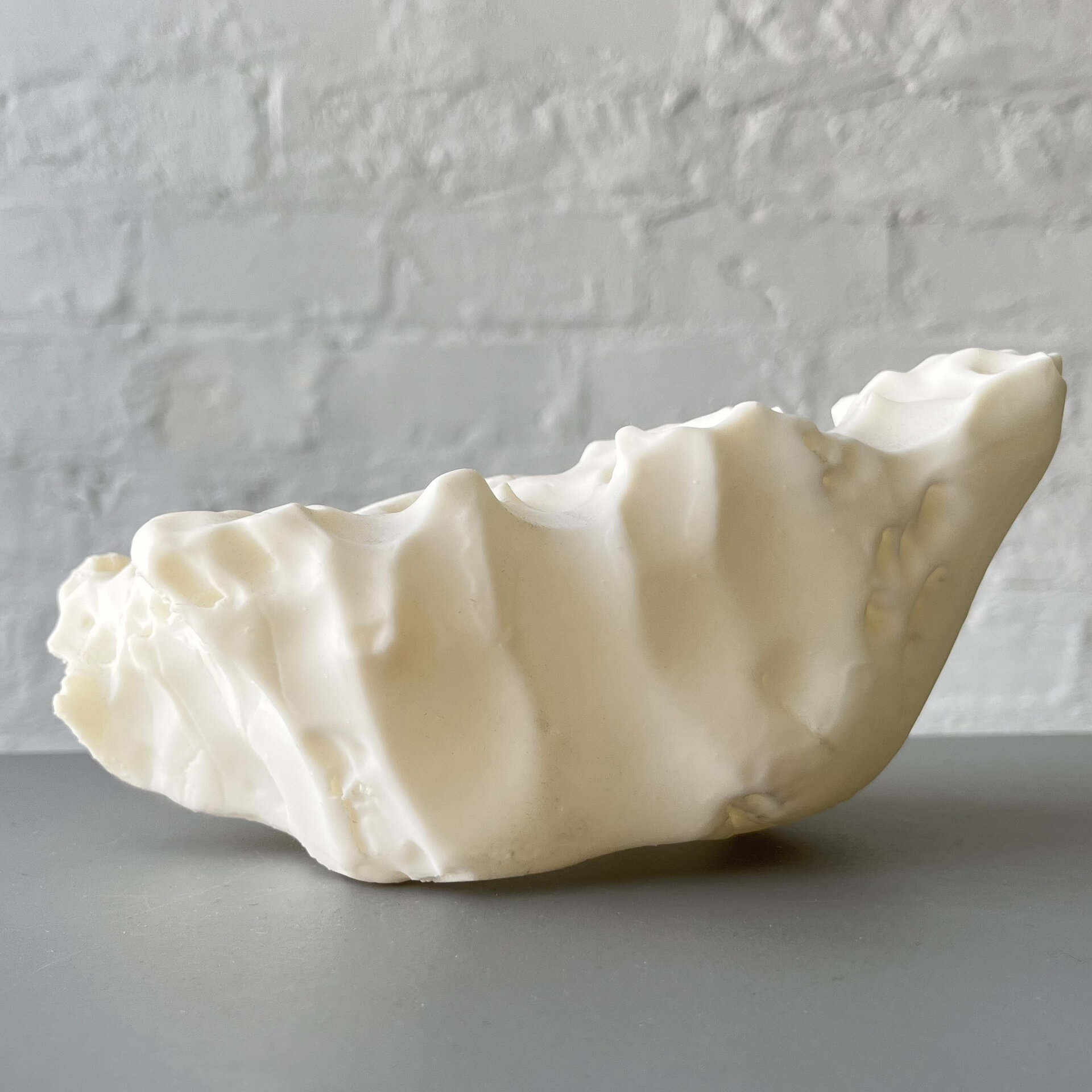
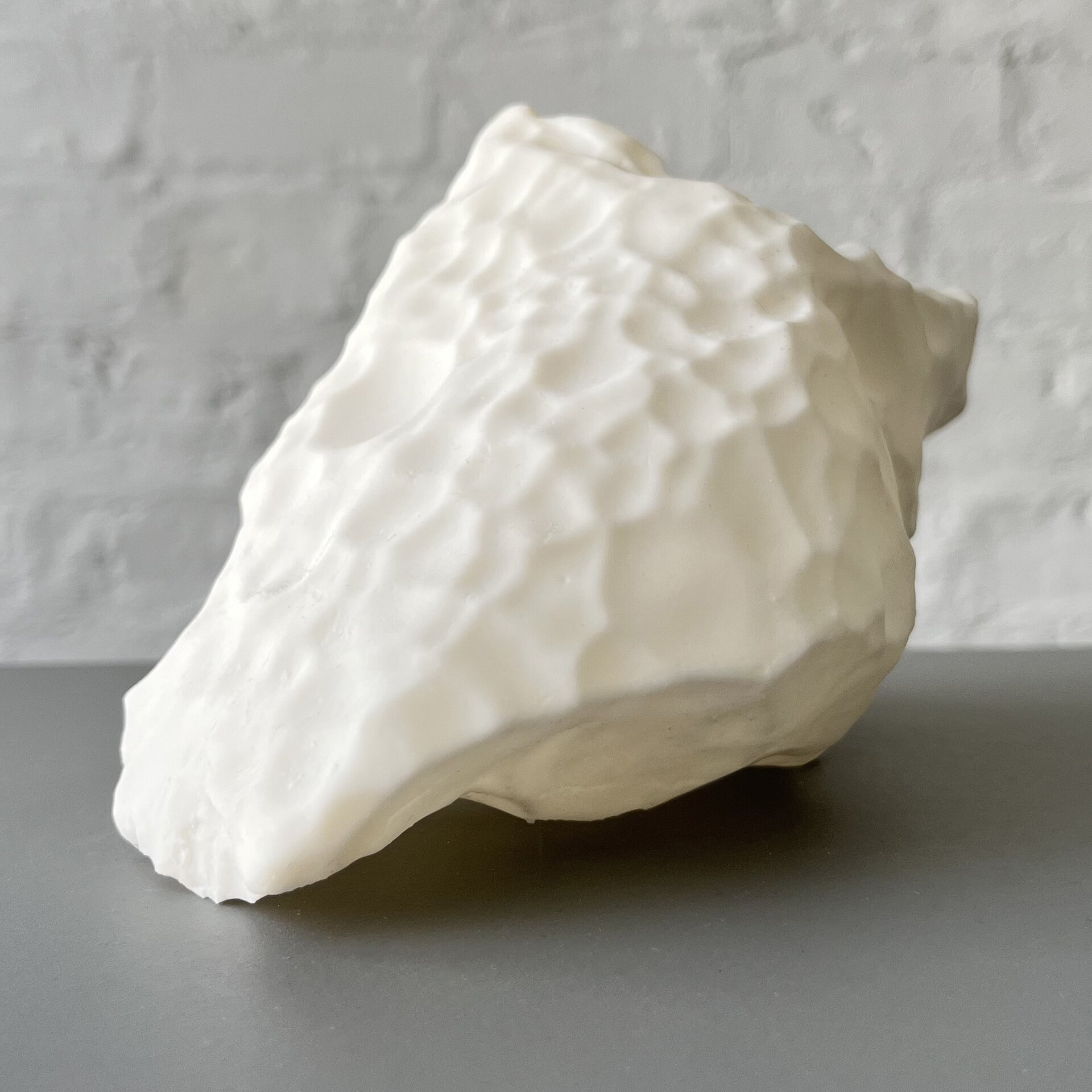
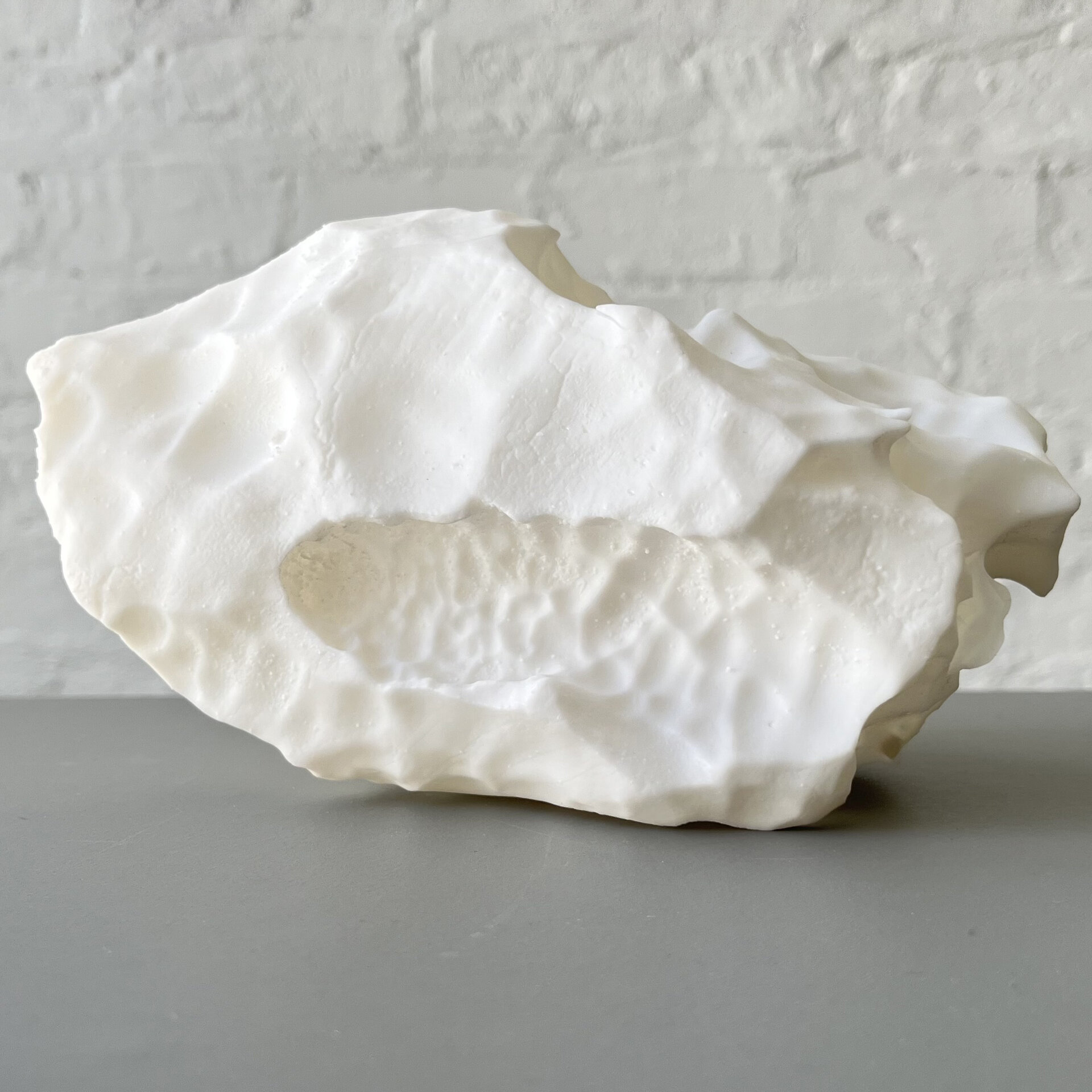
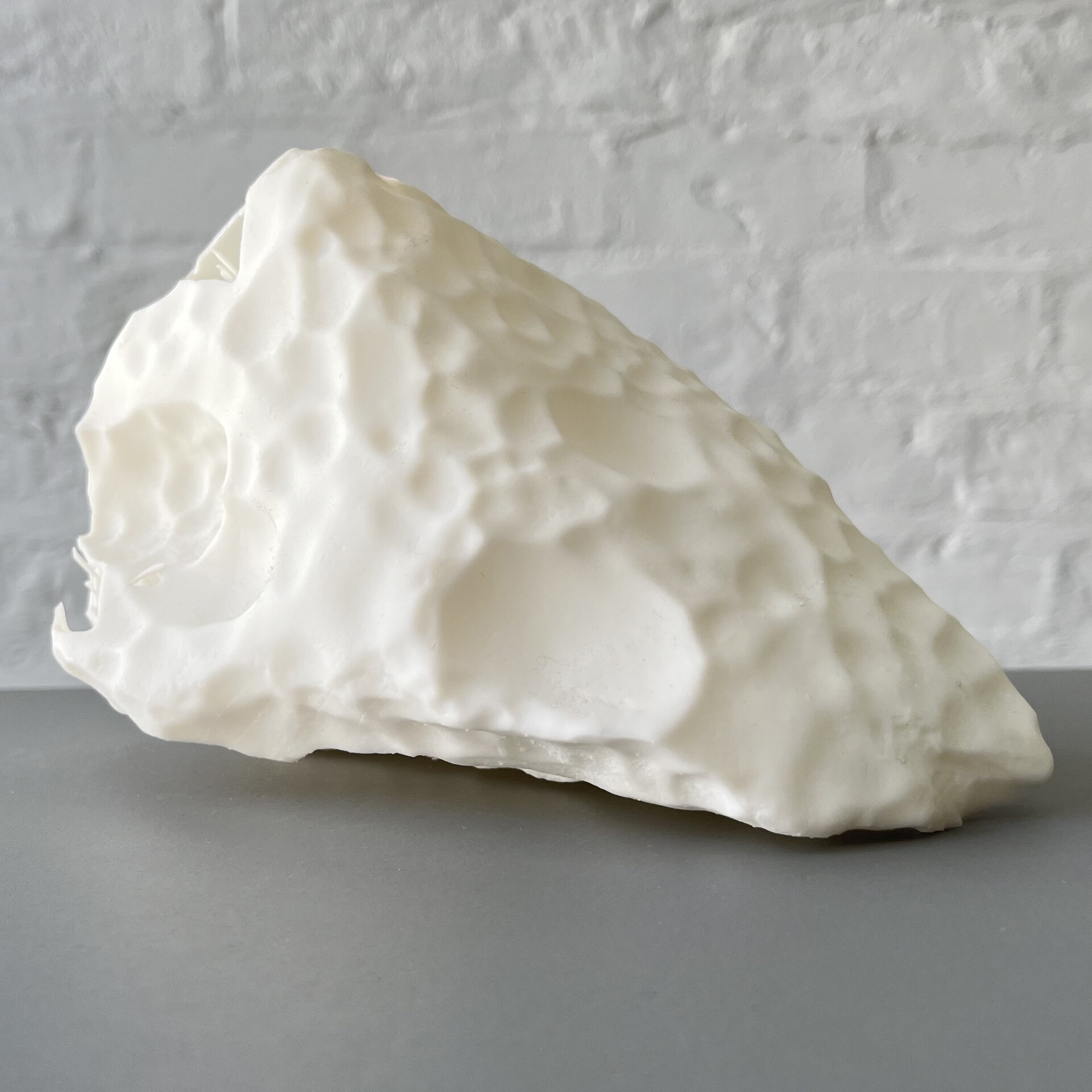
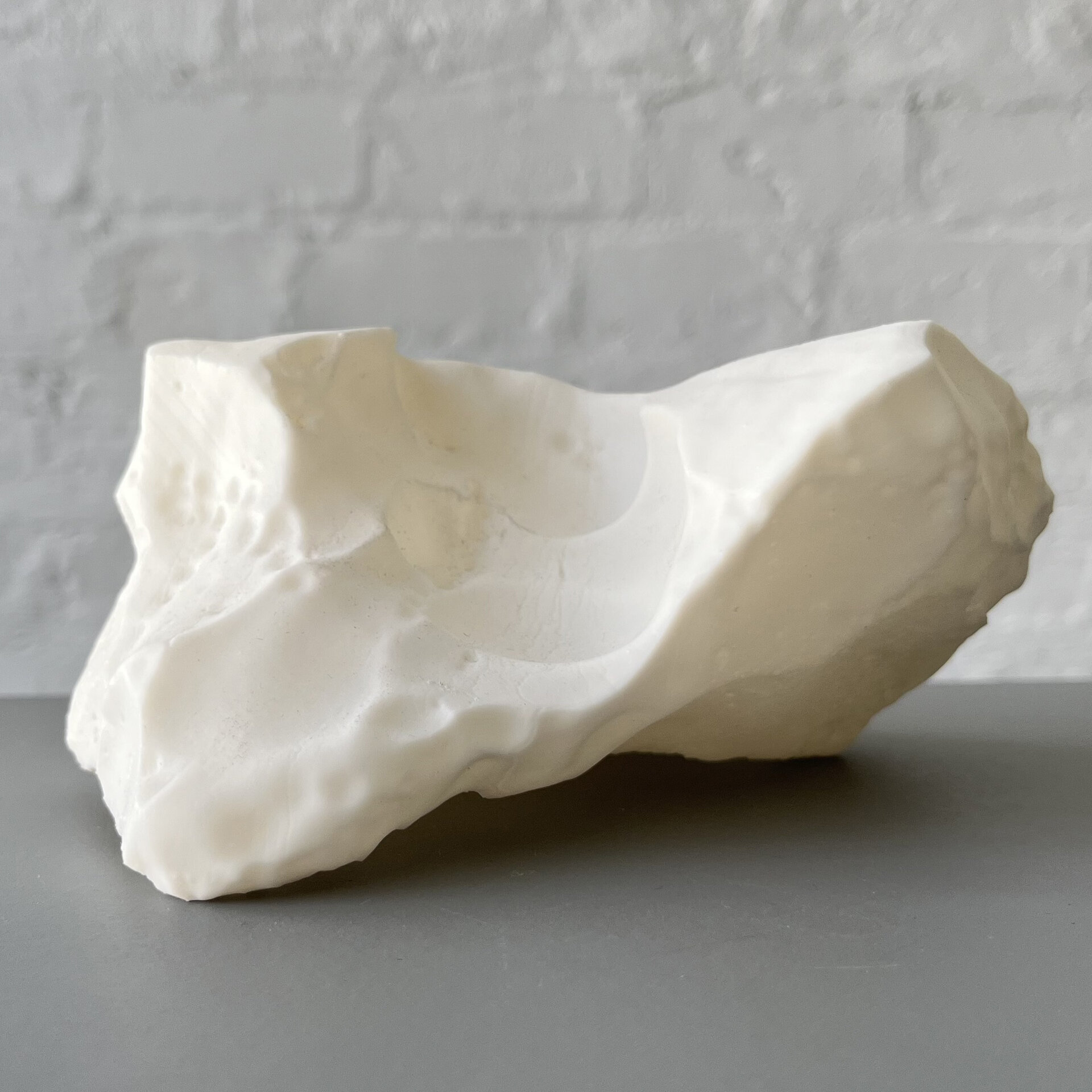
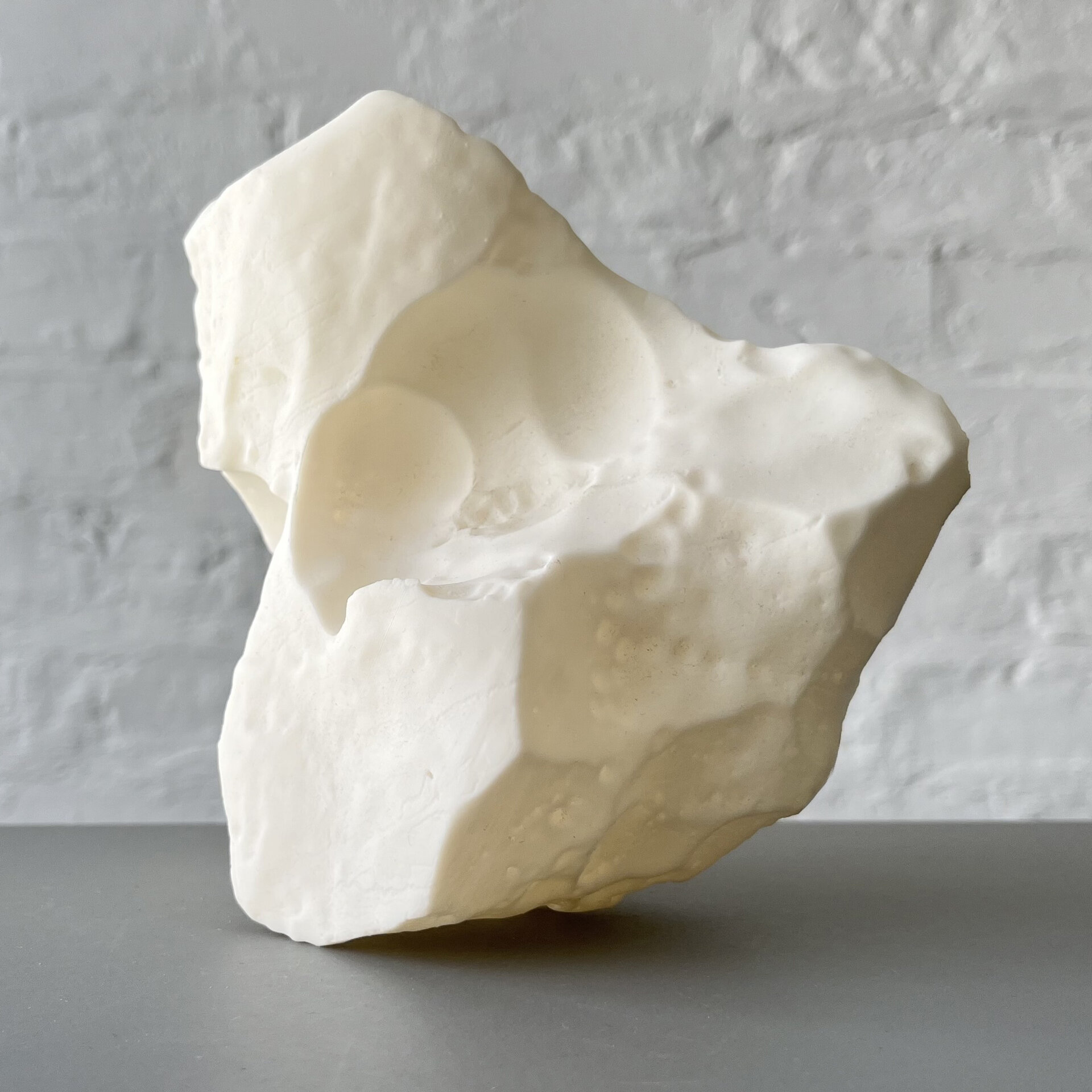
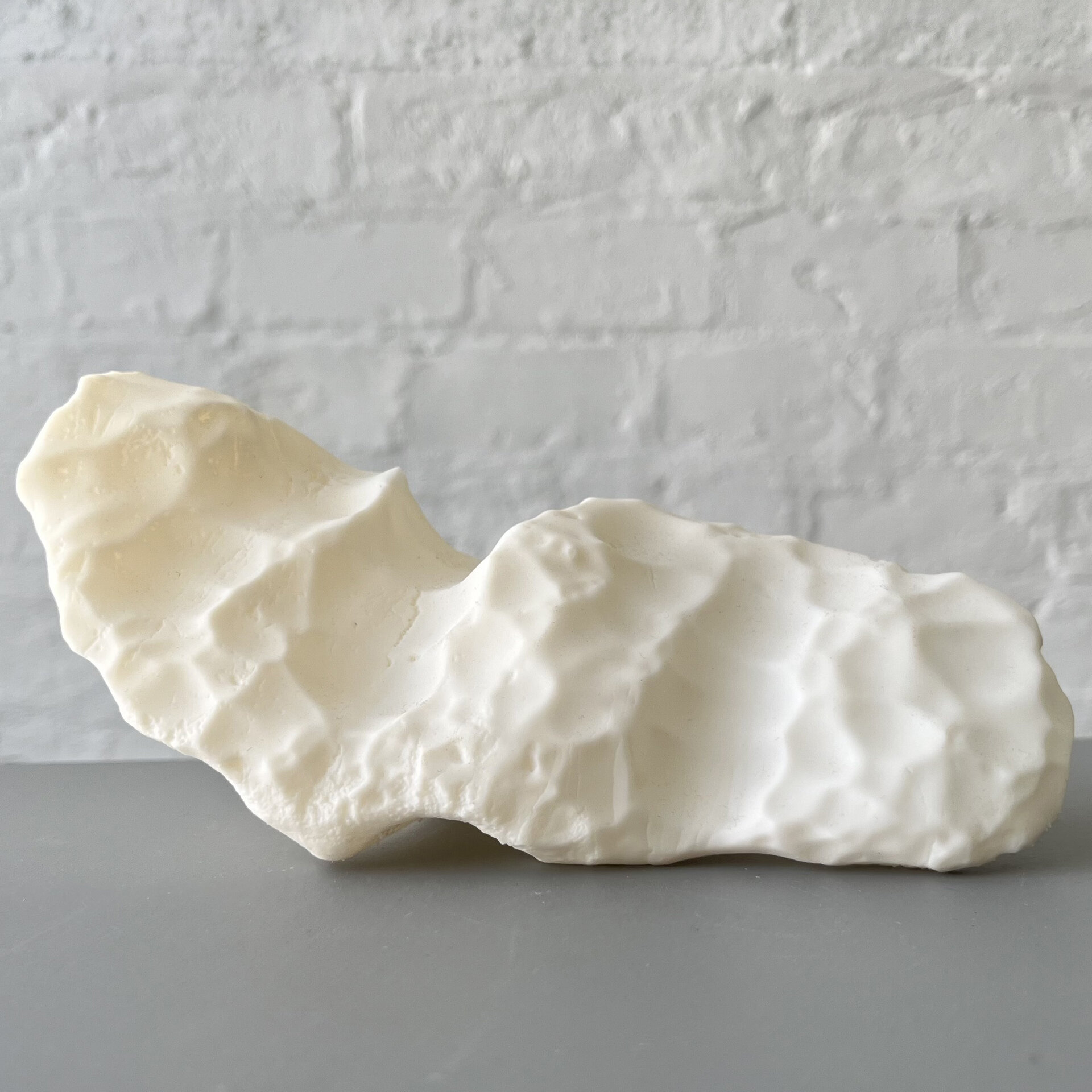
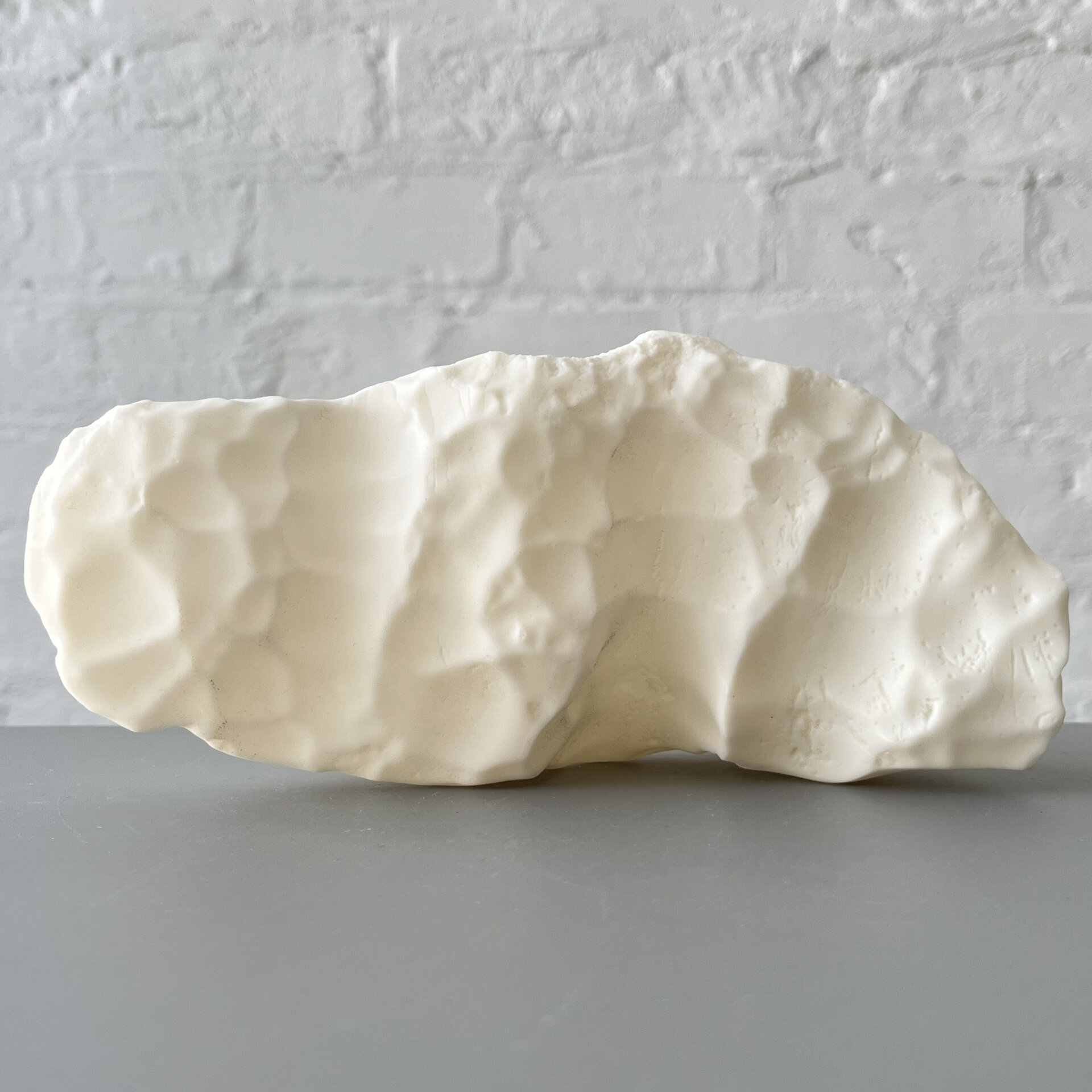
Ice Scans develops methods for capturing ephemeral ice fragment geometries through three-dimensional scanning. Transparent materials confuse standard photogrammetry systems, so digitizing ice requires adapted techniques. Laser scanning technology from automotive applications, combined with surface treatments, captures topology despite complex optical properties. Ice fragments begin deteriorating the moment they leave their frozen environment; each scan session operates under strict time constraints before geometry deforms through melting. Surface treatments enable accurate capture; scanning parameters adjust for transparency and internal refraction. The resulting scan data retains geometry at resolutions sufficient for physical reproduction at altered scales. Mesh data preserves surface detail — fracture planes, crystal boundaries, melt-edge profiles — that would otherwise disappear entirely. Protocols developed here for scanning optically challenging materials extend to subsequent projects, where scanned ice fragments translate into permanent sculptural forms through additive manufacturing. The investigation remains ongoing.
Photography: Phillip C. Reiner
Artwork year: | Last updated: