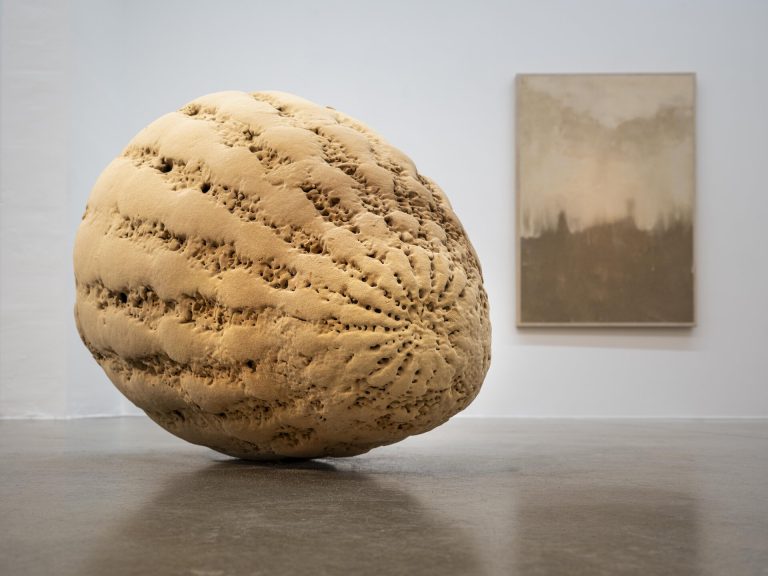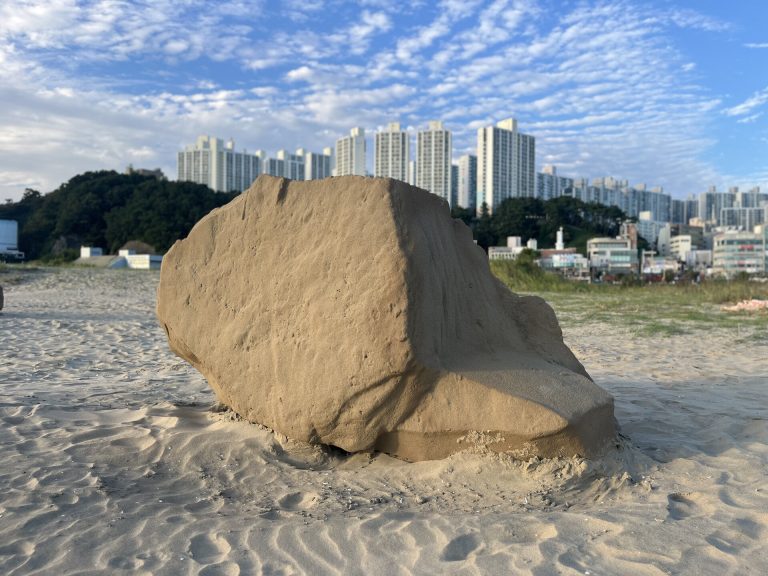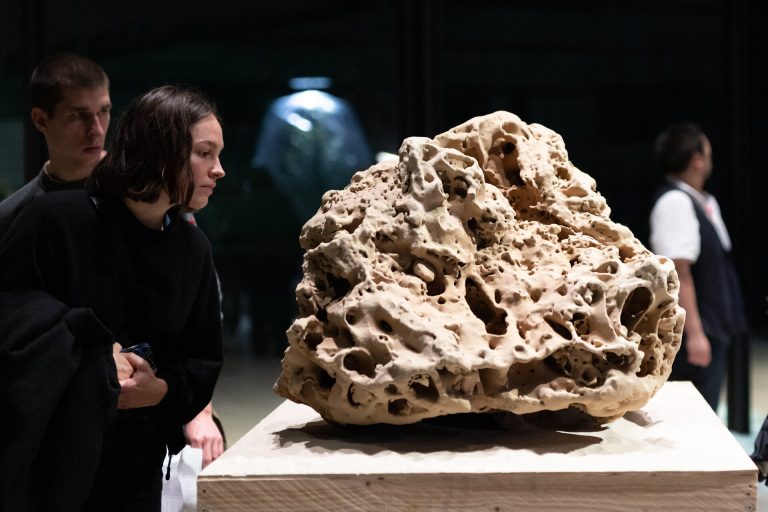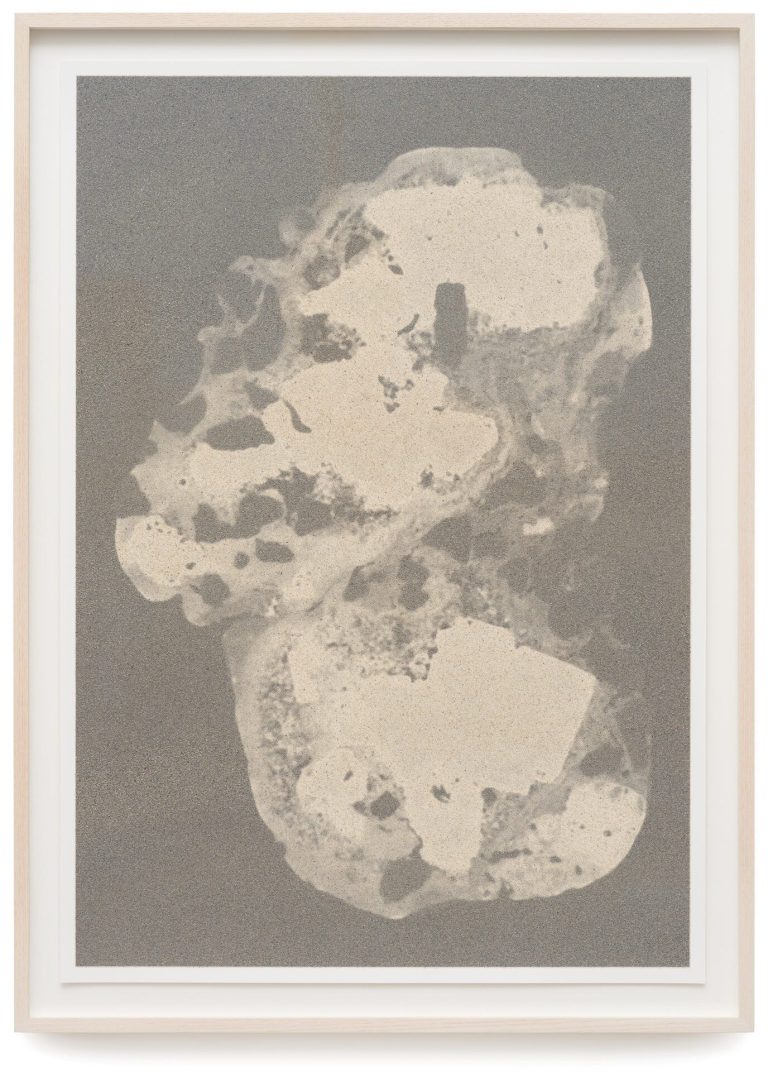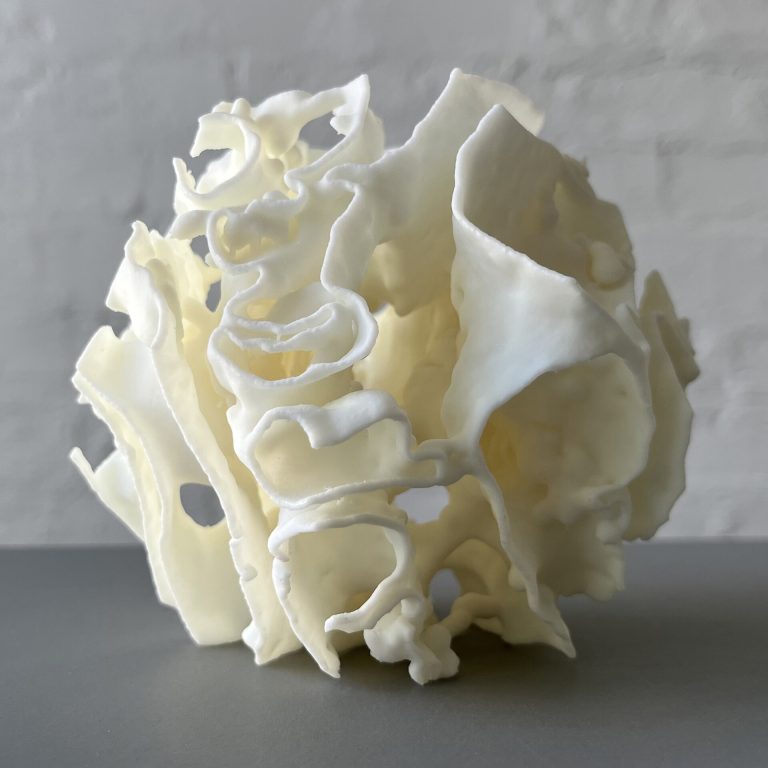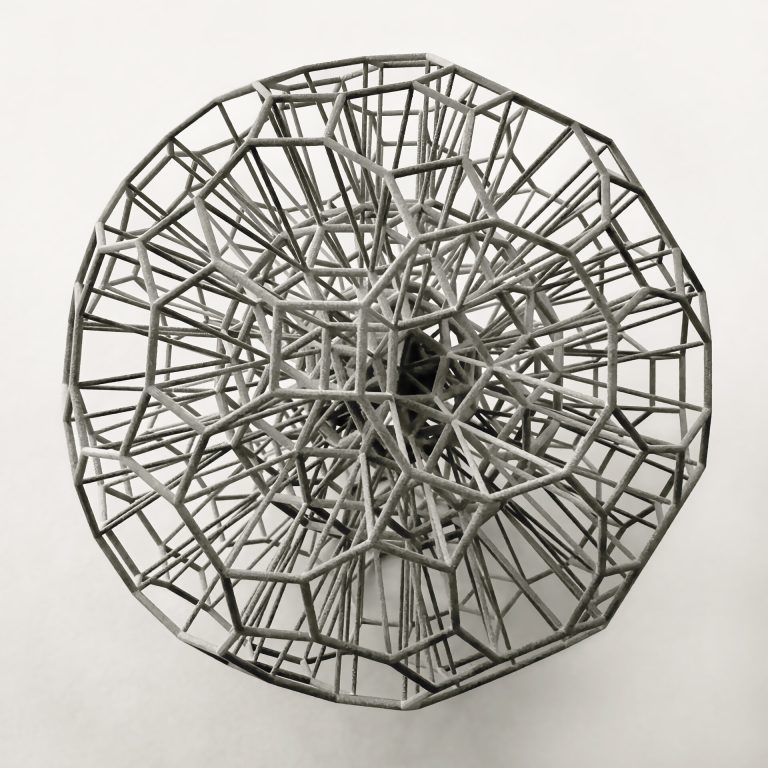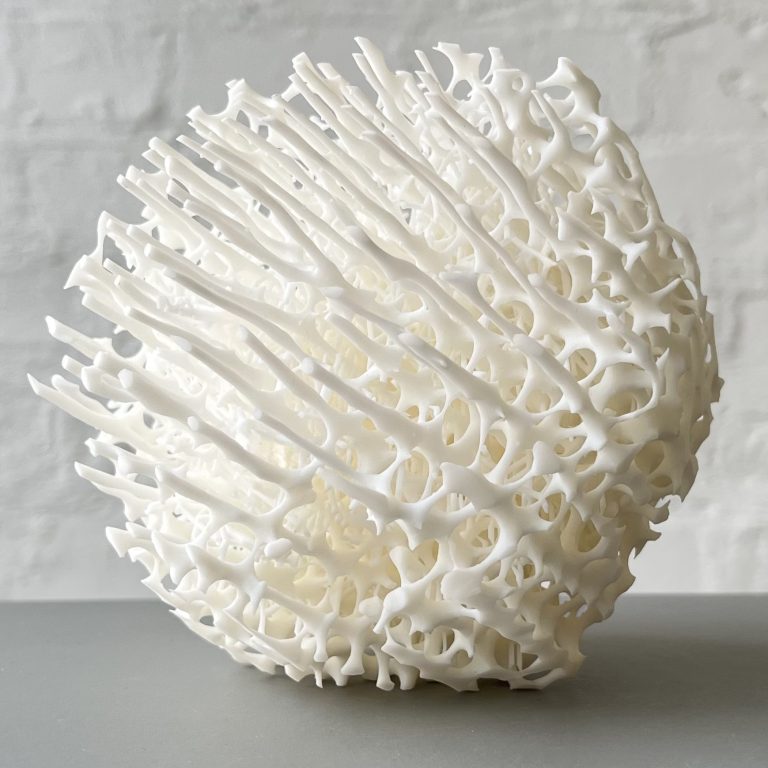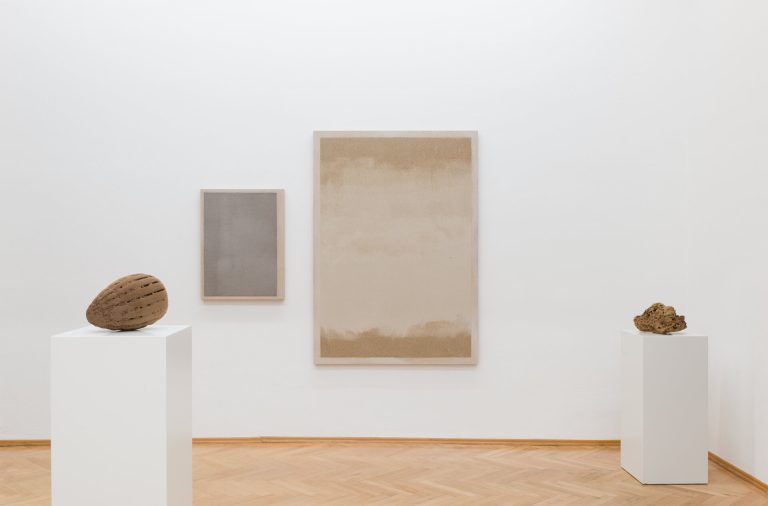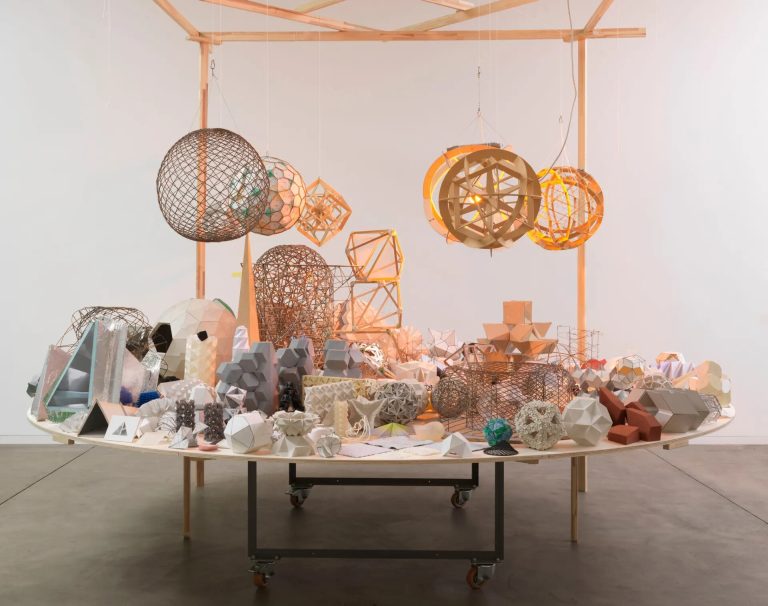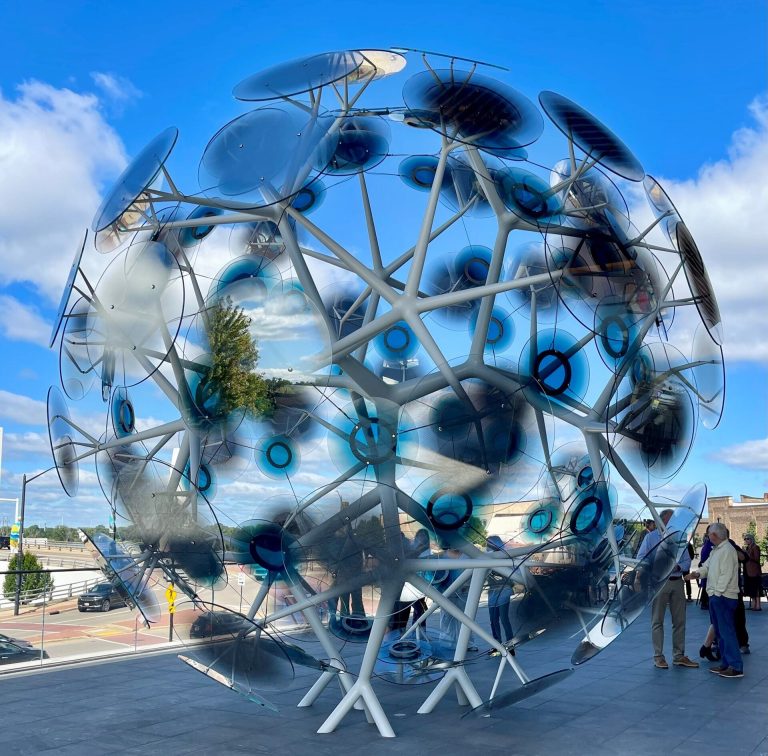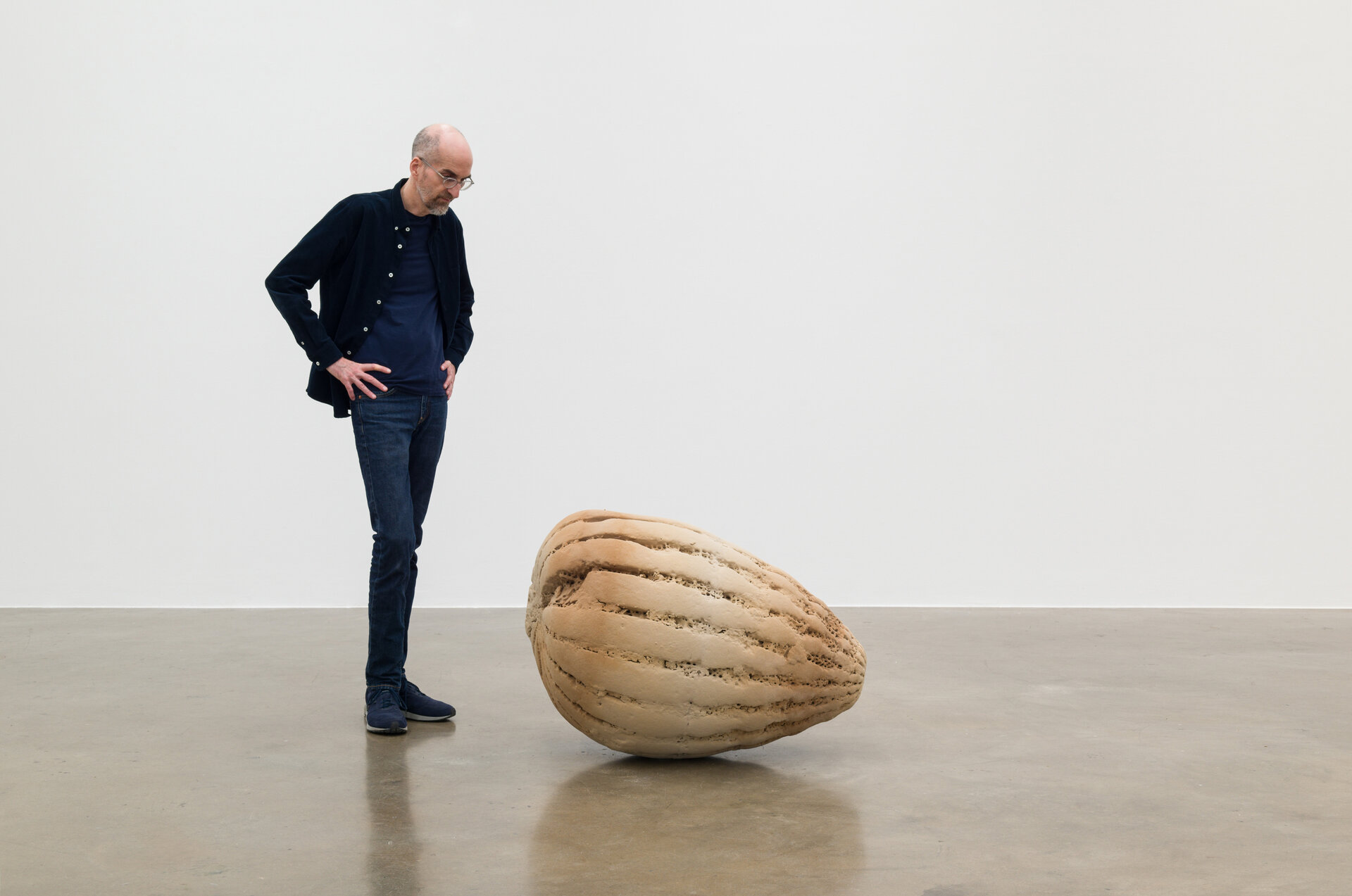
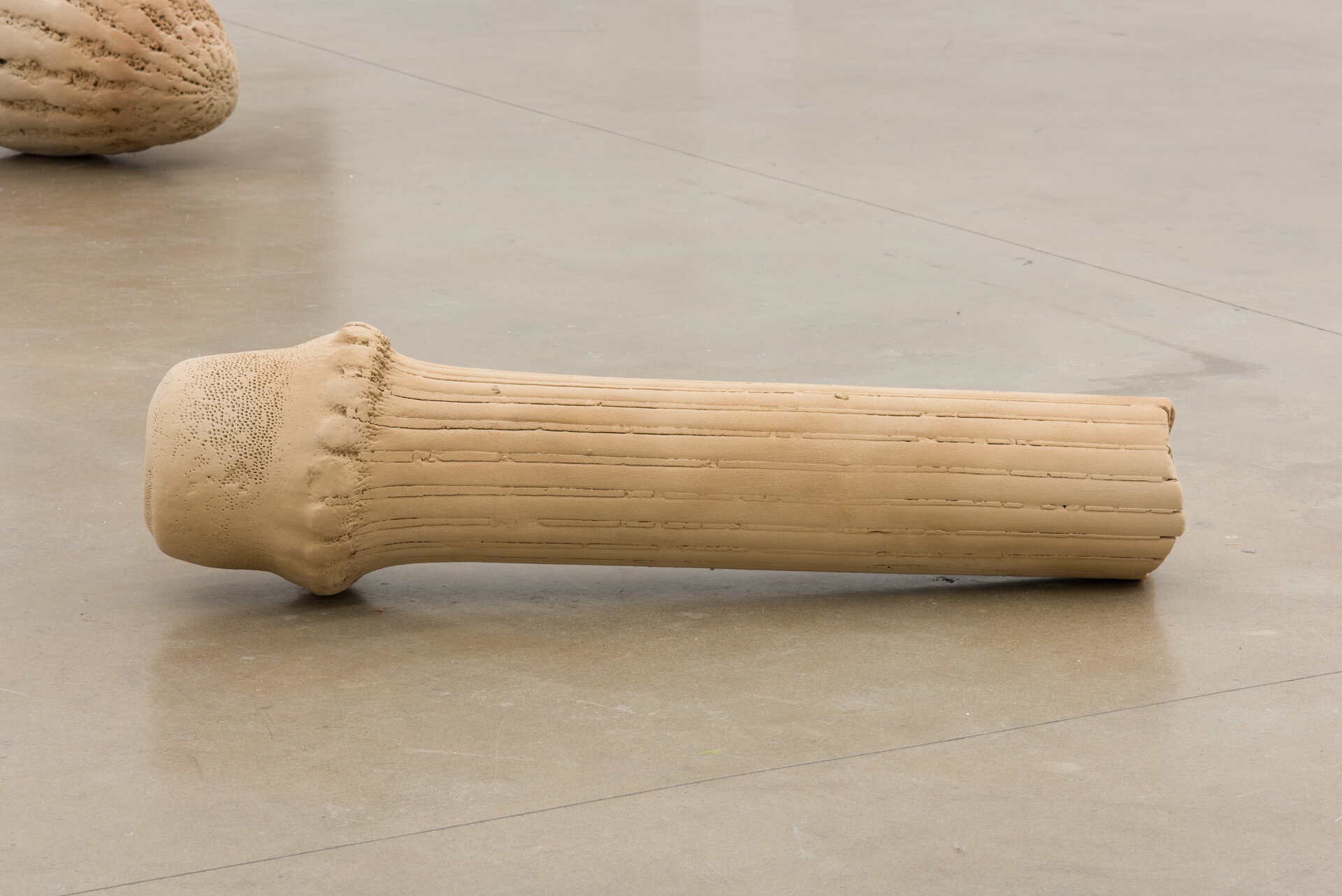
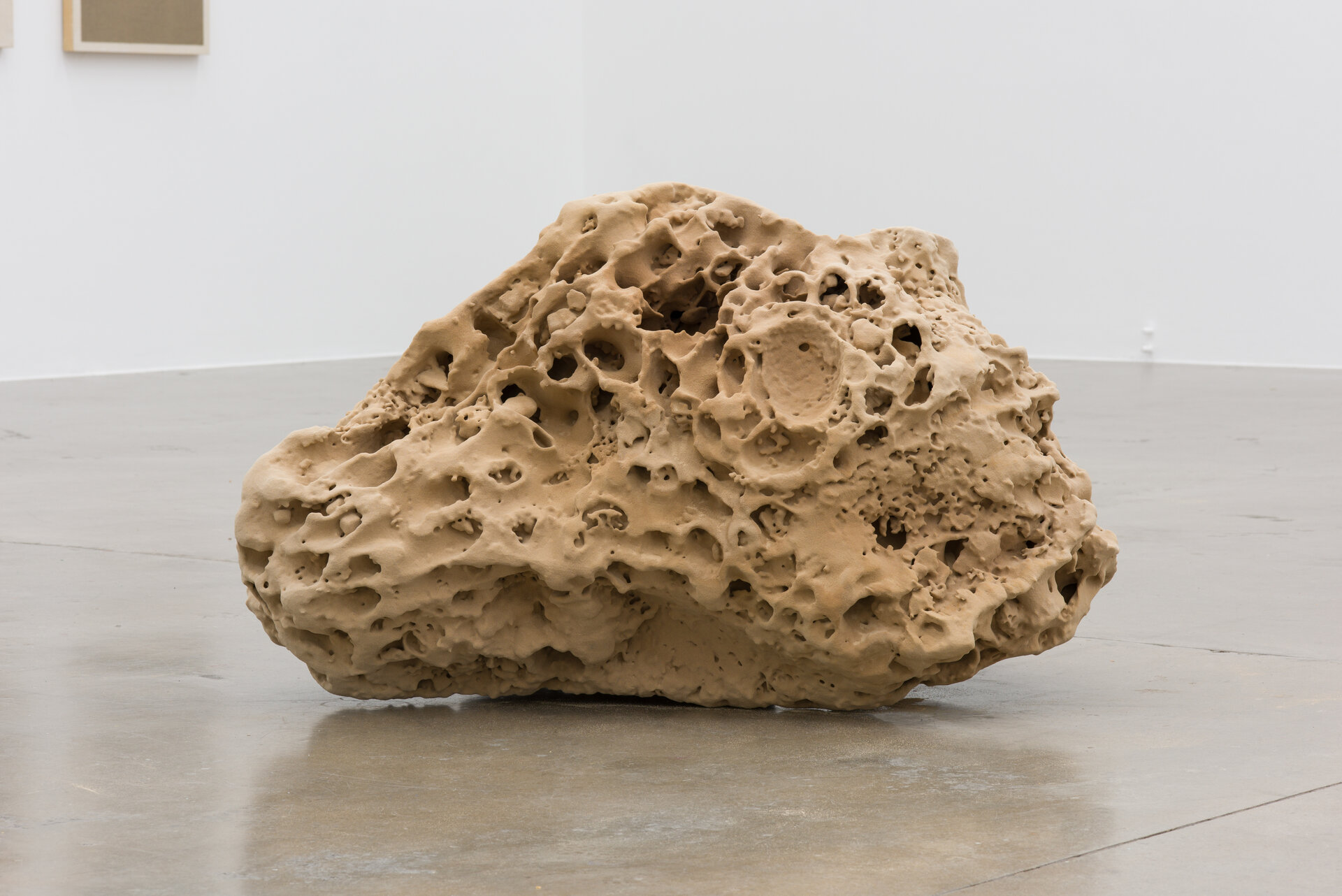
"Fragments Proximity" is a set of three large-scale sculptures. Each is a single grain of sand in the same material, enlarged 600 to 850 times. The scale turns microscopic grains into room-scale objects that occupy floor space at body height and beyond. Surface curves, crevices, and micro-fractures carry the grain's particularity and geological history. At this enlargement, viewers encounter surface detail typically visible only under electron microscopy — erosion channels, mineral boundaries, transport abrasion. Walking around a single grain becomes a spatial experience; the sculpture's topography registers differently from each angle. The project treats sand as a material that holds geological memory and place-specific associations. Sand is abundant globally but under pressure from construction and digital-industry demand. Lee works with detritus as embodied memory; Reiner contributes parametric work based on natural phenomena described by mathematical principles. The collaboration uses mathematical precision to expose structure and geological history in single grains.
Research:
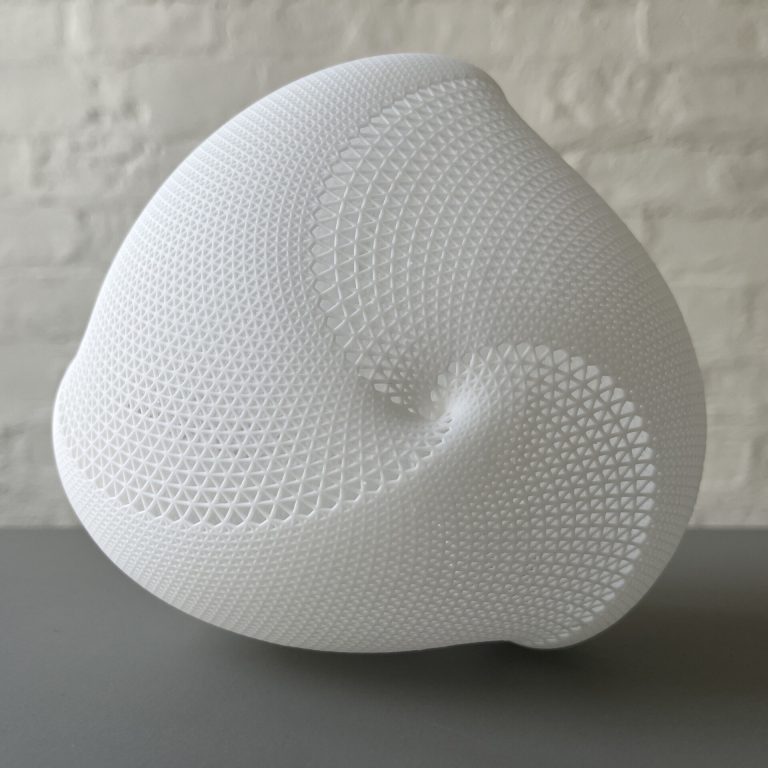
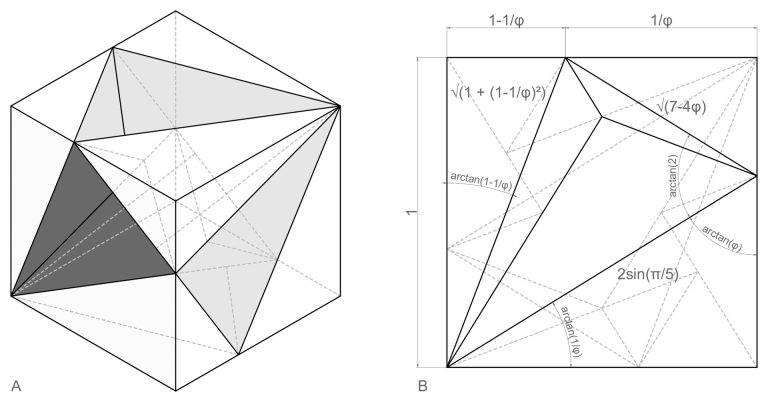
Each sculpture starts with one grain scanned by Zeiss X-ray microscopy (nano-CT). The process captures surface topology and internal density at micron resolution. Data moves from physical grain to DICOM image stack, then to 3D geometry via surface reconstruction. ProtoCtrl handles mesh processing and parametric geometry for 3D printing at monumental scale (600-850x). The enlargement factor demands high polygon counts to maintain surface fidelity; mesh optimization must balance topological accuracy against manufacturing constraints. The workflow addresses the Sorites paradox by fixing a single grain as the unit of reconstruction. Output is hyper-realistic reconstruction at a scale where microscopic detail becomes tactile.
Photography: Christopher Häring
https://jeewi.de
Artwork year: | Last updated: