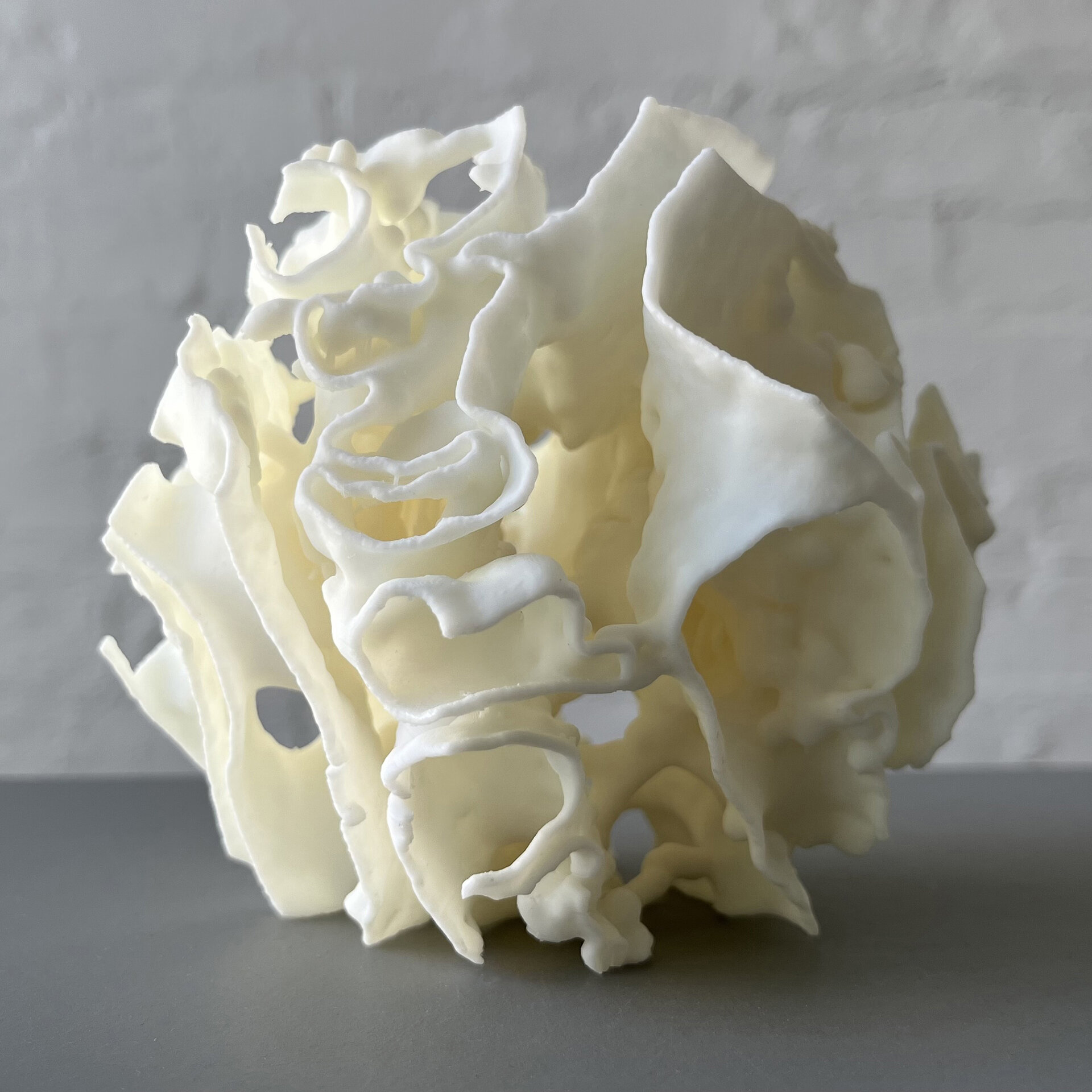
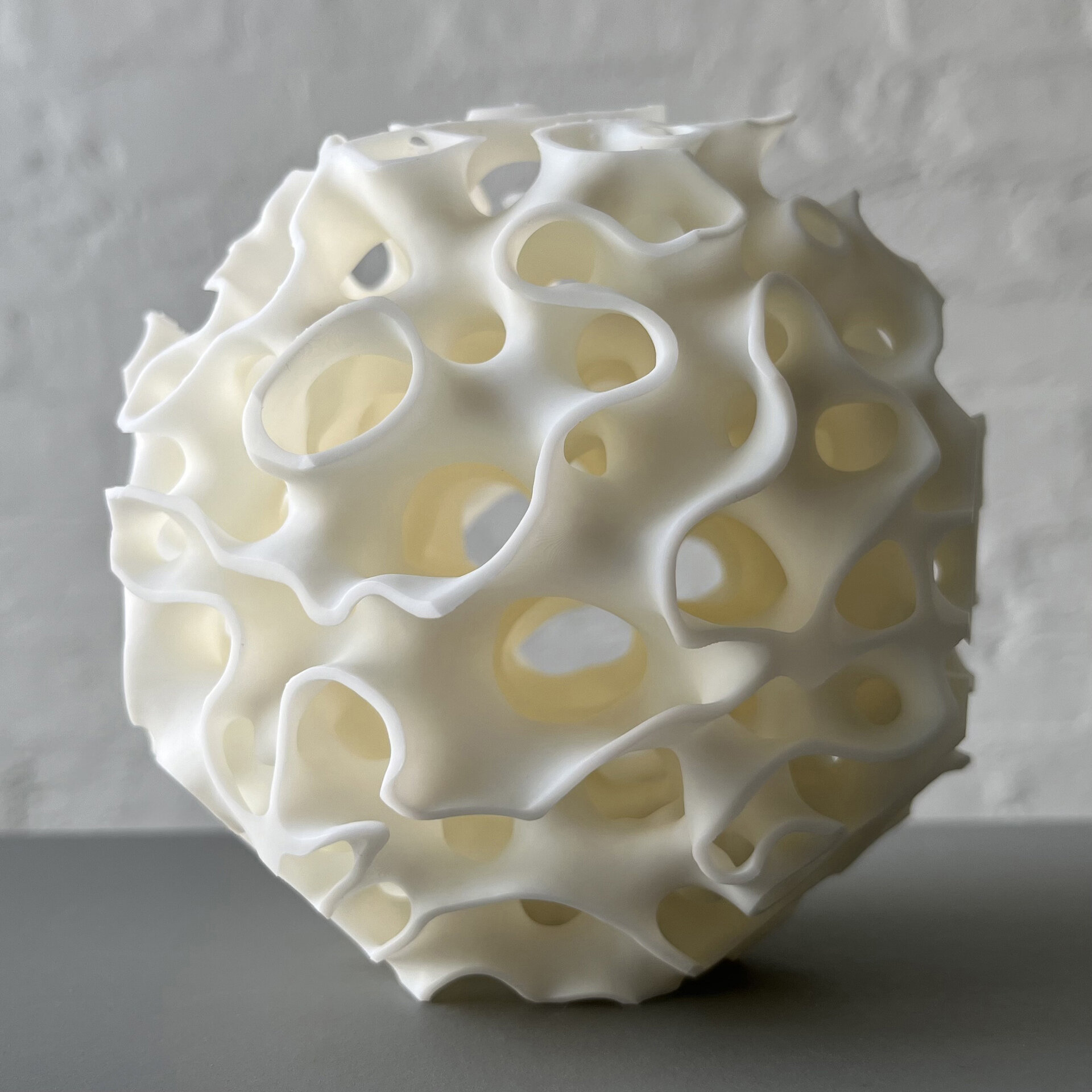
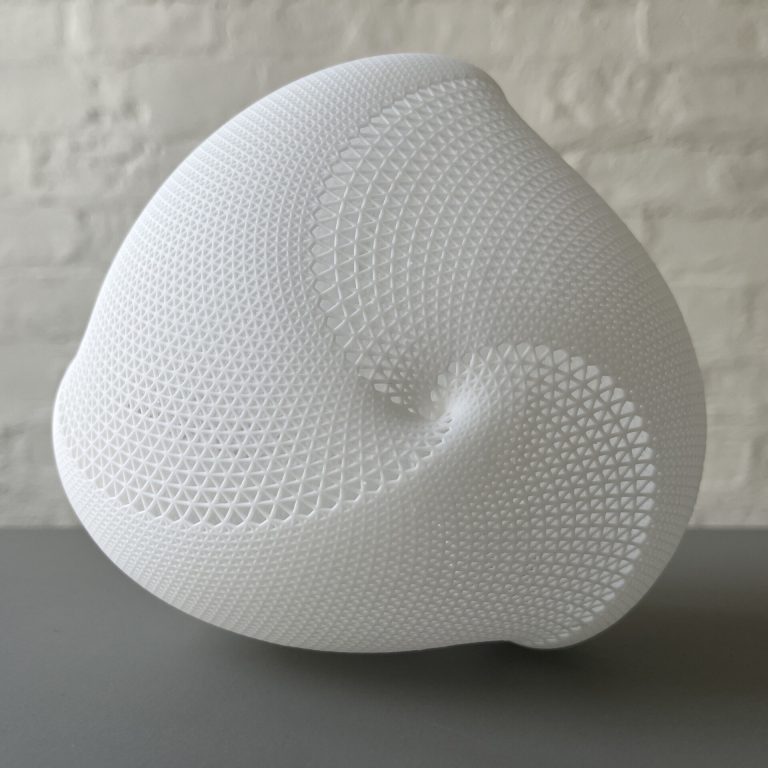
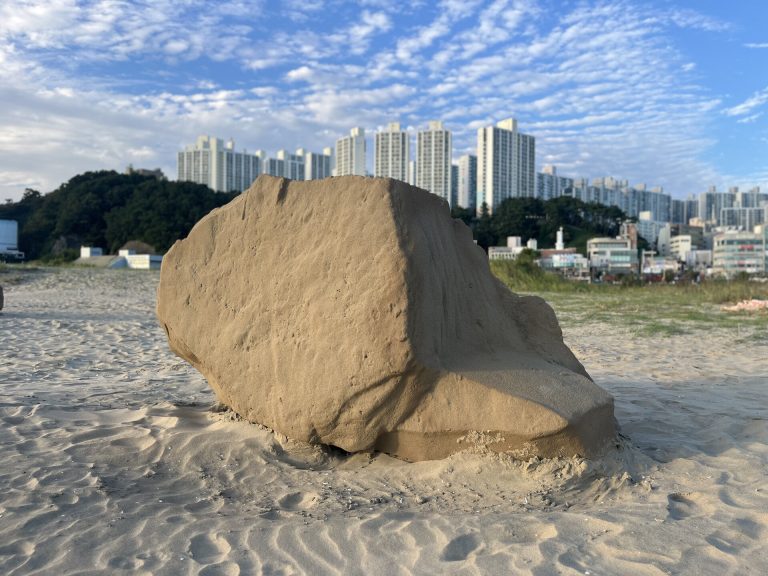
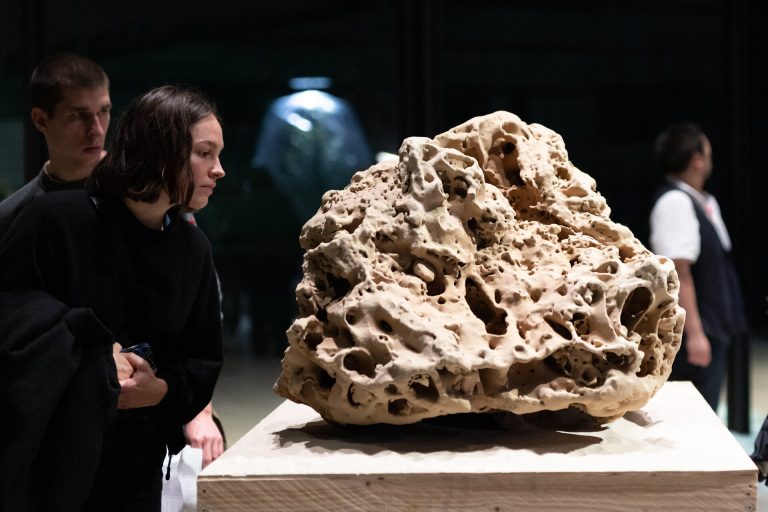
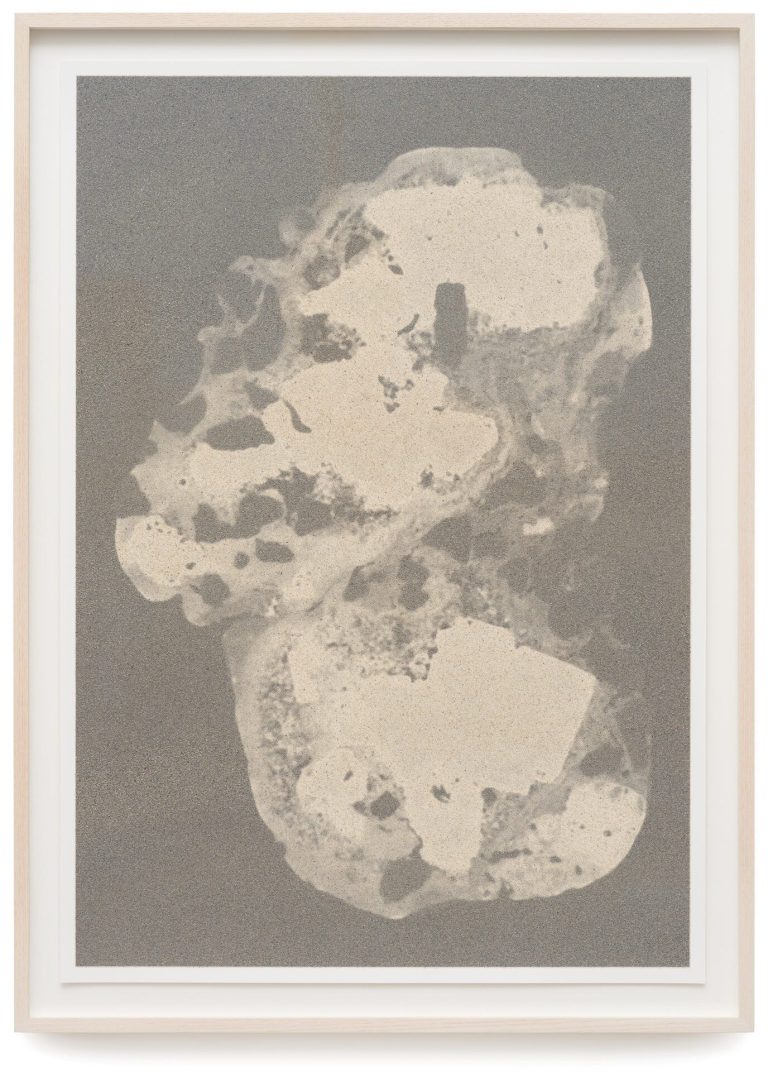
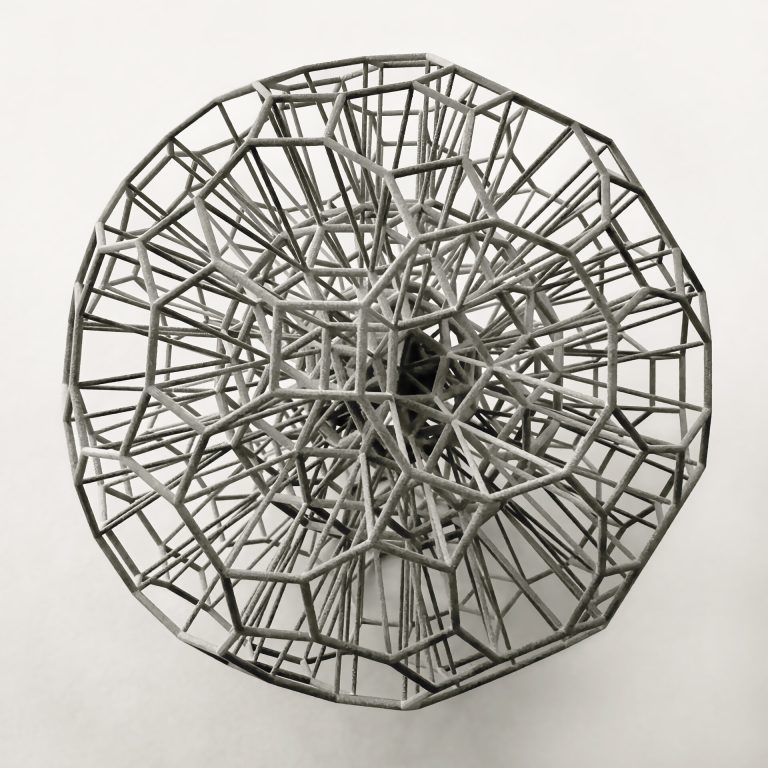
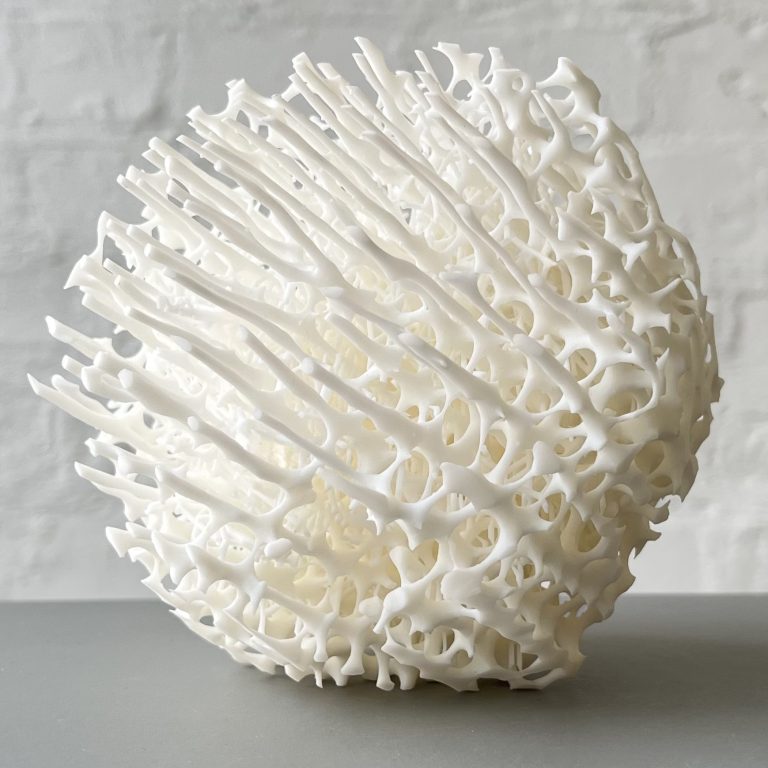
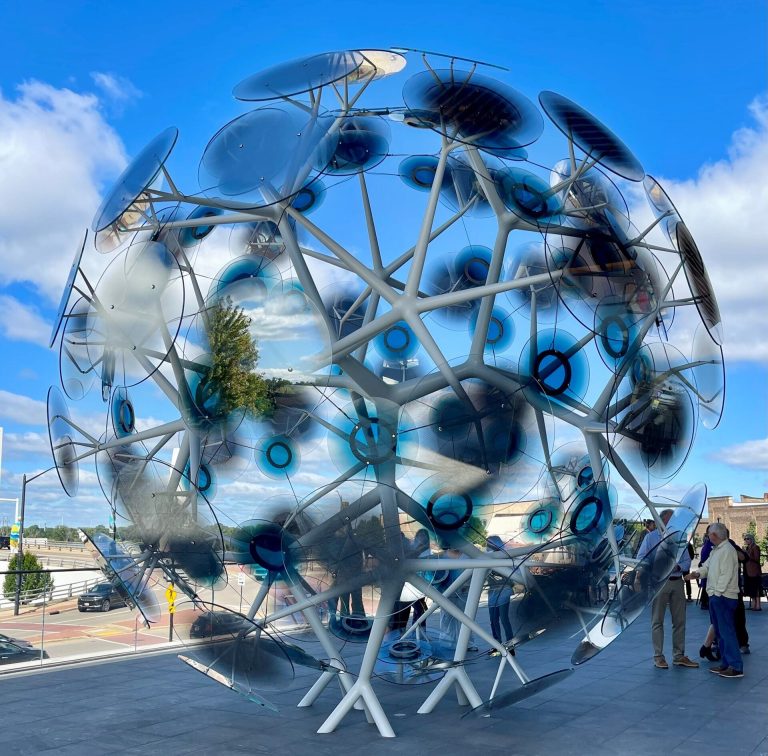
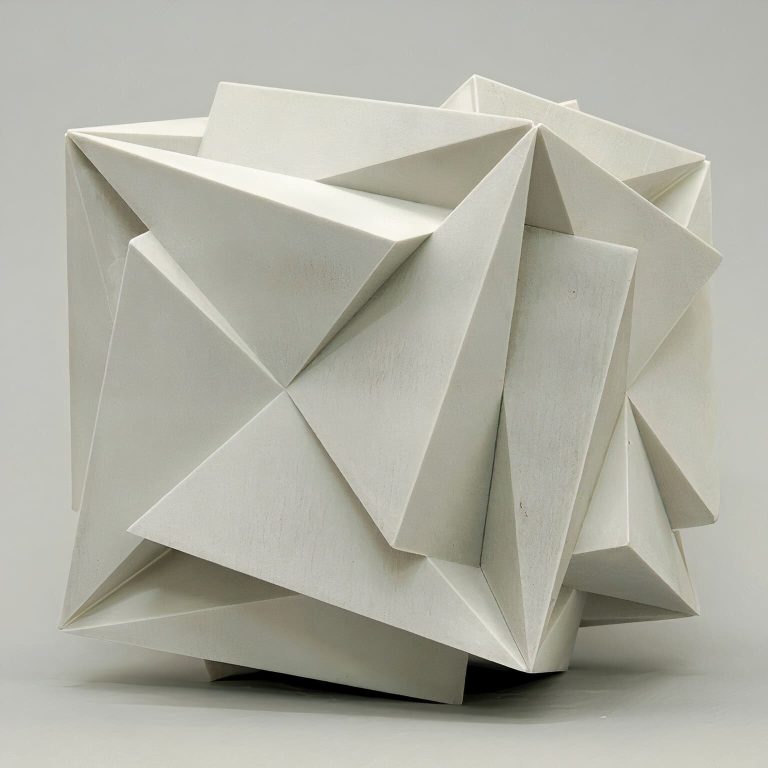
Porouhedrons examines porous polyhedral structures through systematic perforation of base polyhedra. Two configurations presented at Bridges 2025 span the research range. Porouhedron #6 establishes foundational methods for controlled void introduction. Each perforation maintains structural integrity while testing maximum achievable porosity. From this configuration, principles emerge for how openings transform base polyhedra without compromising mathematical consistency. Porouhedron #141 applies these methods at increased complexity. Its high configuration number reflects extensive parametric testing: computational processes evaluate multiple variations before selecting specific geometric arrangements. Each opening follows algorithms that preserve polyhedral properties while creating interconnected void networks. Resulting forms parallel natural cellular structures — trabecular bone, coral matrices, volcanic pumice — through mathematical process rather than biomimetic intent. Controlled perforation in both configurations produces three-dimensional void systems that maintain precise geometric relationships between openings and the base polyhedron.
Research: Perforation operations on base polyhedra test how void patterns affect structural and geometric properties. Configuration #6 establishes core methods: perforations must maintain load paths while maximizing open area, constrained by 3d printing tolerances for minimum wall thickness and overhang angles. Configuration #141 scales these constraints to denser perforation patterns. Computational testing evaluates hundreds of parametric variations, selecting configurations that balance void density with printability. The work focuses on how algorithmic perforation generates structurally viable forms at the limits of additive manufacturing resolution.