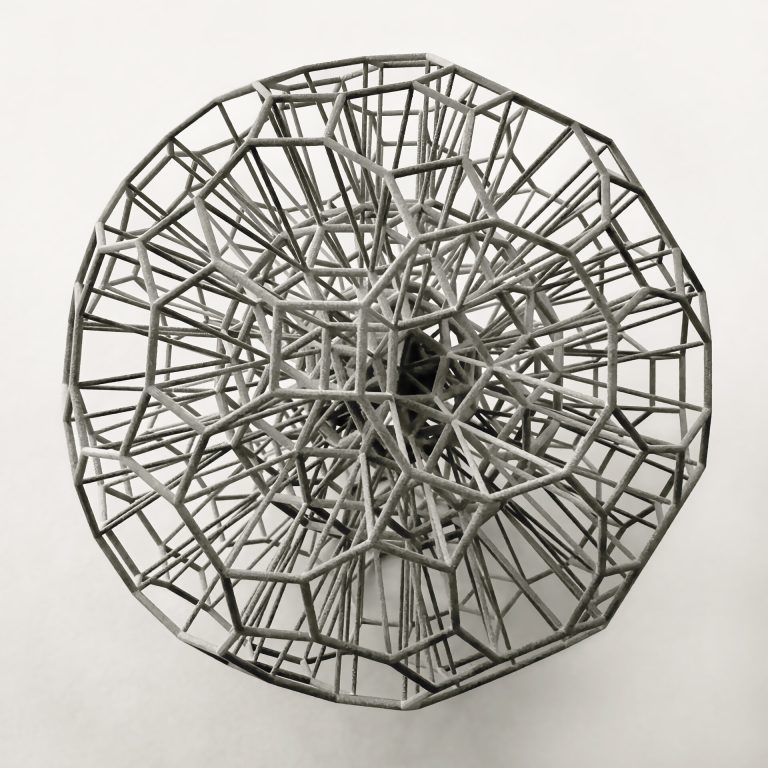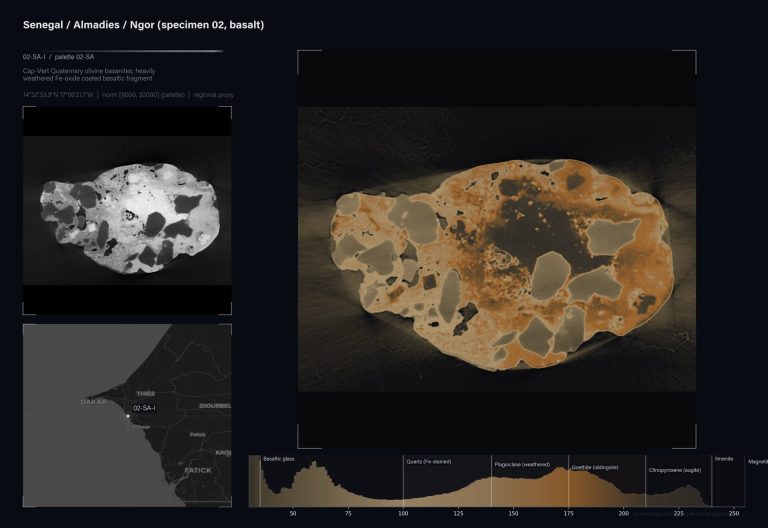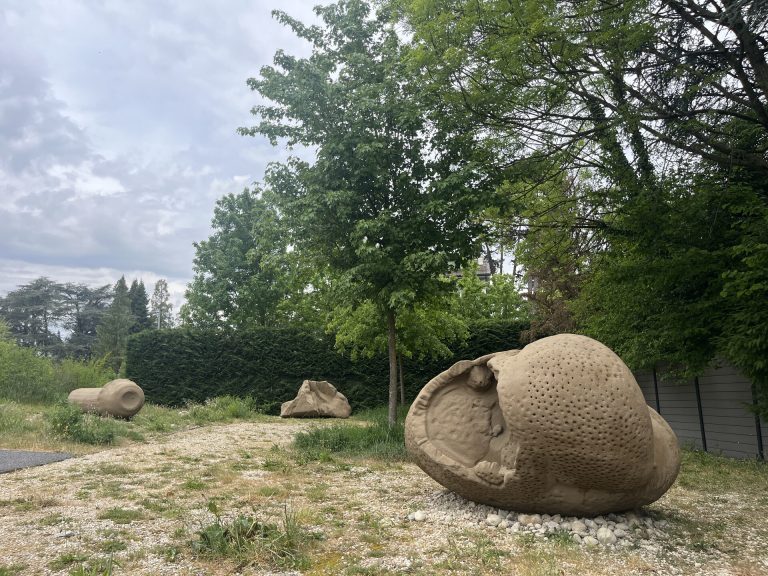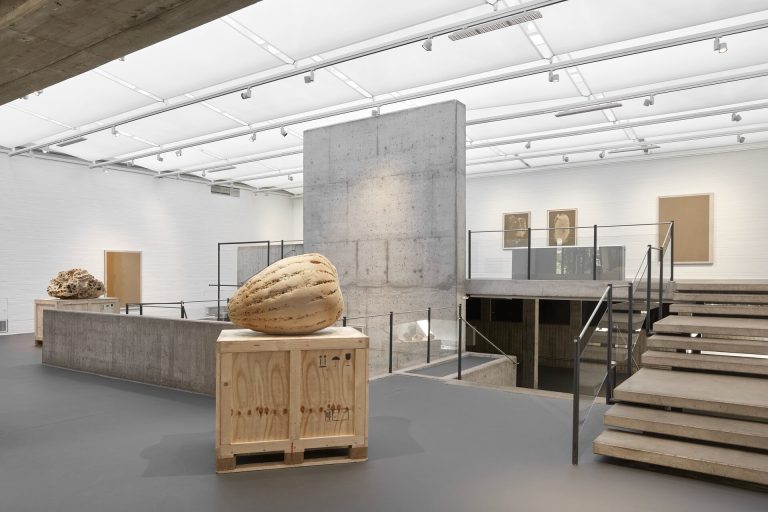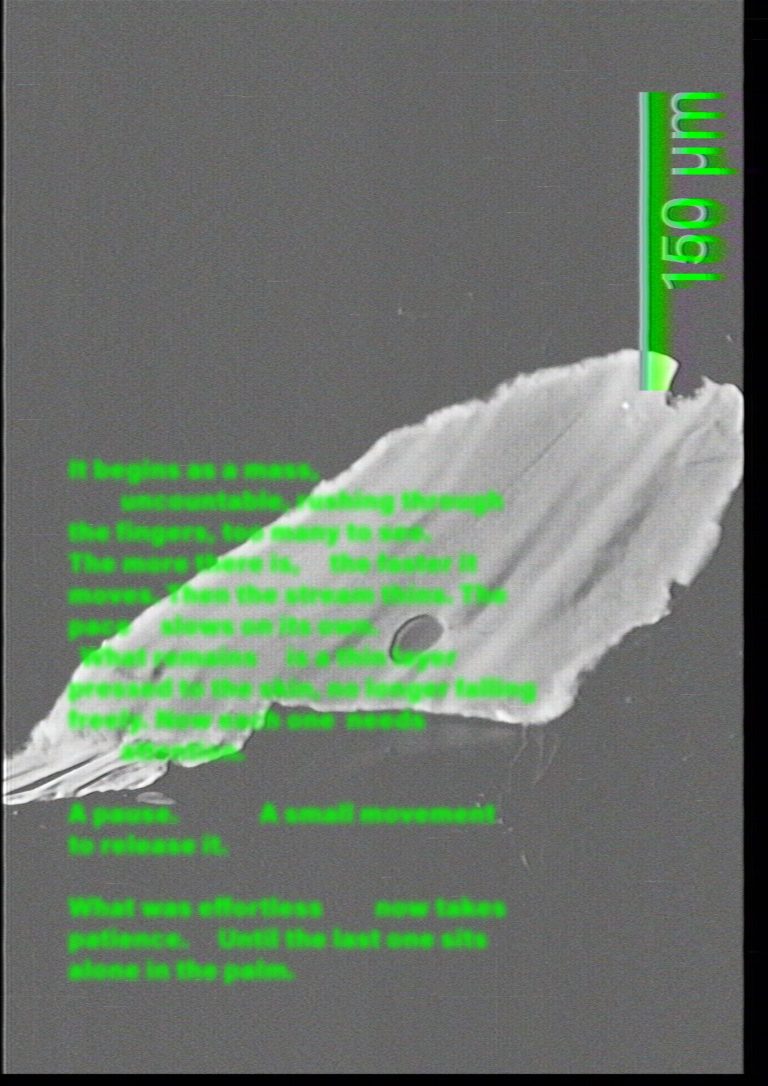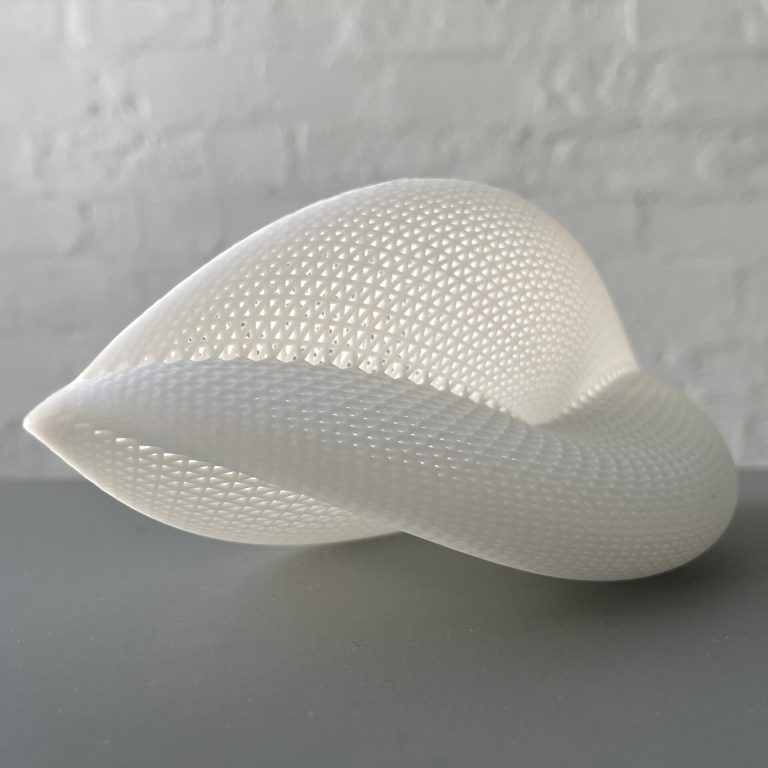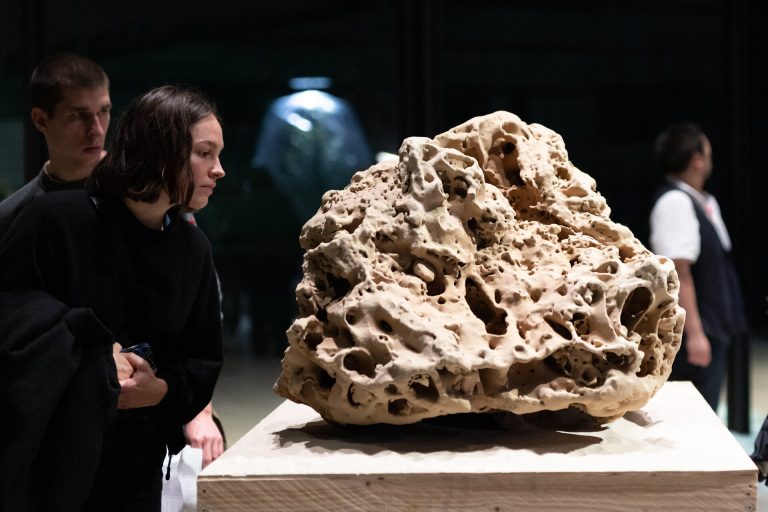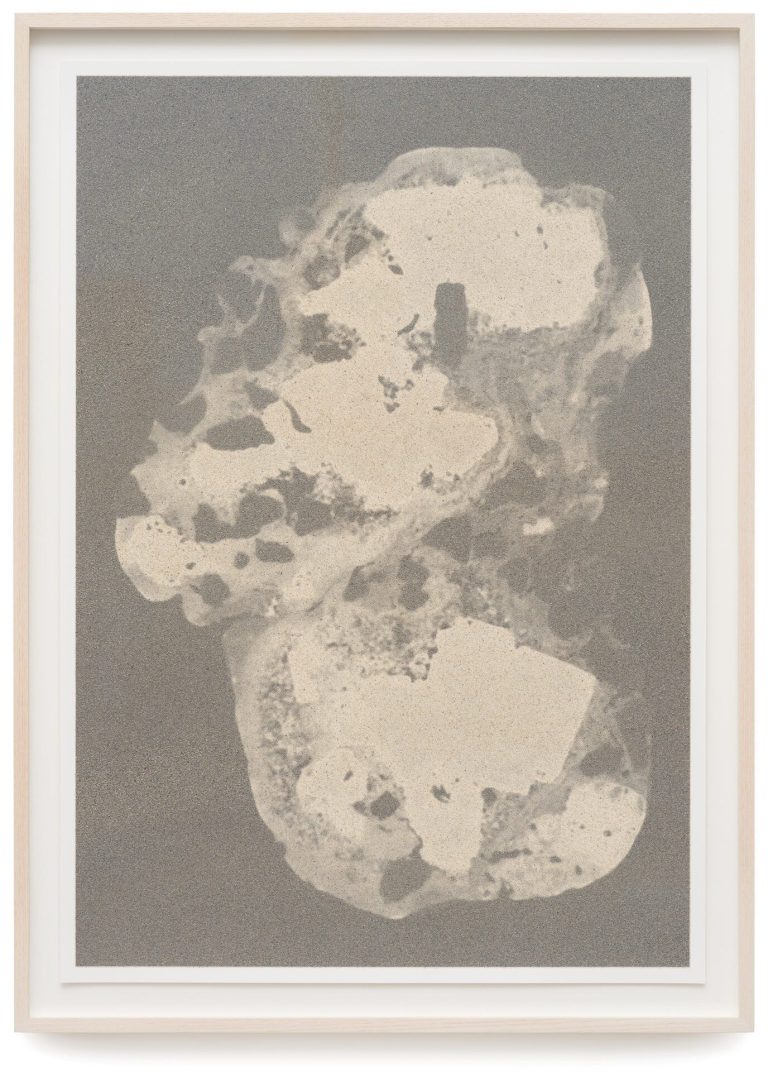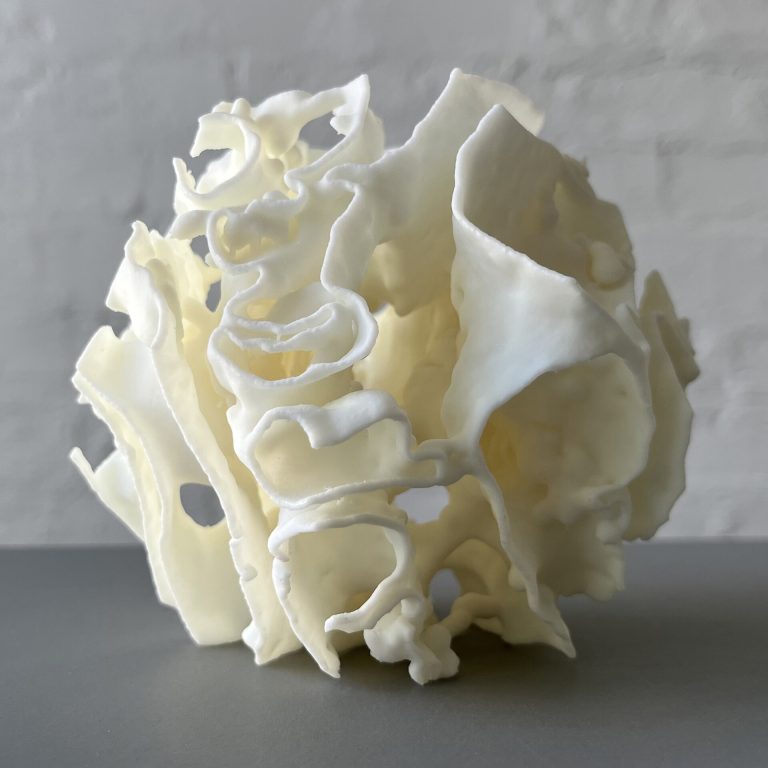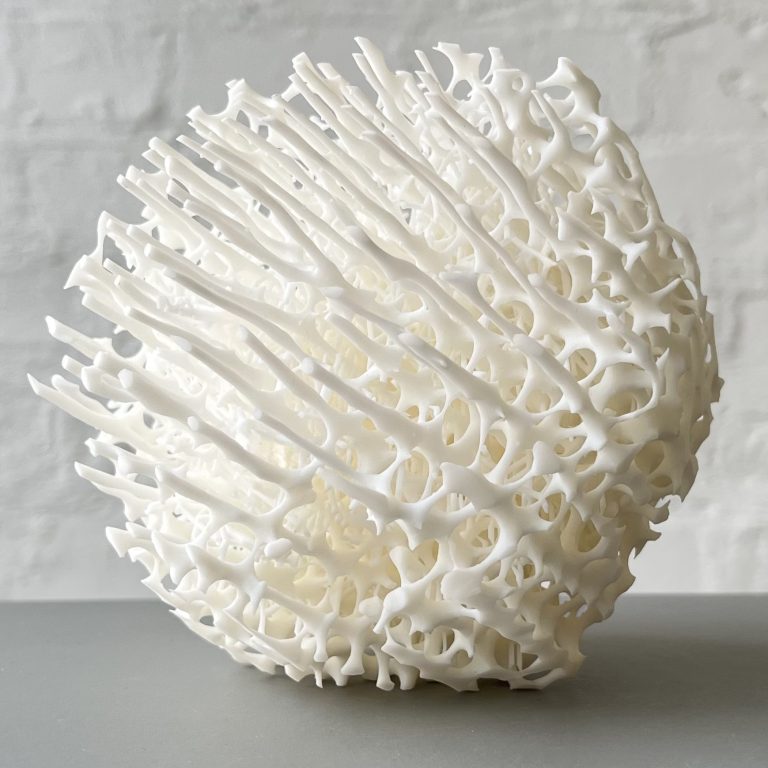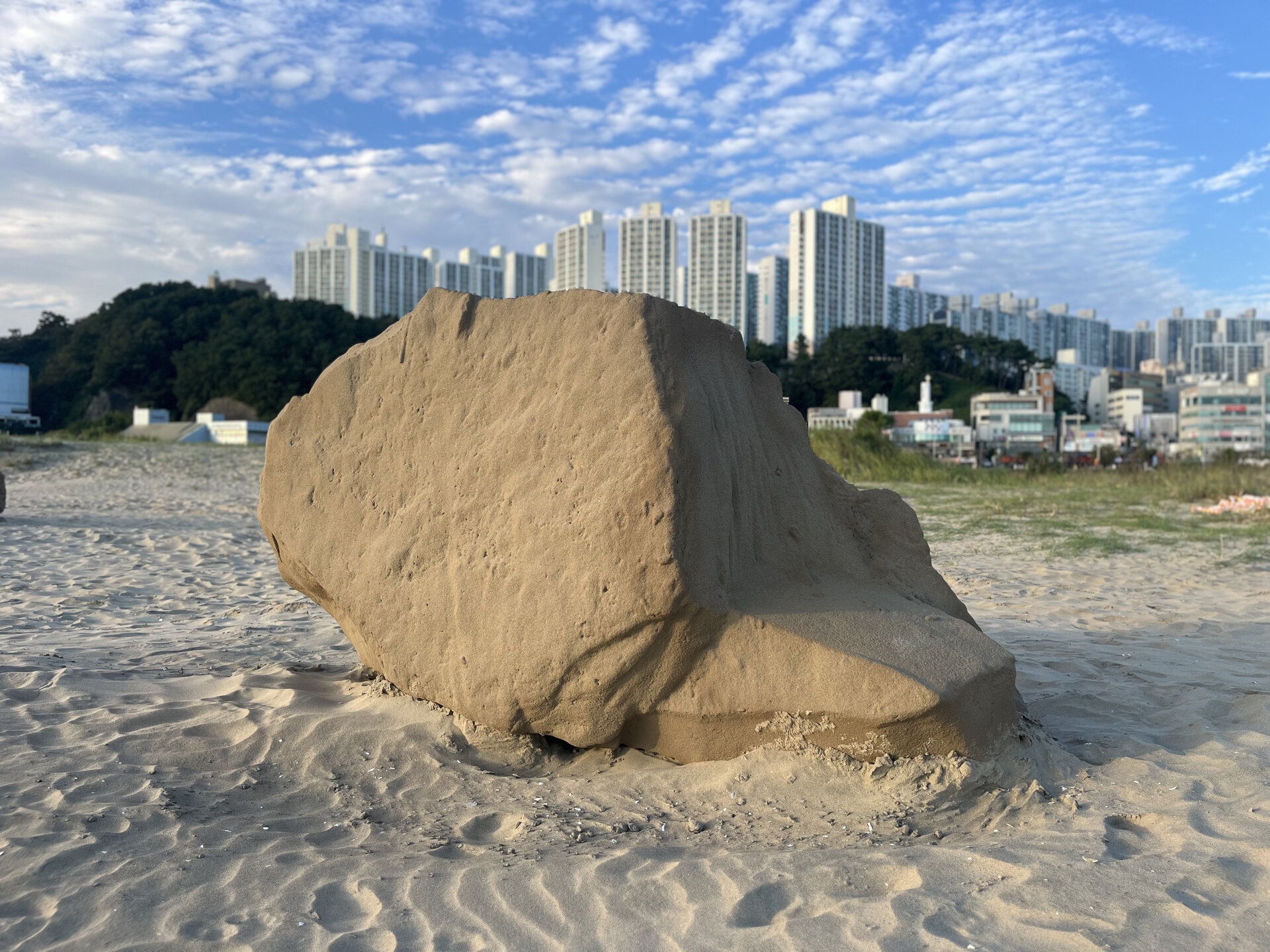
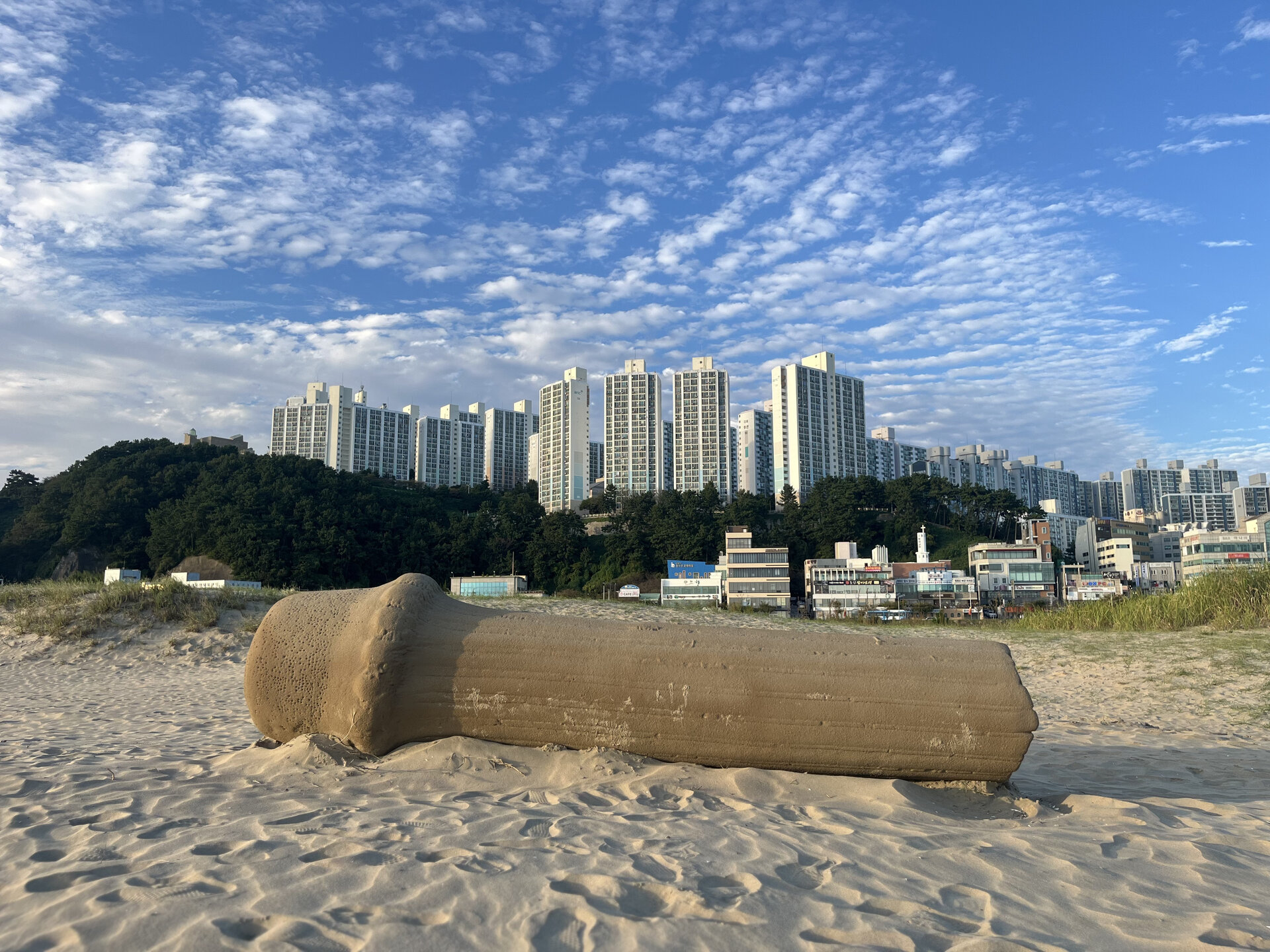
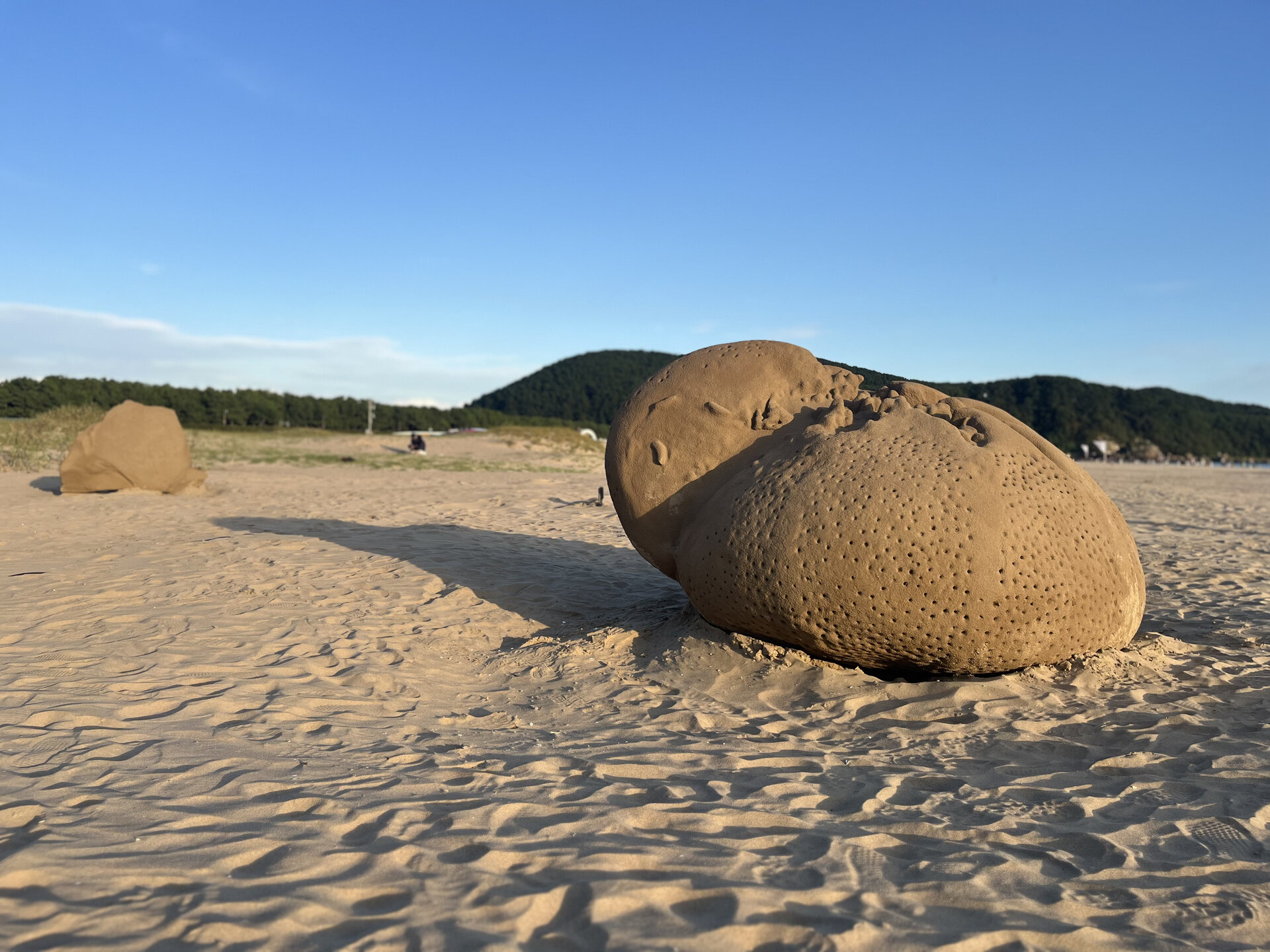
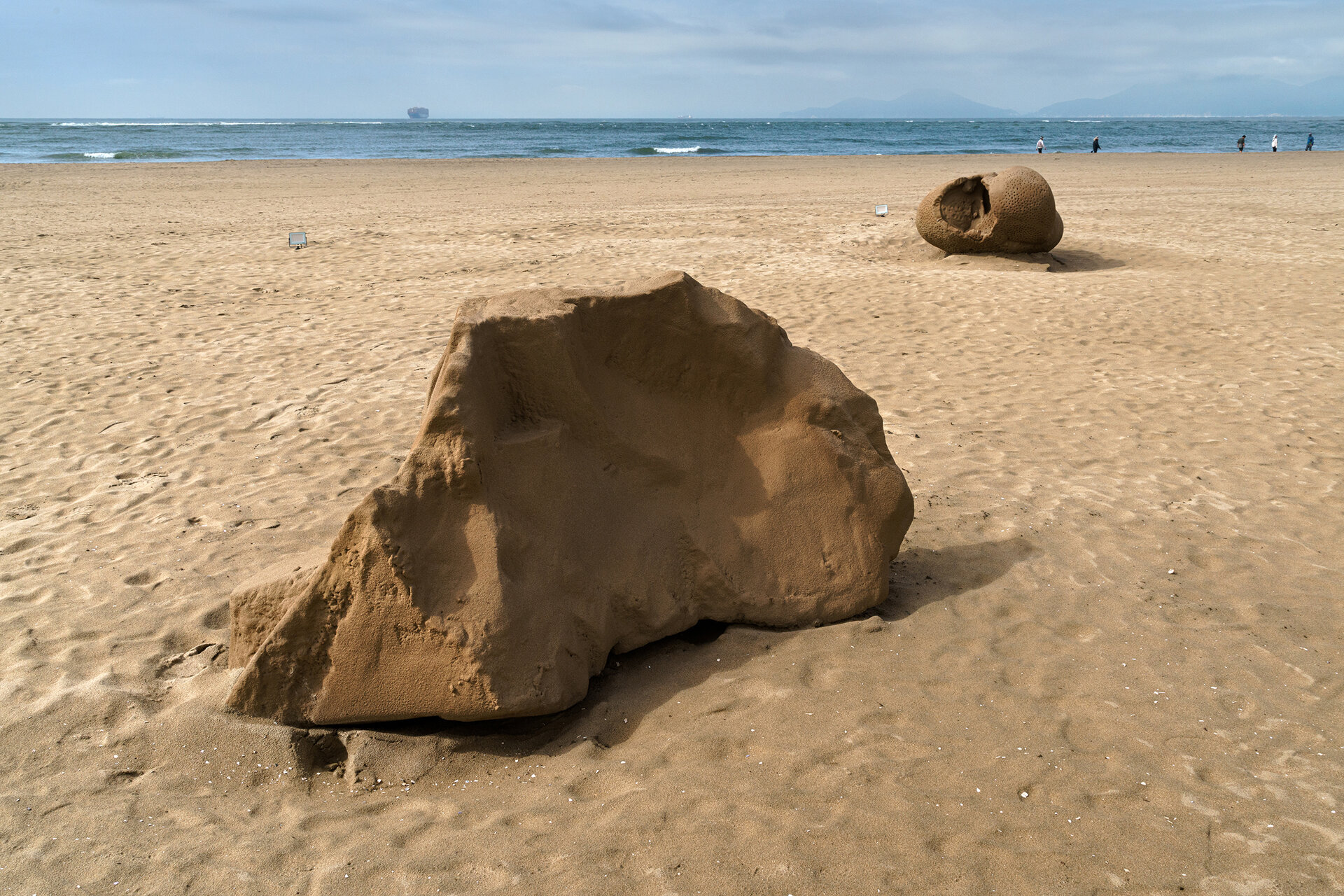
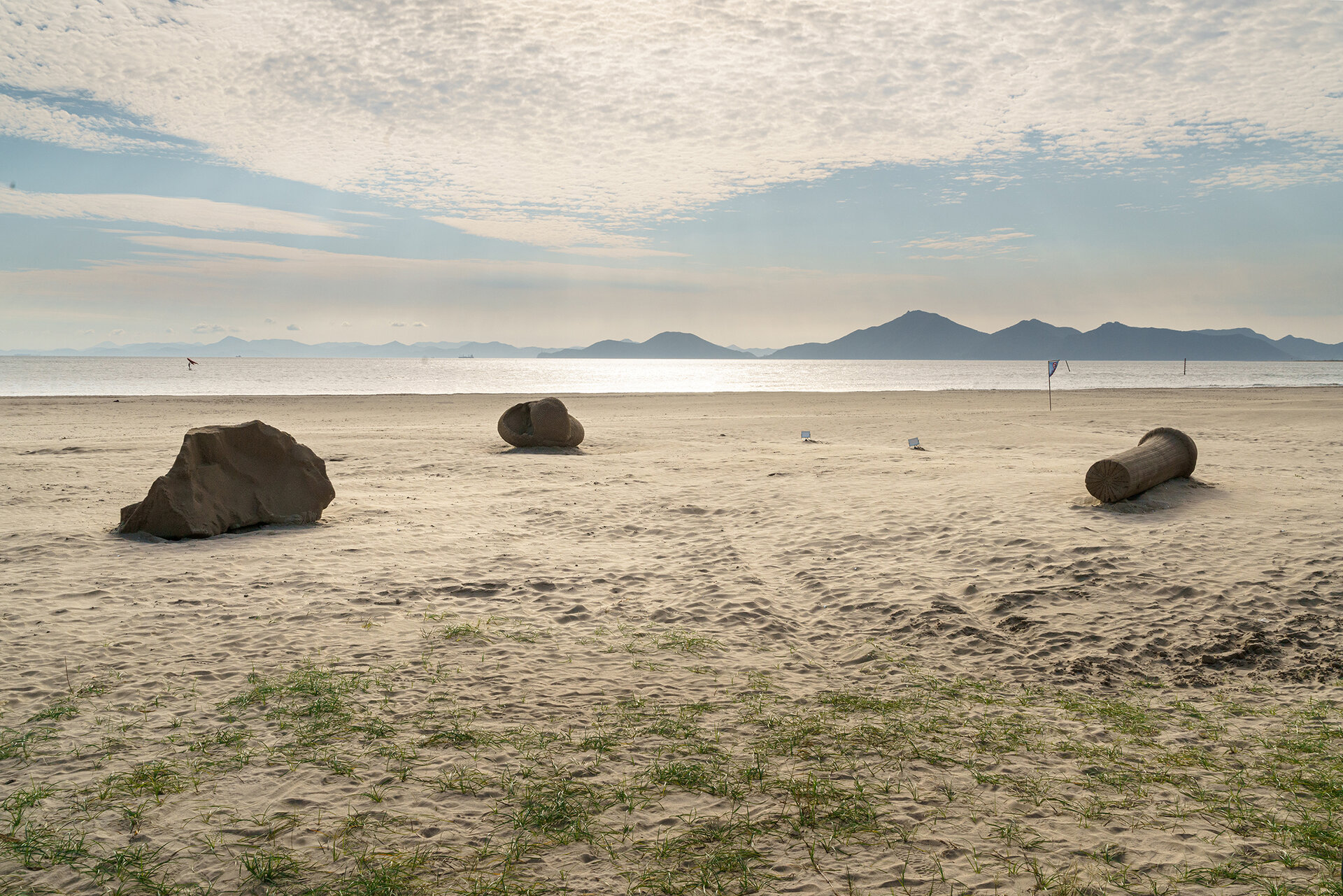
"Tidal Memories" brings Field of Fragments research to Dadaepo Beach, where the Nakdong River meets the sea. Three sculptures present sand grains enlarged 2000 times — one from Dadaepo Beach, two from other continents. Each grain's surface topography, captured through nano-CT scanning, reveals geological time: erosion patterns, mineral composition, transport histories written in microscopic detail. At nearly two meters in dimension, the sculptures register as geological objects rather than scaled reproductions. The works sit at the tide line, subject to water's daily rhythms. High tides may shift their positions; this movement becomes part of the work. Lee traces material memory through detritus while Reiner develops geometric structures within natural forms. The Sea Art Festival theme "Undercurrents – Beneath Waves, Above Wind" connects to the project's method: precision technology renders visible what exists below perception. The tide line placement grounds the sculptures in the same coastal processes that shaped their source grains.
Research:
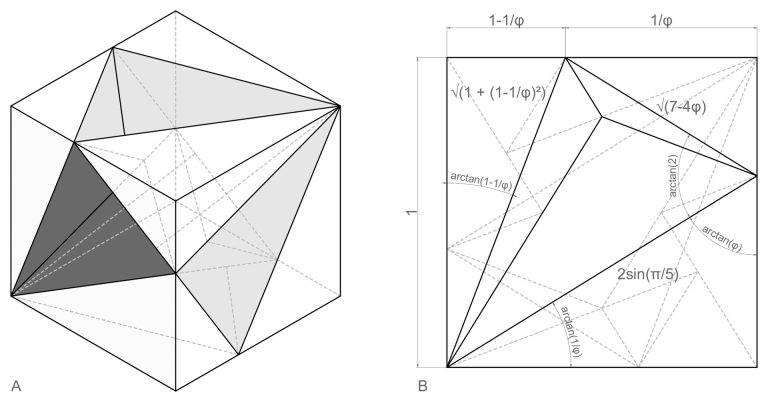
Nano-CT scanning with Zeiss equipment captures sand grains at sub-micron resolution. The 2000x enlargement factor pushes computational limits: mesh processing must preserve microscopic surface detail while generating structurally viable forms. Each grain's scan data — originally 50-100 microns across — expands to sculptures nearly 2 meters in dimension. DICOM image sequences translate to 3D geometry through surface reconstruction algorithms, requiring selective detail retention that balances fidelity against production constraints. Coastal placement demands materials that withstand salt water, UV exposure, and mechanical stress from tidal forces. The production workflow preserves topological accuracy while engineering forms stable enough to endure environmental dynamics.
Photography: Phillip C. Reiner, Jeewi Lee
https://www.saf2025.org/en/exhibition/fragments-tidal-memories
https://jeewi.de
Artwork year: | Last updated: