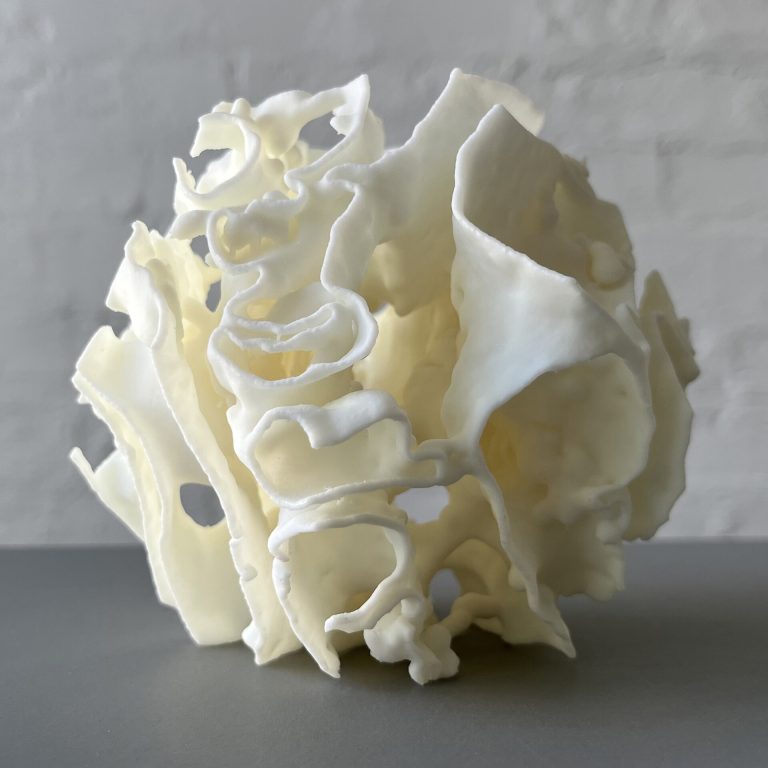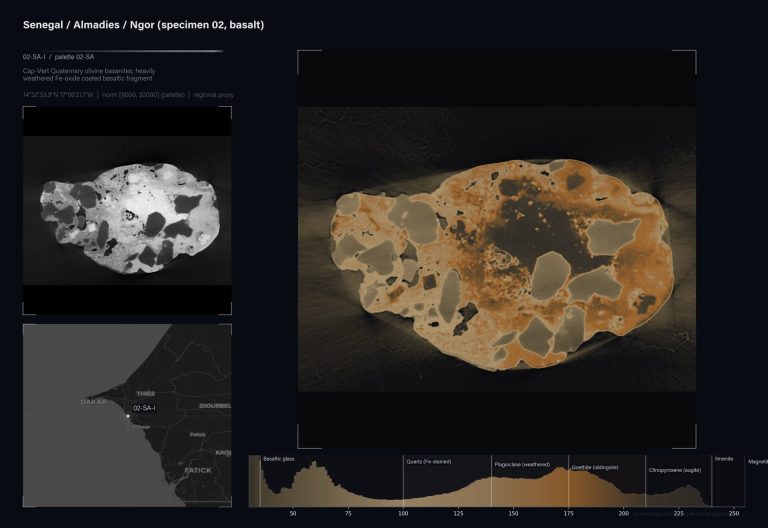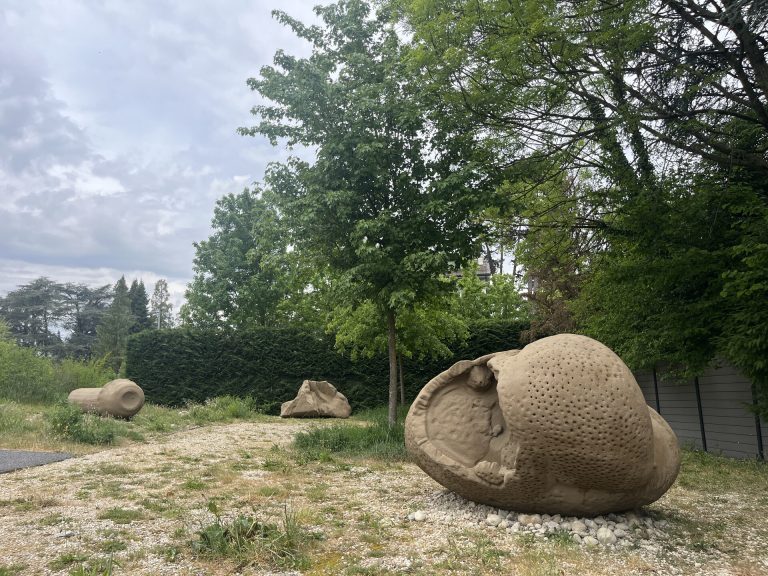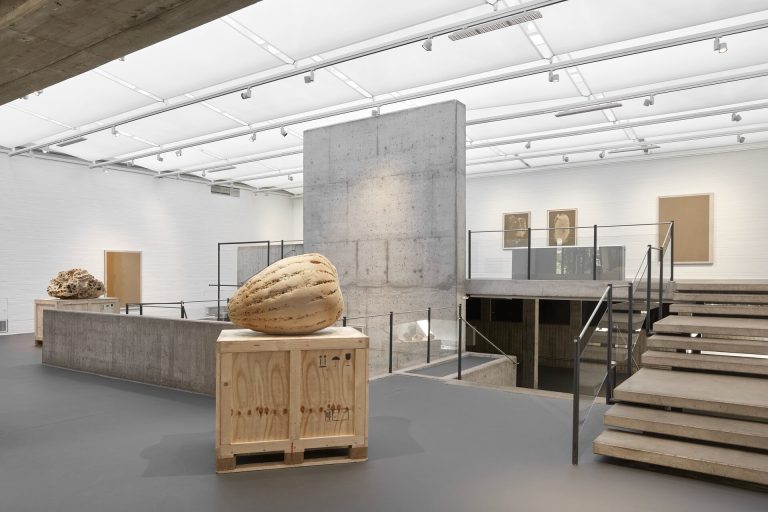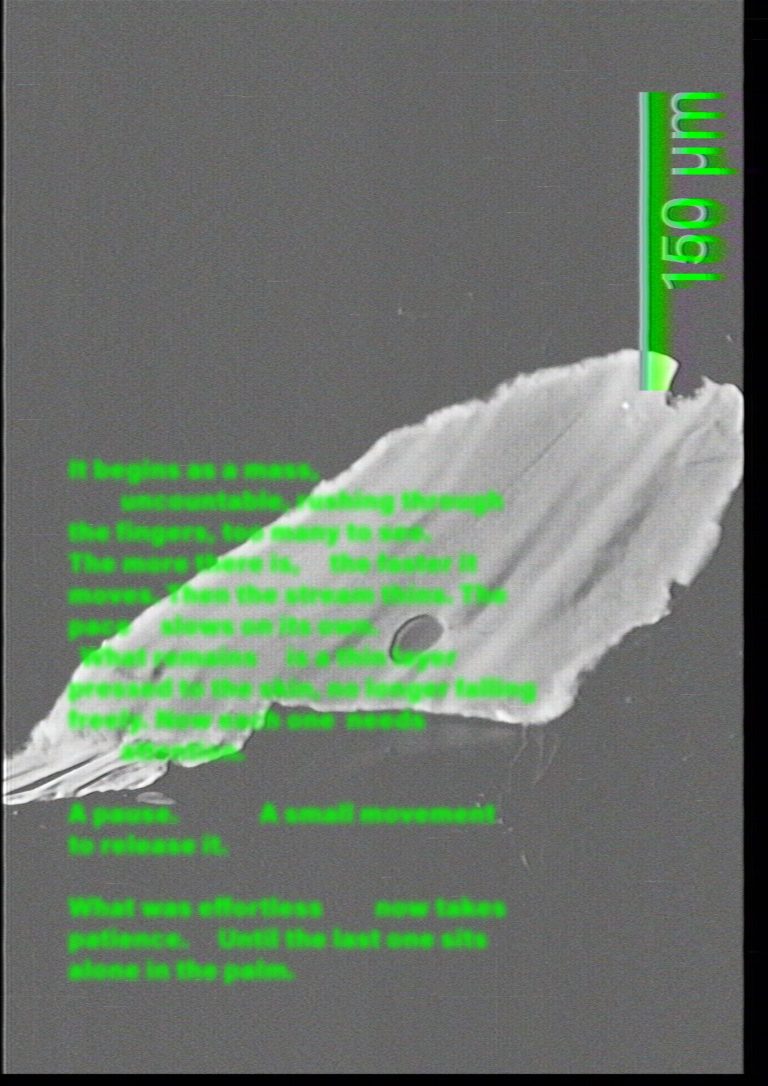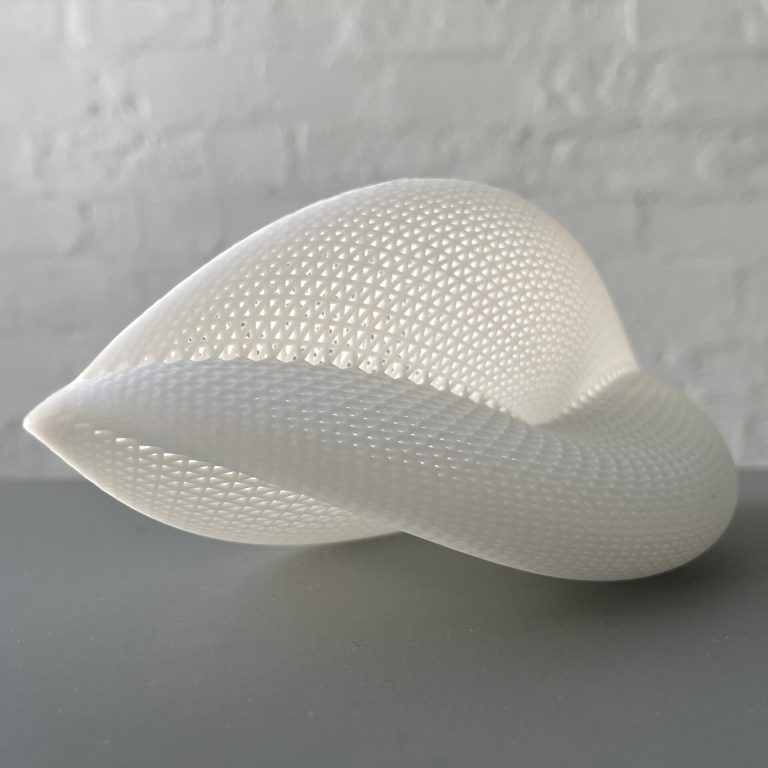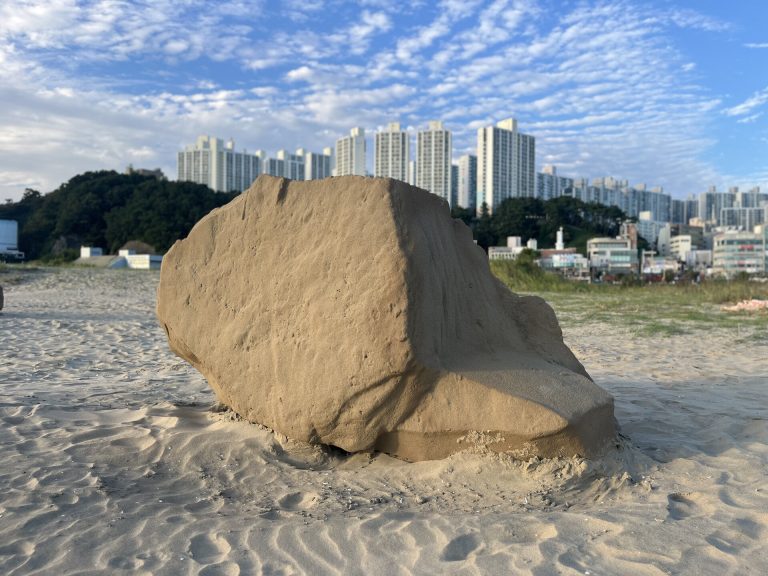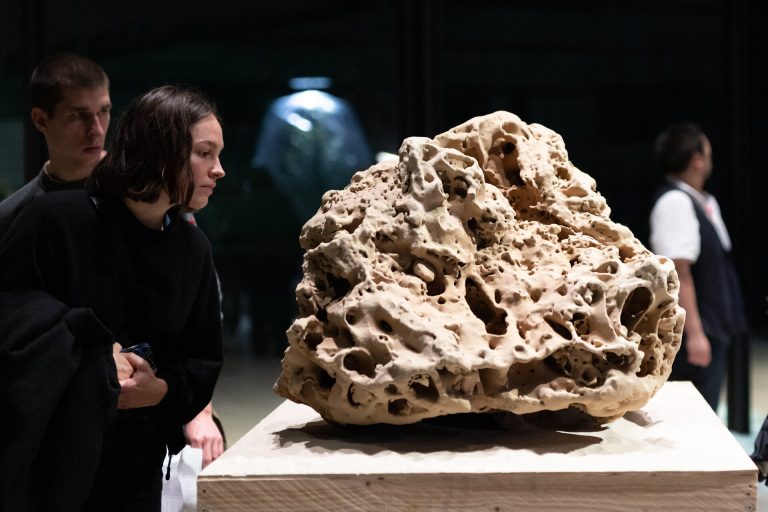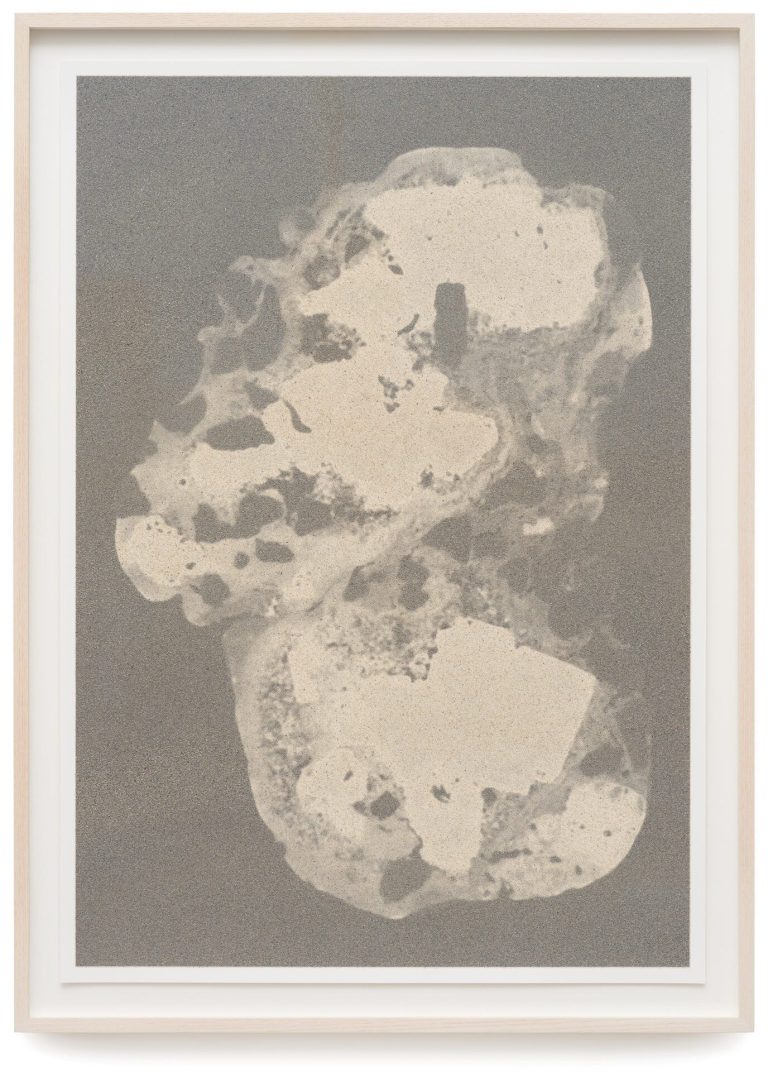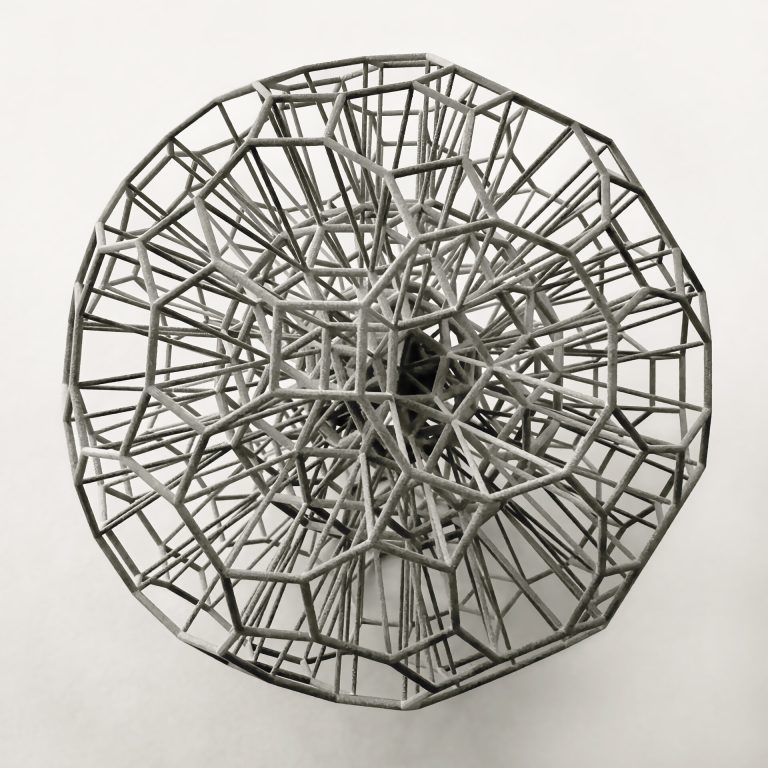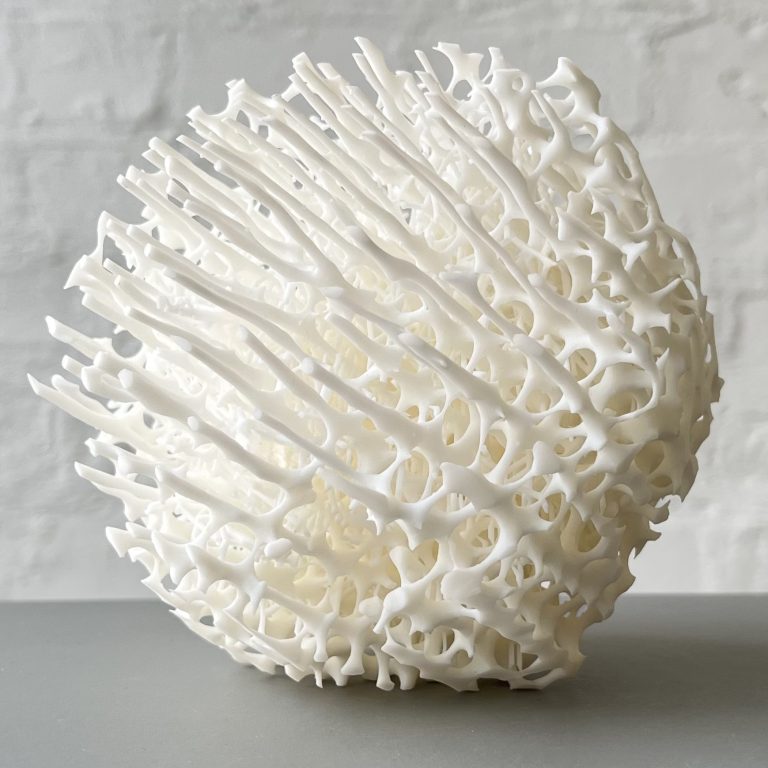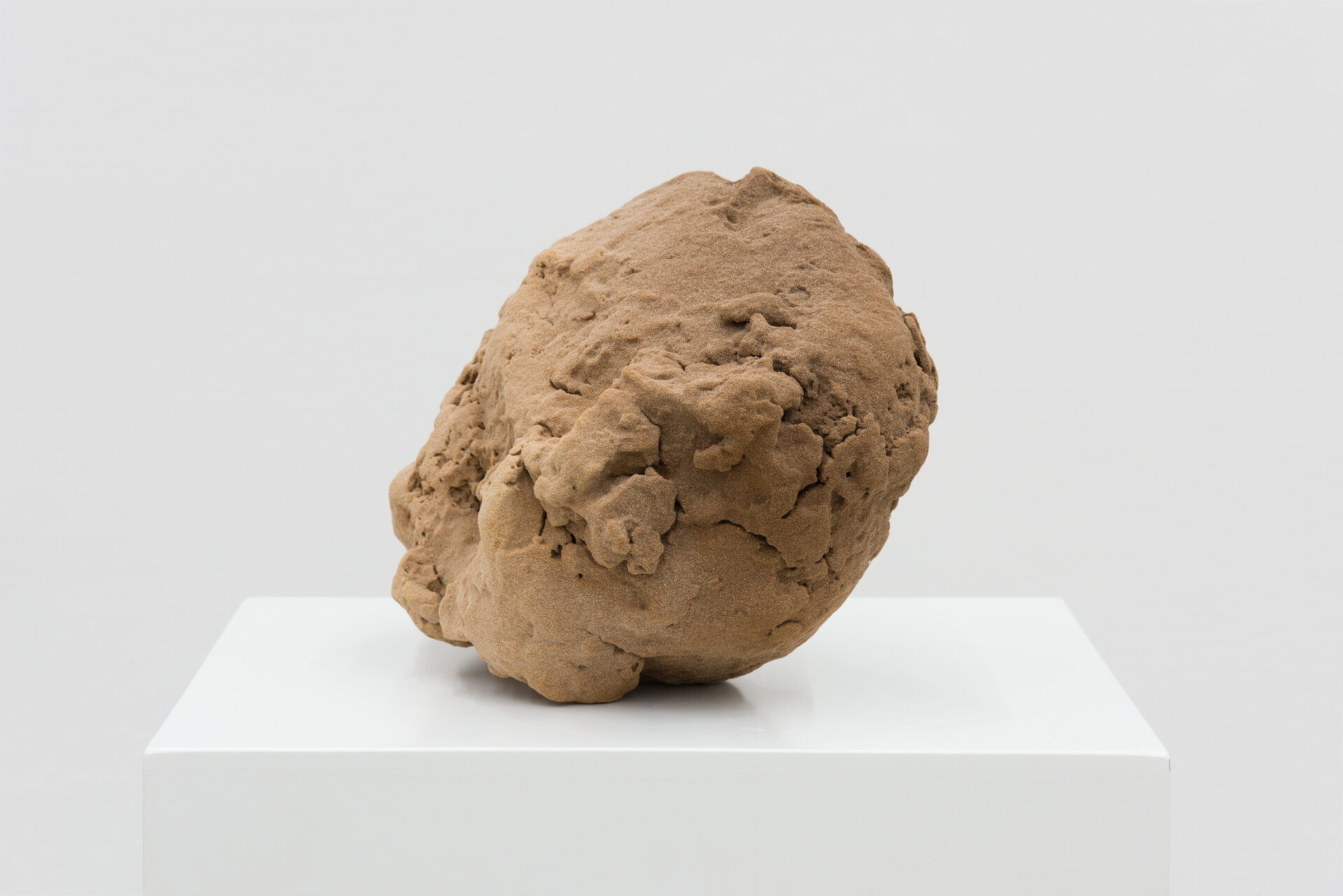
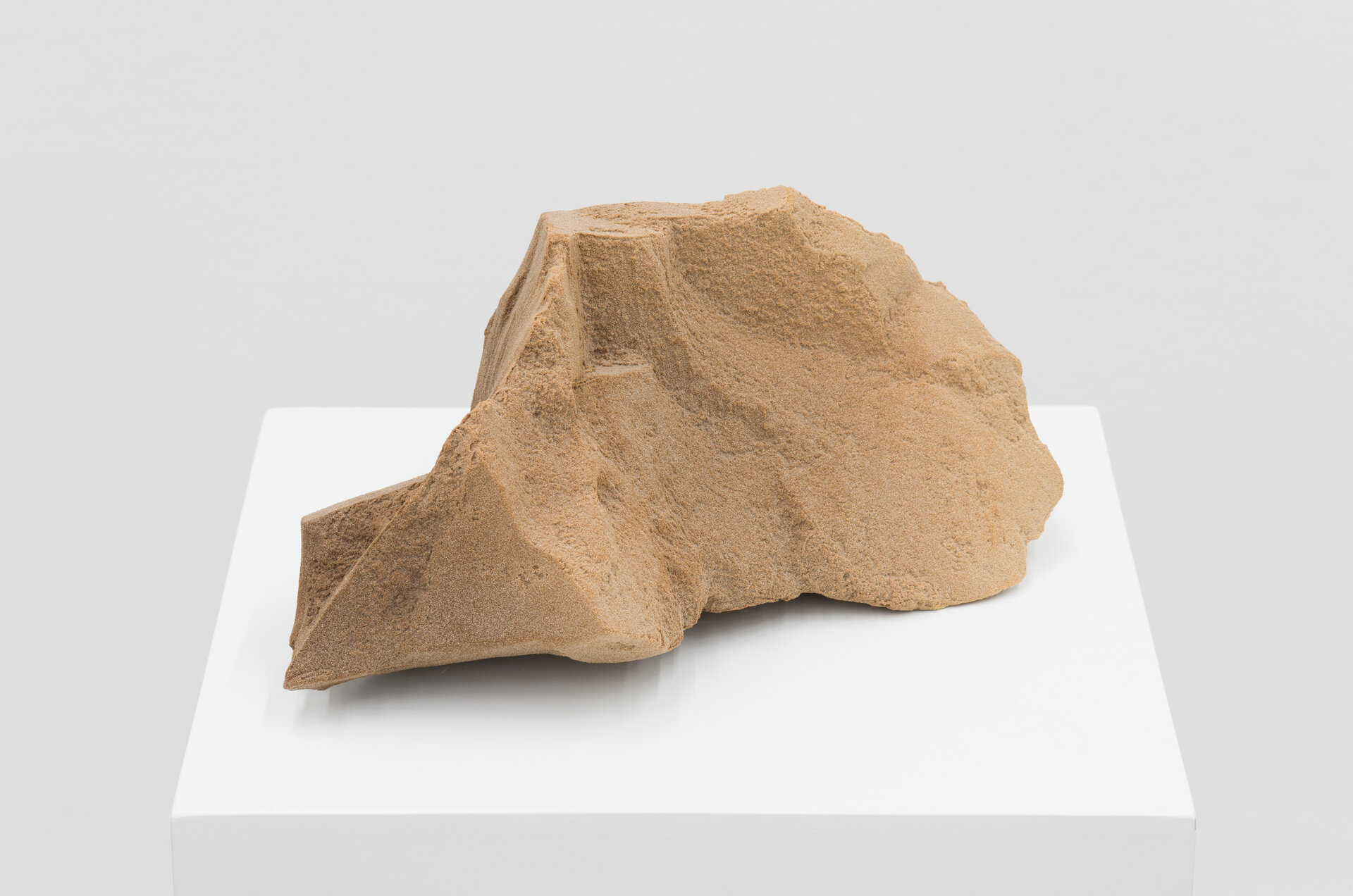
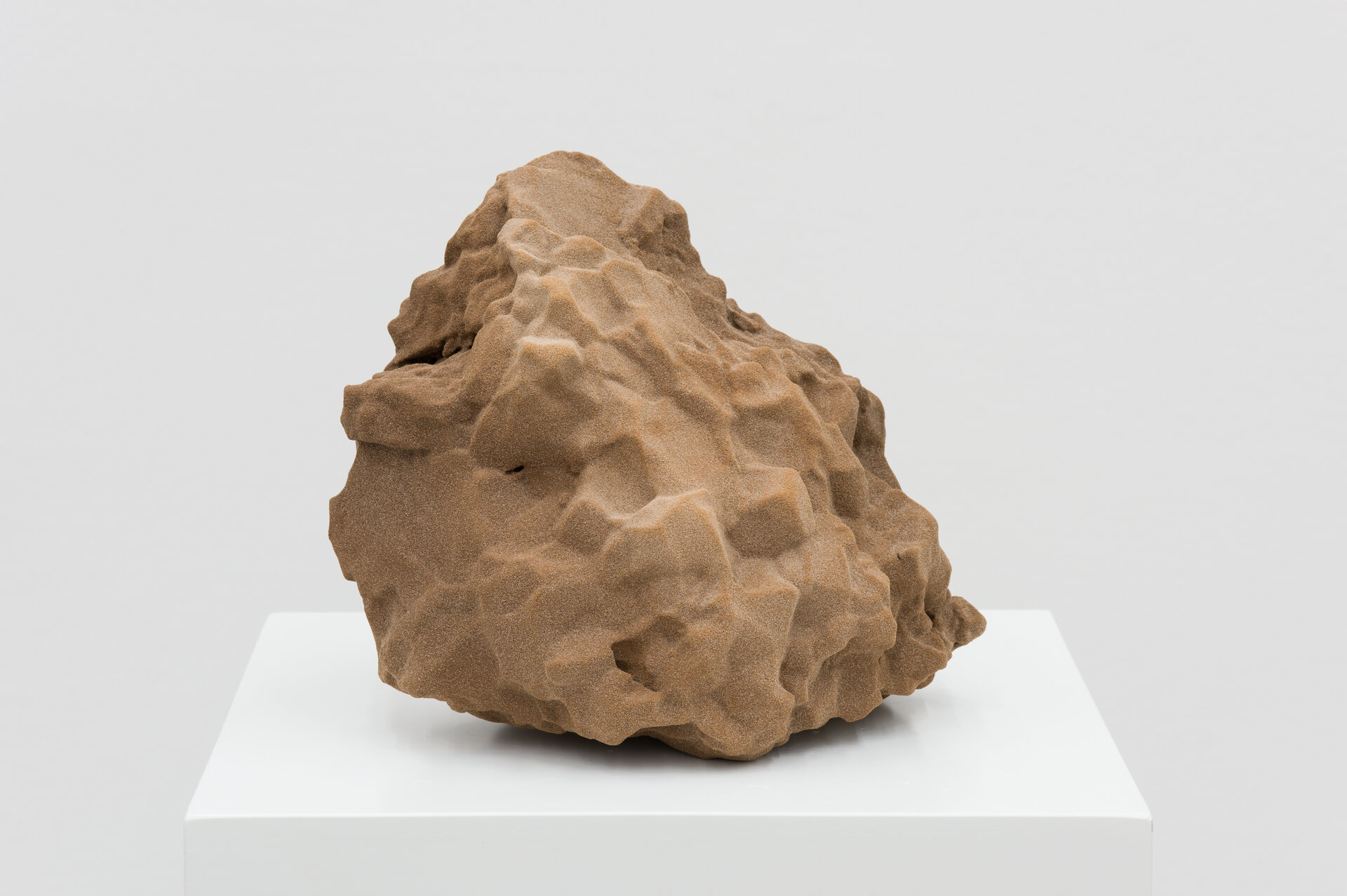
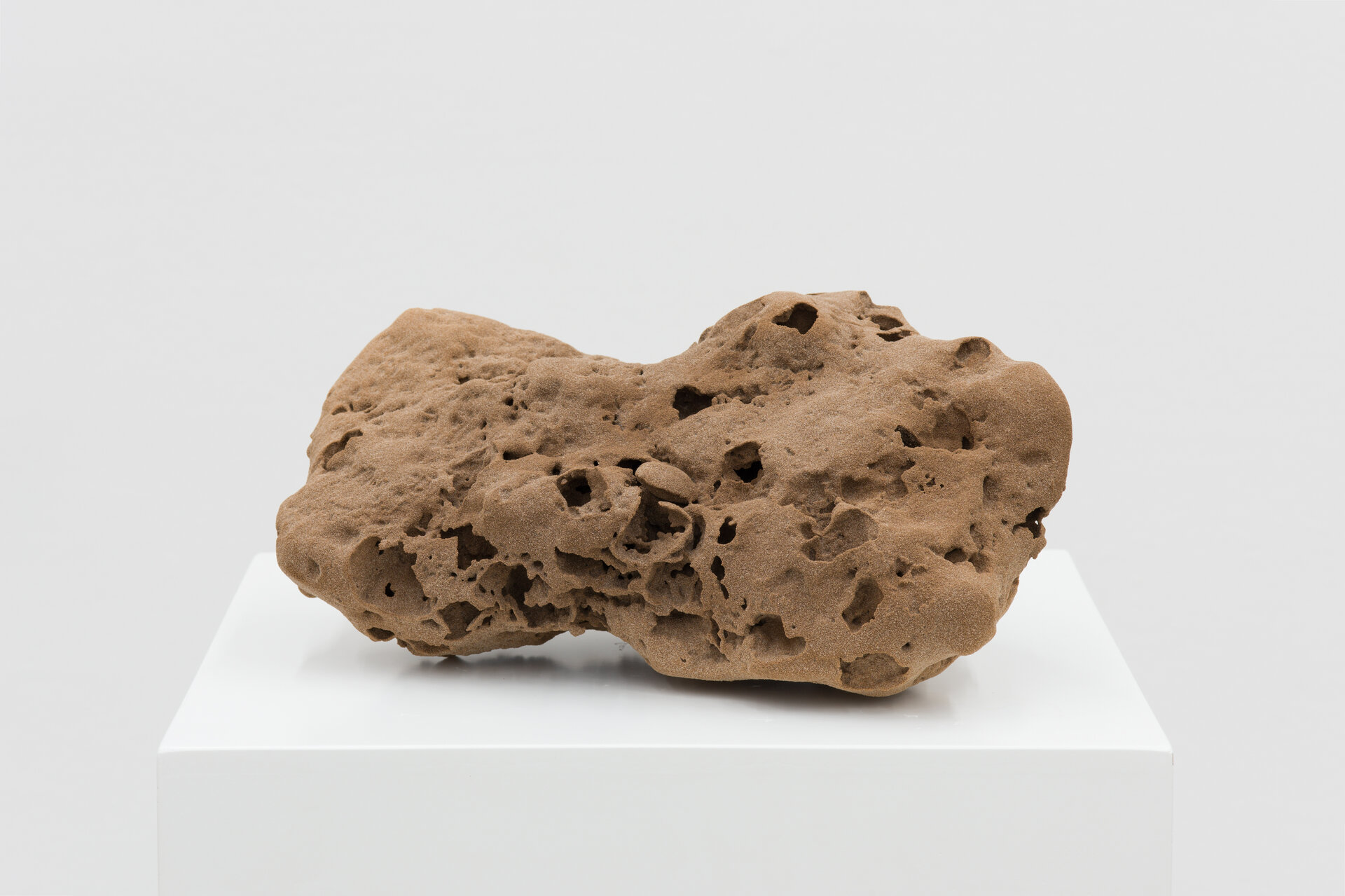
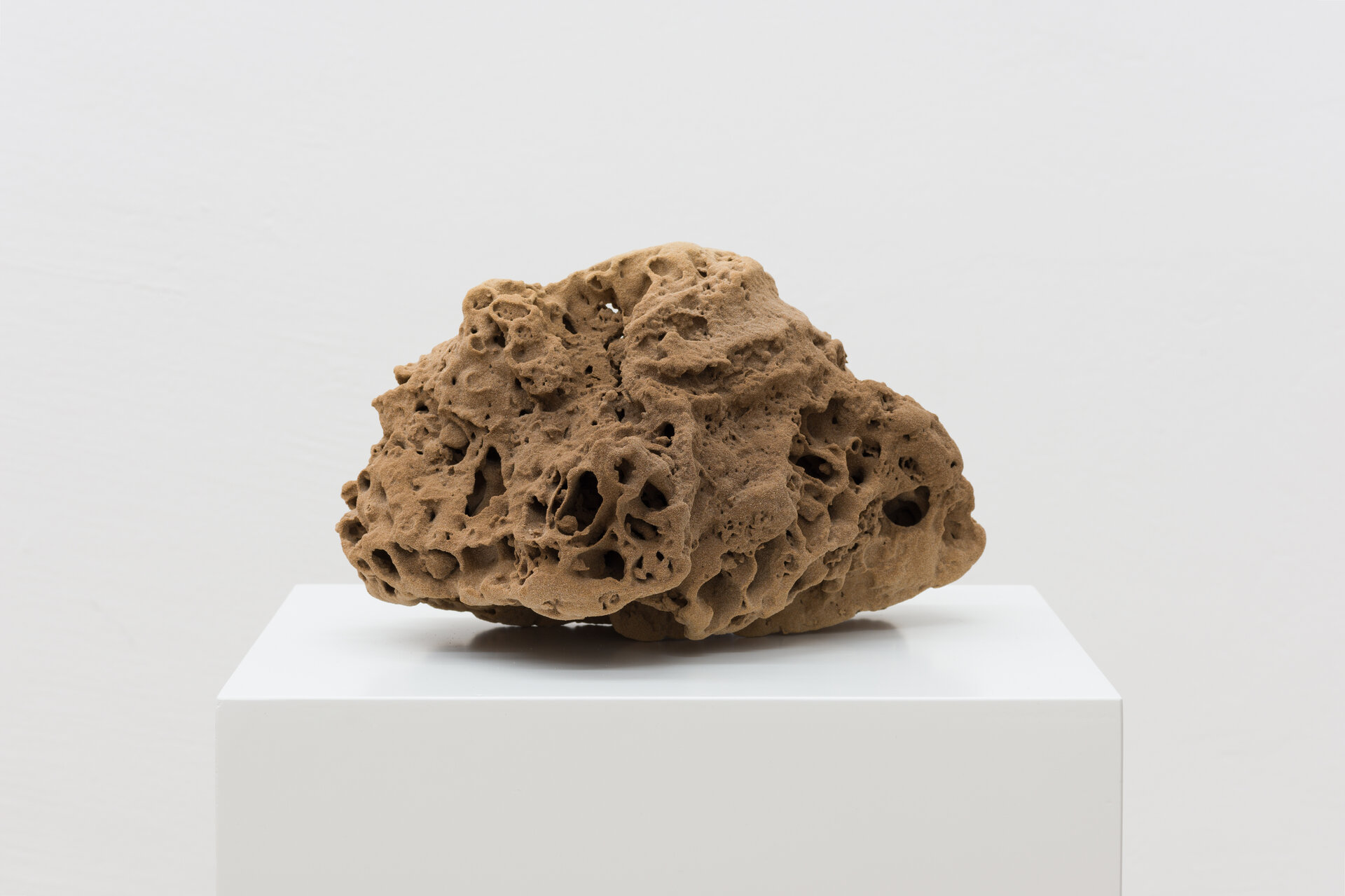
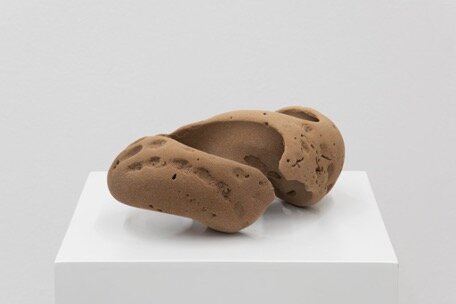
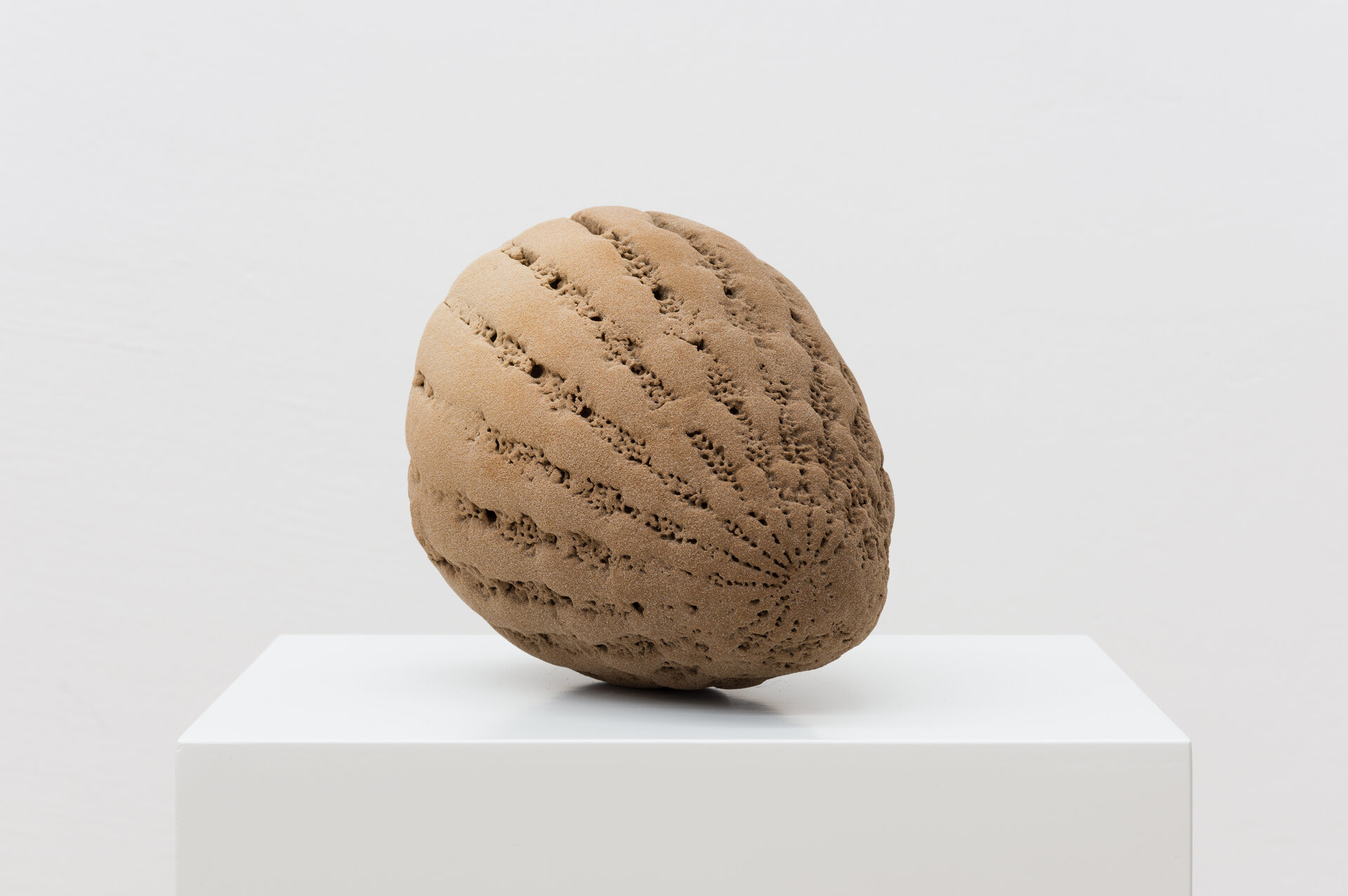
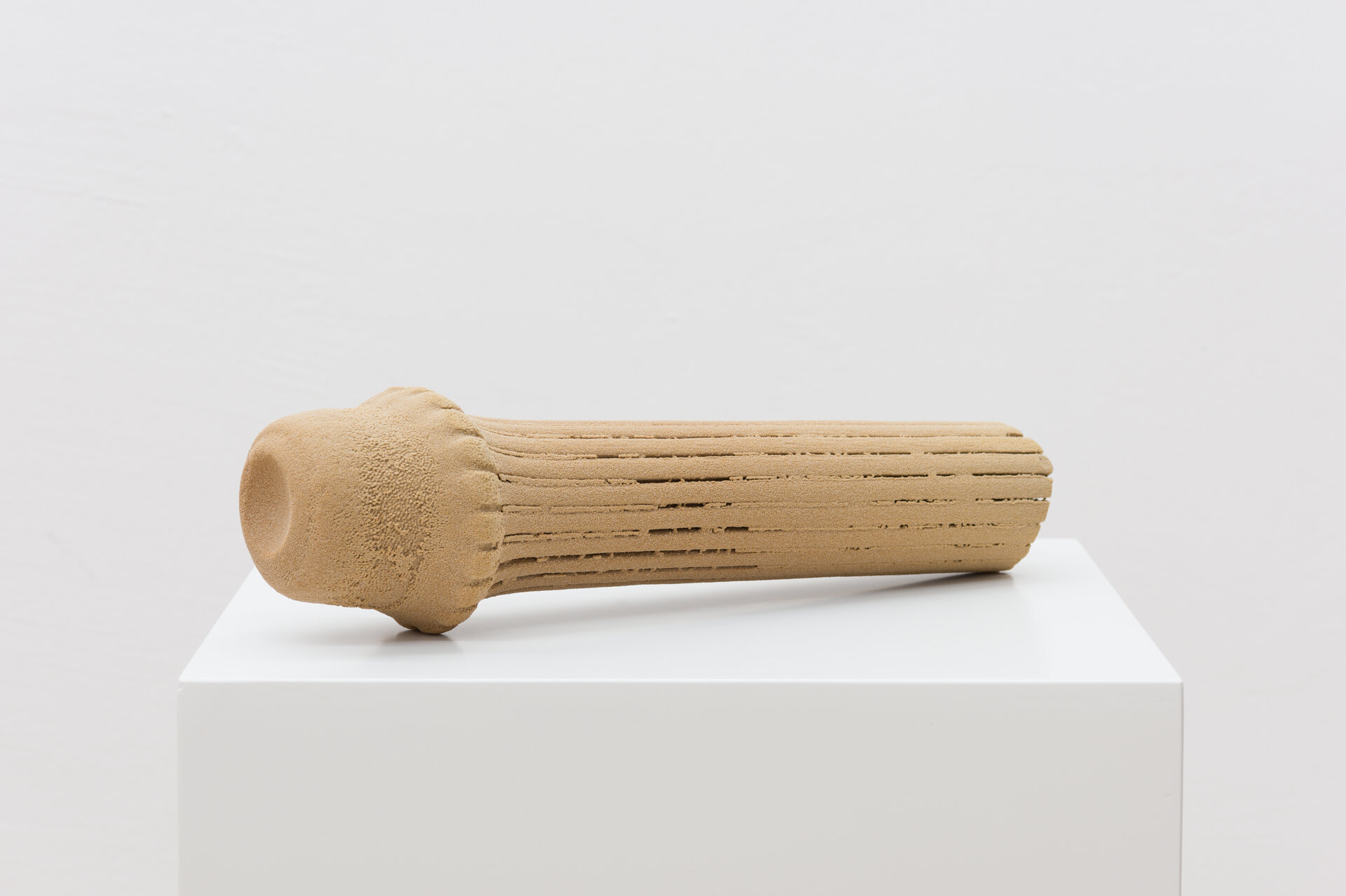
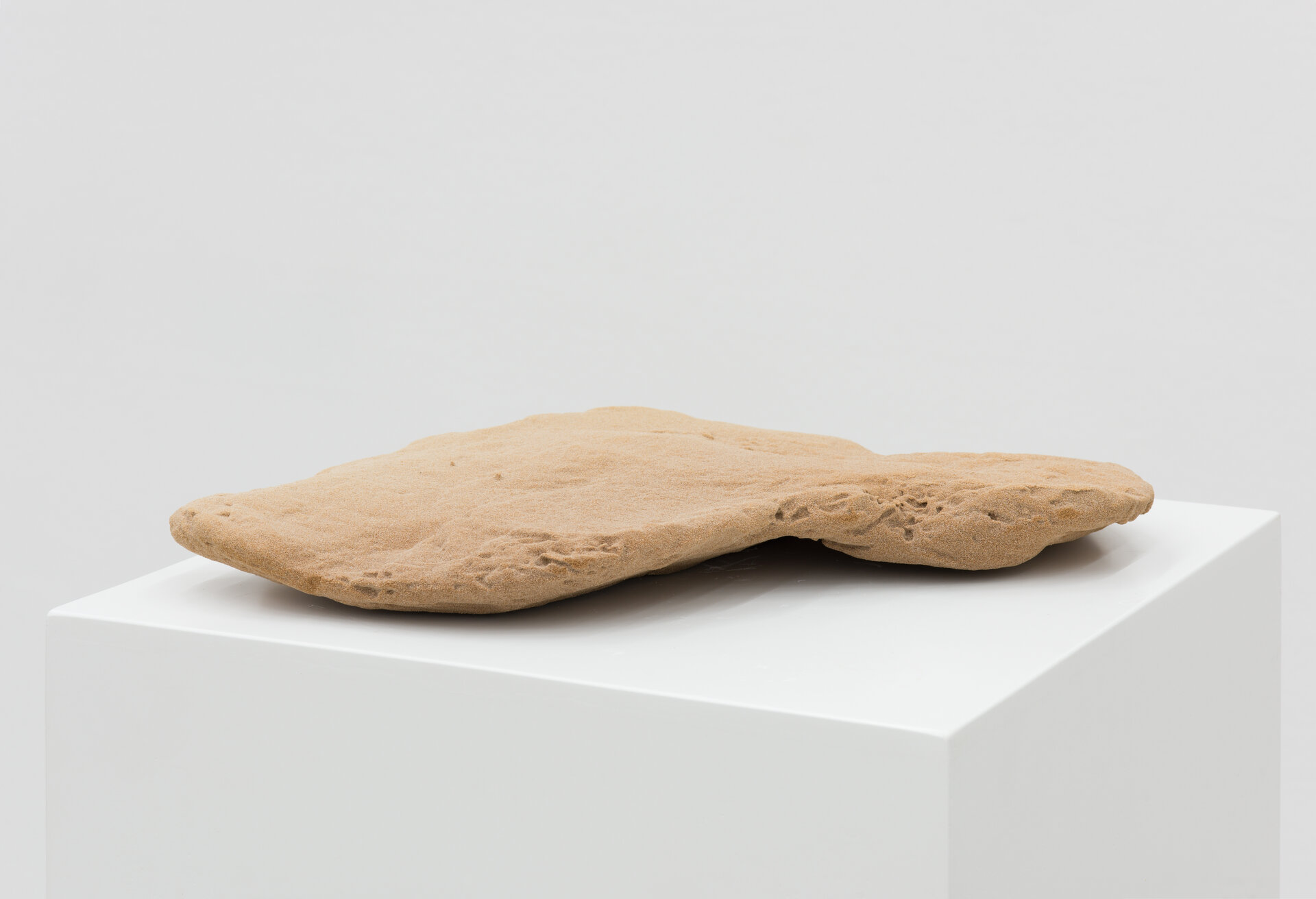
"Fragments" is an ongoing edition of nine sculptural works. Each work is a single grain of sand in the same material, enlarged 130 to 230 times. The scale allows close examination of individual grains; each sculpture preserves the topographies and temporal traces in their surfaces. The edition may expand as new grains are selected and added. Grains are selected from locations across multiple continents, each carrying distinct geological signatures: angular shards from recent fracture, rounded forms shaped by millennia of water transport, pitted surfaces from chemical weathering. The project treats sand as a material that holds geological memory and place-specific associations. Sand is abundant globally but under pressure from construction and digital-industry demand. Lee works with detritus as embodied memory; Reiner contributes parametric work based on natural phenomena described by mathematical principles. The collaboration uses mathematical precision to expose structure and geological history in single grains at intimate, hand-held scale.
Research:
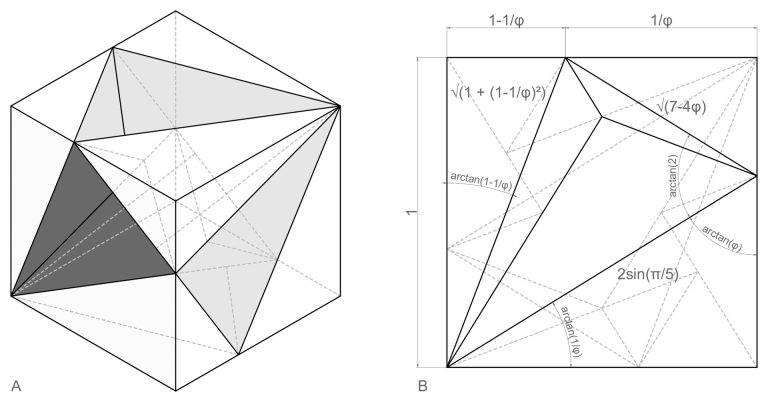
Each sculpture starts with one grain scanned by Zeiss X-ray microscopy (nano-CT). The process captures surface topology and internal density at micron resolution. Data moves from physical grain to DICOM image stack, then to 3D geometry via surface reconstruction. ProtoCtrl handles mesh processing and parametric geometry for 3D printing. At 130-230x enlargement, features invisible to the eye — micro-fractures, mineral inclusions, erosion channels — become legible surface detail. The workflow addresses the Sorites paradox by fixing a single grain as the unit of reconstruction while the material itself is defined by multiplicity. The result is hyper-realistic reconstruction preserving sub-millimeter surface detail.
Photography: Christopher Häring
https://jeewi.de
Artwork year: | Last updated: