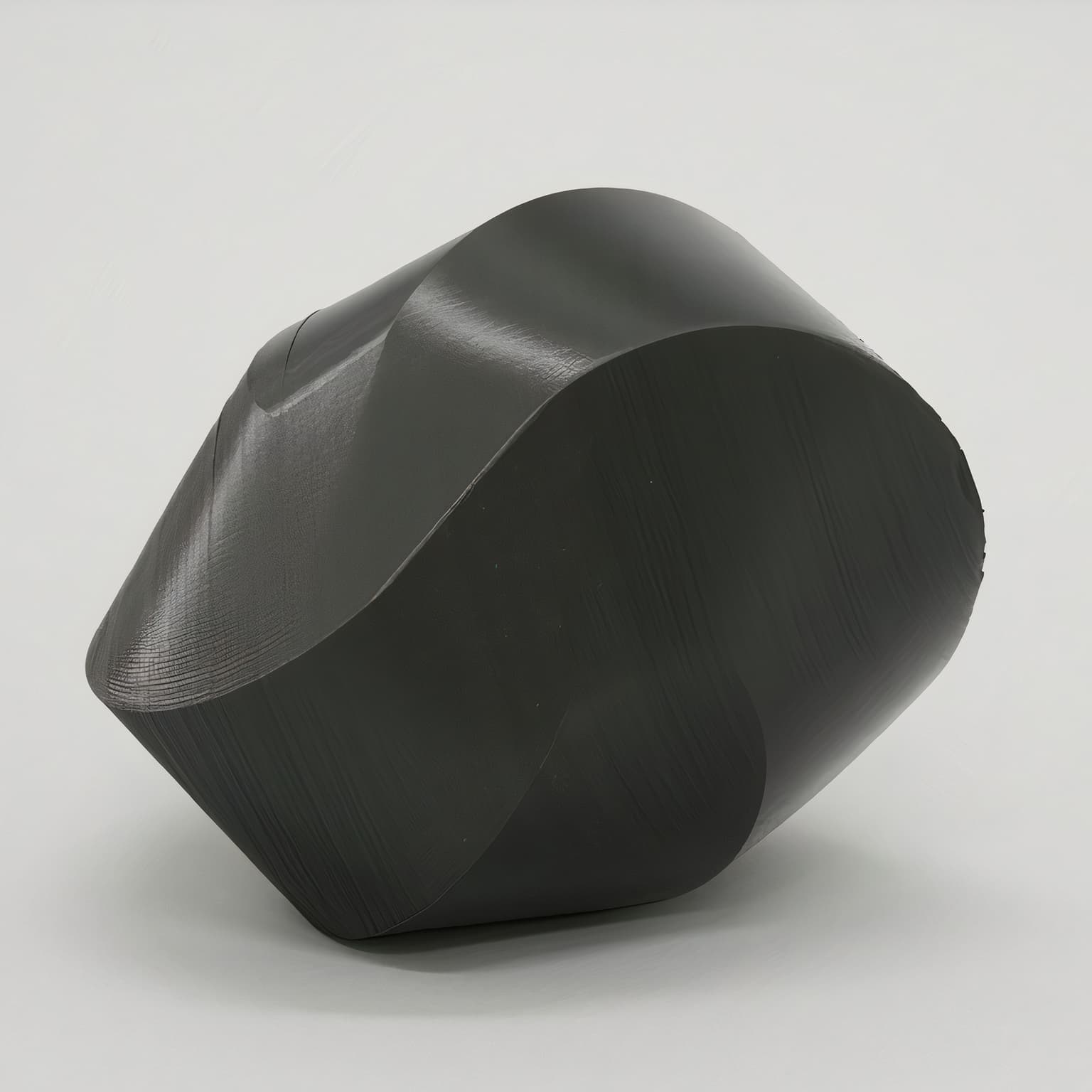
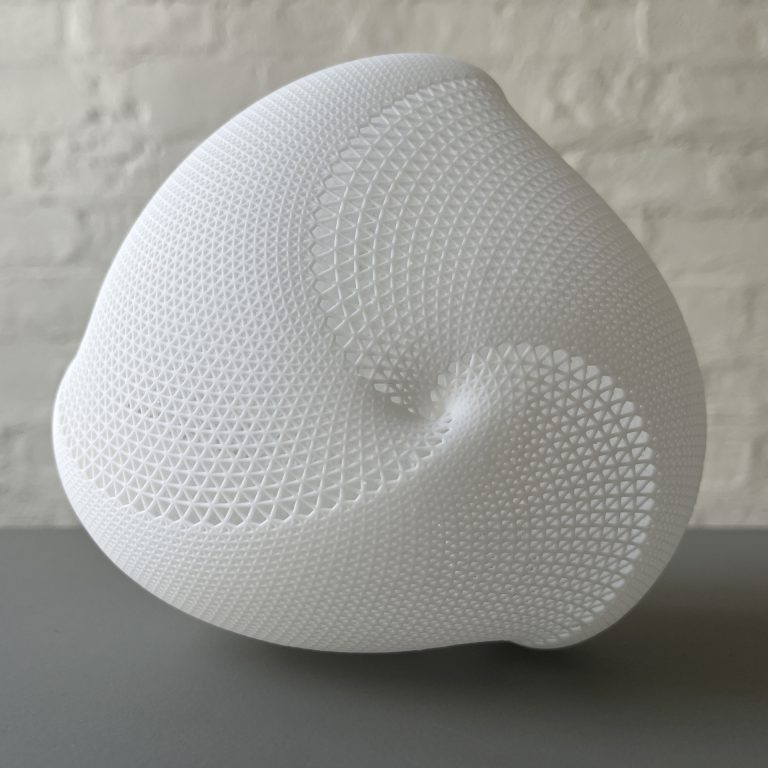
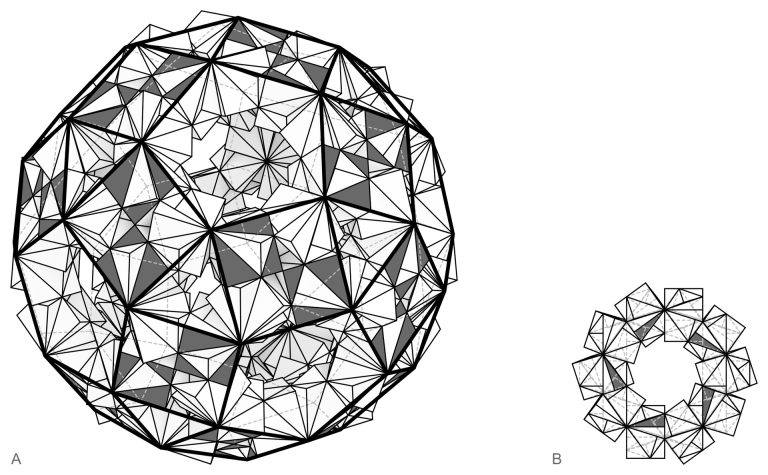
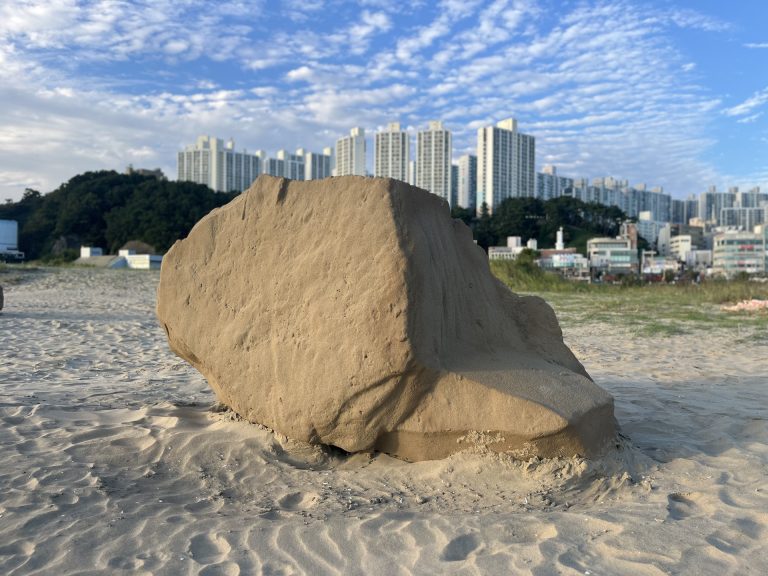
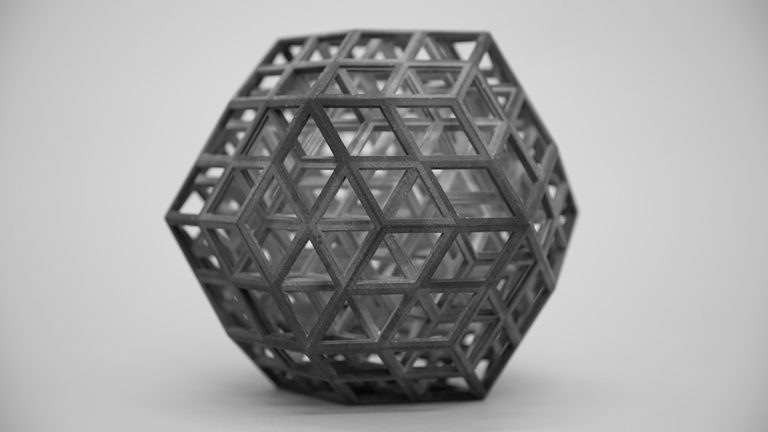
Triakaleidocycloid is inspired by Paul Schatz's Oloid and extends the idea to a family of derivatives. The goal was a shape whose edges combine arcs and lines and whose surface is developable. The oloid can be generated by tracking the edges of the "invertible cube" as it is turned inside out; the same edge-tracking approach was applied to create a series of kaleidocycloids. The base invertible polyhedron can have different numbers of edges; which edges are tracked also varies. Each choice yields a developable surface with a specific curvature and fold behaviour. The investigation maps parameter choices (edge count, tracking pattern) to the resulting surface geometry and tests which combinations remain single-sheet and physically realisable.