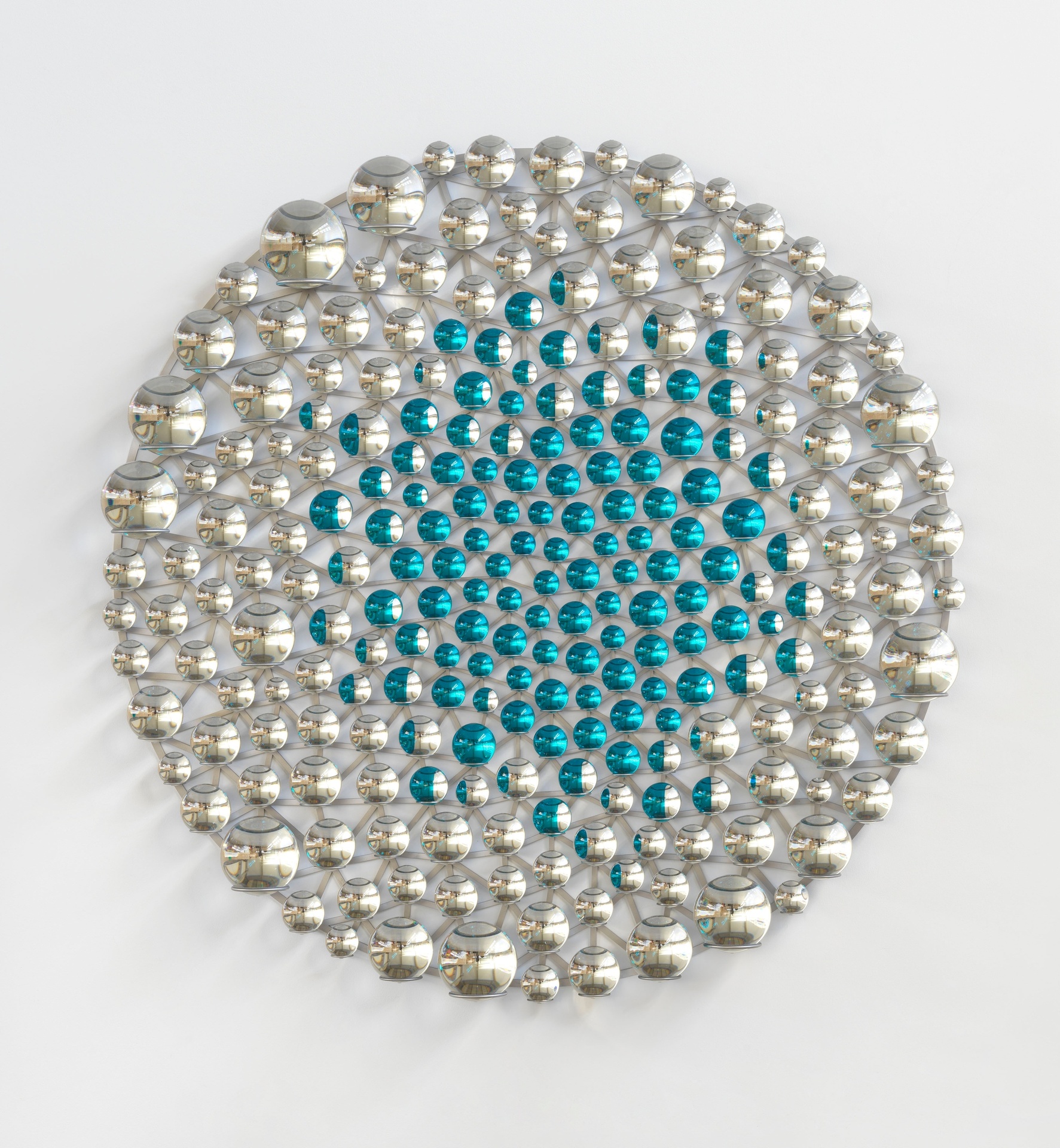
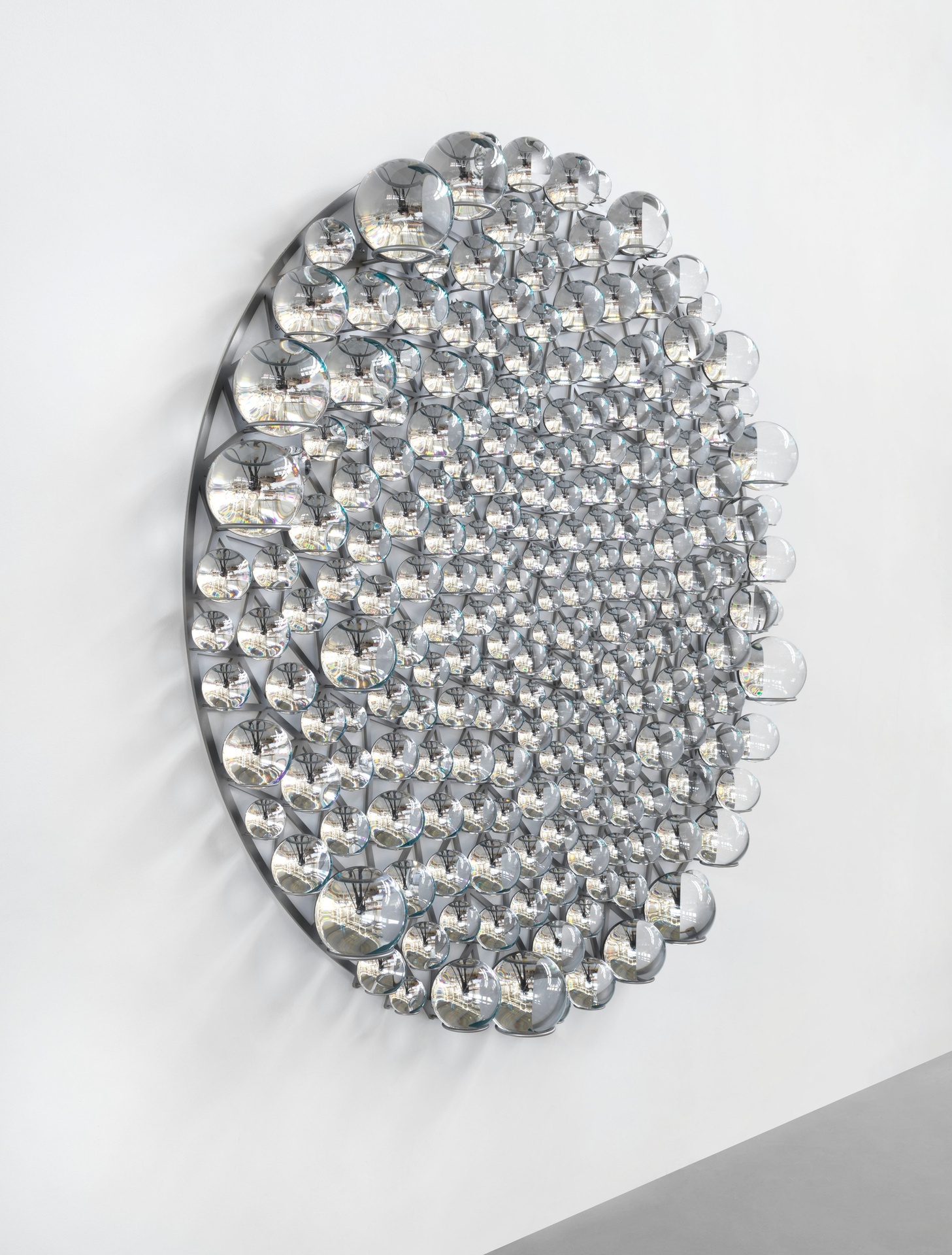
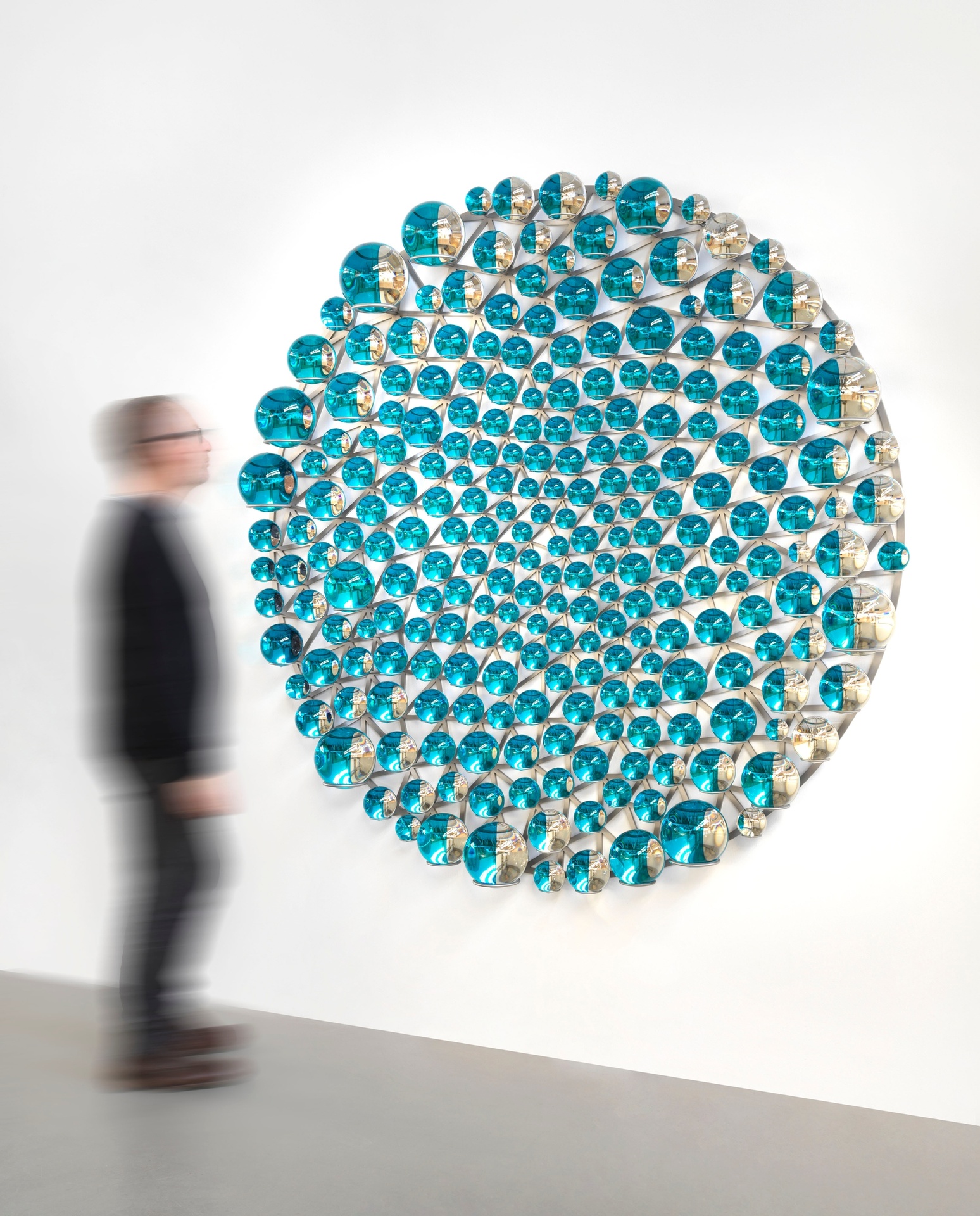
"The Attention of Time" employs partially silvered glass spheres to fragment and multiply perception. Each sphere acts as convex mirror and lens simultaneously-viewers see themselves inverted and miniaturized while surrounding colors blend through optical interference. The partial silvering creates transparency gradients; some areas reflect fully, others allow light passage, producing layered visual effects. Cyan and black paint applied to specific zones introduces controlled color mixing as viewers move. The spherical array generates interference patterns between adjacent reflections. Multiple spheres create recursive reflections-images bouncing between surfaces, each iteration smaller and more distorted. Time manifests through movement: static viewing yields one image set, circulation reveals continuous transformation.
Research: Sphere positioning follows optical geometry principles for maximum interference effects. Partial silvering patterns calculated to create specific transparency gradients-computational modeling determines coating density for desired reflection/transmission ratios. Color zones (cyan, black) positioned using spherical coordinate mapping, ensuring predictable color mixing as viewing angles change. Array geometry optimizes for overlapping reflection fields, creating visual density through multiplication rather than physical quantity.