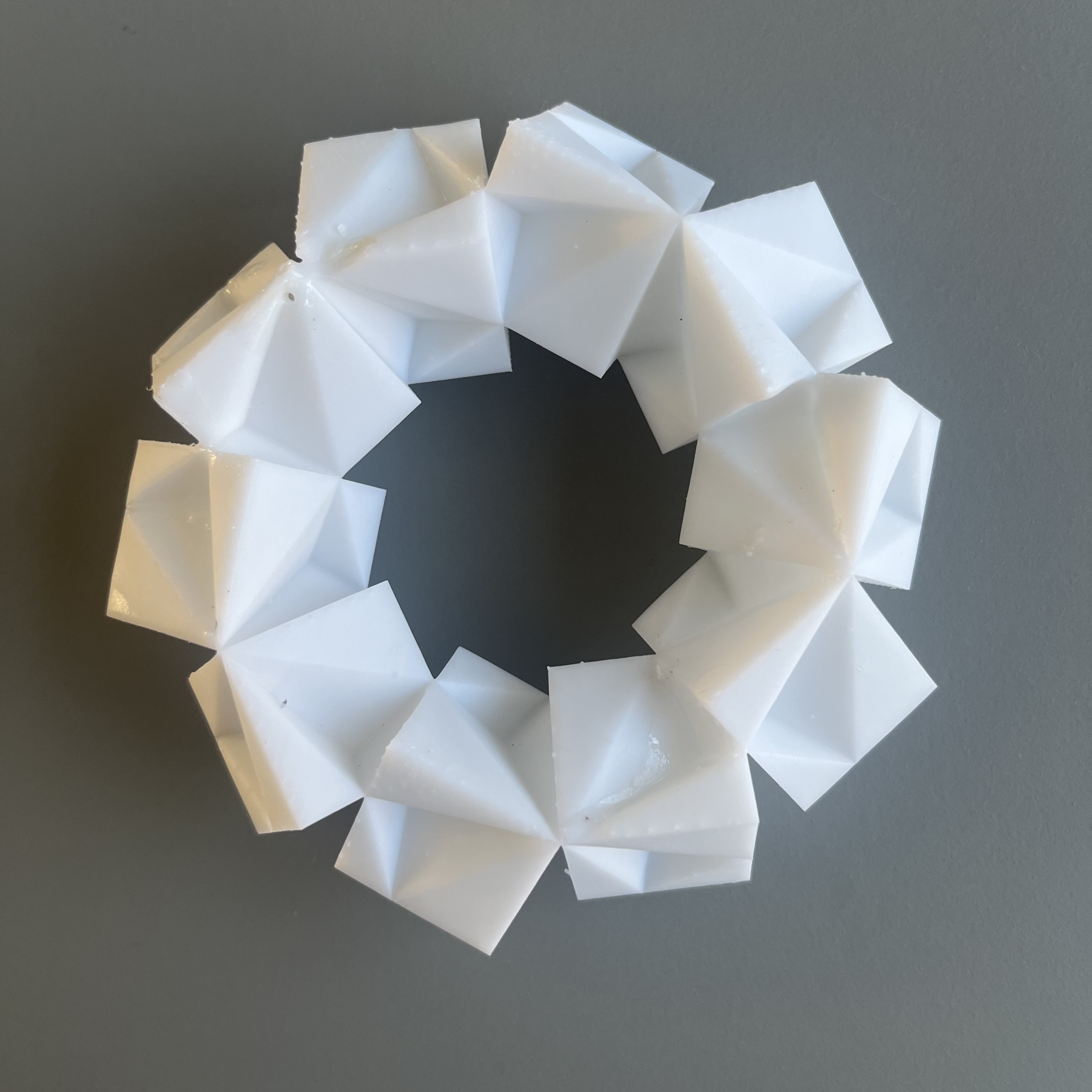
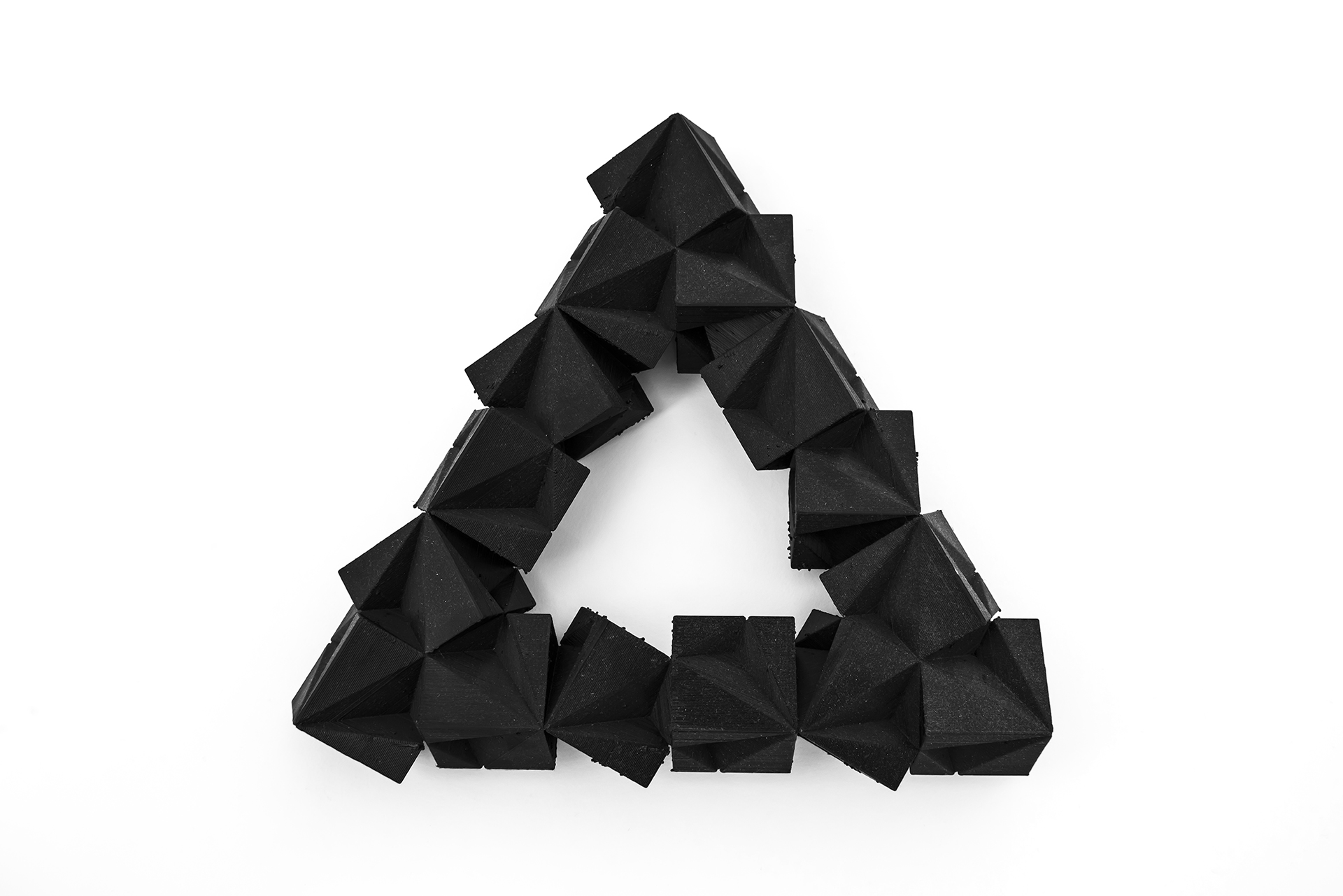
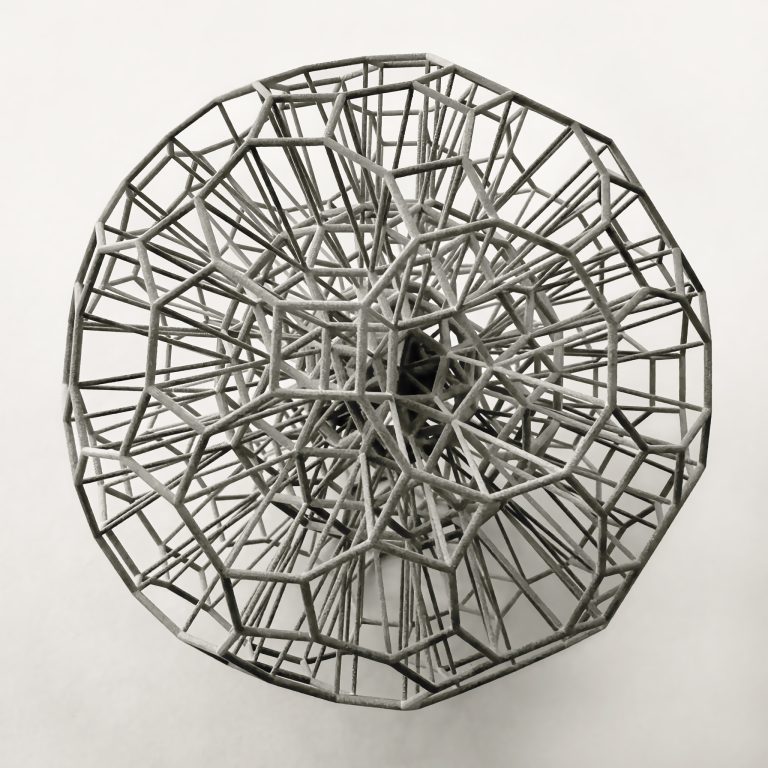
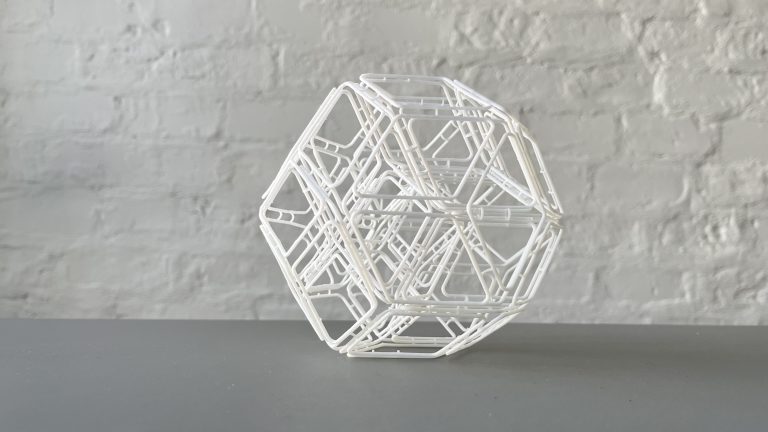
The SuperCube Elements study investigates the fundamental building blocks that form the SuperCube system's geometric vocabulary. The research examines basic clusters ranging from two-cube interlocking pairs to complex multi-cube assemblies. The investigation identifies key configurations. The two-cube pair establishes the fundamental interlocking mechanism where tetrahedral indentations accommodate protruding elements. Three-cube triangular forms create groupings with three-fold rotational symmetry. Four-cube blocks serve as foundations for periodic structures. Five-cube patterns establish pentagonal arrangements. The eight-cube cluster demonstrates how different groupings interconnect through shared central units. The study also explores the ten-cube ring formation that interlocks independently without requiring central clusters. These rings function as self-contained structural elements capable of creating larger polyhedral forms. The research tests how these fundamental elements combine and which geometric relationships govern their assembly. Each building block represents an essential component in the SuperCube system's modular logic.