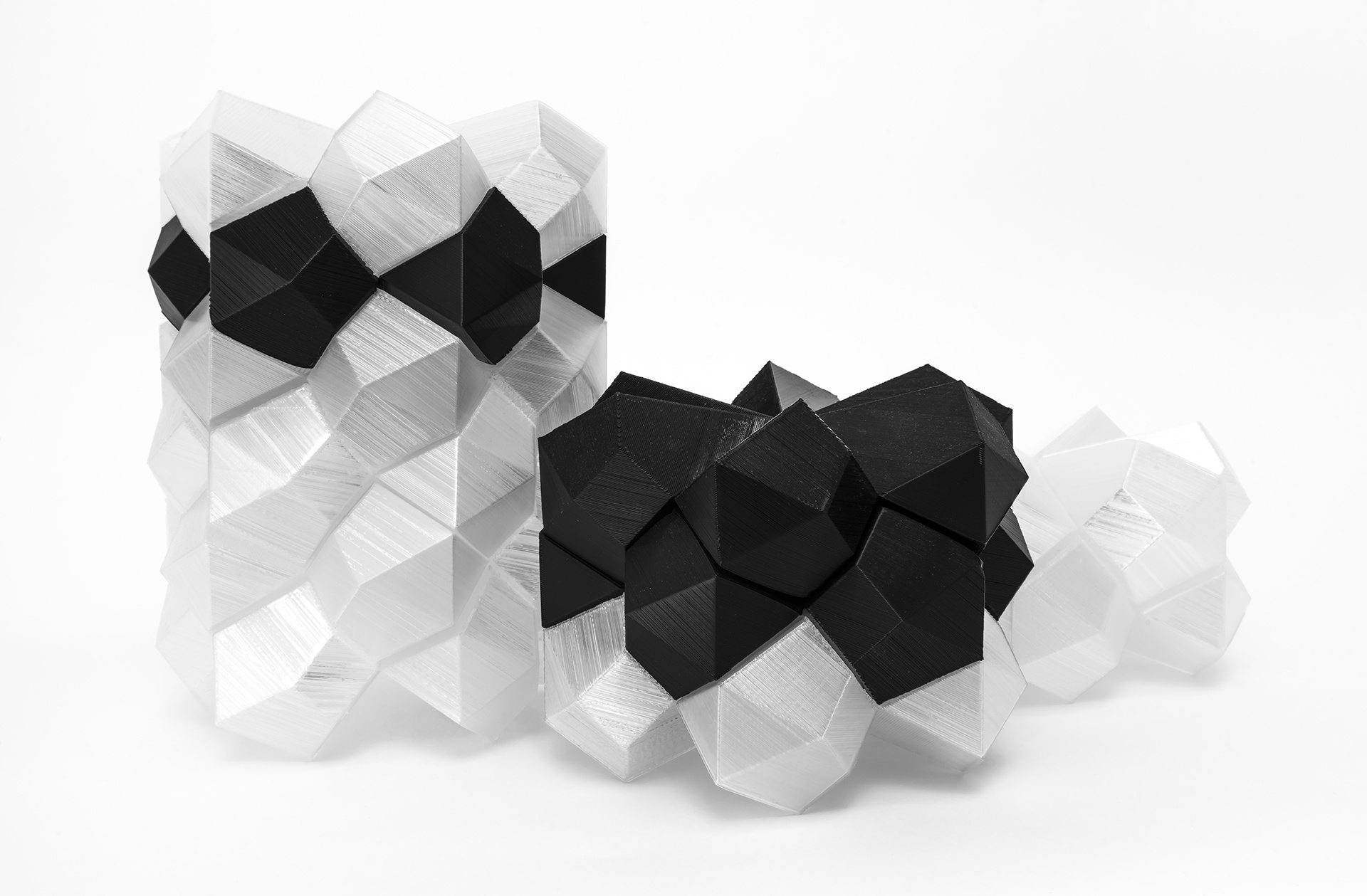
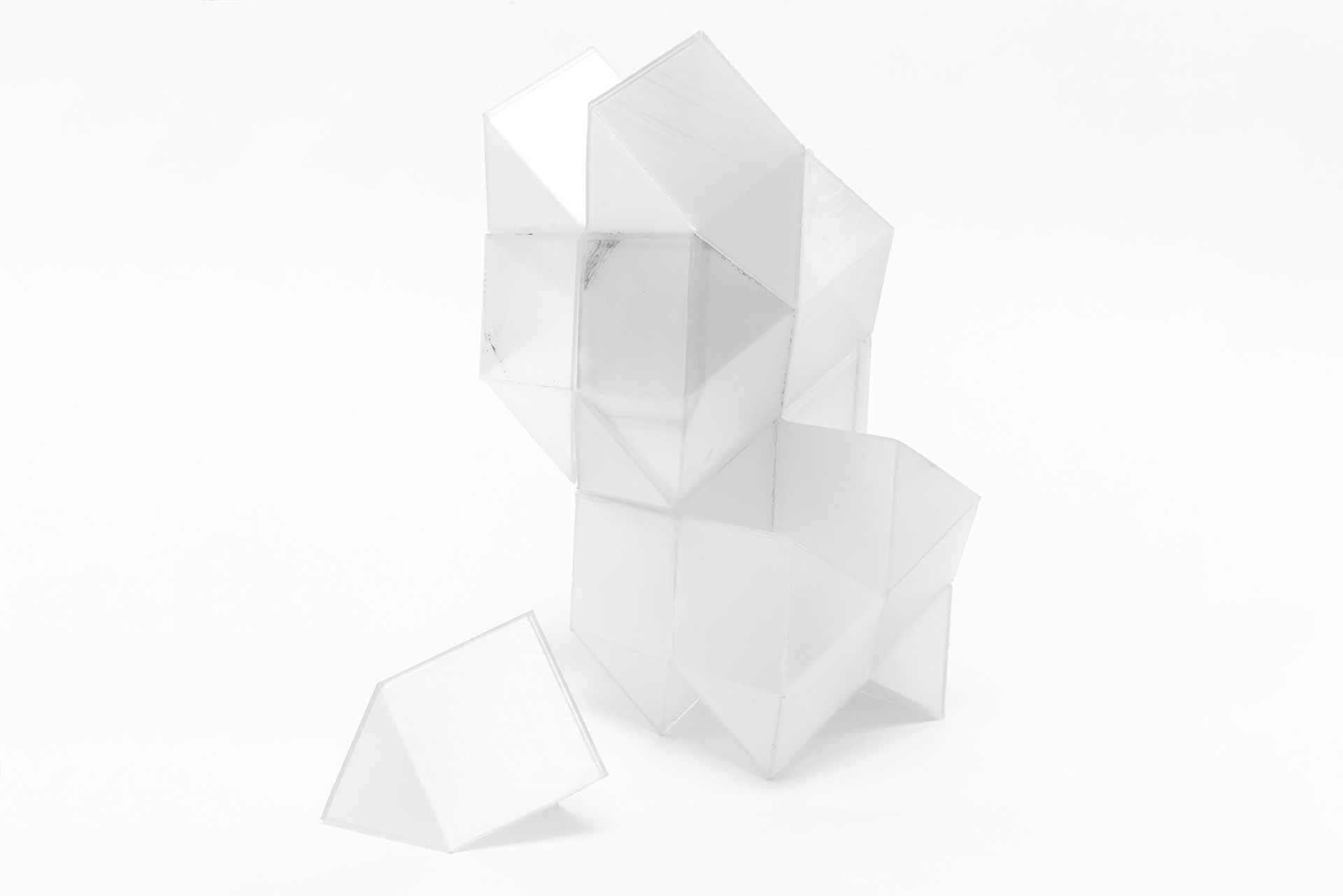
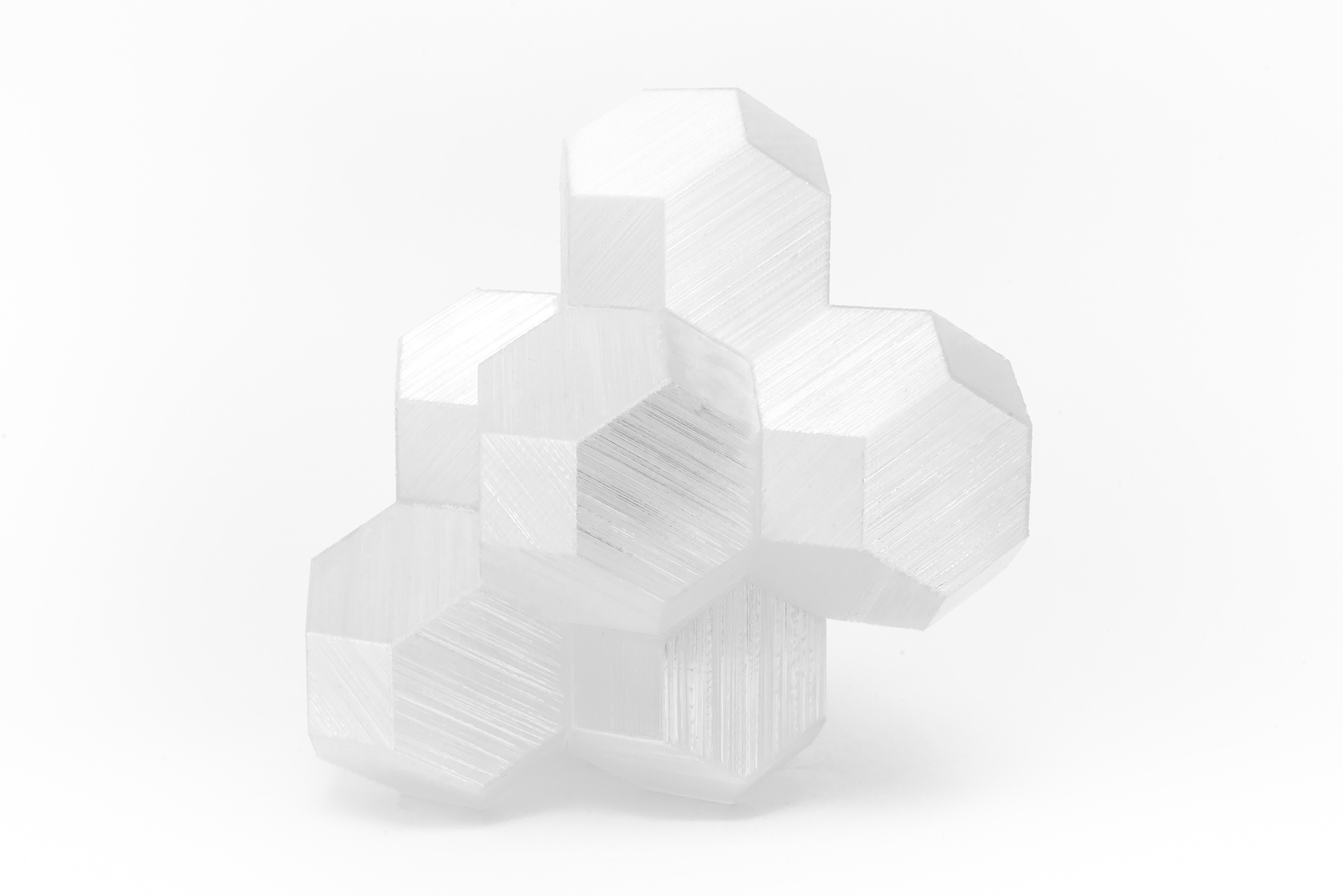
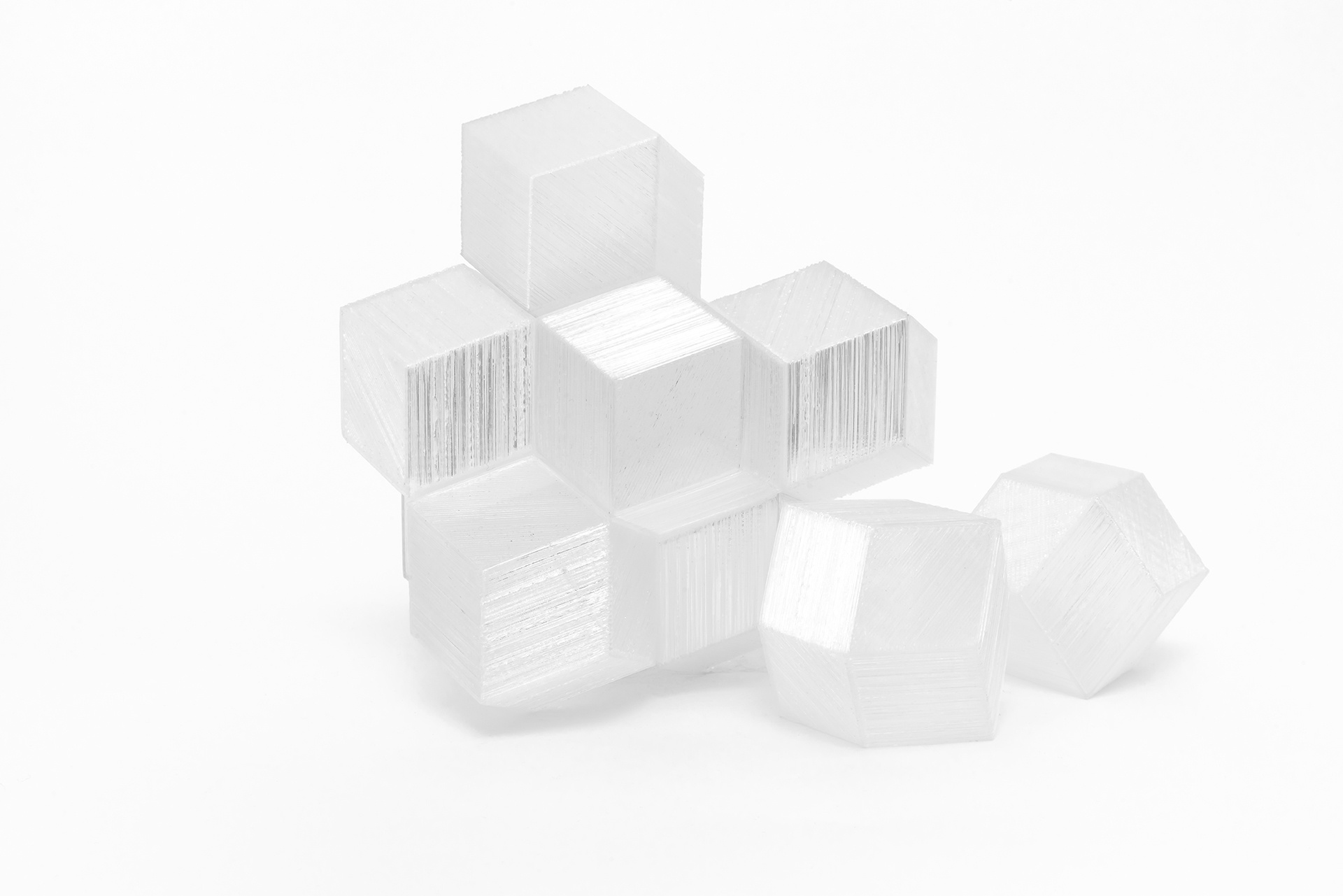
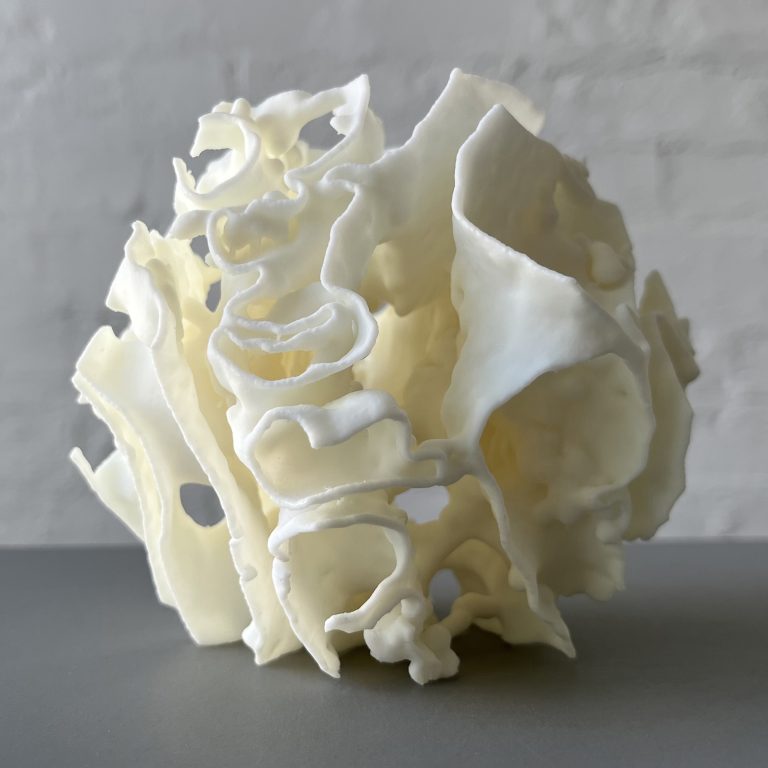
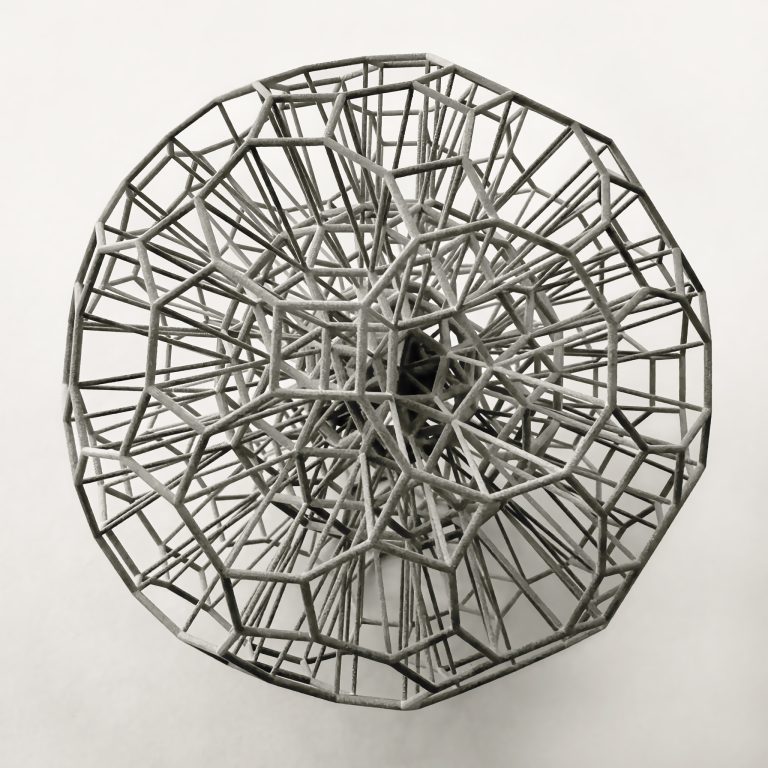
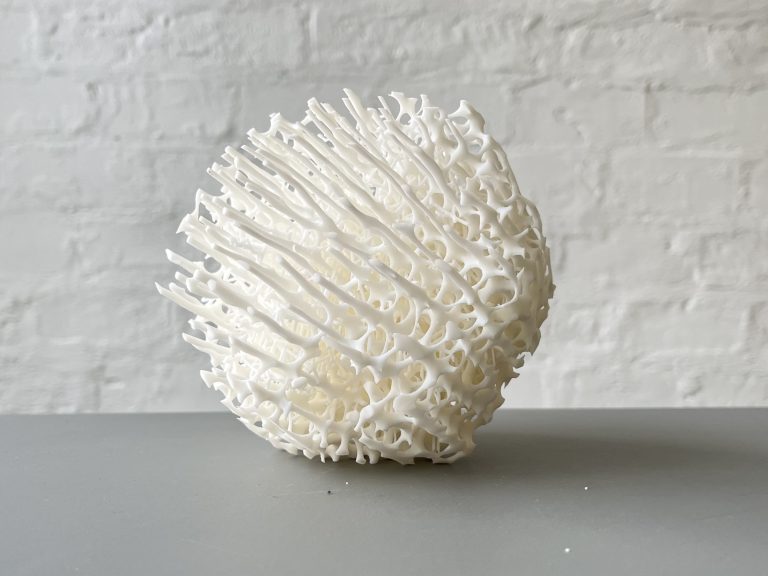
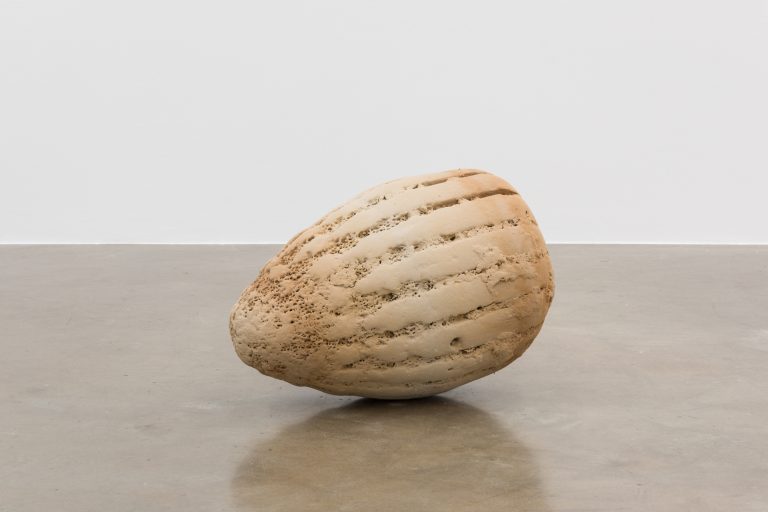
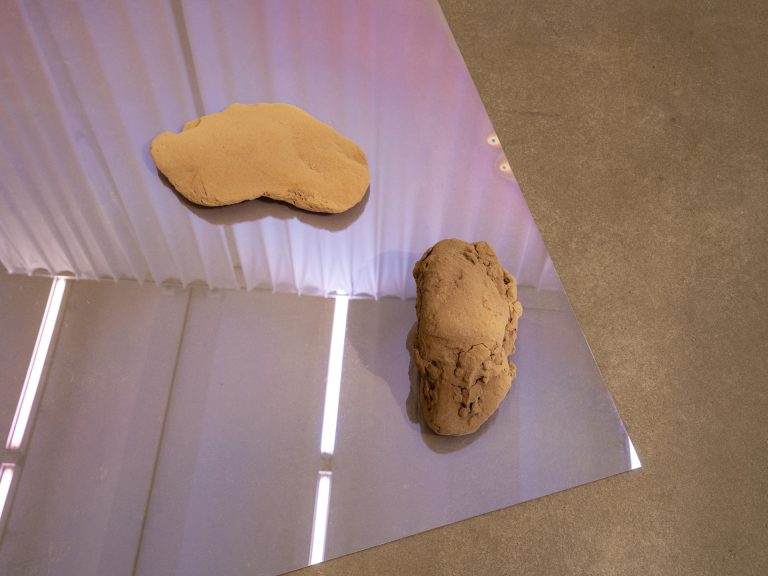
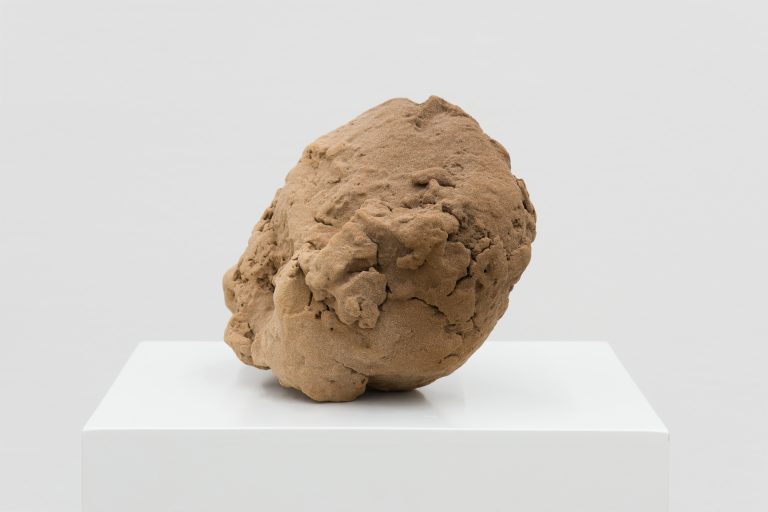
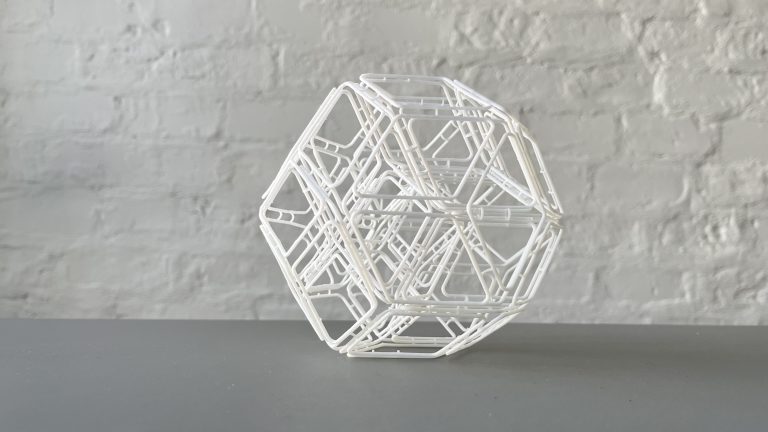
The Space Fillings study tests which polyhedra can tile three-dimensional space without gaps or overlaps. The research examines various polyhedral forms to determine their space-filling properties through physical model testing. The investigation explores different candidates including rhombic dodecahedra, truncated octahedra, and other polyhedral types. Each form presents distinct challenges for achieving complete space tessellation. The study addresses how face arrangements, edge relationships, and angular constraints affect space-filling capability. Physical models demonstrate which configurations successfully tile space and which fail due to geometric incompatibilities. The research establishes practical methods for testing tessellation principles through 3D printed assemblies where multiple units combine to reveal space-filling patterns or expose geometric limitations.