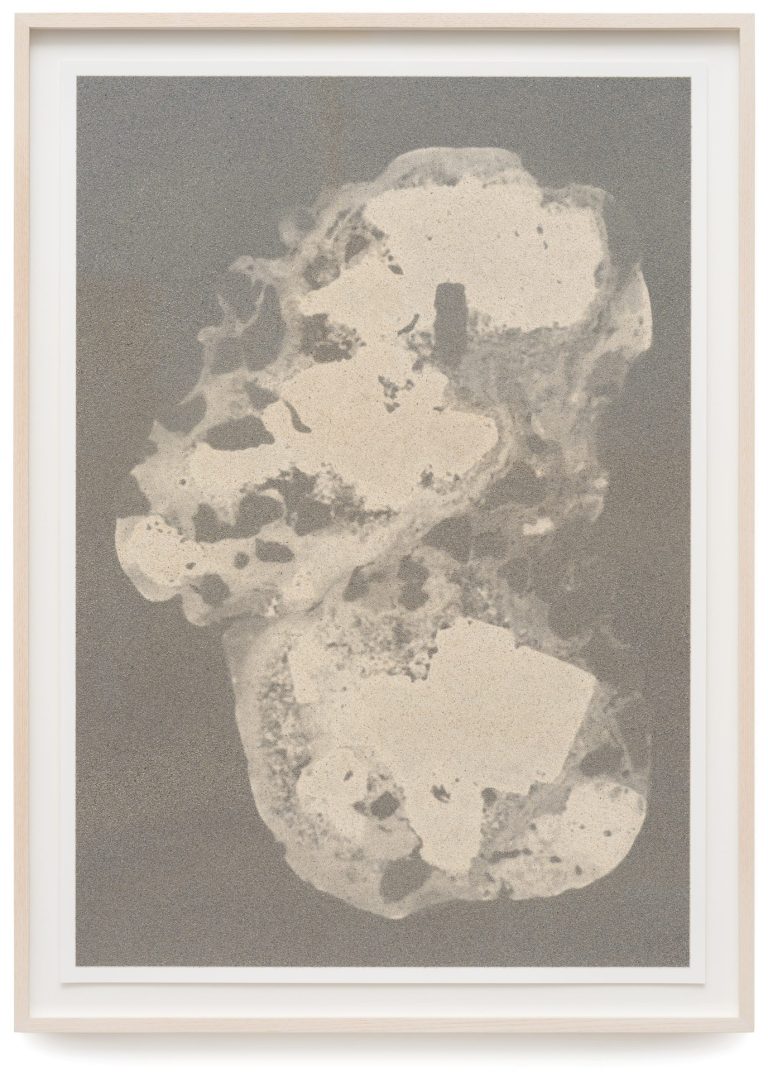
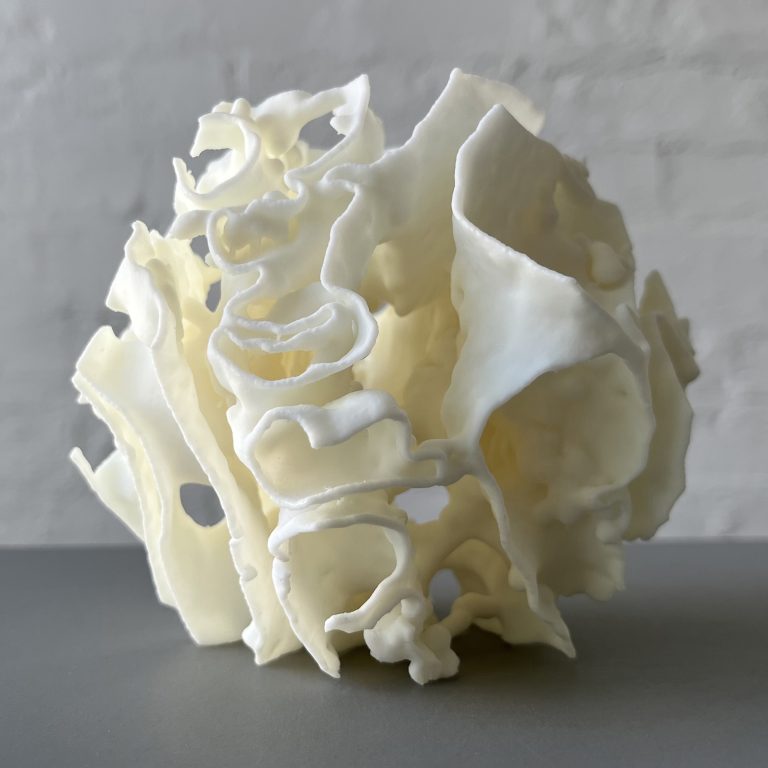
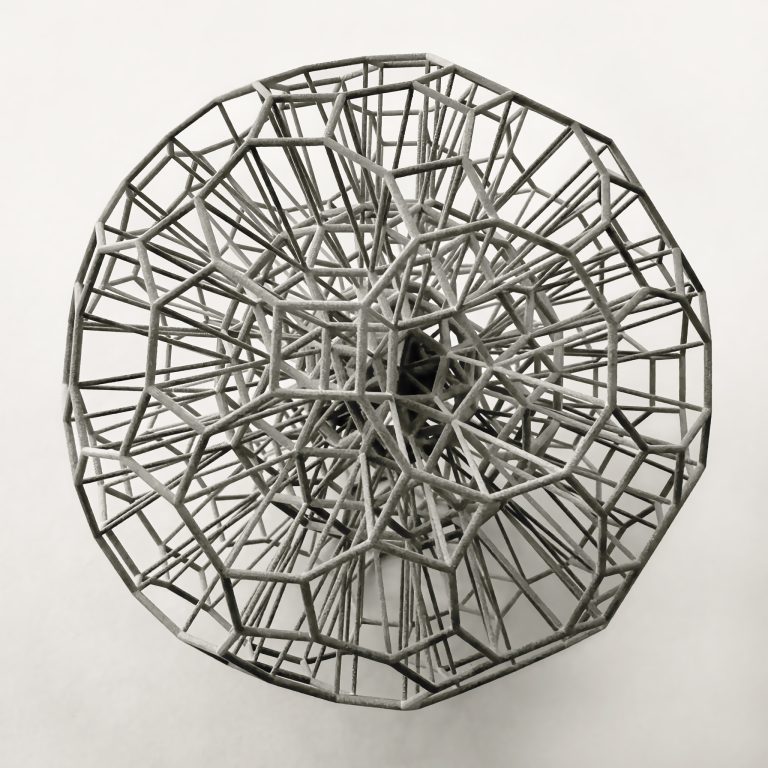
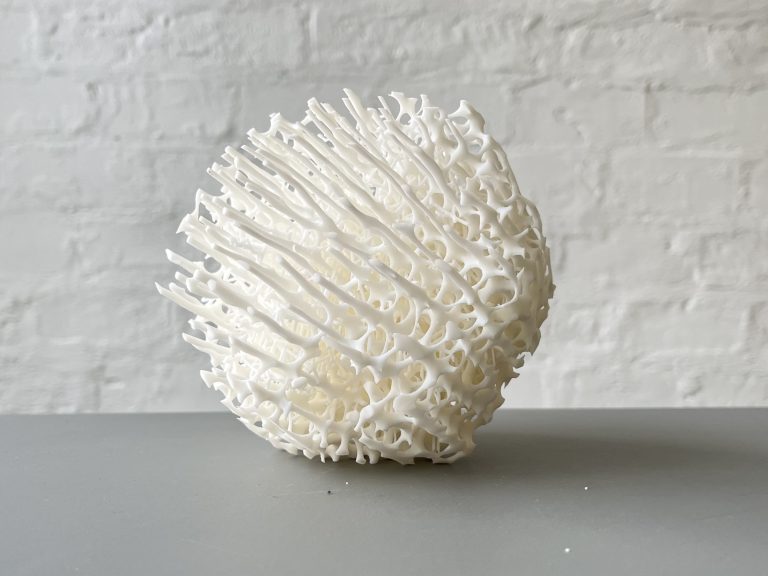
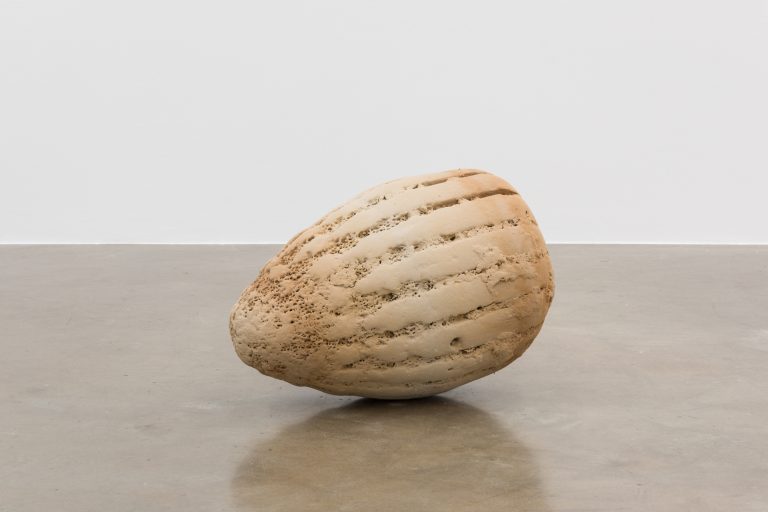
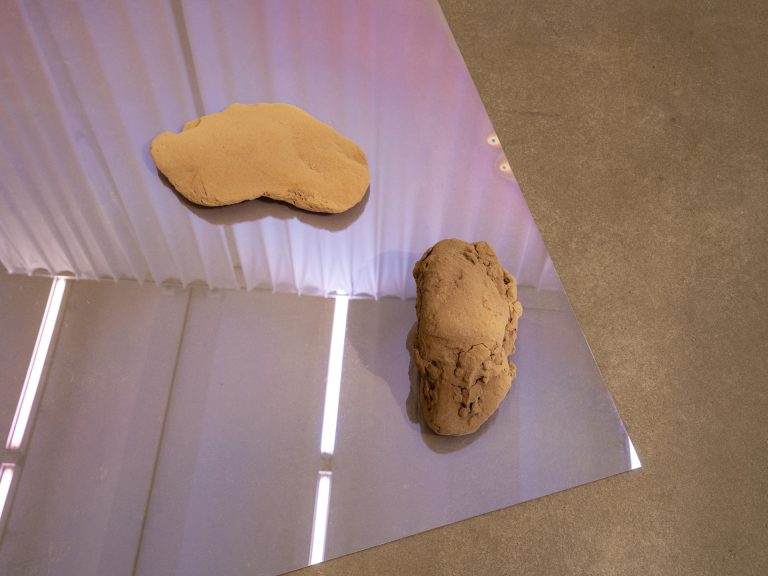
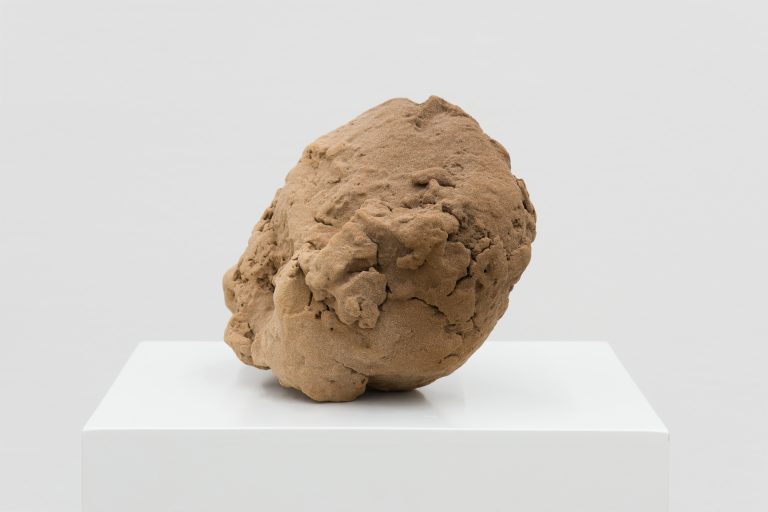
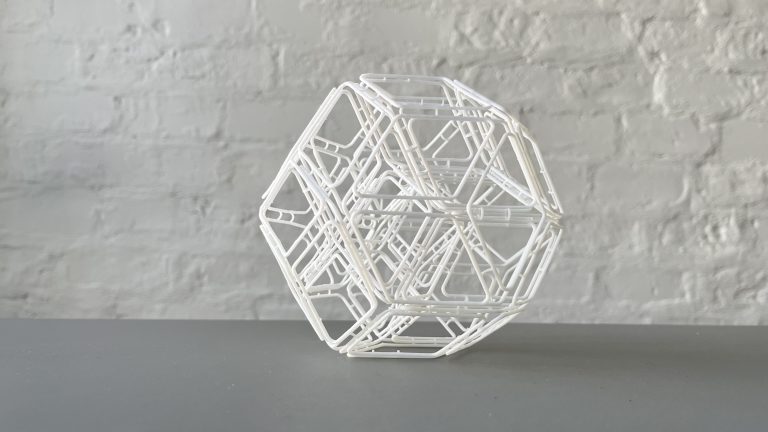
The Nano-CT study establishes methods for scanning sand grains at sub-micron resolution using computed tomography. The research develops workflows for processing DICOM data from nano-CT scans, revealing microscopic surface topologies invisible to standard observation. The investigation addresses computational processing that translates high-resolution scan data into fabricatable forms. Each sand grain captures geological history-transport distance, mineral composition, erosion patterns, weathering effects-encoded in microscopic surface architecture. The study tests which processing approaches balance surface fidelity against digital manufacturing constraints. The research examines how medical imaging technology adapts to geological materials. Scan parameters, data processing methods, and mesh generation techniques establish protocols for capturing natural complexity at scales where microscopic form records material history. This work provides foundations for translating scan data into enlarged sculptural forms.