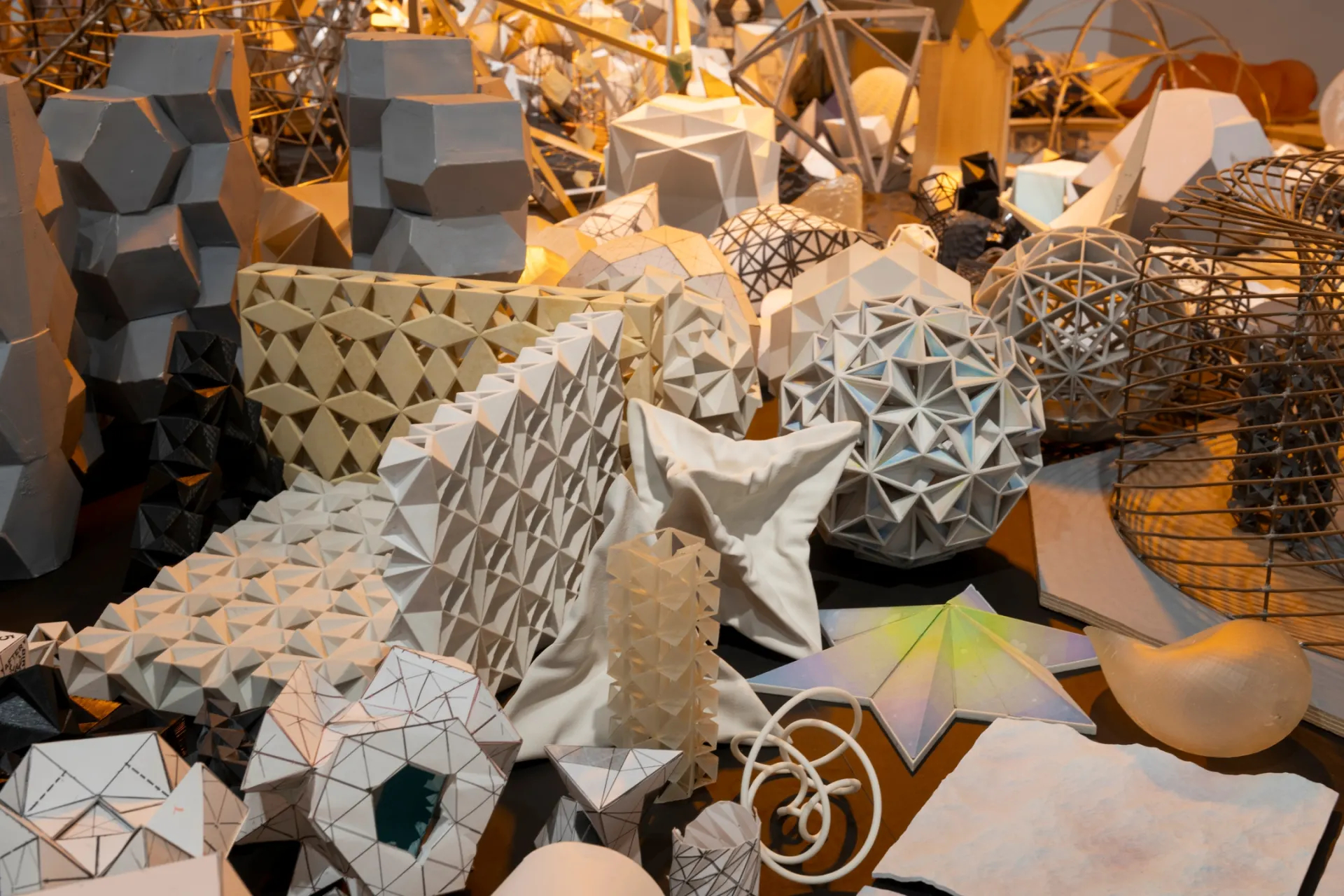
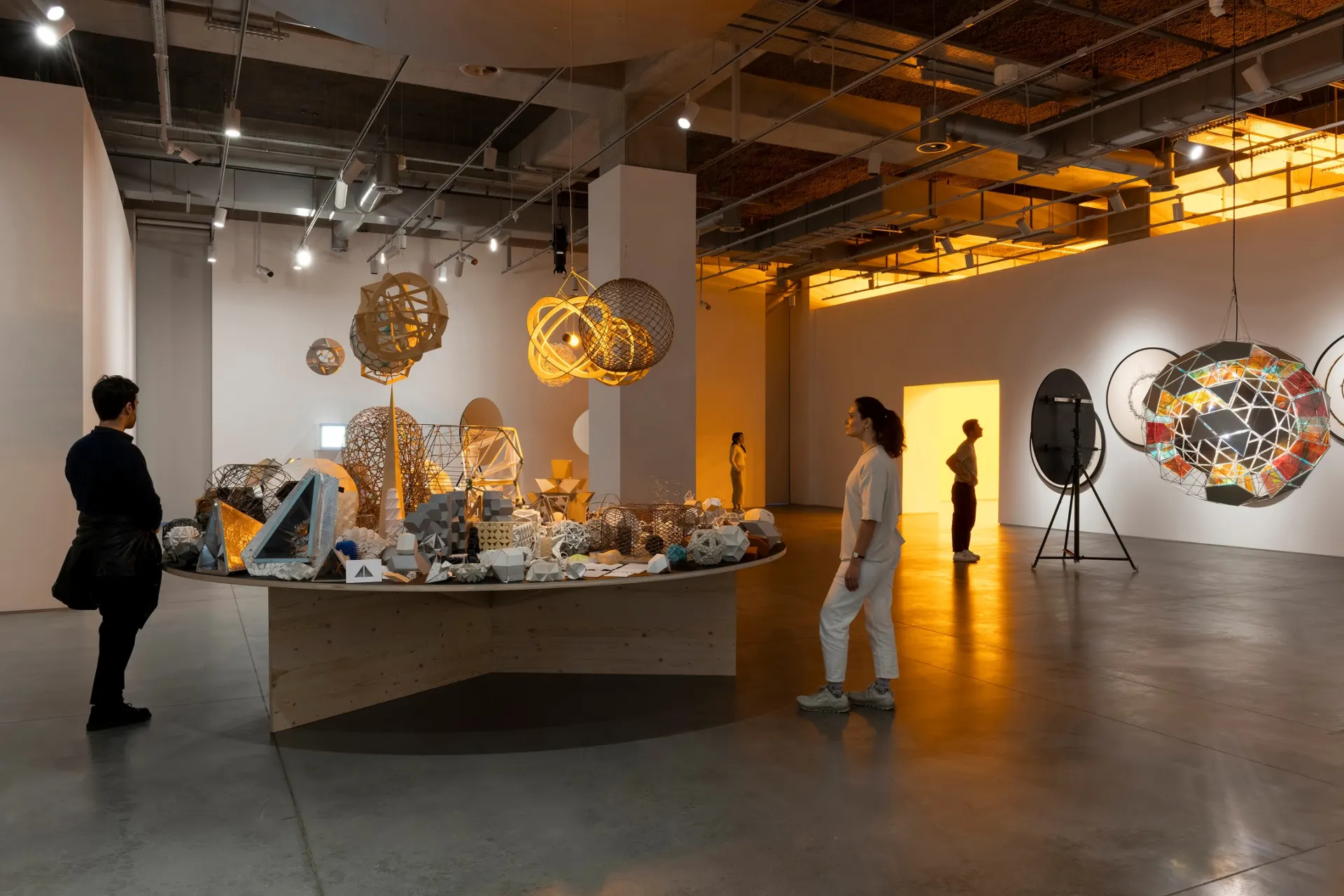
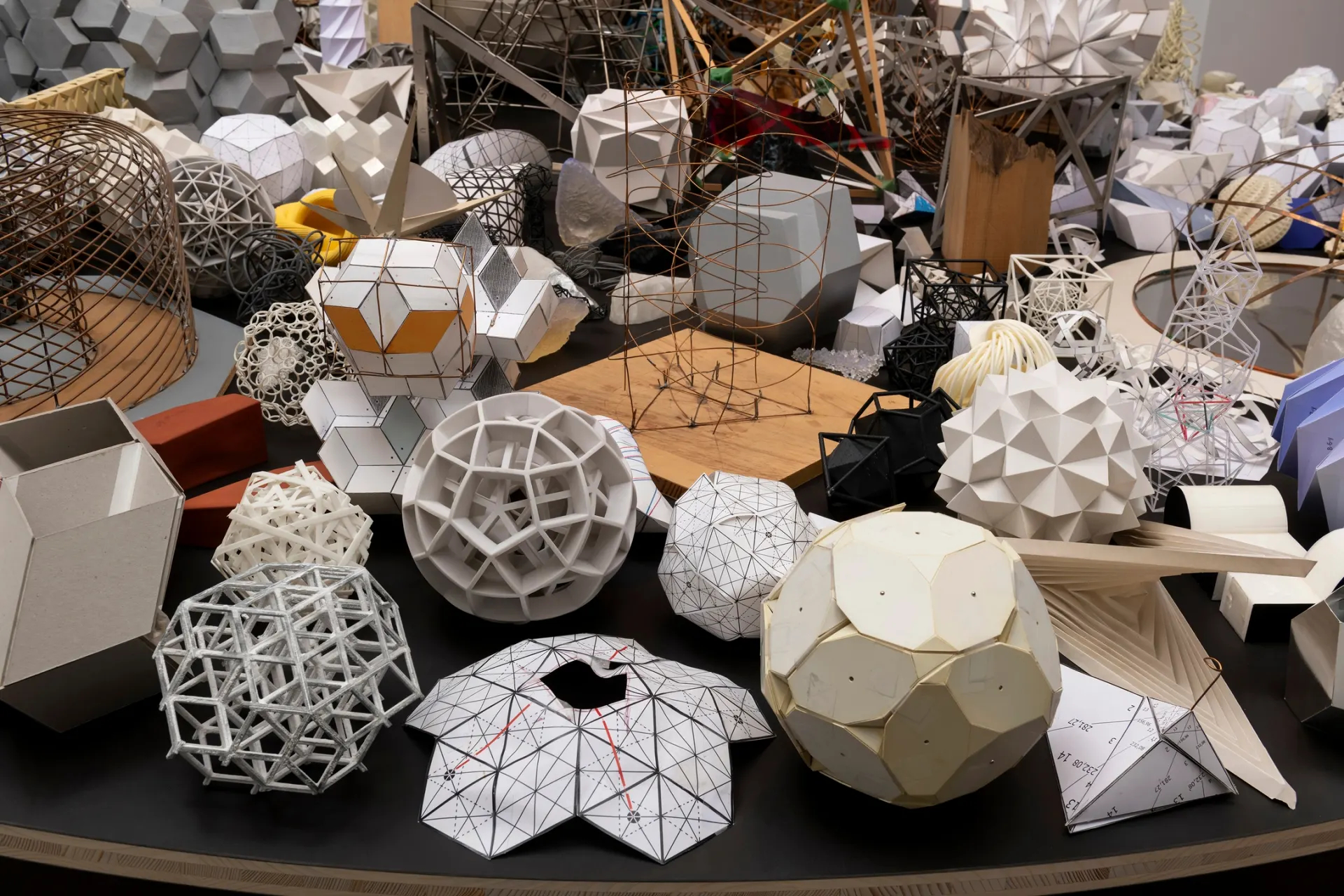
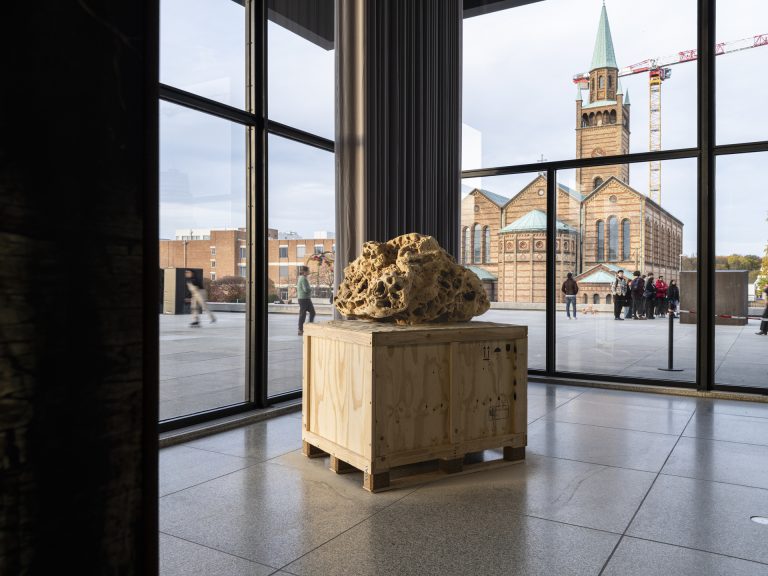
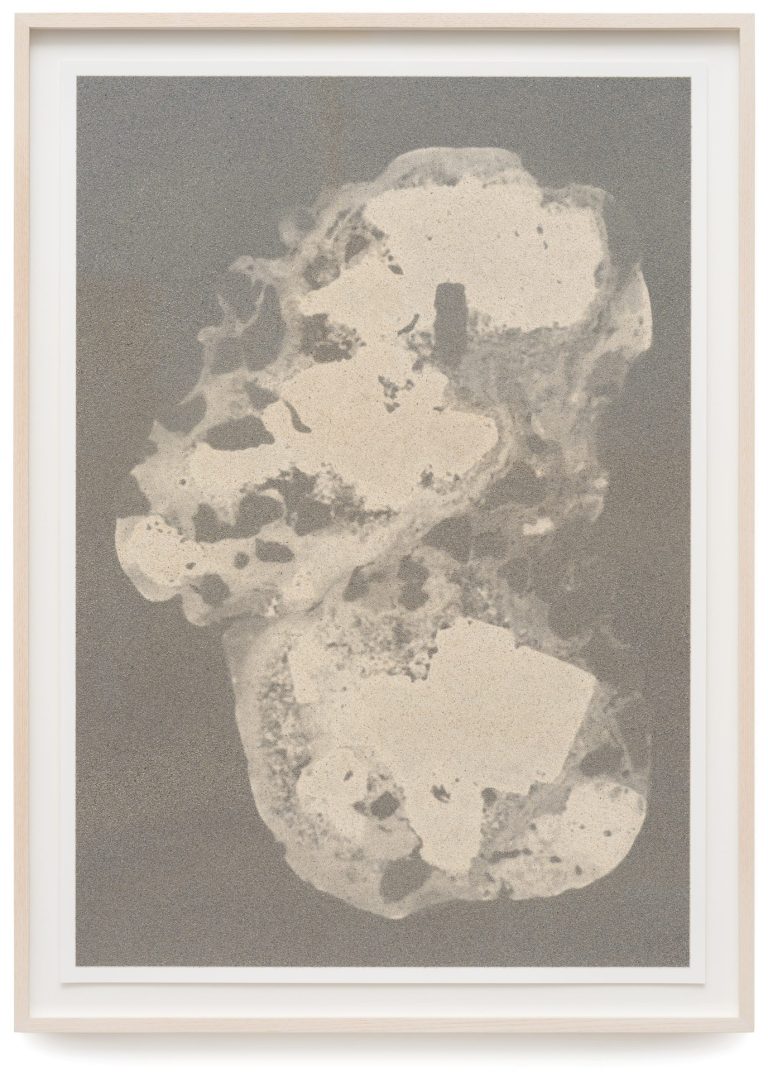
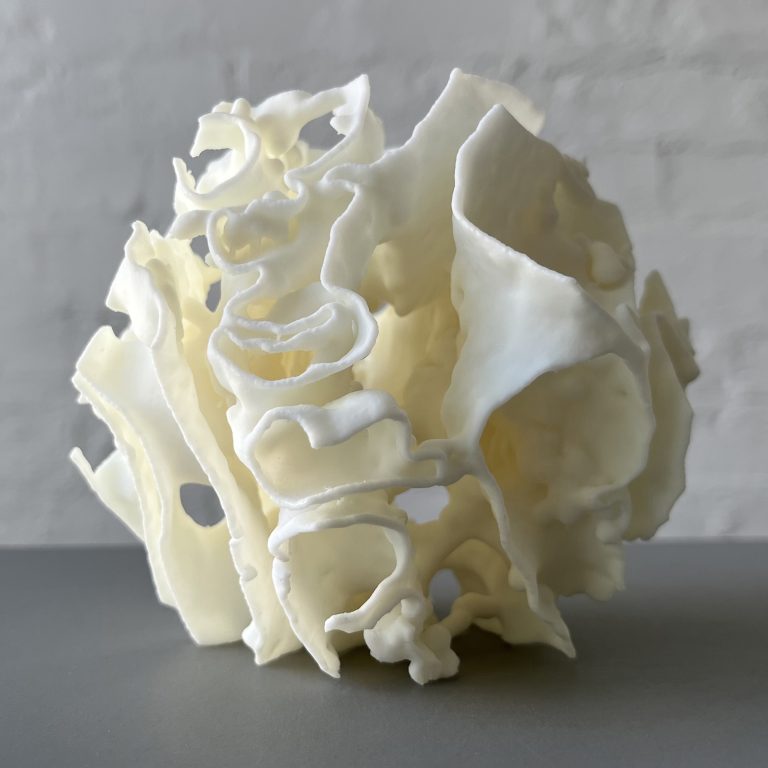
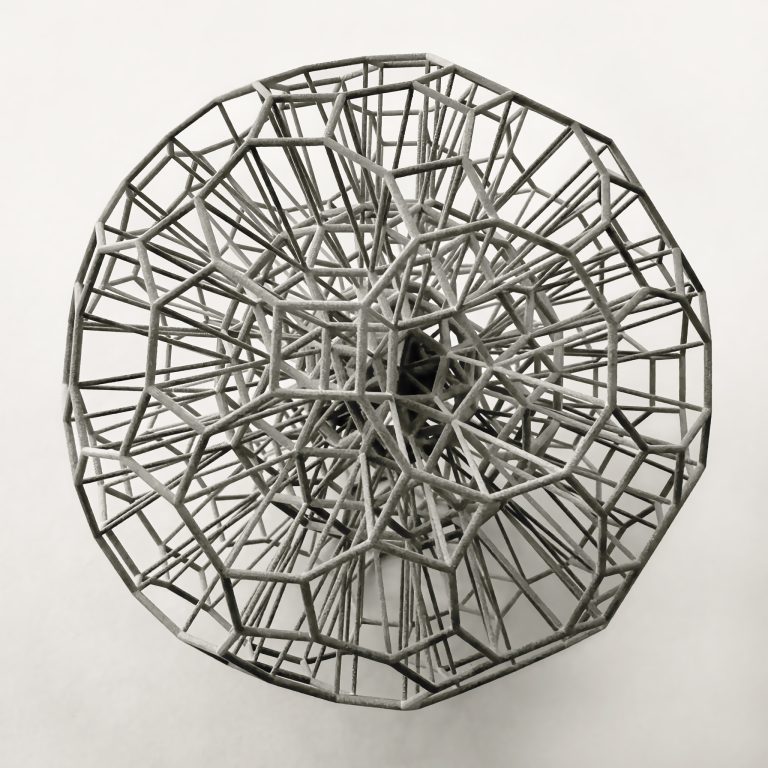
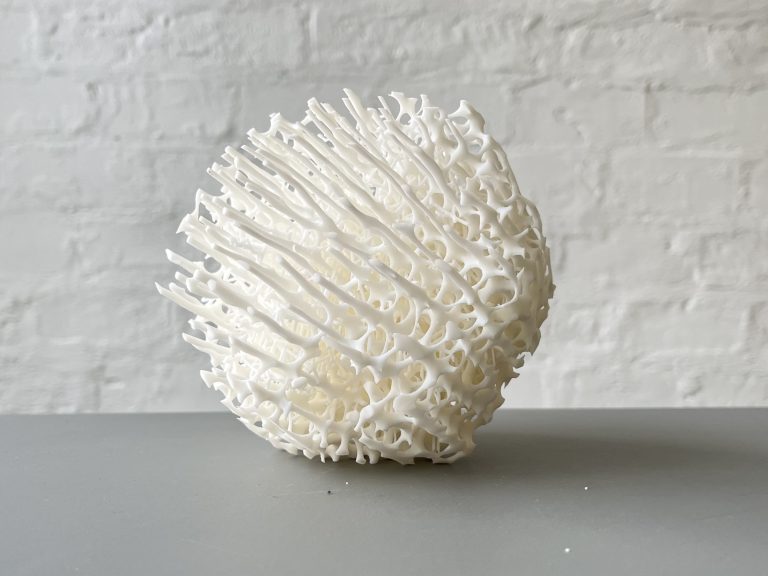
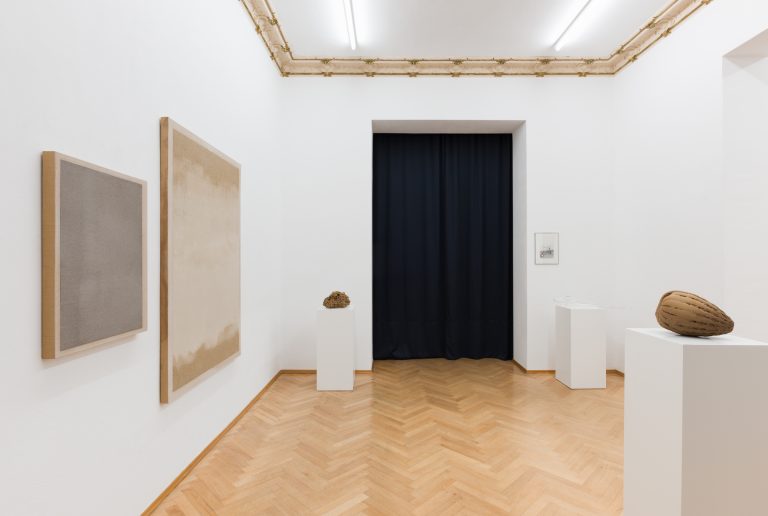
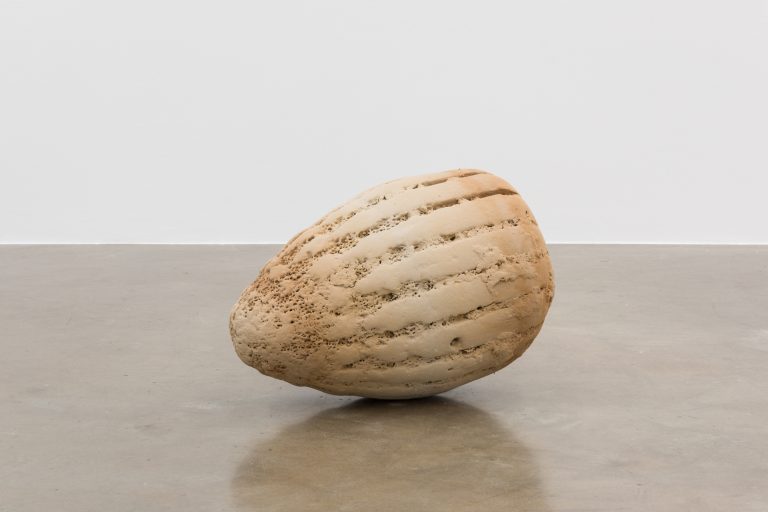
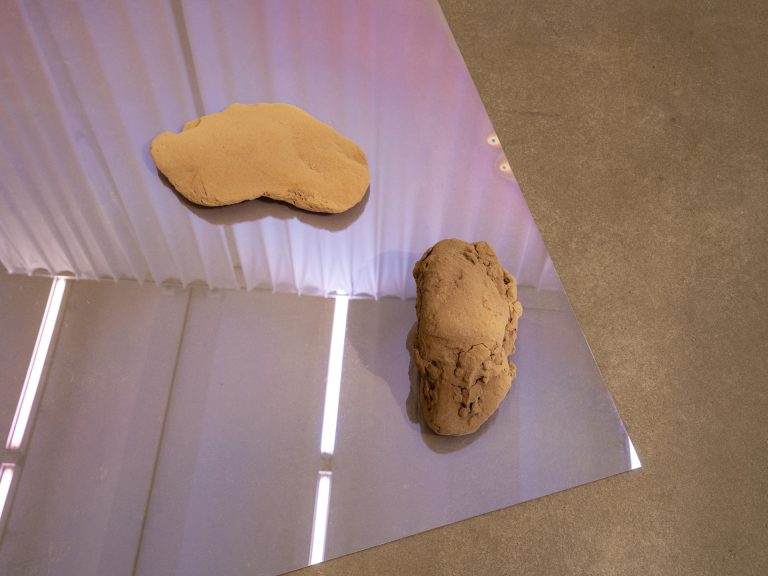
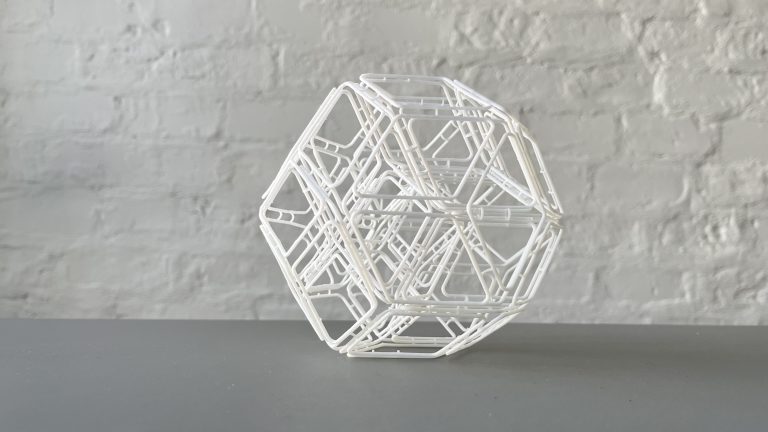
Model for your circular city presents the studio's archive of geometric study models on a circular wooden table measuring 440 centimeters in height and 360 centimeters in diameter. The arrangement displays physical models, maquettes, and prototypes developed by Phillip C. Reiner between 2015 and 2022, alongside earlier models by Einar Thorsteinn. The circular configuration organizes these research objects in a manner that evokes an unplanned cityscape, where individual geometric investigations cluster across the table surface. The models were not created for this presentation but represent accumulated research output from the studio's geometric investigations. Reiner's studies explore SuperCube systems, spherical structures, aperiodic arrangements, and branching geometries. The collection includes investigations of icosahedral symmetries, golden ratio relationships, modular interlocking systems, and compound polyhedral arrangements. Some models examine kinetic properties, optical effects, or robotic fabrication constraints. The circular format differs from the rectilinear table used in Model room (2003). The new configuration creates radial relationships between models positioned around the perimeter and those occupying the central area. The cityscape effect emerges from the density and variety of forms rather than deliberate planning. Each object represents a specific investigation into spatial, mathematical, or fabrication questions. Many models correspond to documented research studies examining particular geometric principles or construction methods.
Research: The geometric investigations explore modular SuperCube assemblies, spherical mapping methods, aperiodic tiling principles, and branching structural systems. Research methods included computational geometry, 3D printing for rapid prototyping, parametric modeling, and robotic fabrication studies. The collection documents investigations into icosahedral and dodecahedral symmetries, rhombic space-filling arrangements, kaleidoscopic optical systems, and pressure-responsive geometries. Studies examined how geometric principles scale from small prototypes to architectural dimensions while maintaining mathematical coherence.