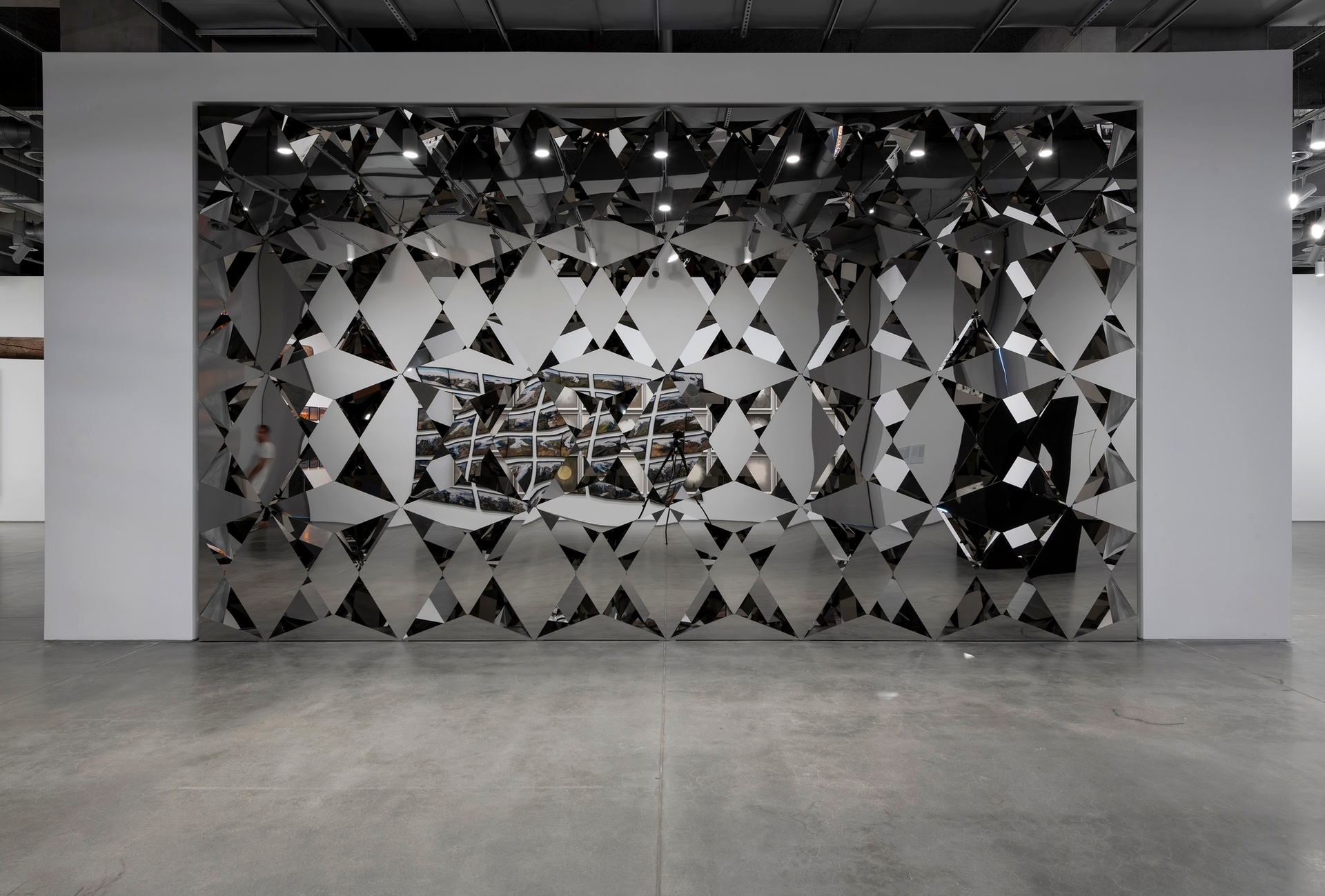
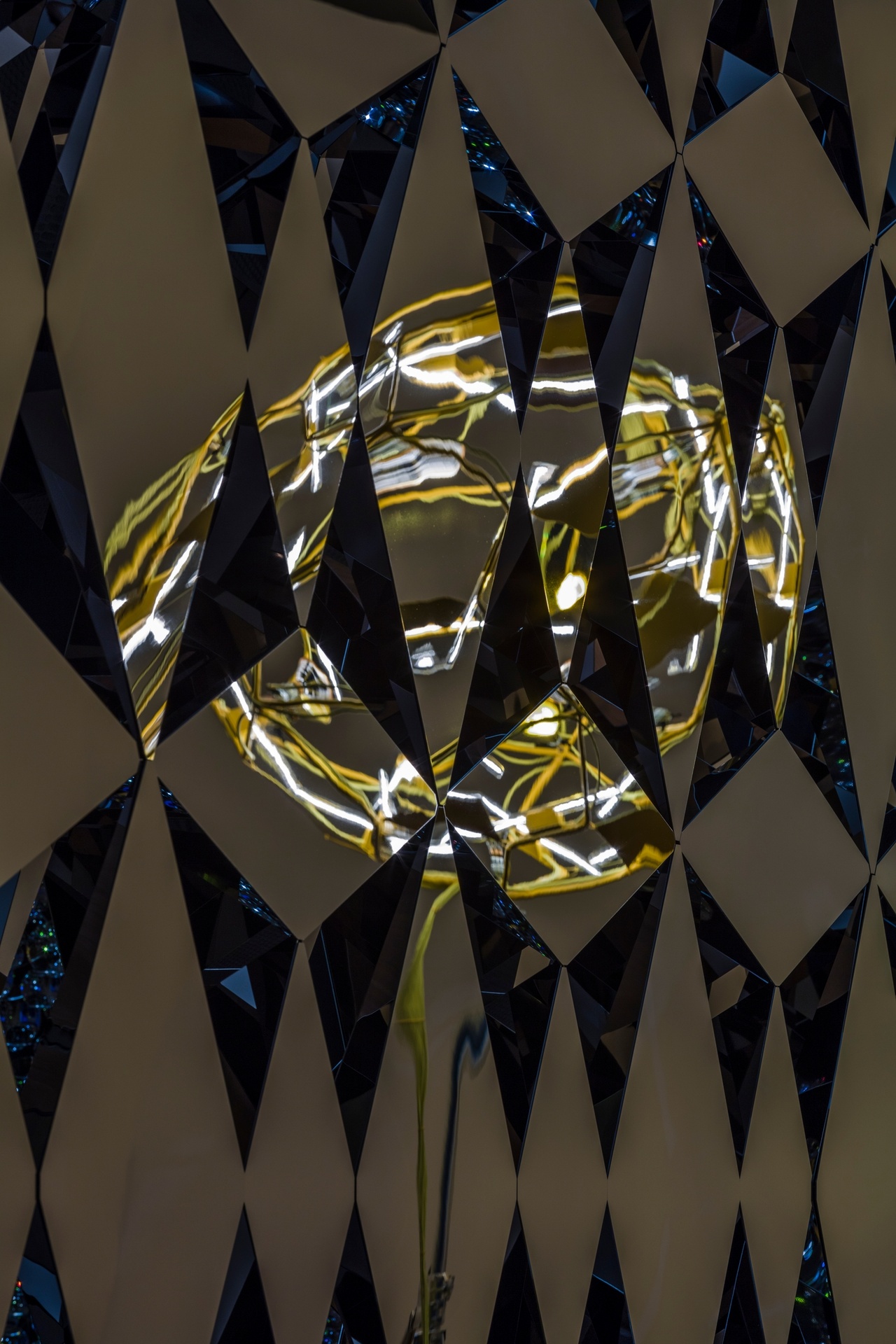
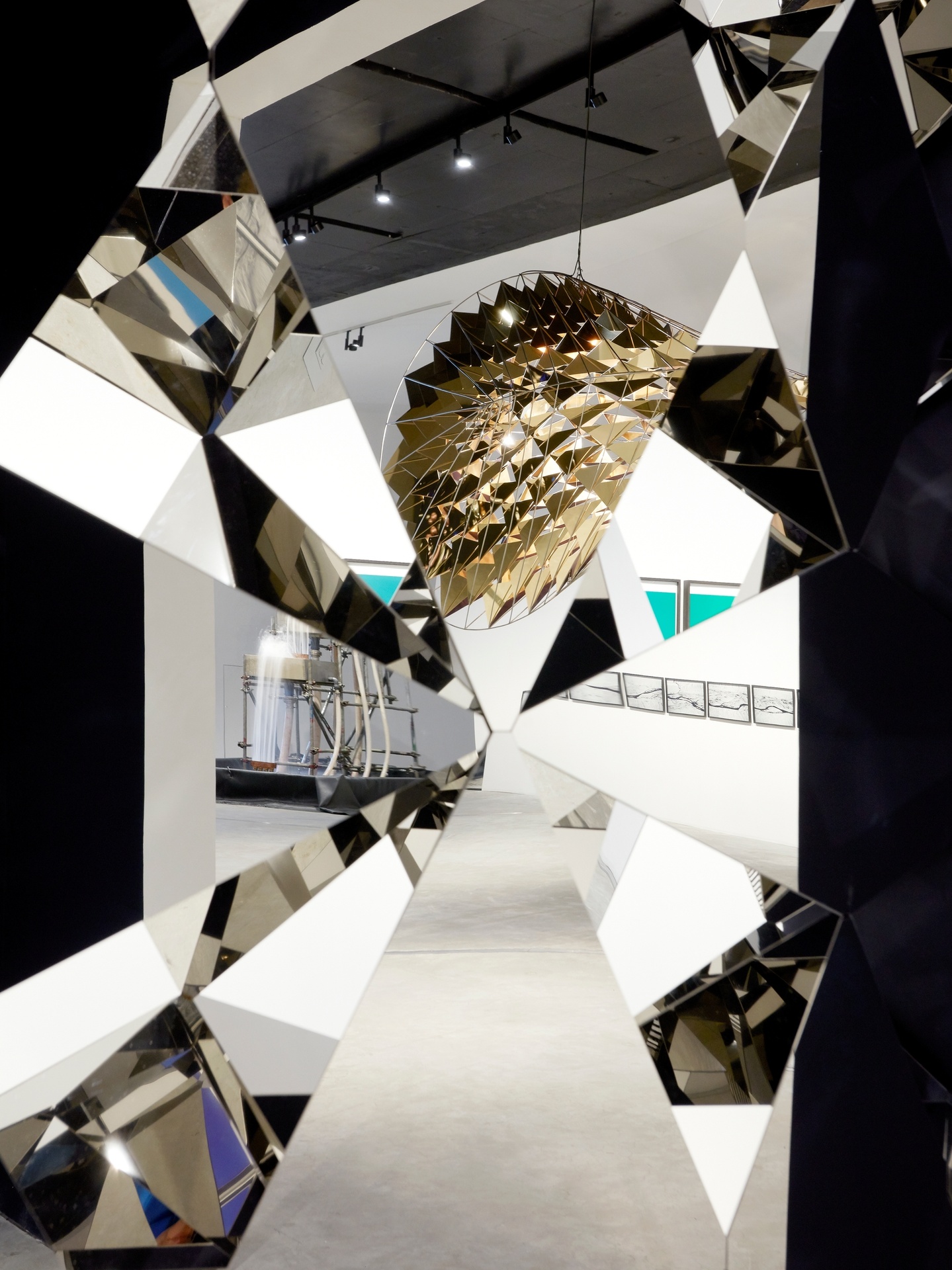
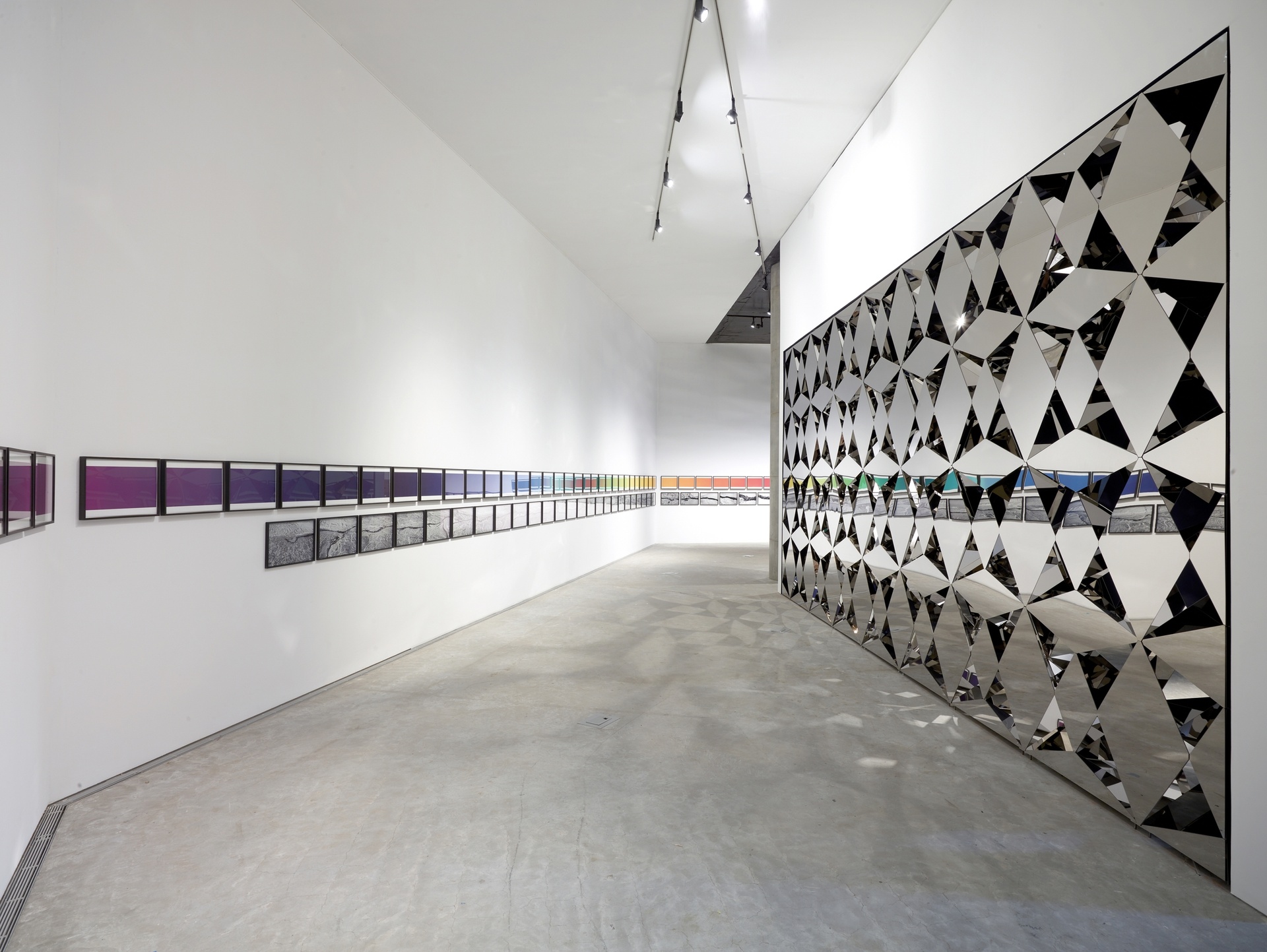
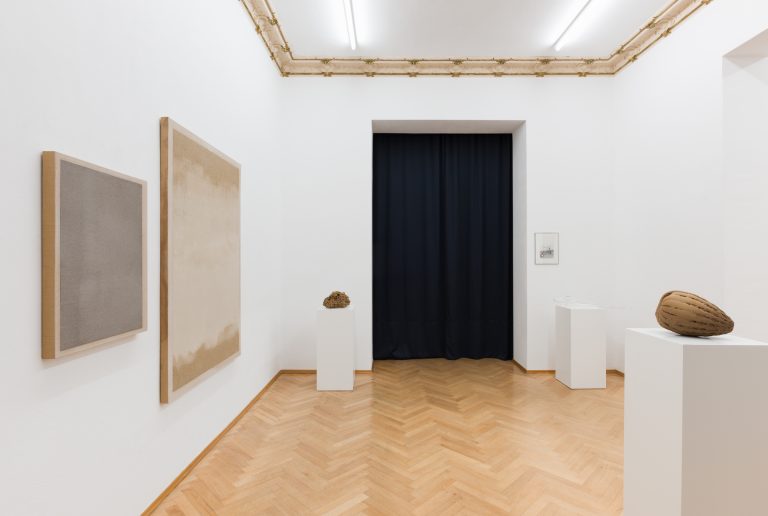
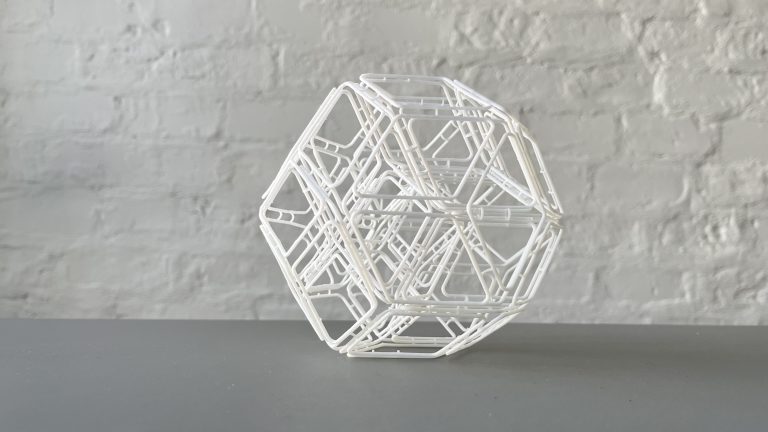
"Less Ego Wall" constructs a museum partition from stackable stainless steel modules. The modules derive from SuperCube research-interlocking units that produce periodic arrangements with systematic tetrahedral voids. Diamond-shaped mirrors clad the module exteriors, leaving gaps between units. These gaps reveal the wall's interior, where additional mirrors produce nested triangular reflections. The optical effect: infinite regression of reflections within the wall's depth. Viewers see themselves fragmented and multiplied, front and back simultaneously. The modular system allows flexible configuration-walls of different dimensions assemble from the same unit types. The mirror arrangement blurs spatial boundaries: which side is front, which back becomes ambiguous through reflection.
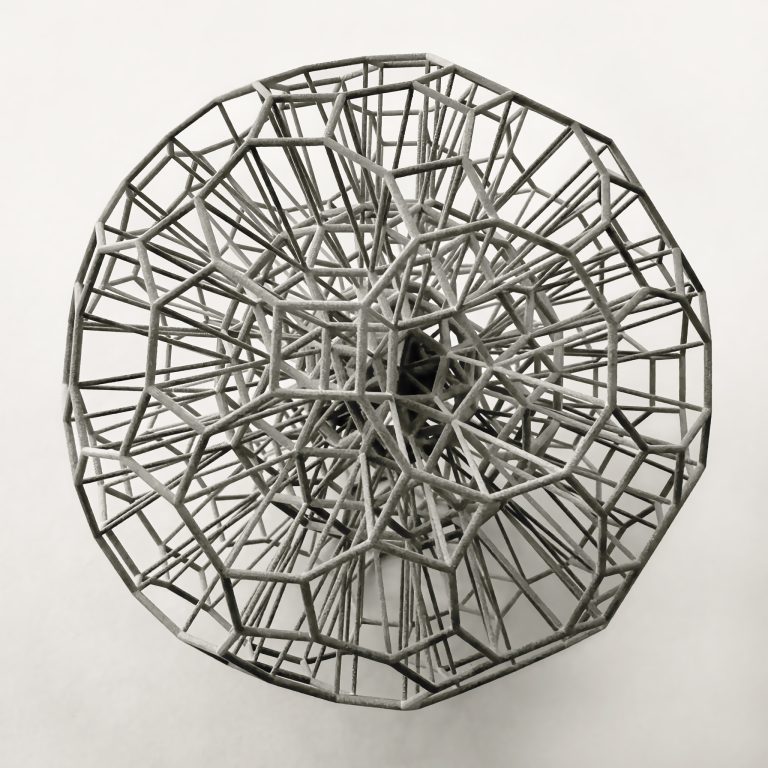
Research: The SuperCube module derives from the five-cube compound through tetrahedral subtraction. Each unit: a cube with six tetrahedral indentations, where edge divisions follow golden ratio proportions. These indentations enable interlocking-modules connect through rotational transformations that produce periodic arrangements. The wall employs four-cube point-symmetric blocks as base units, extended through half-turn rotations around edge midpoints. This periodic structure repeats at twice the cube edge length, producing a lattice with tetrahedral voids. Diamond mirrors clad the cubic faces, while the tetrahedral gaps reveal interior mirror surfaces. The gap geometry-derived from the golden ratio proportions-produces nested triangular reflections. Each void becomes an optical chamber where reflections multiply through the angular relationships inherent in the module's geometry. The modular system's rotational logic permits flexible wall dimensions while maintaining structural coherence.
Photography: Studio Olafur Eliasson, Hyunsoo Kim, Anders Sune Berg, Kayhan Kaygusuz olafureliasson.net