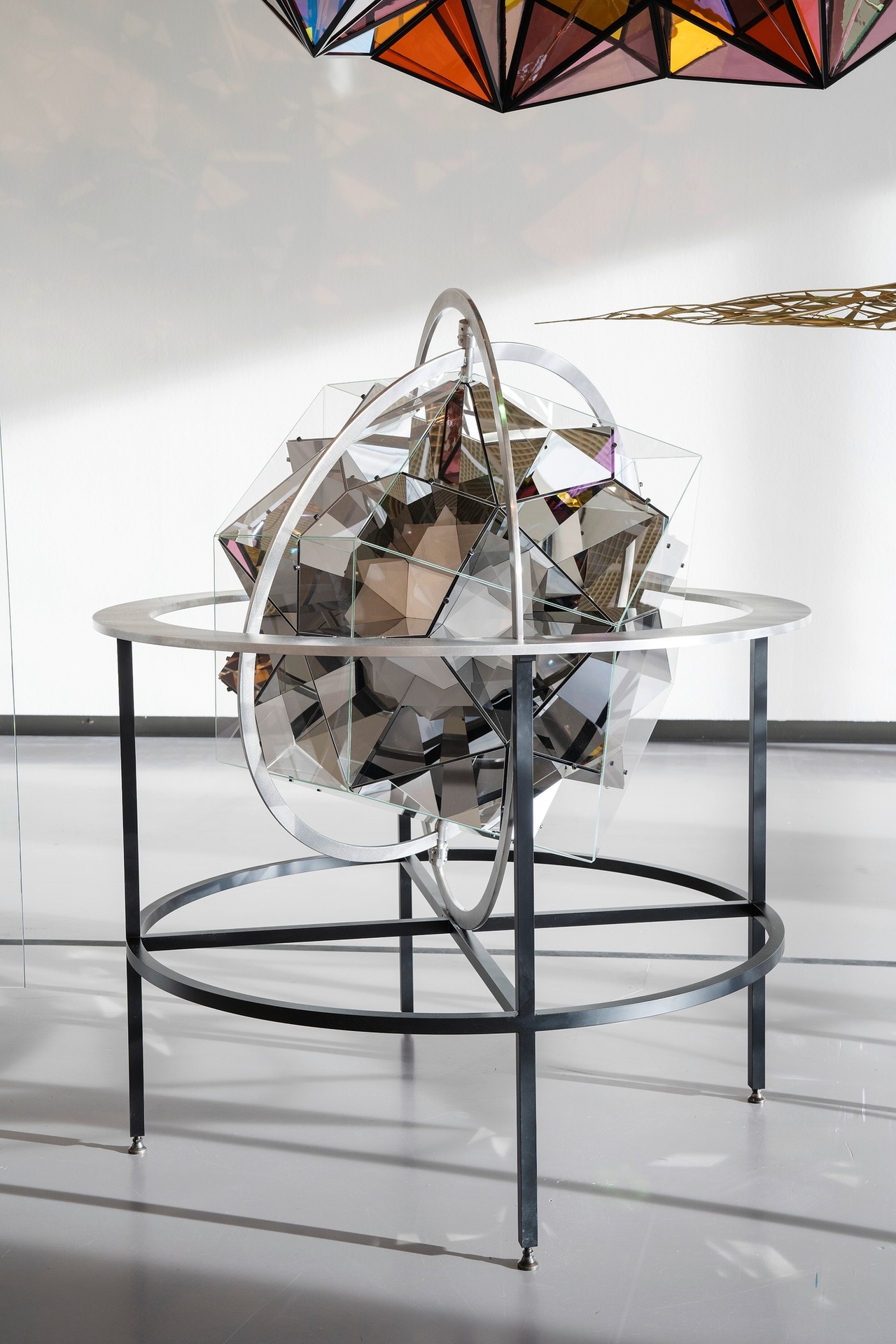
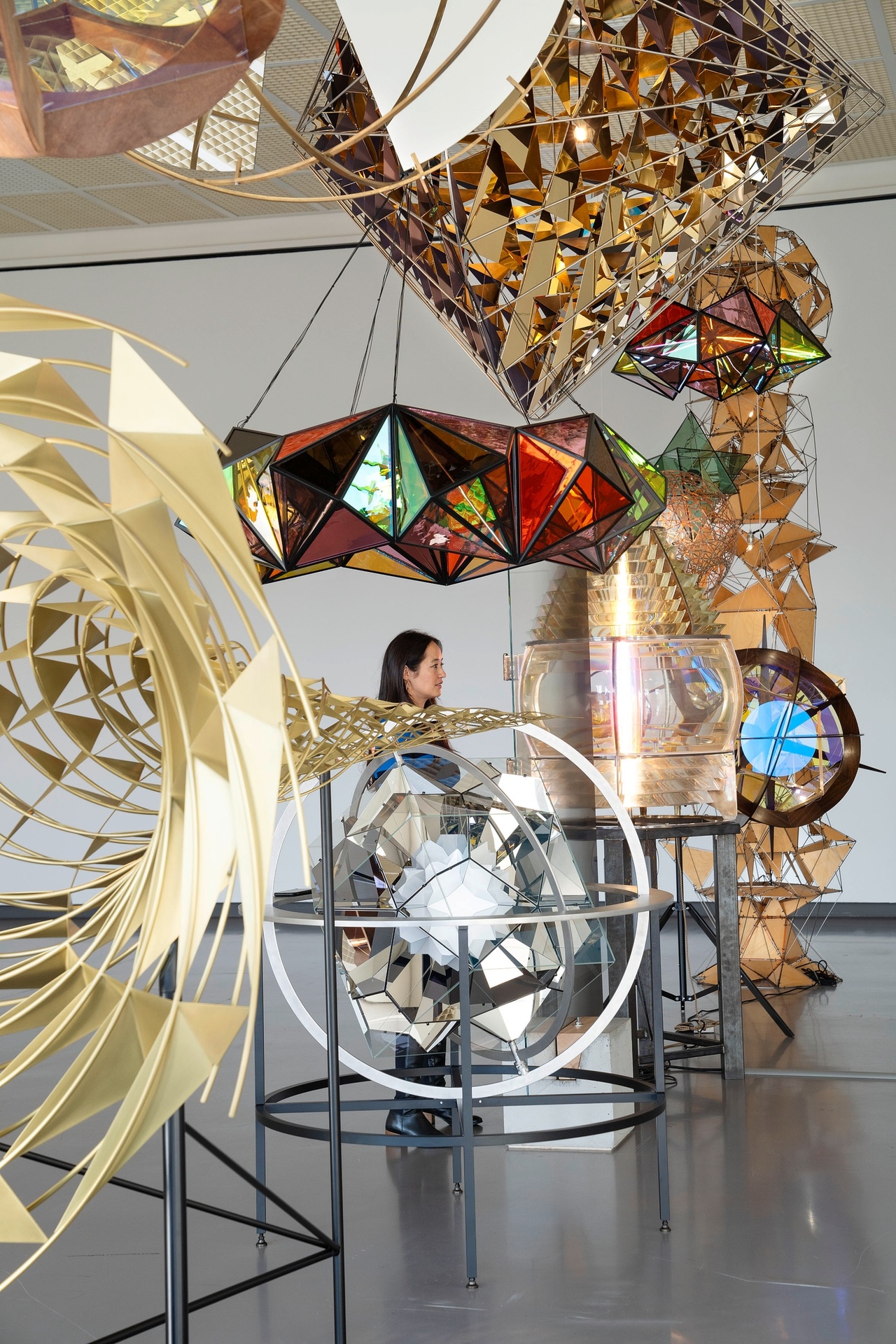
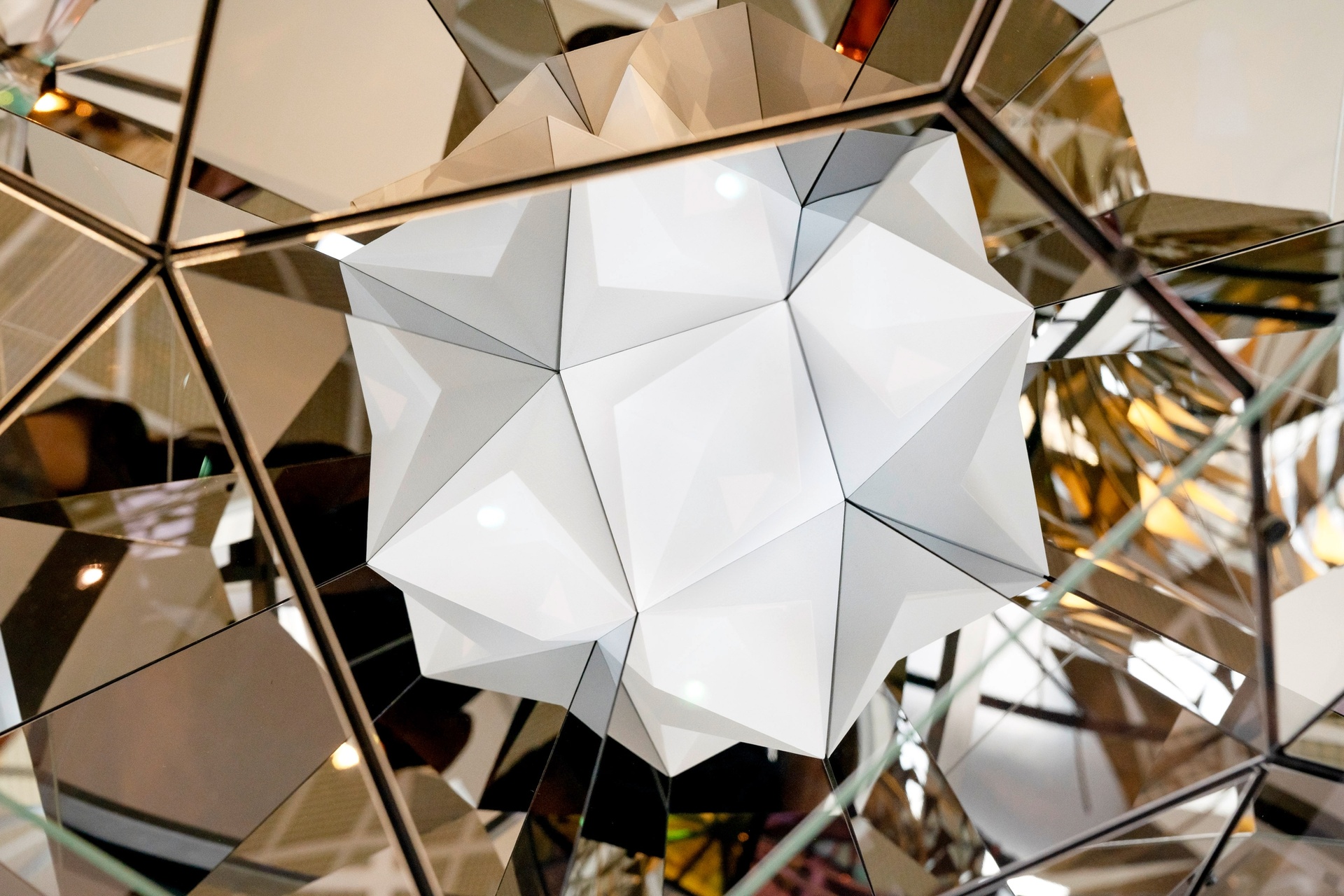
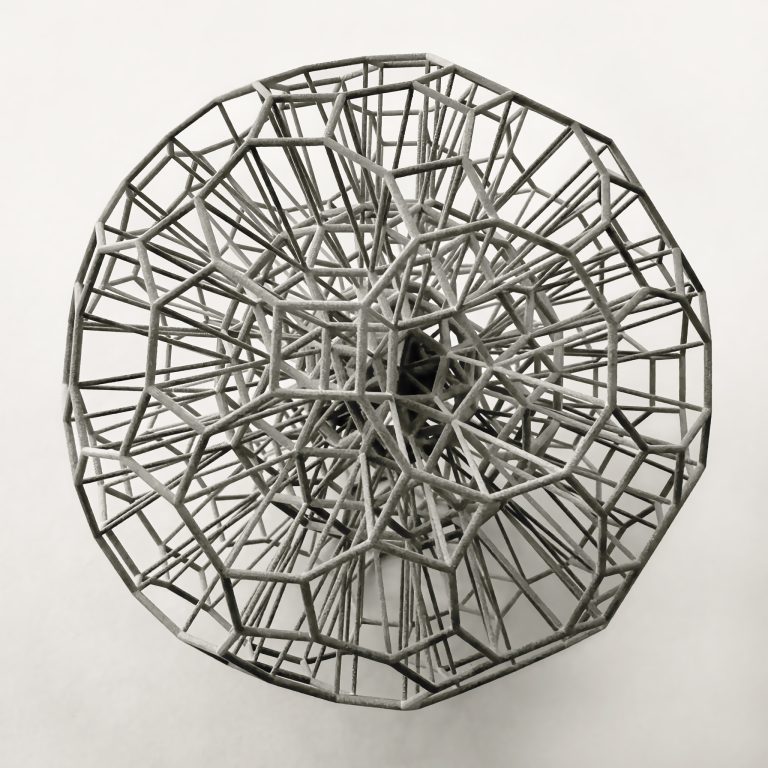
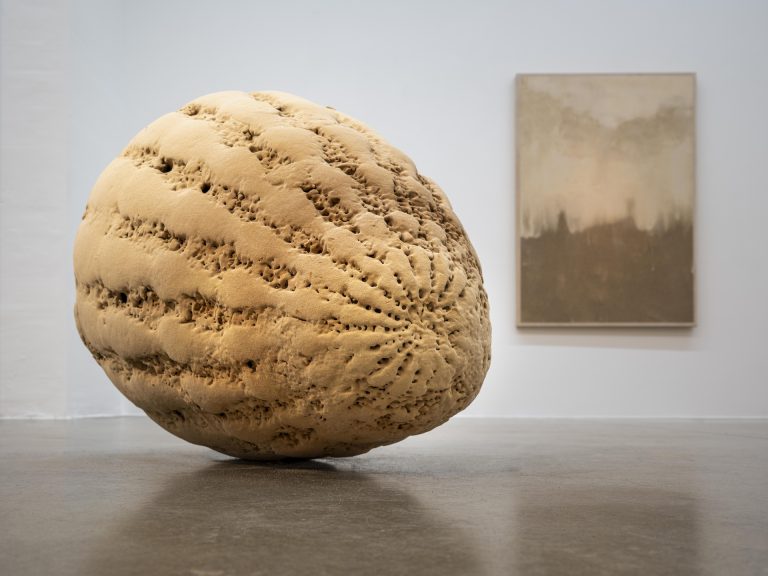
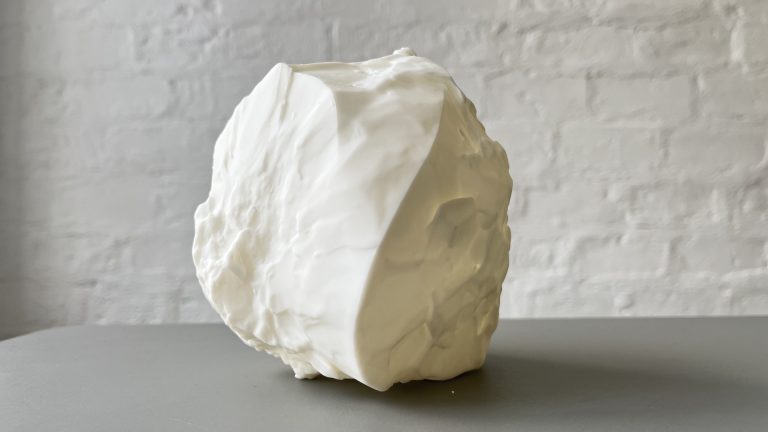
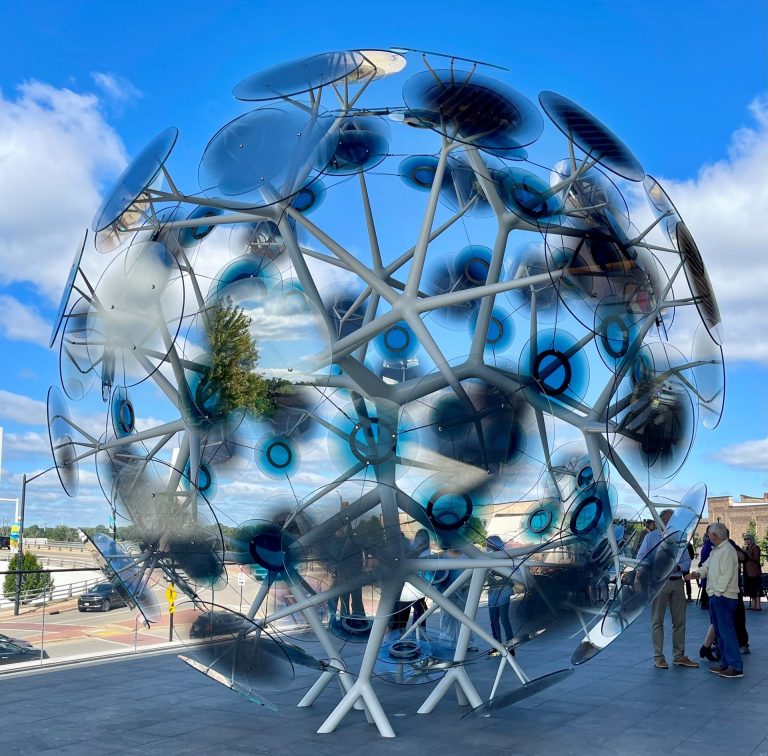
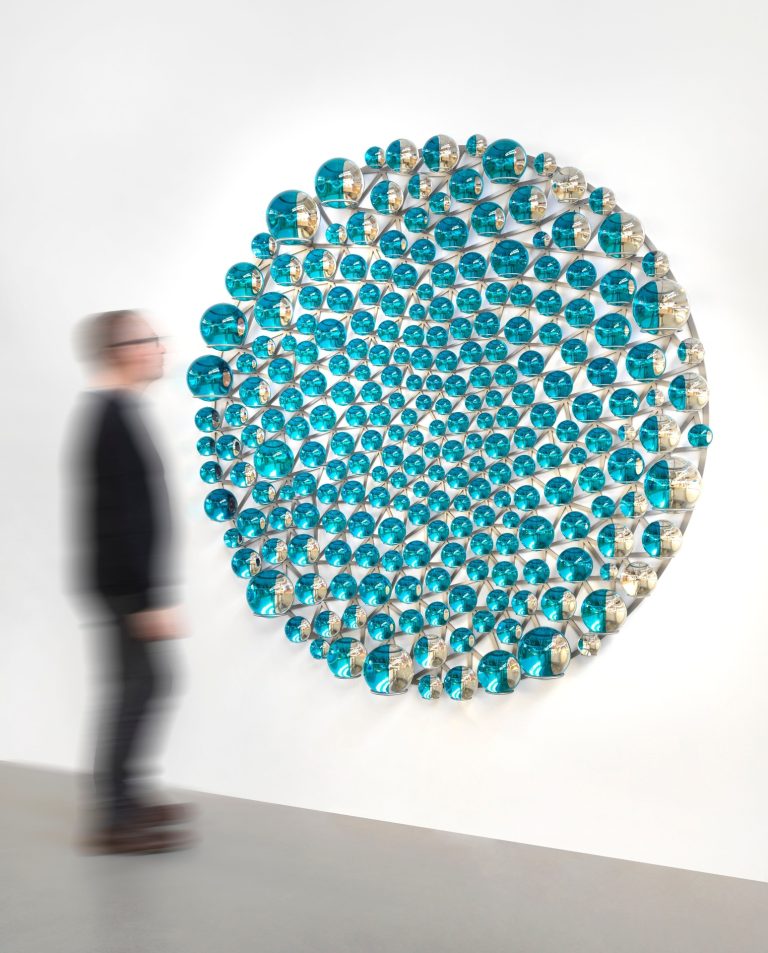
Kaleidosphere integrates thirty kaleidoscopes into a rotating spherical structure. Each kaleidoscope generates a different polyhedron through mirror multiplication-three mirrors create triangular symmetry, four produce cubic forms, five yield icosahedral patterns. The sphere mounts on ball bearings, allowing viewers to rotate it and examine each kaleidoscope individually. Polished stainless steel mirrors multiply fragmentary inputs into complete virtual polyhedra floating at the shaft's end. The thirty configurations represent distinct symmetry groups, each producing its characteristic polyhedral illusion. Viewers become part of the optical system-their reflections fragment and multiply within the mirror arrays. The work adapts the Kaleidosphere prototype presented at Bridges 2020 into a full-scale installation, synthesizing kaleidoscope research into a comprehensive spherical catalog of polyhedral symmetries.
Research: Each kaleidoscope's mirror configuration derives from polyhedral symmetry groups-the mathematical classification of rotational symmetries. Mirror angles calculated to match dihedral angles of target polyhedra: 60 degrees for tetrahedral, 90 degrees for cubic, 72 degrees for icosahedral symmetries. The spherical housing distributes thirty configurations across the surface, each oriented for comfortable viewing when rotated. The Kaleidosphere prototype from Bridges 2020 established the hybrid physical-optical approach-partial physical forms completed by mirrors to create virtual polyhedra. This full-scale adaptation implements the complete catalog of symmetry groups. Precision mirror mounting ensures optical accuracy-misalignment destroys the polyhedral illusion.