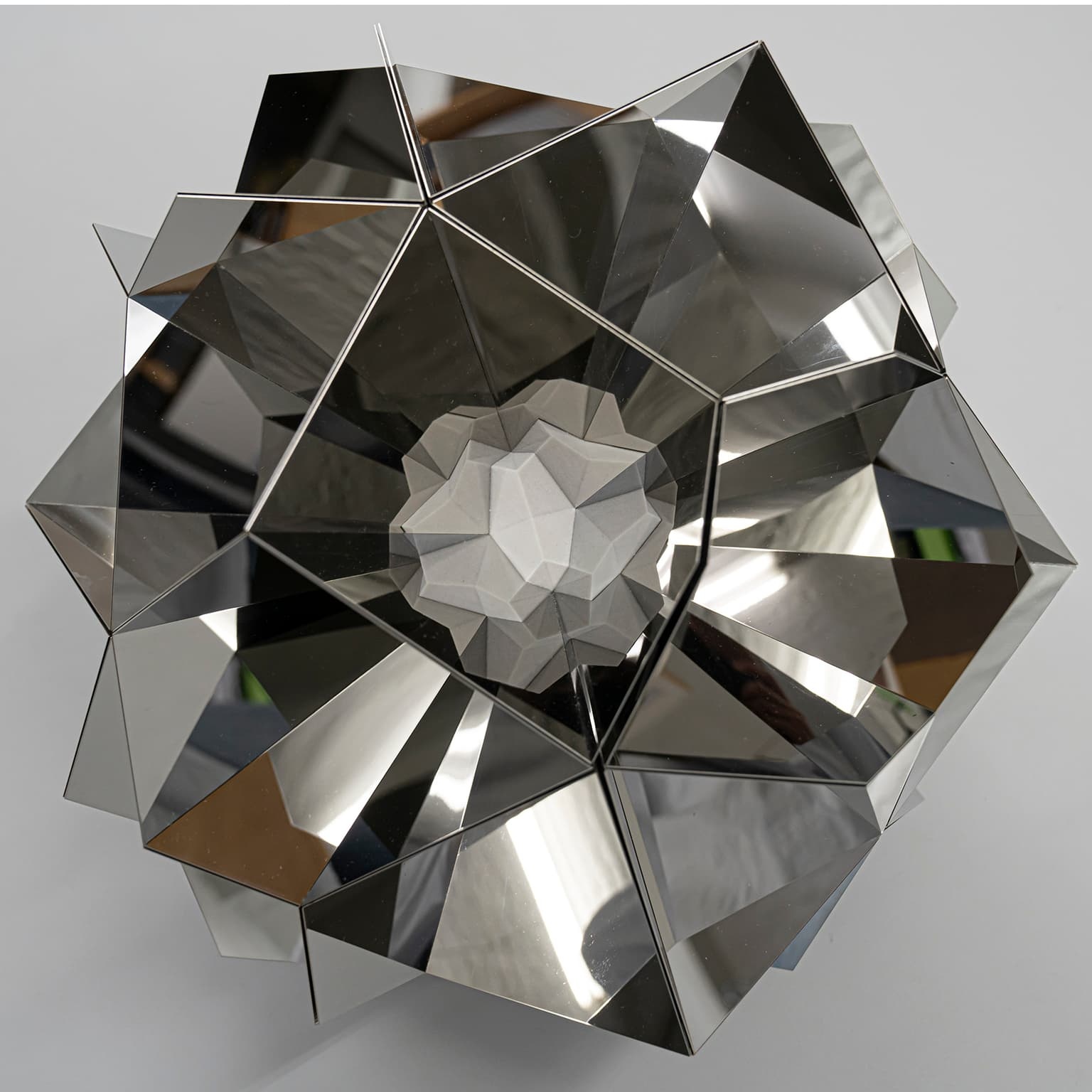
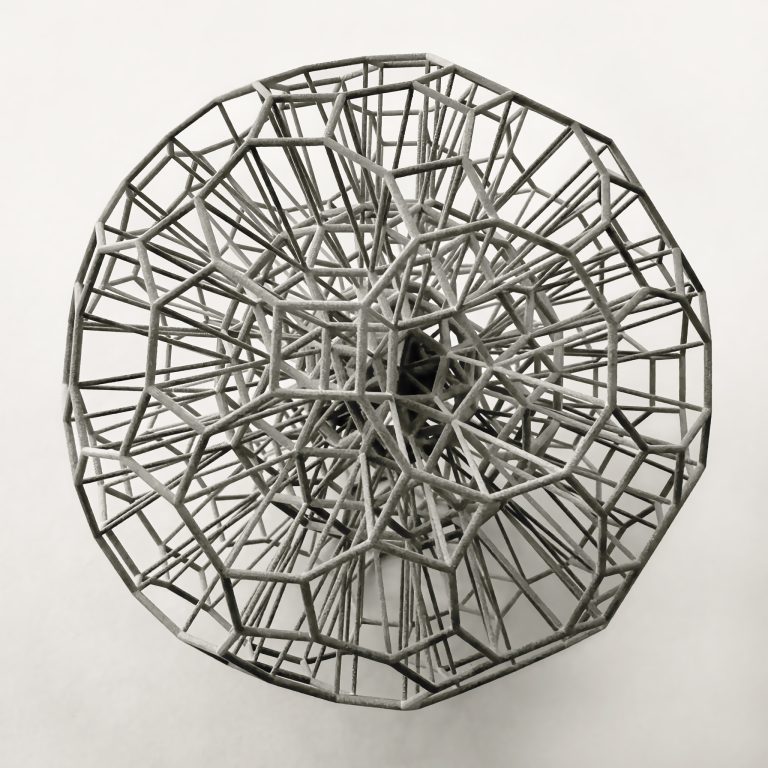
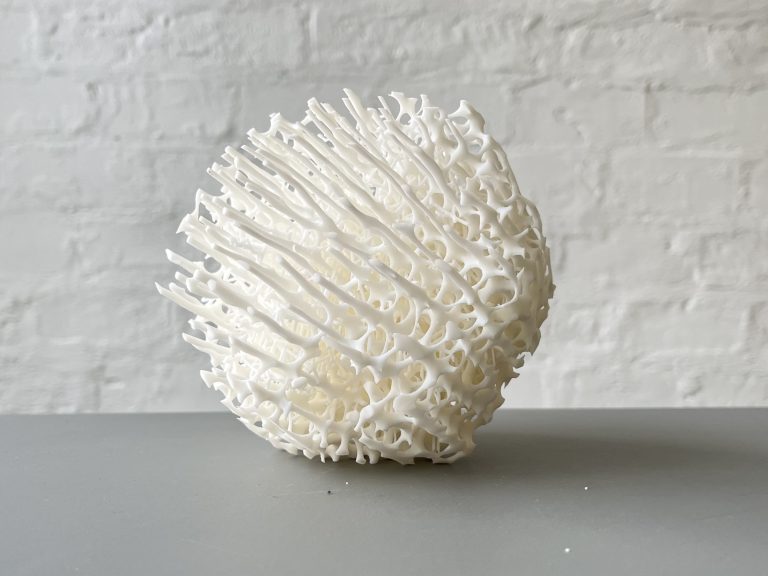
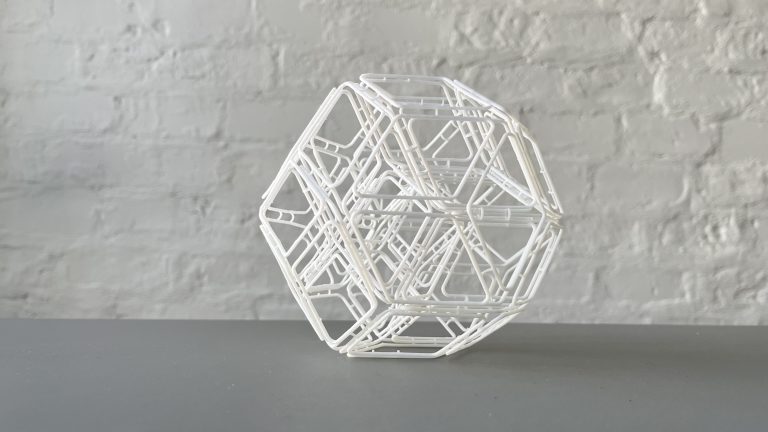
Kaleidosphere prototype explores hybrid physical-optical geometry. Polyhedra group by symmetry type-tetrahedral, octahedral, icosahedral-then dissect along symmetry planes. Spherical sections merge into groups of four, each containing a different polyhedral fragment. Mirrors positioned between sections complete the geometry optically. The challenge: mirrors must align precisely with symmetry planes while physical sections offset from center to maintain correct optical paths. Mirror shapes cut by polyhedra matching the underlying symmetry group. The result: partial physical forms that mirrors multiply into complete virtual polyhedra. This prototype established principles later implemented in the full Kaleidosphere installation-thirty kaleidoscopes synthesizing the complete catalog of polyhedral symmetries through mirror multiplication.
Research: Symmetry plane dissection follows group theory principles-each symmetry type has characteristic reflection planes. Tetrahedral symmetry: six planes. Octahedral: nine planes. Icosahedral: fifteen planes. Physical sections occupy specific angular positions; mirrors fill gaps. Optical path calculations ensure virtual polyhedra appear centered despite physical offset. The computational challenge: optimizing section placement and mirror angles to maximize optical clarity while maintaining fabrication feasibility. Resin printing and stainless steel mirrors combine for precision assembly.