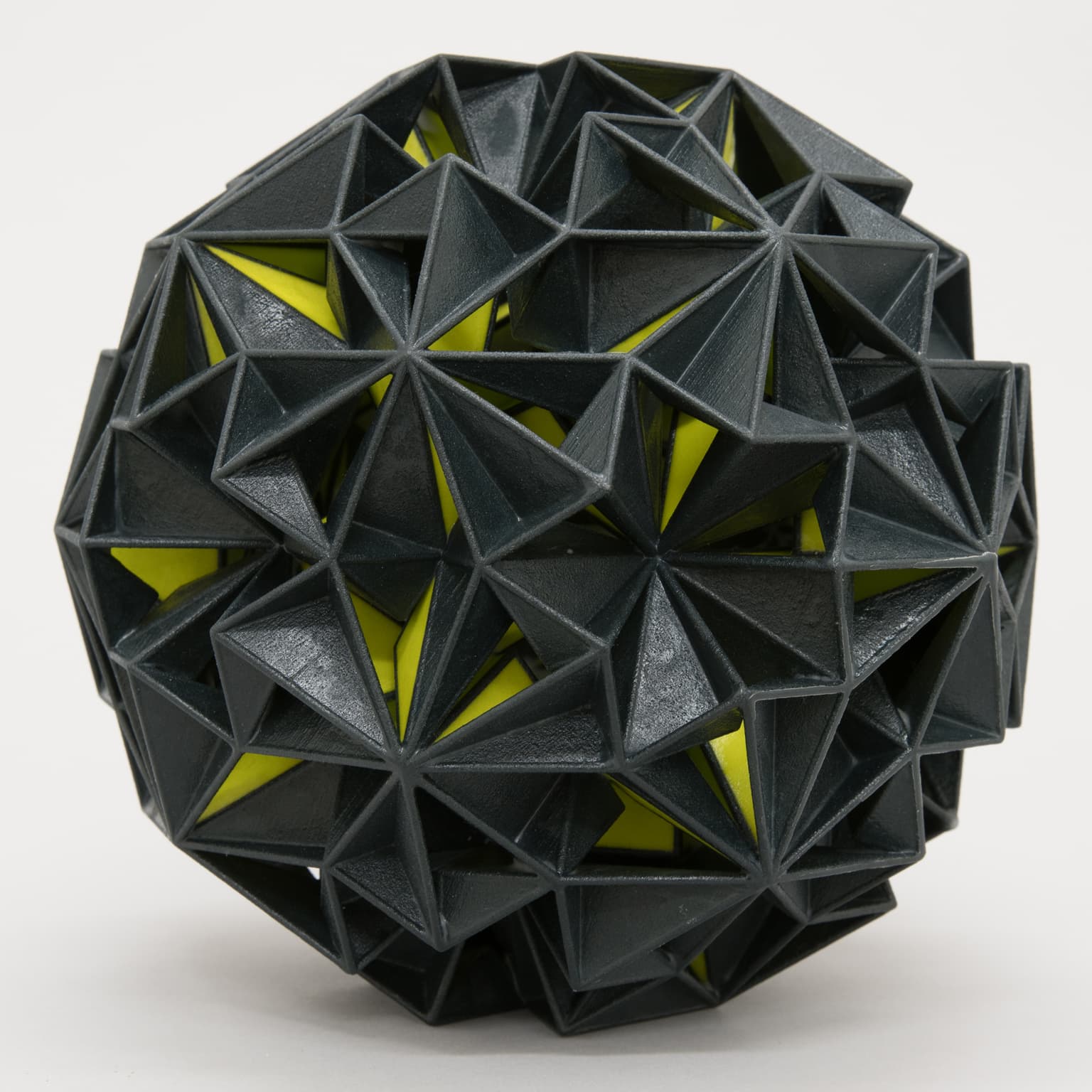
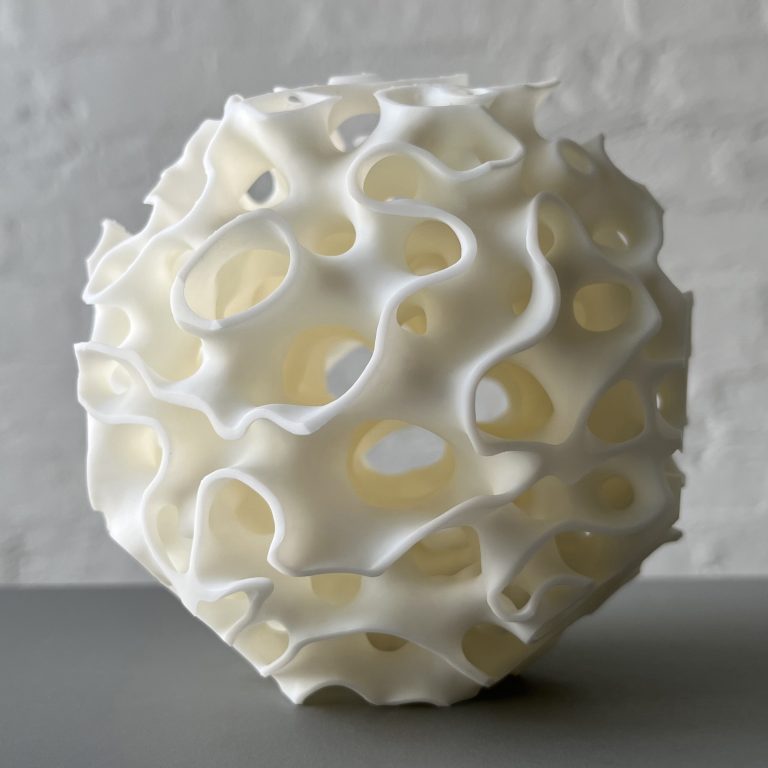
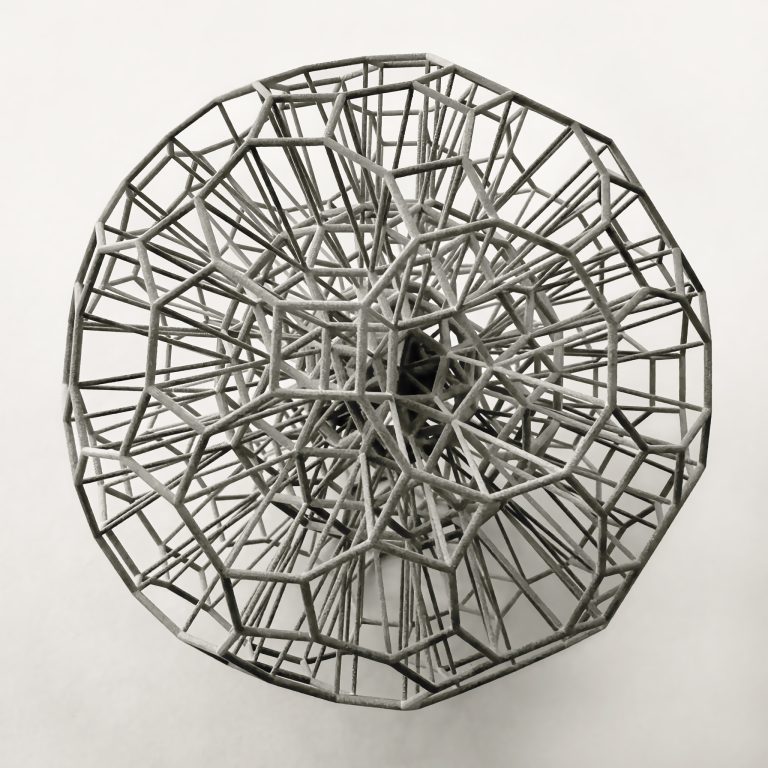
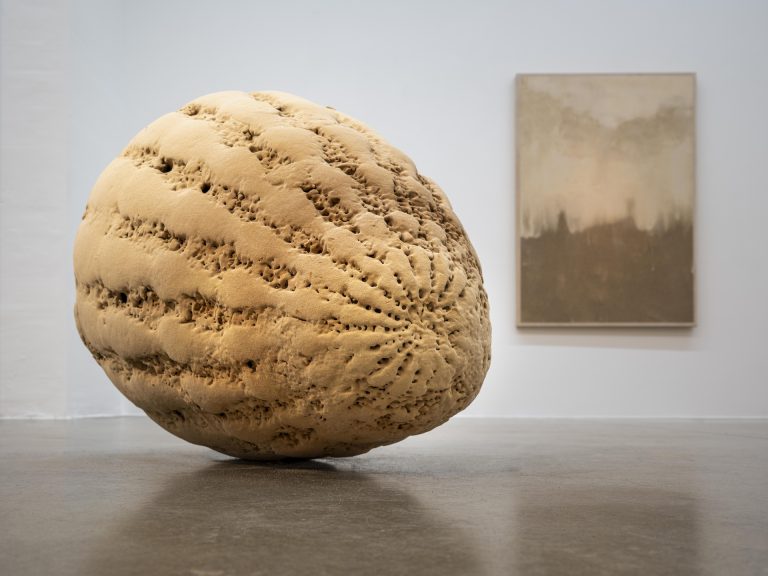
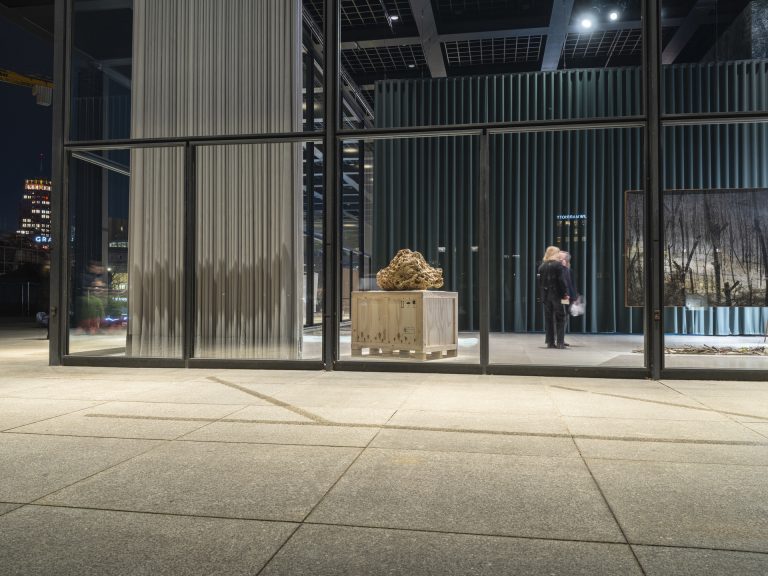
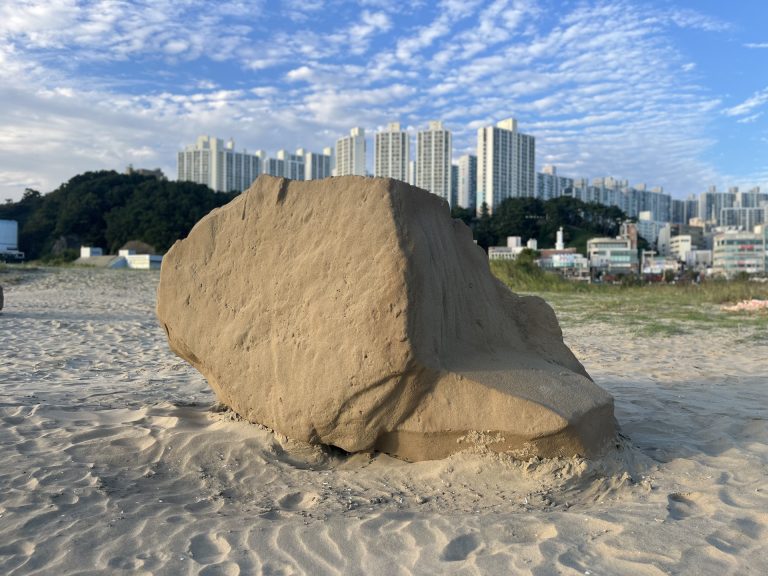
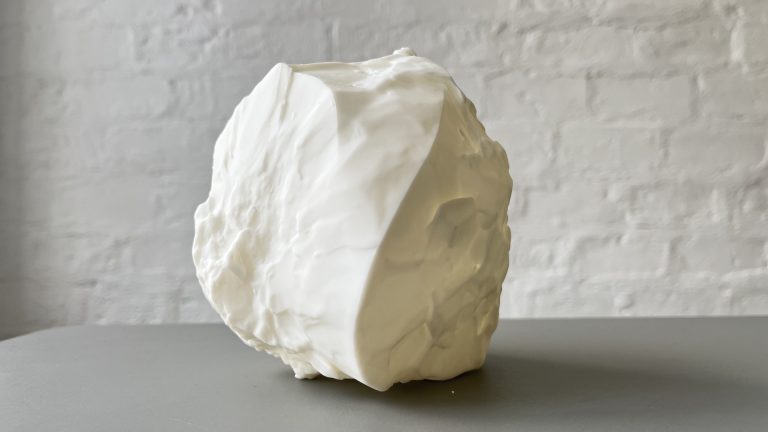
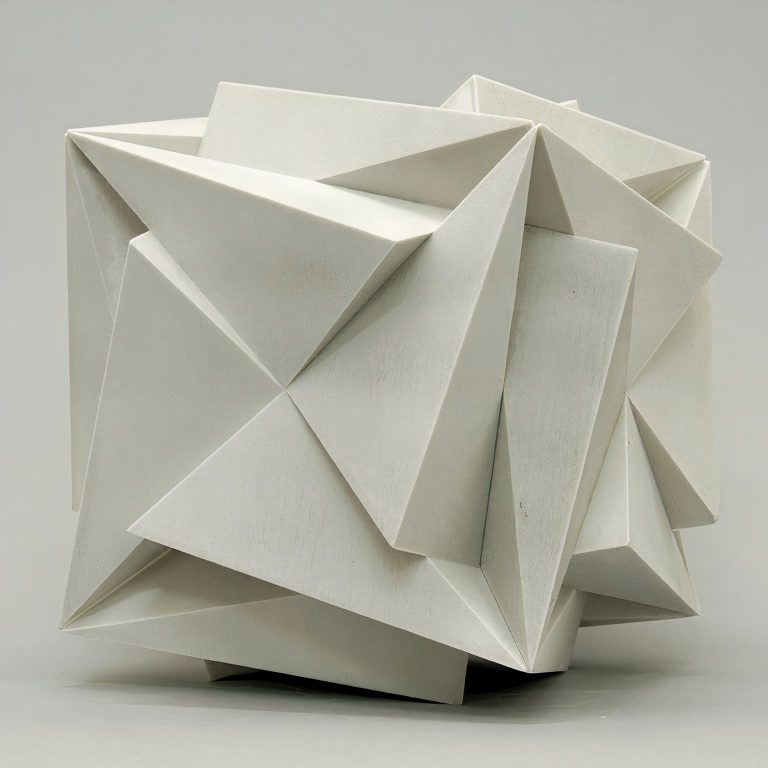
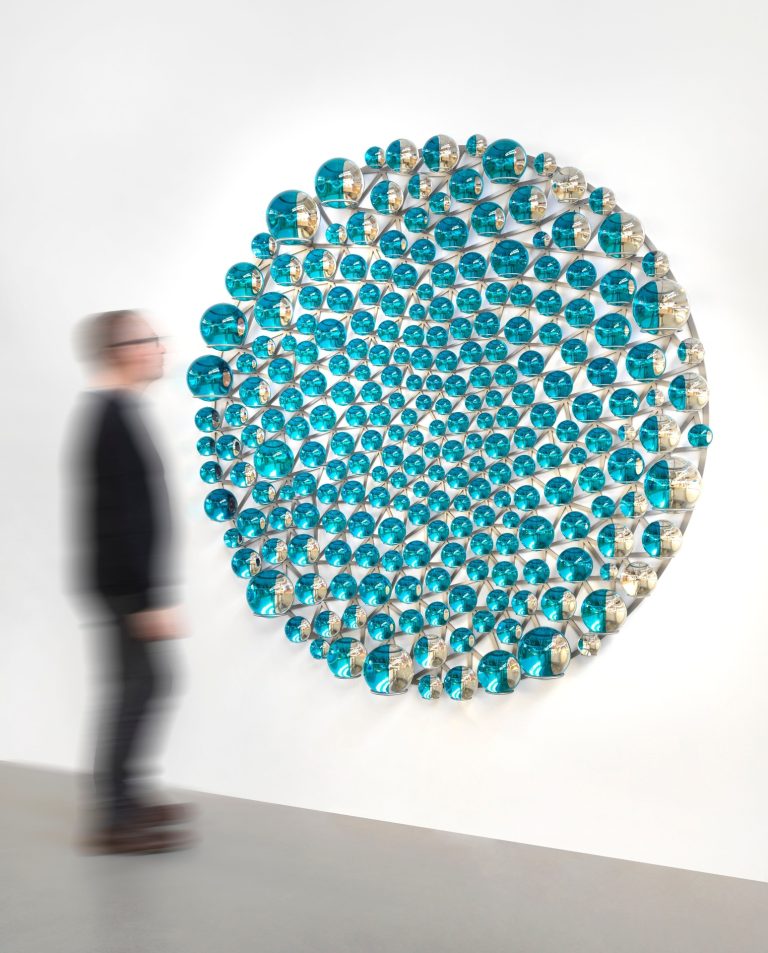
The InvertedSuperCubeSphere inverts the SuperCube geometry-where the SuperCube has six tetrahedral indentations, the inverted form has six tetrahedral projections. Each standard SuperCube derives from the five-cube compound with inward-facing tetrahedra; the inverted version reverses this, creating outward-facing tetrahedral pyramids on each cubic face. This inversion transforms the interlocking mechanism: instead of modules fitting into each other's voids, they now nest around each other's projections. The same golden ratio proportions govern the edge divisions, but the spatial relationships reverse. Arranged in the same 60-module icosahedral configuration, the inverted spherical form creates a complementary structure-positive space becomes negative, convex becomes concave. Olafur Eliasson later adapted this inverted geometry for his artwork "How to Build a Sphere Out of Cubes" (2018).
Research: The geometric inversion process reverses the SuperCube's construction logic. Where the standard SuperCube subtracts tetrahedra from a cube, the inverted form adds tetrahedral pyramids to each face. This transformation preserves all golden ratio relationships: edge divisions maintain their proportions, angular relationships stay consistent, but spatial orientation reverses. The 60-module assembly follows identical rotational principles as the standard SuperCubeSphere, yet the interlocking behavior transforms-projections now interweave rather than nest into voids. This complementary geometry reveals how the same geometric framework generates dual spatial systems. The inverted configuration demonstrates the SuperCube's versatility, creating a positive-negative pair where indentations become projections, concave becomes convex, while maintaining the underlying modular logic.