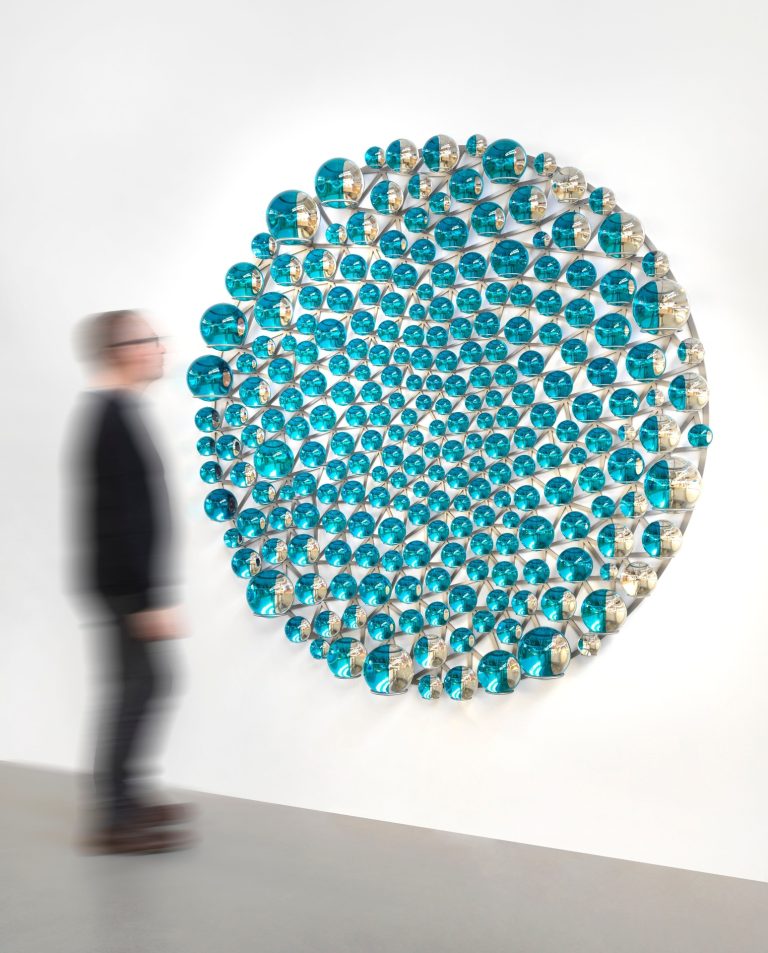
Human Time is Movement – Studio Olafur Eliasson, 2019
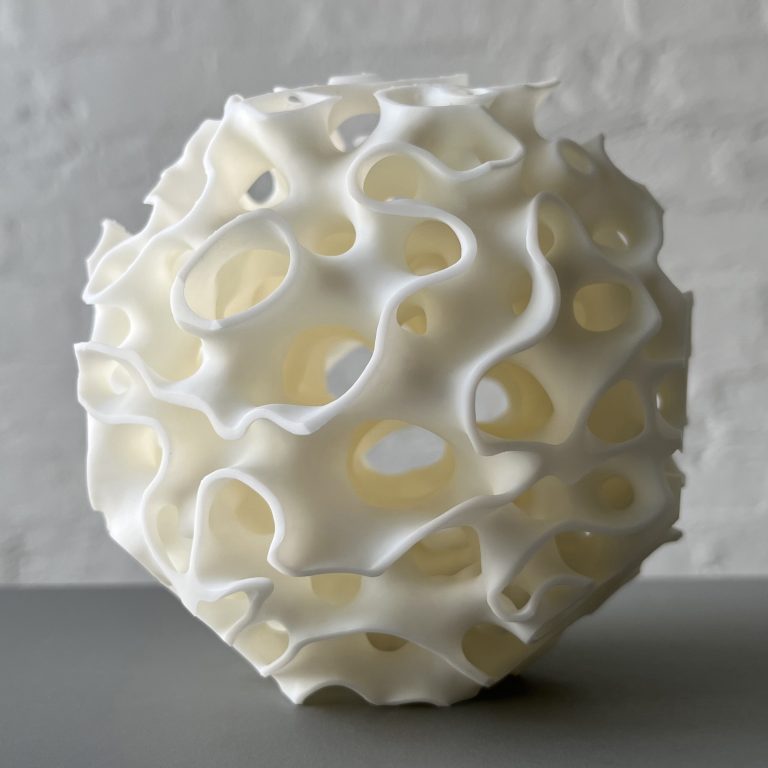
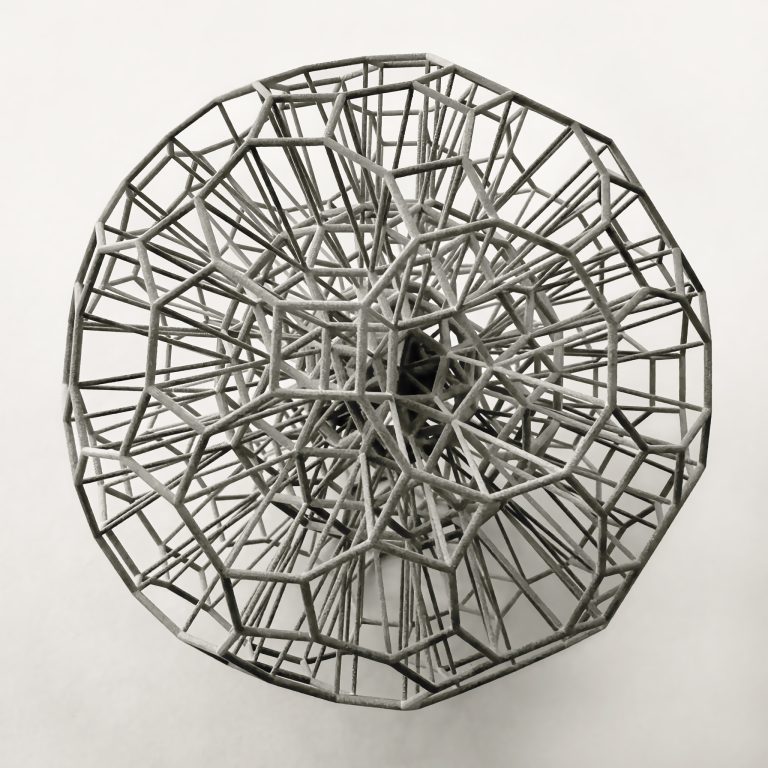
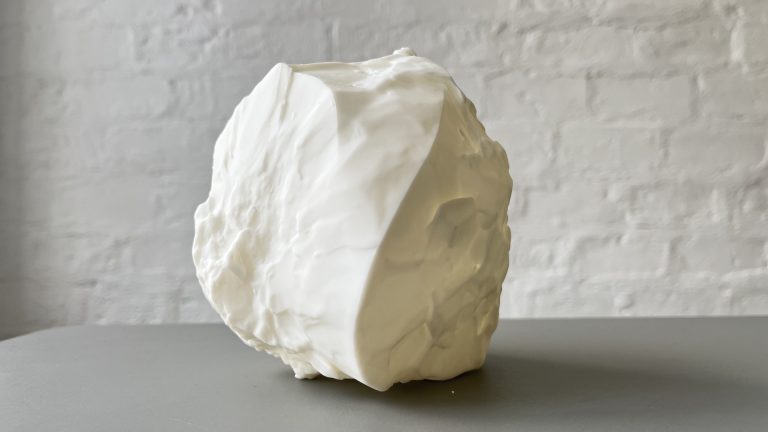
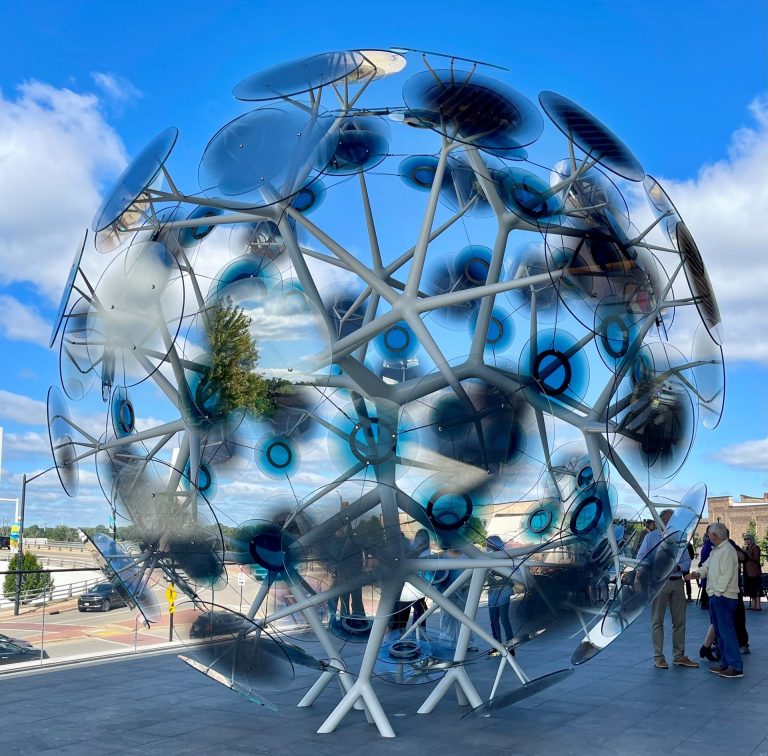
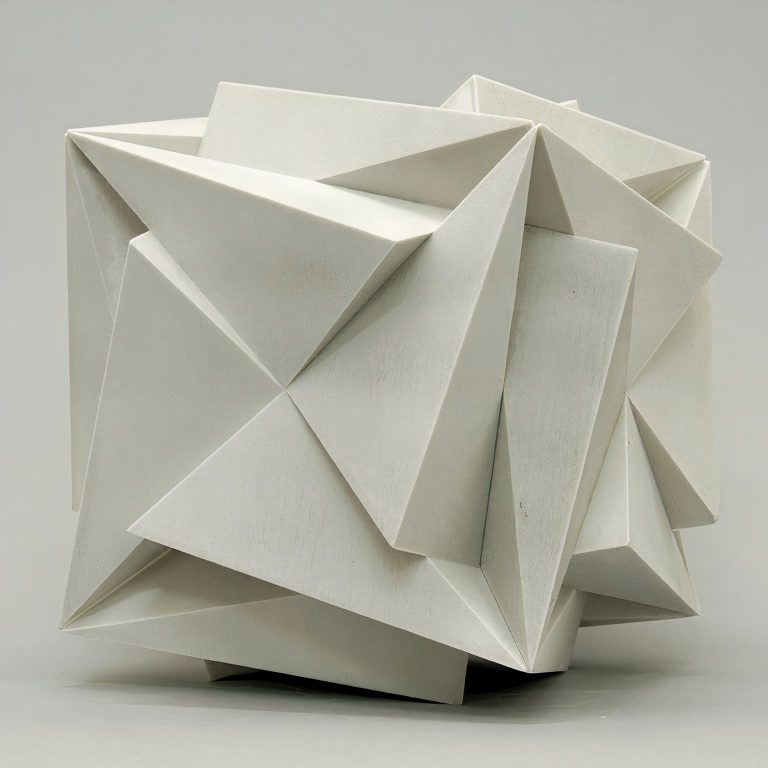
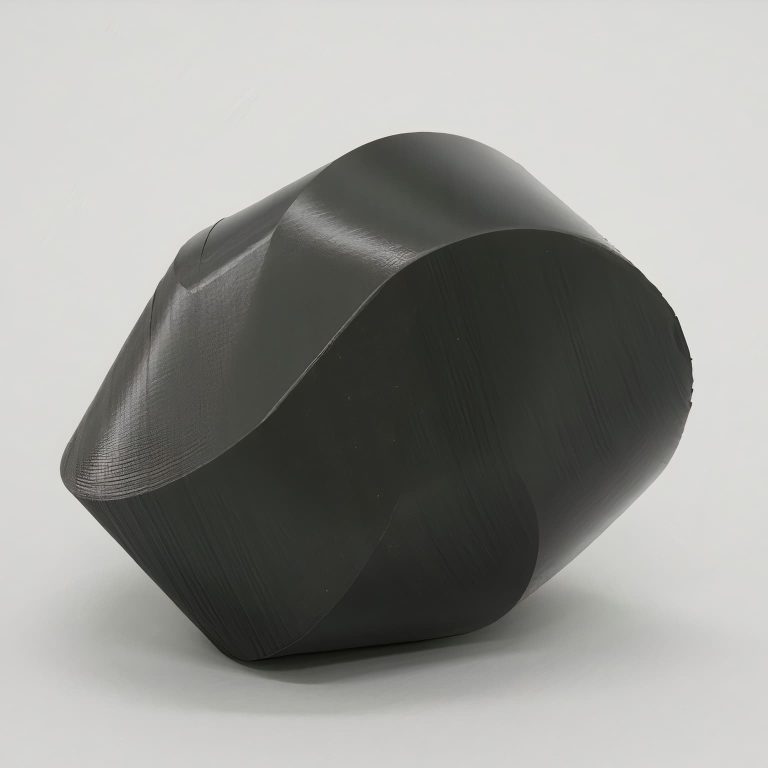
"Human Time is Movement" explores Clelia curves-mathematical forms defined by simultaneous meridian progression and axial rotation on a sphere. Guido Grandi discovered these curves in 1728, naming them after Countess Clelia Borromeo. The motion resembles peeling an orange or winding yarn into a ball. Each variation adjusts two parameters: rotation speed and radial contraction. Different ratios produce dramatically different forms-some tight spirals, others loose helices. The series demonstrates how small parameter changes generate diverse sculptural outcomes from a single equation. Black and white paint simulates central light source behavior: white where light hits, black in shadow. This trompe-l'oeil lighting emphasizes three-dimensional form through two-tone surface treatment.
Research: Clelia curves emerge from a point on a sphere's meridian rotating at constant speed while the sphere itself rotates along its axis. Collaboration with Stefano Arrighi explored how different frequency relationships between these two rotation speeds generate distinct curve forms. Each curve has its own frequency (m) coming from the relative speeds-when m=1, the result is a Viviani curve. The mathematical formula was modified so curves gradually converge toward the sphere's center before returning to a periodic loop, with damping phases that reduce speed during convergence. The computational workflow: parametric curve generation ? surface creation around curve path ? structural analysis for stainless steel fabrication. Paint application follows simulated lighting calculations, determining shadow zones for each form's specific geometry.