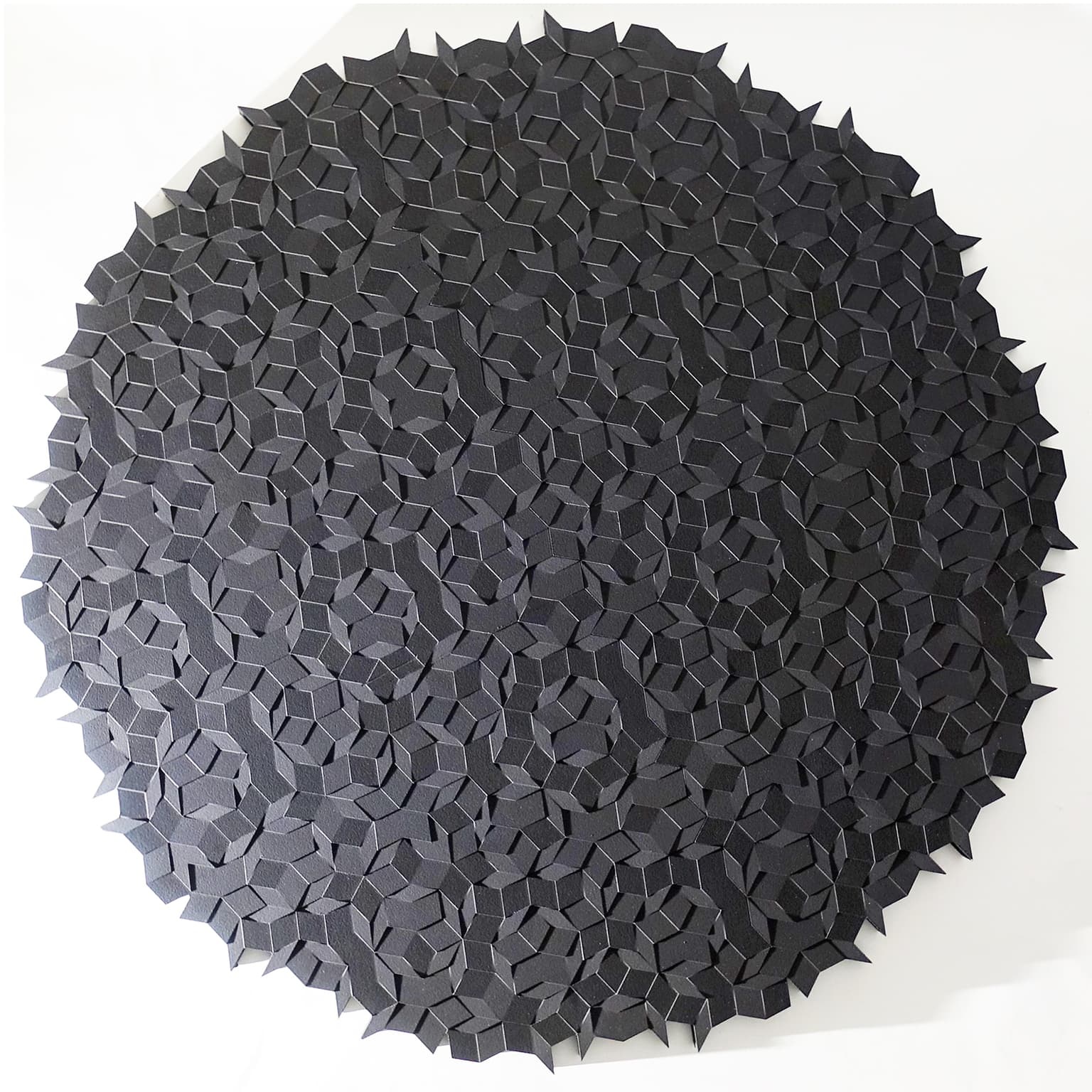
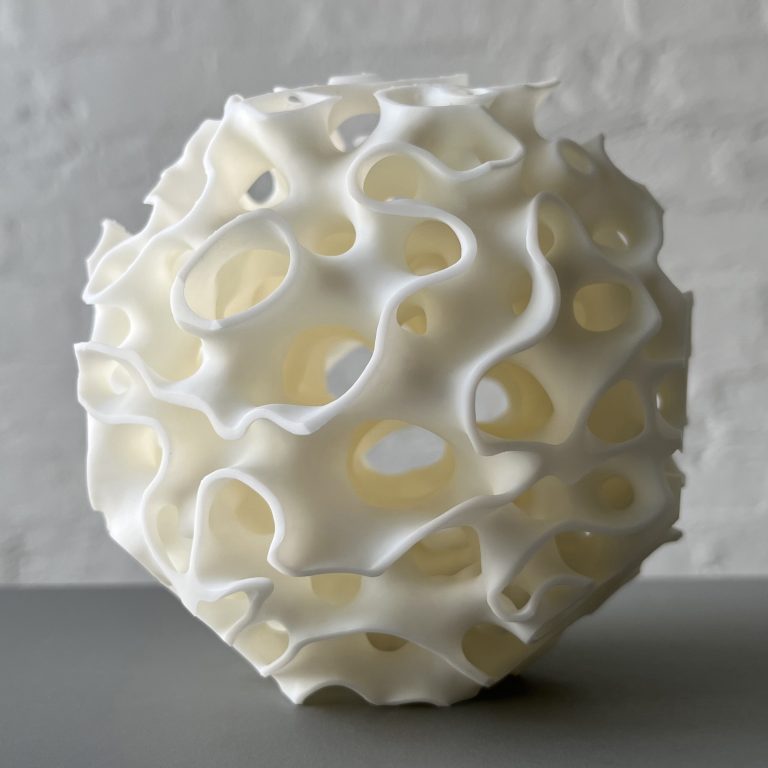
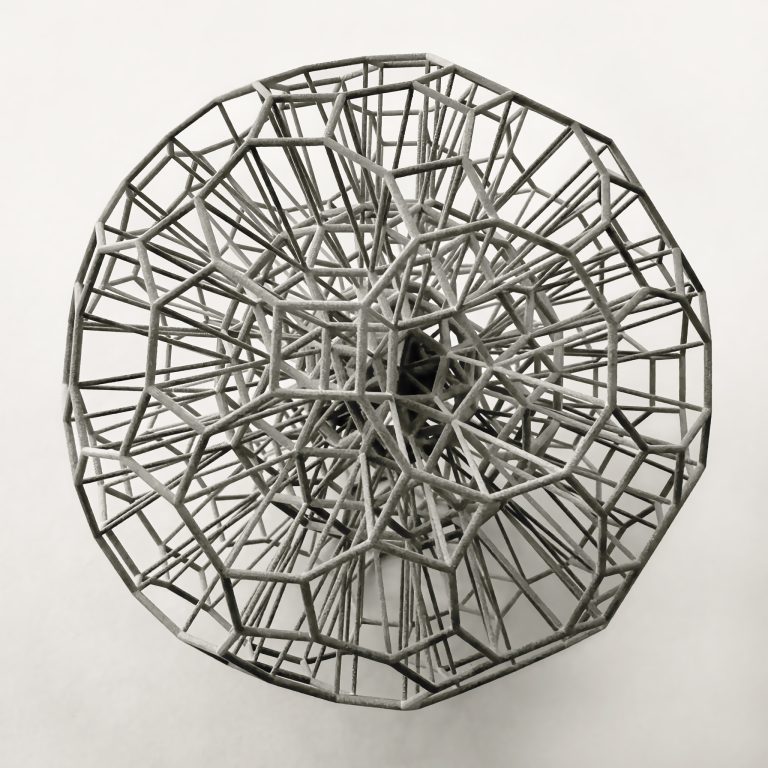
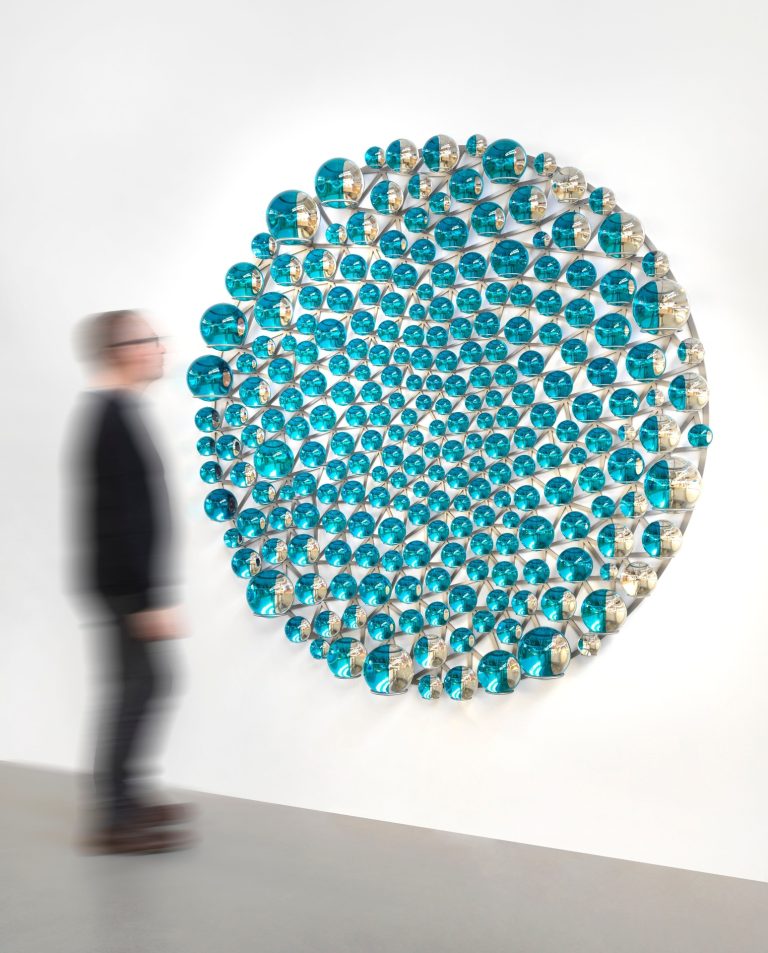
Aperiodic Subgrouping tests how non-repeating patterns interact with light. The work starts with a fivefold symmetric point cloud-positions that never repeat yet maintain rotational symmetry. Subdivision algorithms cluster points into five groups. Each cluster converts to tiles tilted at specific angles. As sunlight moves across the day, different clusters catch light while others fall dark. The pattern transforms through solar geometry rather than mechanical change. This example uses ten tile types across five groups; the system scales to other configurations. Black paint and minimal tilt angles reduce shadow interference, keeping pattern visibility clean. The research translates Penrose-like aperiodicity into time-based visual systems, where mathematical non-repetition meets daily cycles.
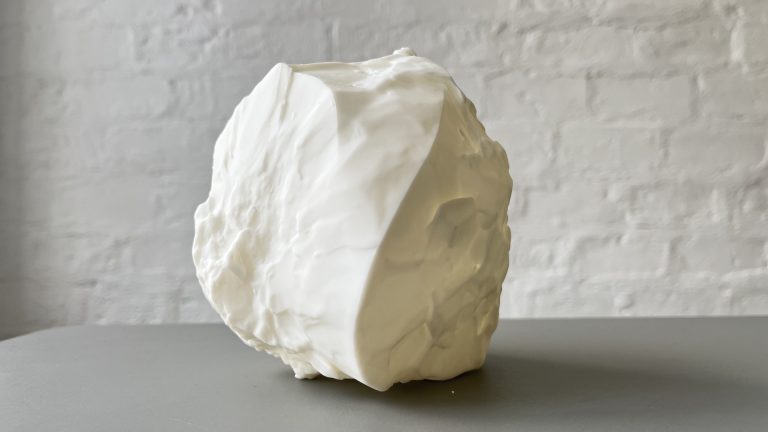
Research: Fivefold symmetry generates aperiodic tilings-patterns that fill space without repeating. Subdivision algorithms partition the point cloud into clusters based on proximity or other metrics. Each cluster receives a tilt angle calculated for specific solar positions. The computational challenge: optimizing tilt angles across groups to maximize pattern contrast at different times while maintaining fabrication feasibility. Resin printing captures precise tilt angles and surface normals critical for optical behavior.