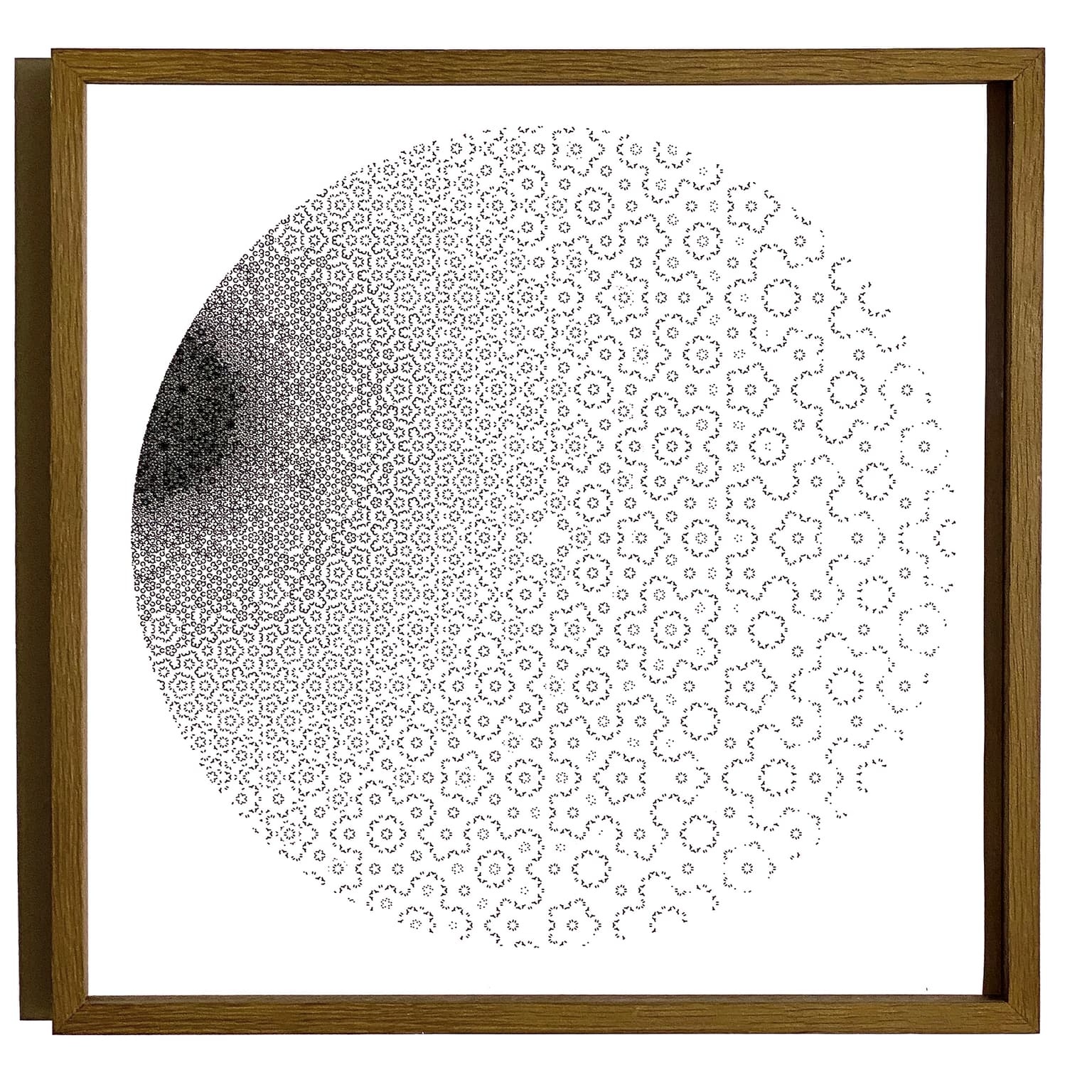
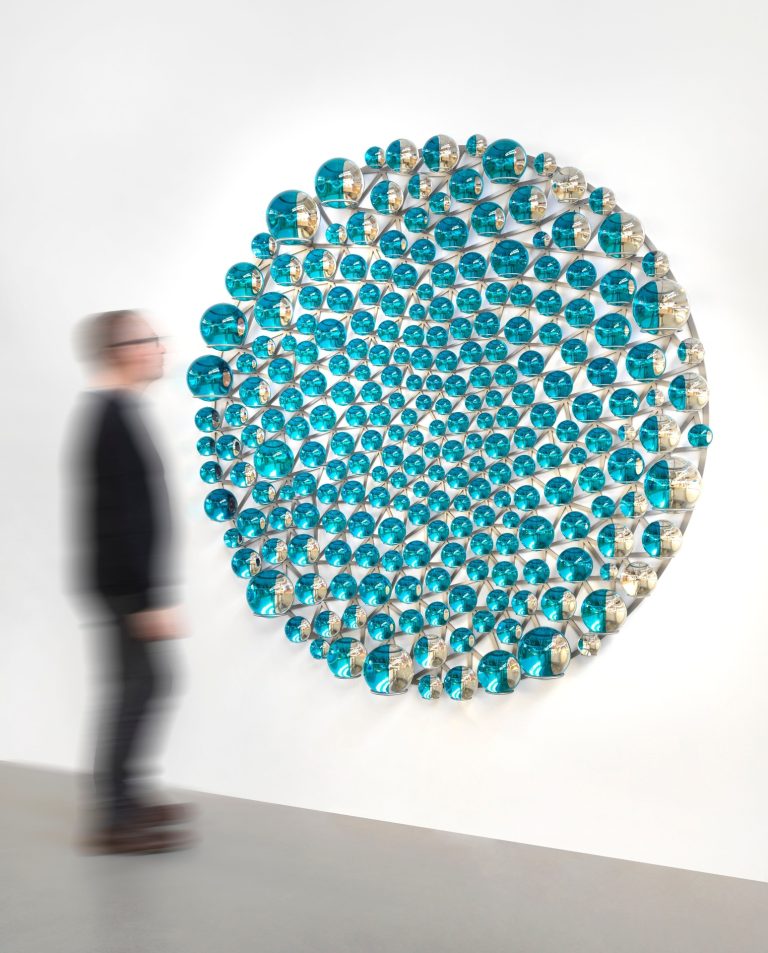
Aperiodic Gradient solves a specific problem: creating smooth gradients from non-repeating patterns. The process begins with a dense point cloud-thousands of potential positions. Machine learning clustering algorithms subdivide this cloud based on point proximities, creating roughly equal sub-groups. Each cluster receives an intensity range mapped from a curve function. An attractor point influences final selection: distance to attractor determines each point's intensity within its cluster's range. Points below threshold survive; others vanish. The result: continuous gradient emerging from discrete, aperiodic elements. No repetition, no randomness-pattern emerges from systematic culling. The method bridges computational clustering with visual design, proving that smooth transitions can arise from non-periodic structures.
Research: ML clustering operates on spatial proximity metrics, grouping points by neighborhood relationships rather than grid alignment. The algorithm choice-k-means, hierarchical clustering, or custom proximity measures-affects gradient character. Critical parameters include cluster count, distance metrics, and boundary handling. The attractor-based intensity mapping adds directional bias to the aperiodic structure, creating visual flow within mathematical constraints. Print output reveals emergent patterns invisible in the computational process.