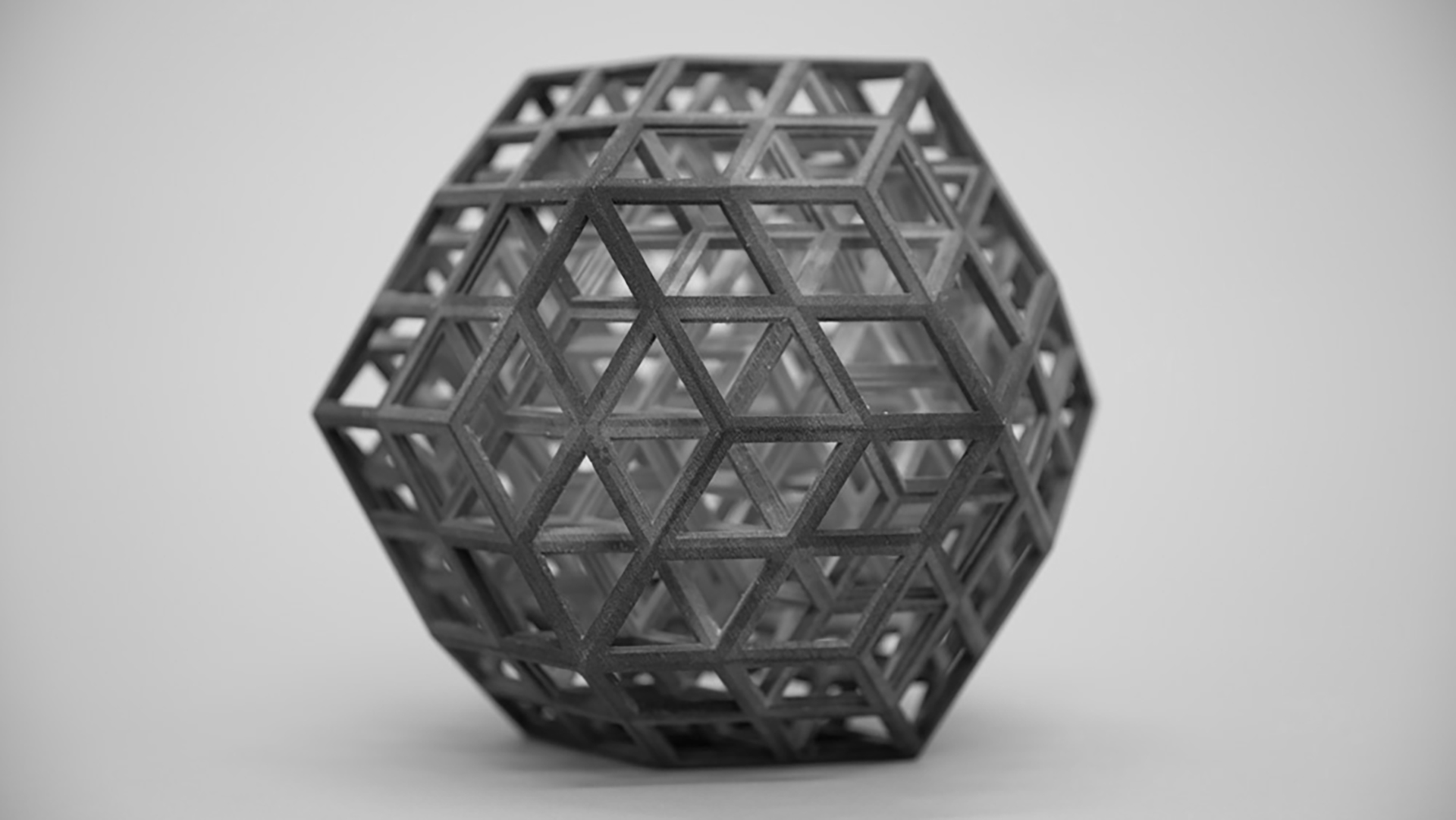
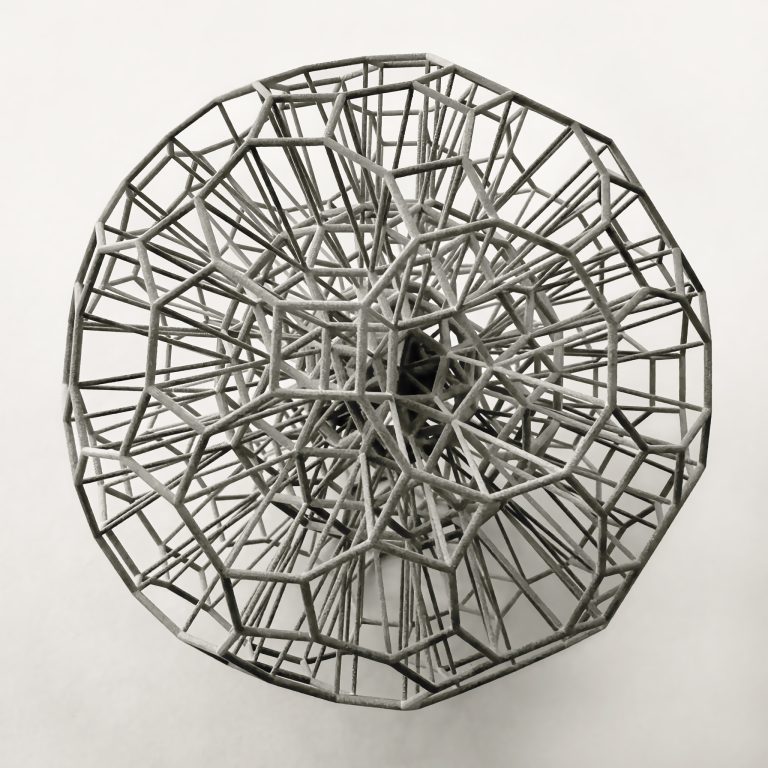
The Rhombic Structures study investigates spatial arrangements built from two types of golden rhombohedra. These three-dimensional rhombic units serve as building blocks for various polyhedral forms and aperiodic space-filling systems. The research explores how these rhombohedra combine to create different geometric configurations. The rhombic triacontahedron emerges as one possible assembly, but the system generates various additional polyhedral forms through alternative arrangements. Each configuration demonstrates how the same fundamental units organize into distinct spatial structures. The investigation extends into three-dimensional aperiodic tilings, examining how golden rhombohedra fill space without periodic repetition. These arrangements maintain geometric coherence while avoiding translational symmetry, creating ordered structures that differ from conventional crystal patterns. The study tests how different assembly methods affect the resulting spatial organizations and their geometric properties.