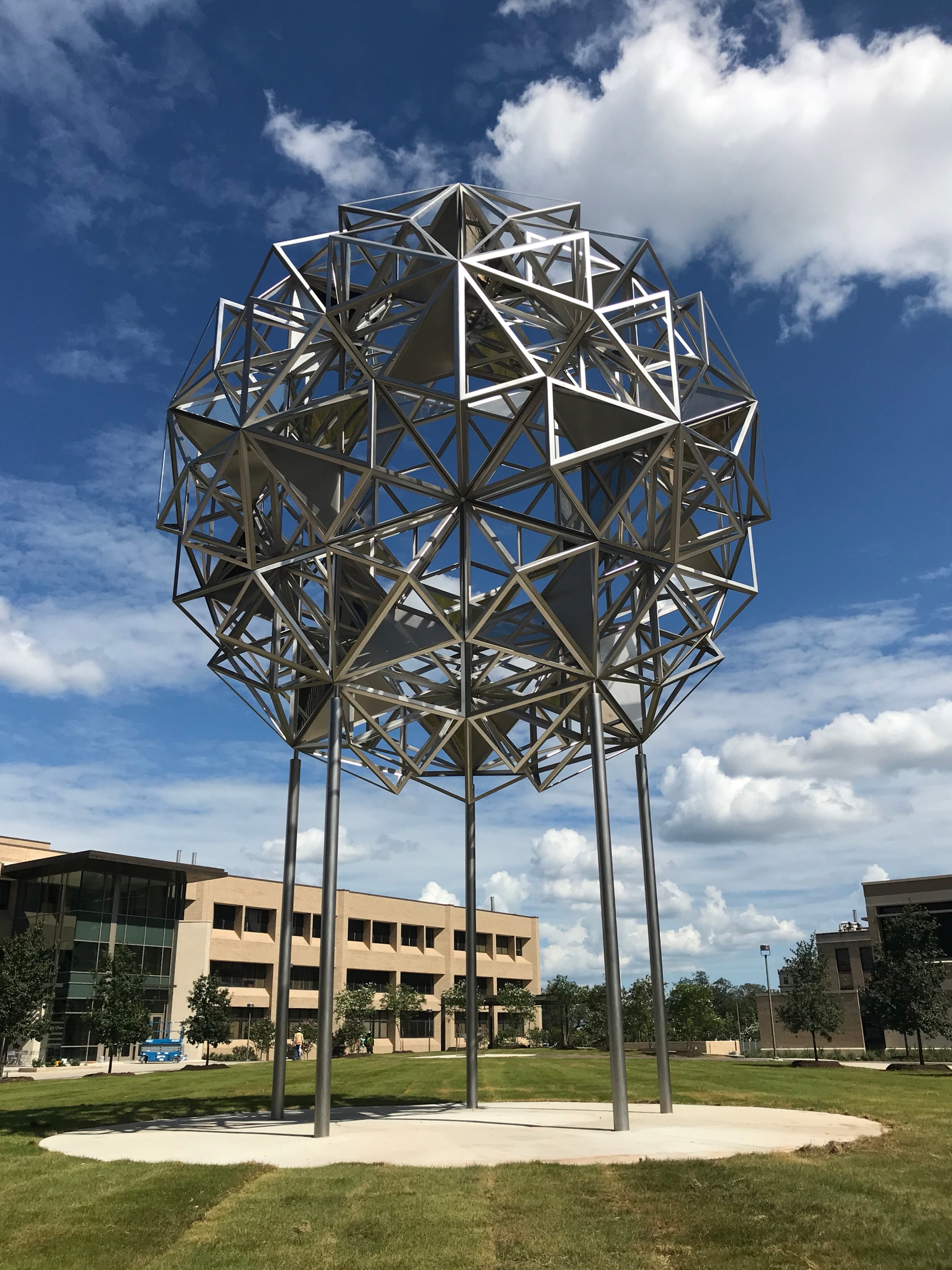
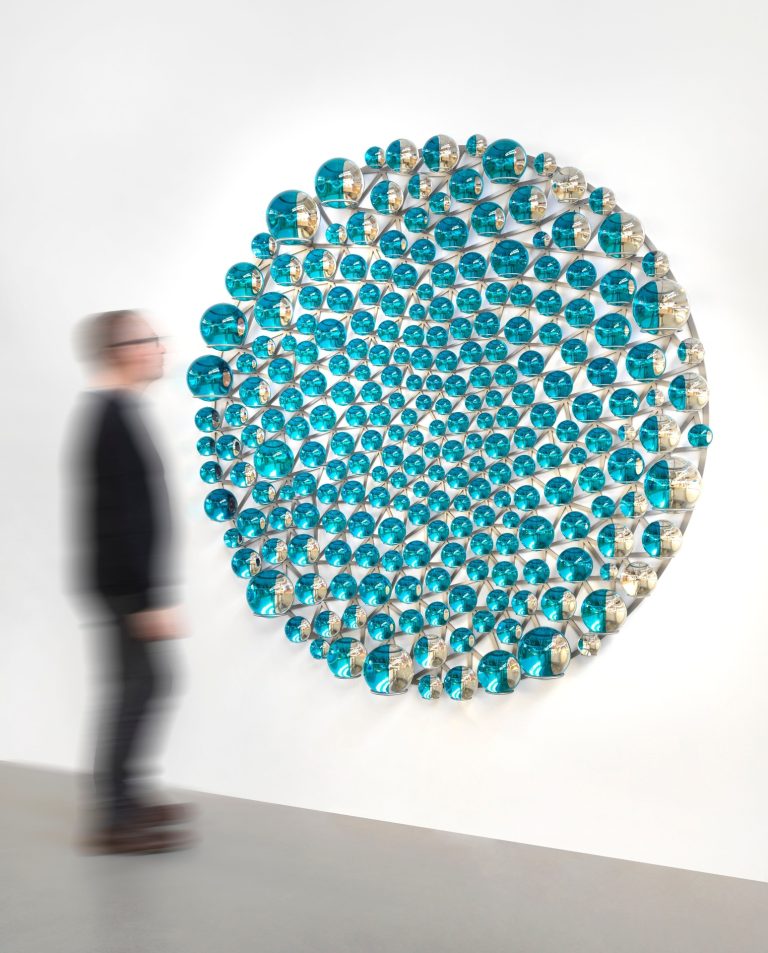
How to Build a Sphere Out of Cubes – Olafur Eliasson, 2018
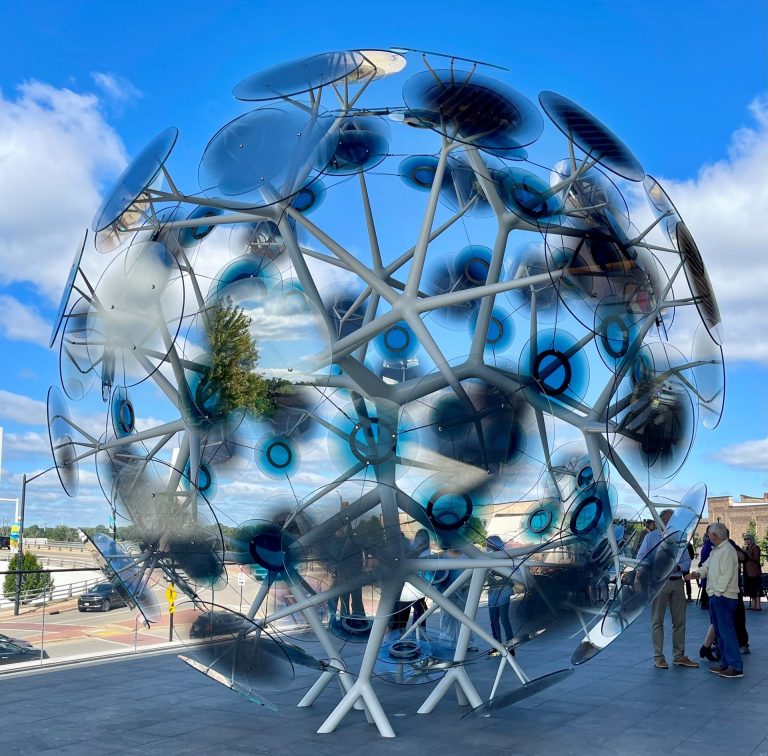
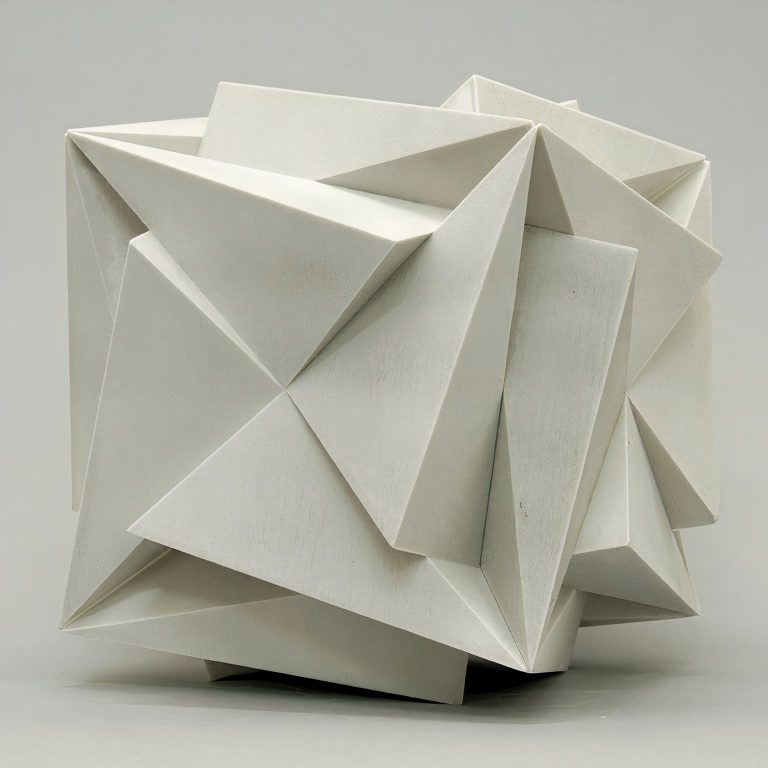
"How to Build a Sphere Out of Cubes" pairs two structures across an elliptical lawn at Texas A&M. One: a human-sized cube with triangular mirror elements. Two: a pavilion-scale sphere built from sixty inverted SuperCube modules. Each inverted SuperCube features six tetrahedral projections on its faces-where standard SuperCubes have indentations, these have projections. The sphere arranges these modules in icosahedral symmetry, creating a complex form where projections interweave. The paired cube serves as a reference scale and geometric primer, its triangular mirrors echoing the geometry within the spherical assembly. The work adapts the InvertedSuperCubeSphere from 2017 Bridges research, translating the projection-based geometry into permanent public sculpture. Brushed stainless steel construction with integrated lighting creates durable outdoor artworks that demonstrate modular geometric principles through direct comparison.
Research: The InvertedSuperCubeSphere uses a variation of the SuperCube module-where standard SuperCubes have tetrahedral indentations, the inverted form has tetrahedral projections on each cubic face. This transformation changes the interlocking behavior: projections interweave rather than nest into voids. Sixty inverted modules arrange through the same rotational transformations that govern the standard SuperCubeSphere, following icosahedral symmetry principles. The assembly creates a complex spherical form where golden ratio proportions remain constant but spatial relationships differ. The paired cubic structure provides scale reference and demonstrates the module's cubic origin. Triangular mirror elements throughout both structures reinforce the geometric relationships. Outdoor installation required engineering adaptation: structural steel framework supports the modules, weather-resistant finishes protect the mirror surfaces, integrated lighting emphasizes the geometric form at night.
Photography: Studio Olafur Eliasson, Wolfgang Devine